
 XM
XM Bybit
Bybit Binance
 Robinhood
 Webull
 IC Markets
 Pepperstone
 OKX
OKX Vantage
 VT Markets
 BingX
BingX Gate.io
 Kucoin
 MEXC
MEXC Exness
 Bitget
- There are 3 popular types of Forex market analysis that traders often use to predict market movements and analyze trends.
- They tend to use one or combine multiple analysis methods to suit their trading style.
- It’s especially useful to confirm trades by applying analysis methods in a demo account.
There are various ways to study the Forex market by predicting trades. Although there are many approaches, traders should follow a simple analysis method that’s sufficient to identify good trading opportunities.
This article highlights the 3 most popular types of Forex market analysis: fundamental, technical, and sentiment, and how they help investors shape their investment strategies. Depending on each investor, they will find the most suitable analysis tools.
1. THREE MAIN TYPES OF FOREX ANALYSIS
What is Forex market analysis? There are three popular types of Forex analysis methods: fundamental, technical, and sentiment. Depending on their trading style, traders can choose different approaches that work best for them.

1.1. Fundamental Analysis
Forex fundamentals mainly revolve around currency trade yields, as interest rates significantly impact the Forex market. Other fundamental factors include Gross Domestic Product (GDP), inflation, and manufacturing activity. However, these factors, whether positive or negative, have less influence than interest rates.
Traders should consider how these fundamental factors might affect interest rate fluctuations. When investors are in a risk-on mindset, money flows towards higher-yielding currencies, as higher interest rates mean greater returns. Conversely, when investors adopt a risk-off sentiment, funds tend to flow into safe-haven currencies.
1.2. Technical Analysis
This tool involves observing past price patterns to predict the right time and place to open and close trades. As such, technical analysis in Forex is one of the most widely used tools.
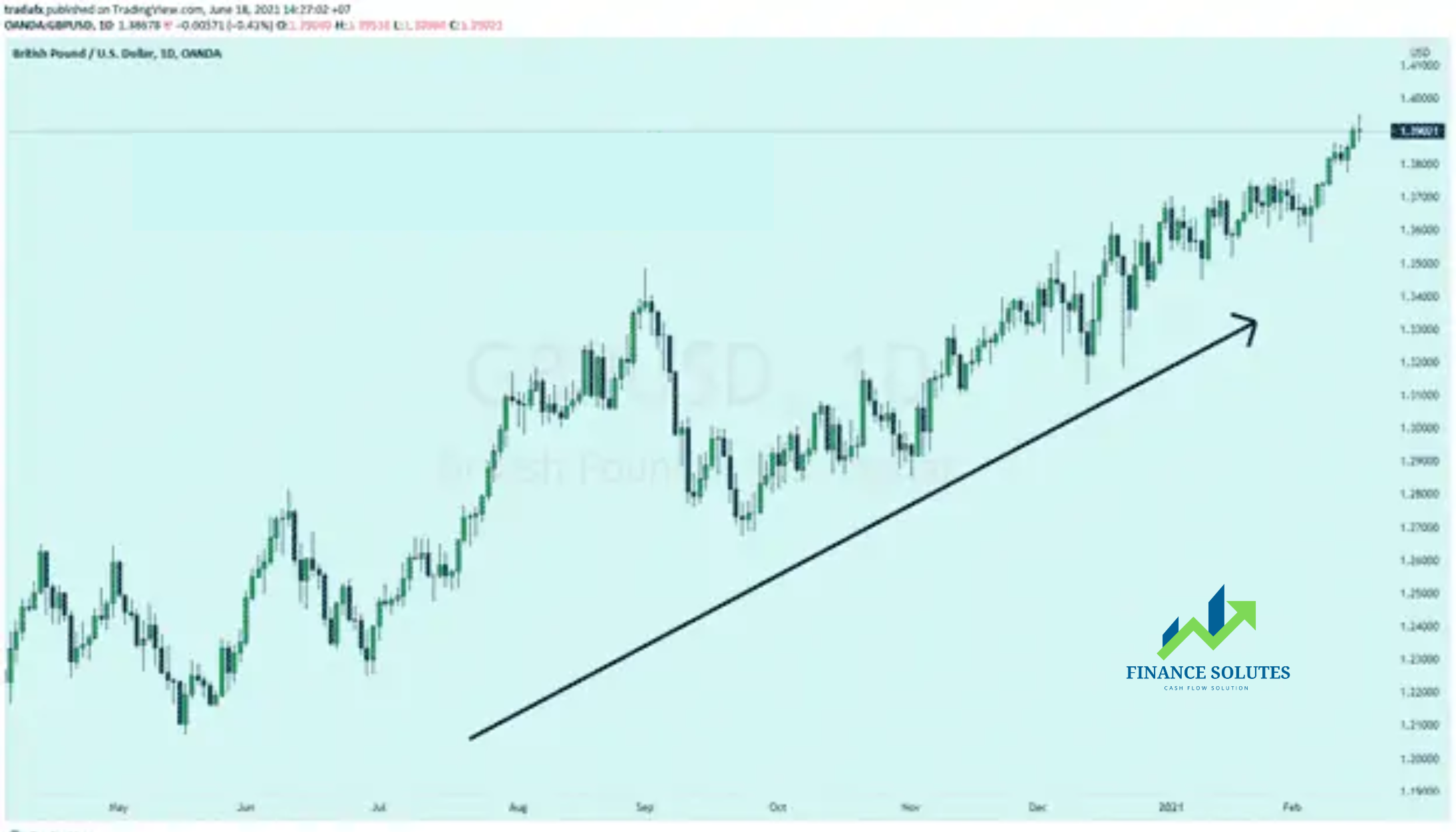
Since Forex is one of the most liquid markets, fluctuations in price charts often provide clues about supply and demand levels. Other insights can be gained by observing price charts, such as identifying the strongest trending currency. Below is an example of a GBP/USD price chart, where the Pound is dominating the USD.
Other research tools can be utilized through indicators. Many investors tend to use indicators because the signals are easy to understand, making Forex trading simpler.
The debate between technical and fundamental analysis in Forex is widespread. There is no definitive answer as to which tool is better. Traders often adopt one method or combine both in their analysis.
1.3. Sentiment Analysis
This tool is another popular method in Forex. When you notice the market has a dominant sentiment in one direction, it means most traders are leaning that way.
Let’s clarify this with an example. Suppose the majority of traders and investors are bullish on the Euro. They believe the Euro will rise in value through their trades. From this, we can infer that most traders are buyers of the EUR/USD currency pair.

Since we know there’s a large group of investors ready to buy, those buyers will eventually become sellers in the future. We know this because, at some point, they’ll want to close their trades. This makes the EUR susceptible to the USD pushing back if those buyers sell to close their positions.
Smarter traders study market sentiment alongside institutional market sentiment.
2. NOTES ON COMBINING ANALYSIS METHODS IN TRADING
Traders can combine all three tools to study the Forex market by:
- Identifying long-term trends with fundamental analysis: Examining a country’s GDP, interest rates, and inflation rates provides in-depth insights into its economic strength — in other words, the strength of its currency. For example, if the U.S. begins an interest rate hike cycle, the U.S. dollar becomes more attractive. The USD’s value will rise as enough investors and traders buy it.
- Finding entry points using technical analysis with indicators: By using multi-timeframe analysis and indicators like MACD or RSI, traders can spot ideal entry points into the market.
- Leveraging market sentiment before trading: Traders can analyze sentiment by observing the number of investors buying or selling, or through different trading volumes in buy/sell actions. The key takeaway is that retail traders tend to follow popular trends, making market sentiment a contrarian indicator.
3. SUMMARY
There are three popular types of Forex market analysis:
- Fundamental Analysis
- Technical Analysis
- Market Sentiment Analysis
- t.me/finance_solutes
- Website: https://finance-solutes.com
- Hotline: +1 929 5636 439 ( Hotline )
- 26 Broadway, Suite 934, New York, 10004, US
