
 XM
XM Bybit
Bybit Binance
 Robinhood
 Webull
 IC Markets
 Pepperstone
 OKX
OKX Vantage
 VT Markets
 BingX
BingX Gate.io
 Kucoin
 MEXC
MEXC Exness
 Bitget
Market Sentiment plays an important role in determining the market’s movements, so what is Market Sentiment? Why does it impact the market in general, and can investors measure it? All of these questions will be answered in the following sections of the article. Let’s dive deeper into Market Sentiment with Forex!
What is Market Sentiment? Definition of Market Sentiment
Market Sentiment is a common concept in financial markets. In Vietnamese, Market Sentiment can be understood as “Cảm tính thị trường” or more commonly as “tâm lý thị trường” (market psychology).
Market psychology represents the overall feelings of the financial market or the majority of traders at a given point in time. It can be observed in both the stock market and the foreign exchange market. Combined with the individual intuition of each trader, investors make trading decisions based on the market’s positive or negative sentiment.
Accordingly, if the market sentiment is optimistic, it is referred to as a bull market. On the contrary, if the sentiment is pessimistic, it is referred to as a bear market. In reality, market movements also depend on many factors such as political news or changes in interest rates by central banks. Therefore, a professional trader must possess the ability to read market sentiment and use a multifaceted market analysis approach.
Contrary to the general market sentiment are investors with opposing views. These investors hope to reverse the market trend and create a new price direction. However, they may also fail to overcome the prevailing market sentiment and will have to conform to the majority trend, albeit with some dissatisfaction.
A Simple Illustration of Market Sentiment
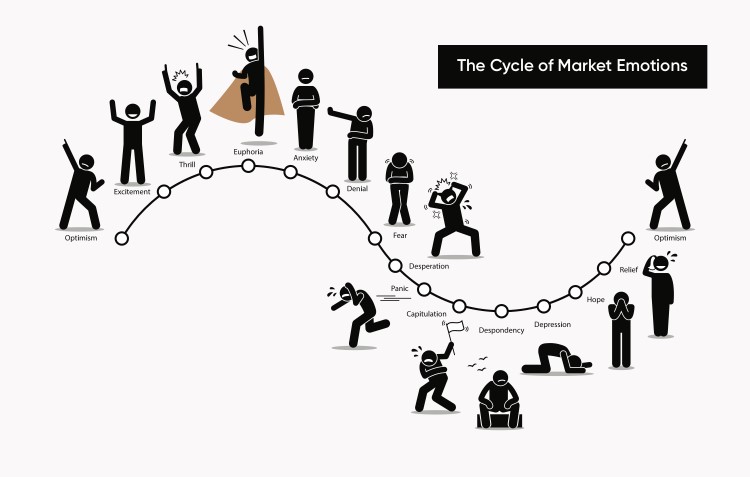
Several studies have shown that market trends are largely influenced by the emotions of investors. Specifically, when you are anxious about the next market move, always wondering whether the price will go up or down tomorrow, that anxiety significantly affects your trading decisions. As a result, market sentiment can change accordingly.
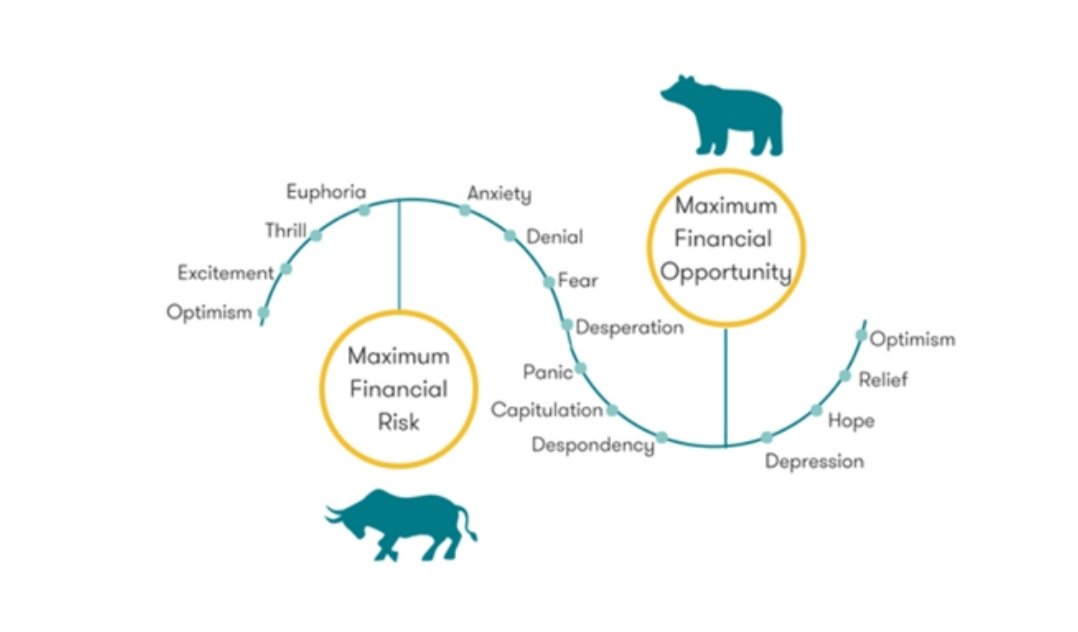
Let’s consider another example: During a period of strong price increases, all traders rush to buy in anticipation. At this point, most investors believe that the price cannot rise any further and that it will inevitably fall. As a result, a new selling trend forms as investors look to lock in profits. The market will then have an excess of sellers, and prices are bound to drop significantly, causing the market to reverse direction. Similarly, in the opposite case, when the market price experiences a sharp decline, traders will develop the mindset that the price has bottomed out. This leads to the emergence of a new wave of market sentiment.
In reality, it is undeniable that the market moves according to the sentiment of the majority. You cannot control the market based on your individual mindset, and when market sentiment aligns with many traders, a significant price fluctuation is bound to occur.
What Causes Changes in Market Sentiment?
To succeed in this field, most investors aim to recognize the latest changes in the market. After helping you understand the nature of Market Sentiment, we will outline some key reasons for shifts in market sentiment. These reasons include:
- The release of certain information or data to the market
- Political developments or significant changes
- The announcement of an unexpected event to the market

Essentially, the more volatile the market is, the more opportunities investors have to engage in trading. Therefore, the skill of understanding market sentiment becomes even more crucial and cannot be overlooked during each trading session.
Characteristics of Market Sentiment
In the next section of the article, we will discuss the characteristics of Market Sentiment, also known as market psychology. We hope this will help you gain a clearer, more comprehensive view of market sentiment.
Firstly, traders need to understand that not every type of sentiment leads to market fluctuations. Every day, a lot of news is published, along with political updates and economic data. While these news pieces influence investor sentiment, they are not enough to create a strong wave that causes the market to move. In reality, many factors determine market movements. Additionally, depending on the type of sentiment, the market experiences fluctuations with varying levels of intensity.
Another key characteristic of market sentiment is that it is always in constant fluctuation. These changes can happen in an instant, but sometimes they may last for several weeks or even months. This ongoing volatility can present significant challenges for traders. As a result, they are always searching for answers to the question of how to trade based solely on sentiment and how the overall sentiment will evolve.

In addition, the emotions of traders are often signs of greed and fear. Trades influenced by these emotions play a critical role in determining whether the market will go up or down. As such, market sentiment tends to reach its peak before the market reverses, regardless of the trend.
Indicators for Measuring Market Sentiment
In the next section, we will explore a few indicators that can effectively measure Market Sentiment. These include the VIX index, the High-Low index, the Bullish Percent (BPI) index, and the commitment of investors.
VIX Index – The Fear Index
First, let’s look at the VIX index, also known as the Fear Index. The Fear Index describes moments when the market is trending upward, but most investors start to fear that prices will fall. At this point, they take measures to mitigate the risks of their trades. Traders often opt to sell off in order to quickly lock in profits. The VIX index is a useful tool for measuring Market Sentiment and is trusted by many traders.
High-Low Index
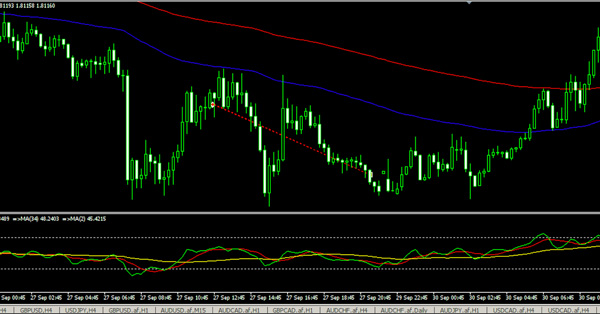
Following the VIX is the High-Low index, used by traders to compare stocks at their highest price with those at their lowest over the past year. A High-Low value below 30 indicates that the market is trading at a low level, and sentiment is considerably reduced. Conversely, a High-Low value above 70 signals a more positive outlook. This suggests that the market is on an upward trend, and investors are exhibiting a stable market sentiment.
Bullish Percent (BPI) Index
Next, we have the Bullish Percent Index (BPI). The BPI measures bullish patterns based on point-and-figure charts. Typically, the bullish rate of this index is 50%. However, if the BPI surpasses the 80% threshold, it indicates that Market Sentiment is optimistic, with the market experiencing heavy buying activity. On the other hand, a BPI value below 20% reflects a more negative market sentiment, indicating that the market is undergoing an oversold condition, or excessive selling.
Measuring Market Sentiment through Investor Commitment
In addition to the VIX, High-Low, and Bullish Percent (BPI) indices, investors also measure market sentiment through investor commitments. This index is released every Friday. Investor commitments show the buy and sell positions of speculative traders and commercial traders in the market. By using these preliminary reports, traders can assess the potential direction of the market for the next trading week. Through this indicator, alongside market analysis, investors can confidently predict future market sentiment.
Trading Effectively According to Market Sentiment
After discussing topics like what Market Sentiment is, examples of market psychology, and how to measure Market Sentiment, the article will continue by offering tips on how to trade effectively based on market sentiment.
Every trader has a unique trading approach based on their strategy and how they build their trading systems. As such, there are various methods for trading according to market sentiment. The key point is to accurately determine the current market sentiment. Is the market showing positive signs, or is it trending toward pessimism? Once you’ve identified the market sentiment, you can devise the correct strategies for your trades, specifically whether to buy or sell in order to maximize profits.
To keep up with market trends as Market Sentiment constantly changes, you need to spend time monitoring the current buying and selling conditions. Make it a habit to do this regularly using indicators and supporting tools to understand the market’s next movement. Remember, only by applying technical analysis methods along with synchronized and accurate fundamental analysis tools will the market picture become clearer.
This article has presented various aspects of market psychology, including what Market Sentiment is and how to trade effectively based on it. We hope this information will provide traders with more knowledge and a comprehensive understanding of market sentiment. Market Sentiment is always in flux, and you should only trade when you’re confident in the market’s direction to minimize risk and maximize your profits.
- t.me/finance_solutes
- Website: https://finance-solutes.com
- Hotline: +1 929 5636 439 ( Hotline )
- 26 Broadway, Suite 934, New York, 10004, US
