
 XM
XM Bybit
Bybit Binance
 Robinhood
 Webull
 IC Markets
 Pepperstone
 OKX
OKX Vantage
 VT Markets
 BingX
BingX Gate.io
 Kucoin
 MEXC
MEXC Exness
 Bitget
It can be said that the ROS (Return on Sales) index is one of the most important indicators in the field of economics. So, what is ROS? How can we implement and apply the ROS index effectively? Let’s explore the detailed content of ROS in the following article. We are sure that through this article, you will gain many useful and practical insights for forex trading.
What is the ROS index?
The ROS index stands for Return on Sales. This indicator represents the profit margin relative to the total revenue of a business. For this reason, the ROS index typically shows the profit generated from every unit of net revenue derived from all sales activities, business transactions, and service provisions. It reflects the opportunity to generate substantial profits (after tax profit).
ROS calculation formula
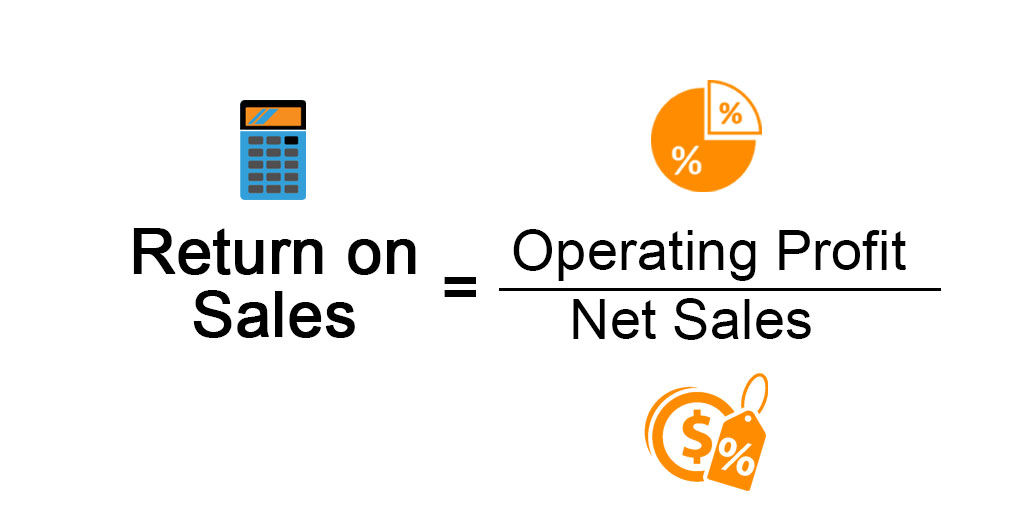
Below is the most detailed ROS calculation formula that you can apply to calculate the exact ROS index.
ROS = Profit after tax / Net revenue x 100%
In which:
- The index of profit after tax and net revenue in the formula will be taken from the financial reports and results in the production and business process of the enterprise to be evaluated.
- In addition, the formula for calculating net revenue will be:
Net revenue = Sales revenue and service provision – Revenue deduction
How to read the ROS index
What everyone needs to understand when learning about ROS is to comprehend what the ROS index is indicating and how it impacts the overall performance when expressed. Below is how you can read the ROS index effectively and accurately.
- If a company’s ROS index shows a positive number (+), this indicates that the company is operating profitably, generating a profit (after-tax profit > 0). The higher the ROS, the better the company is performing.
- On the other hand, if a company reports a negative ROS (-), it certainly means the company is operating at a loss, not generating profits, and could even be in a state of debt (after-tax profit < 0).
Example of ROS Analysis
Based on the production and business results of Company A, the company’s SAR target was 6% last year, 8% this year, and the industry average is currently increasing by 10% in revenue. In other words, an additional dollar of revenue this year will generate more profit compared to last year. However, compared to the target, the company’s ROS is below the industry average, showing that the company is less efficient at generating profit from revenue compared to others in the industry. It also reflects the company’s poor cost management and operational inefficiencies.
Meaning of the ROS Index
Each economic indicator has a specific target and meaning, and of course, the ROS index is no exception. Below are the detailed meanings of the ROS index when conducting analysis, evaluation, and application.
For Businesses
For businesses, effectively applying and analyzing the ROS index brings significant and valuable insights in managing, controlling, and running their services. Here are some specific benefits and meanings for businesses when utilizing the ROS index:
Increasing Revenue: Companies can use the meaning and evaluation goals of ROS to implement measures that increase revenue. This can be done by maximizing customer retention and boosting sales, as well as attracting new customers through marketing programs and events such as discounts, promotions, or major improvements in customer service offerings.

Leveraging Technology to Boost Productivity: One of the ways businesses can navigate difficult periods in their operations is through the use of technology. For example, customer relationship management (CRM) systems are highly effective solutions that help businesses optimize the performance of their sales teams and attract more potential customers. Additionally, CRM tools can help companies easily resolve existing customer service issues, improving overall efficiency and satisfaction.
Reducing Labor Costs: This can involve making upfront investments that allow for greater flexibility in adjustments and reducing costs in the long term. Higher salaries will undoubtedly attract abundant, potential talent, and providing professional, well-structured training will help businesses generate substantial sales.
Reducing Material Costs: This can be achieved by proactively contacting suppliers of services, materials, and products to negotiate lower prices. Alternatively, companies can assess and analyze their production processes to ensure that raw materials are used efficiently, minimizing waste.
For Investors
Based on the ROS index, investors can make positive evaluations about whether a company’s business operations are as effective as expected. Furthermore, the index can provide extremely detailed information about the potential for growth, enabling investors to evaluate opportunities to grow alongside the company, such as:
- A positive ROS is a sign that the business is profitable. The higher the ROS, the greater the profit.
- A negative ROS means the business is operating at a loss. This suggests that the company’s managers are either lacking specific measures or unable to control the overall costs of the business operations. It may also indicate that the company’s products are too competitive to sell effectively in the market.
For Banks
Banks use these indicators to assess whether the business operations of a company are steady and effective, and to evaluate the company’s ability to pay its debts. This information serves as a basis for banks to decide whether to approve loans for the company.
How to Evaluate Business Performance through ROS
As mentioned earlier, the ROS index allows companies to clearly see their actual operational performance. However, while a positive ROS reflects good performance, it doesn’t always guarantee that the company is operating well. Likewise, a negative ROS doesn’t necessarily mean the company is performing poorly.

One thing you’ll notice when ROS increases is that business activities become more cost-efficient. This includes costs arising from business assets and operations.
For this reason, when analyzing ROS, it’s important to combine indicators like ROE (Return on Equity), ROA (Return on Assets), and other profitability metrics to gain a broader and more objective understanding of a company’s performance.
Additionally, to assess the trend of a company’s ROS, you need to analyze it over a sufficient period to obtain the most accurate conclusions (a reasonable comparison period is 3 to 5 years). Comparing the industry average with ROS will also help in formulating the business’s plan.
What is a Good ROS?
Different industries will have different ROS benchmarks, yielding various indicators. For this reason, we can only make positive assessments if the ROS is better than the industry average, but we cannot compare different industries with each other. Based on this, each level of the ROS indicator provides a different perspective on the company’s activities. In general, if the ROS is assessed accurately and independently (i.e., without considering ROE or ROA), a company is considered healthy if ROS > 10%.
Notes to improve ROS index for businesses
With the benefits that ROS provides, you might wonder if there are ways to improve the ROS indicators. The answer is yes, you need to pay attention to several subjective factors such as:
- Boosting Revenue
- Product Life Cycle
- Price Control
Additionally, you should focus on other factors related to buyers, such as their income, product demand, and other competitive aspects (e.g., pricing, product variety). By evaluating and concentrating on these key elements, you can easily and proactively manage the ROS index, which is also a way to improve your company’s performance metrics.
The Relationship Between ROS, ROA, and ROE
To more easily assess business performance, understanding the relationship between ROS, ROA, and ROE is essential. Below is detailed information about the relationship between these three indicators:
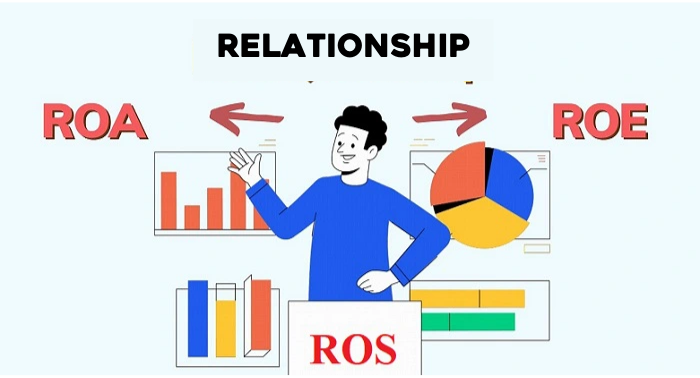
First, to understand the relationship between these indicators, it’s important to grasp their definitions, which will help you connect ROS, ROA, and ROE.
- ROA (Return on Assets) is a measure of profitability based on a company’s assets. It highlights the close relationship between a company’s profitability and its assets, helping to identify how effectively a company utilizes its assets to generate profits.
- ROE (Return on Equity) is a measure of profitability based on the shareholders’ equity. It shows how well a company is using its equity capital to generate profits. This ratio reflects how efficiently the company is deploying its resources to maximize return on investment.
All three of these ratios are designed to assess how well a company is performing. ROS is based on operational performance, while ROE and ROA come from the balance sheet. A rise in ROS can significantly contribute to an increase in ROA. Conversely, if the ROS decreases, the ROA will also follow suit, indicating that the company is not managing its costs efficiently.
Thus, investors, together with Traderforex, have explored in detail what ROS is, along with its specific characteristics that you can more skillfully apply when trading. We hope this information is helpful to you as you invest in the financial market. Wishing you success.
- t.me/finance_solutes
- Website: https://finance-solutes.com
- Hotline: +1 929 5636 439 ( Hotline )
- 26 Broadway, Suite 934, New York, 10004, US
