
 XM
XM Bybit
Bybit Binance
 Robinhood
 Webull
 IC Markets
 Pepperstone
 OKX
OKX Vantage
 VT Markets
 BingX
BingX Gate.io
 Kucoin
 MEXC
MEXC Exness
 Bitget
Although it only lasts for a very short time, when Flash Crash appears, it causes the market to fluctuate up and down extremely unstable. So what are the specific causes of Flash Crash? And what are the ways to limit their appearance? If you are an investor who wants to learn about this market as well as minimize risks, do not hesitate to join us to learn the detailed content below.
What is the concept of Flash Crash?
First, let’s explore in detail the concept of the term “Flash Crash” and what makes it different from other specialized terms in the forex financial market. If the price drops very quickly and intensively within a very short period of time, it is referred to as a flash crash. Black box trading is the main cause of a Flash Crash.
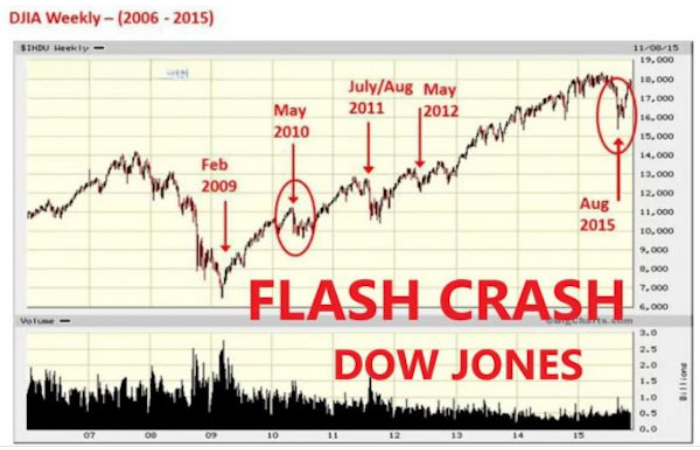
These trades occur with high frequency. Large and rapid transactions create billions of dollars, which can disappear in a short time—sometimes just a few minutes or even seconds. Afterward, they are restored to their original state.
Why do Flash Crashes occur in the forex market?
Flash Crashes occur quite frequently in the market, and for this reason, many investors cannot precisely recognize the formation of this phenomenon. Therefore, Forex will explain the specific causes of Flash Crashes.
Causes stemming from human behavior
According to market analysts, humans are the primary cause of Flash Crashes. Fund managers and traders sell large amounts of trades simultaneously. They place orders and sell in various ways across the market.

The higher the number of trades, the more likely the price of a product will trend in one direction. That is, when the volume of trades increases, the price tends to move more significantly. Another reason for a Flash Crash is when some traders aim to manipulate currency.
To achieve this, they will do whatever it takes to confuse market sentiment, causing the price of the coin to drop even further. This allows them to purchase a large quantity of the product at a relatively low price.
Due to fraudulent factors
In cases where the market price is close to the selling price, traders will place large sell orders and cancel them before they are executed. In other words, if fraud occurs, this scenario has been recorded in history, with an example found in 2010. This topic is discussed in more detail below.
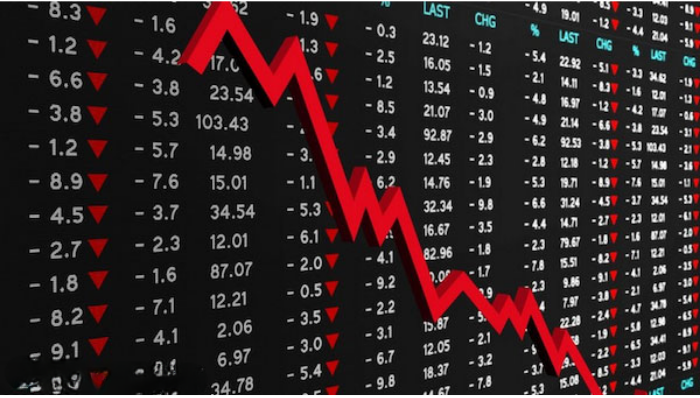
It could be due to system glitches or computer errors
Another cause of a Flash Crash is a system error in the automated trading platform or issues with the broker’s data source. These two factors are also the main reasons why the price of products tends to decrease sharply.
High-frequency trading (HFT)
In a specific period of less than one second, when a large number of trades are executed, this is referred to as high-frequency trading (HFT). If you want to use this trading method, you must have a computer program with the necessary software.
Because this happens with large volumes and in a very short time frame, it is difficult to reliably identify and evaluate signals. For this reason, HFT is one of the causes of sudden crashes.
How does the market fluctuate when a Flash Crash occurs?
The economy is on the brink of collapse when a Flash Crash happens. The cause of this phenomenon is the lack of market confidence in the economy. This makes economic recovery opportunities very difficult to achieve.

However, there is a public group of people who believe that the Flash Crash is due to system errors, or it could be due to security issues faced by key leaders of the country. From the information above, it’s clear that there are many causes for sudden breakdowns.
Therefore, when trading, never forget to set a stop-loss limit. Be prepared mentally and react promptly to market developments.
Summary of some events related to Flash Crash
There have been many incidents related to Flash Crashes. These events partly demonstrate the importance of Flash Crashes in the volatile Forex financial market.
Flash Crash of 2010
The 2010 Flash Crash occurred on May 6. The reason for this collapse: A trade worth $4.1 billion took place on the NYSE, which caused the Dow index to drop more than 1,000 points in just a few minutes.
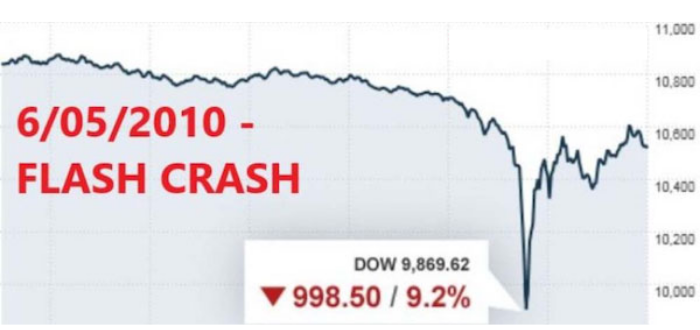
When this happened, analysts were concerned about the underlying structure of the market, along with the consequences of high-frequency trading.
In 2015, the U.S. Department of Justice officially announced 22 charges, including market manipulation and fraud, targeting a businessman named Sarao.
Trader Sarao placed large sell orders for futures contracts, known as E-Minis, which are used to predict trends in the S&P 500. With such a large volume, supply surged, and prices dropped sharply. However, before the orders were executed, Sarao had canceled most of them.
As a result, a flash crash occurred, and the trader made $9 million. Over the four-year period from 2010 to 2014, Sarao earned $40 million.
Flash Crash of 2013
On April 23, 2013, the AP news agency reported an issue with its Twitter account: President Barack Obama was involved in an explosion at the White House. After this tweet was published, the market reacted strongly.
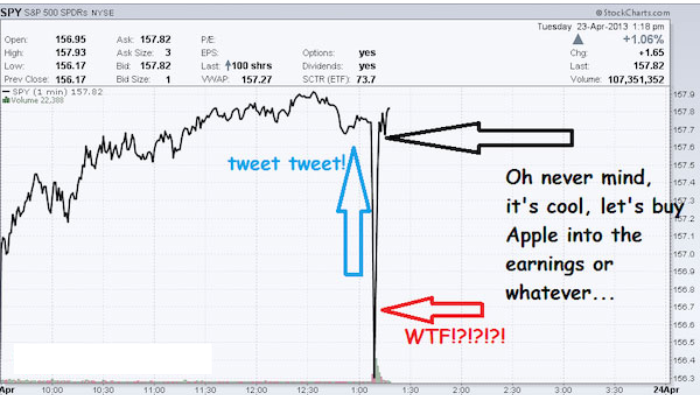
The stock market fluctuated. Notably, the S&P 500 index dropped by 0.9%, meaning in an instant, $130 billion disappeared. Afterward, the stock market returned to its initial level. However, the brief period of volatility left an indelible mark on many traders, who could never forget this event.
Flash Crash of 2015
The Flash Crash of 2010 occurred on May 6. The cause of this collapse was a $4.1 billion trade on the NYSE, which caused the Dow index to drop over 1,000 points in just a few minutes.
When this happened, analysts became concerned about the fundamental structure of the market, along with the consequences of high-frequency trading.
In 2015, the U.S. Department of Justice officially announced 22 charges, including market manipulation and fraud. The charges were aimed at a businessman named Sarao.
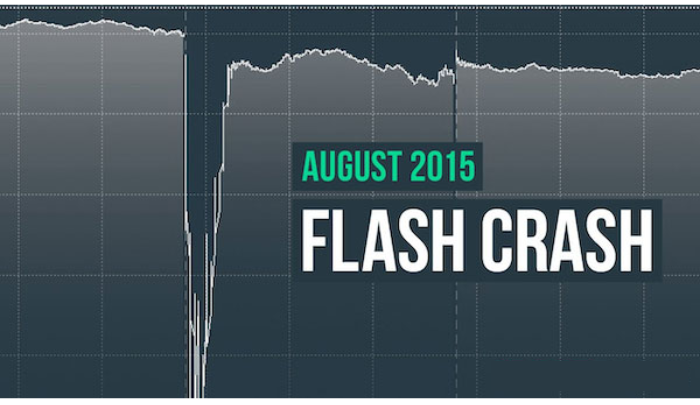
Trader Sarao placed large sell orders for futures contracts, known as E-Minis, which are used to predict trends in the S&P 500. With such a large volume, the supply surged, causing prices to drop sharply. However, Sarao had canceled most of the orders before they were executed.
After this announcement, the CHF exchange rate surged rapidly. This meant that the USD/CHF currency pair dropped sharply, from 1.02204 down to a low of 0.83541. This was a significant drop of 1,866 pips in a very short time. The loss was later confirmed by the Swiss National Bank (SNB) to be $51 billion.
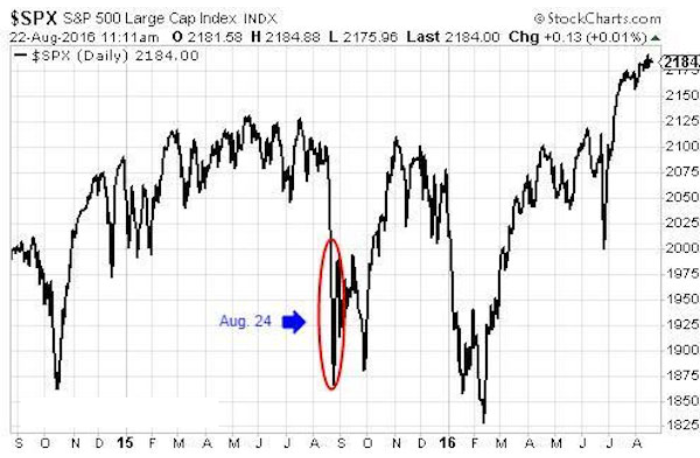
The refusal of the Swiss National Bank (SNB) was a major shock to the market. Evidence of this can be seen as several exchanges temporarily halted operations, and there were reports of hedge funds closing down. Faced with the risk of a massive depreciation, they failed to respond in time, believing that the EUR/CHF currency pair would stabilize at the 1.0000 level.
From the information above, we can draw the following lessons: Risk always accompanies leverage. Setting stop-loss orders only helps to minimize the risk of losing capital, but it doesn’t guarantee the value of the product. Nothing is absolute, even when it involves the rise of a large, respected entity.
Flash Crash of 2016
The year 2016 may not have been a good year for the GBP, as it was significantly affected by the flash crash.
The first event occurred on June 24, 2016. This was the referendum on whether the United Kingdom should leave the European Union. 52% of Britons voted for Brexit. The first flash crash occurred soon after, when the GBP/USD currency pair plummeted by 2,500 pips.
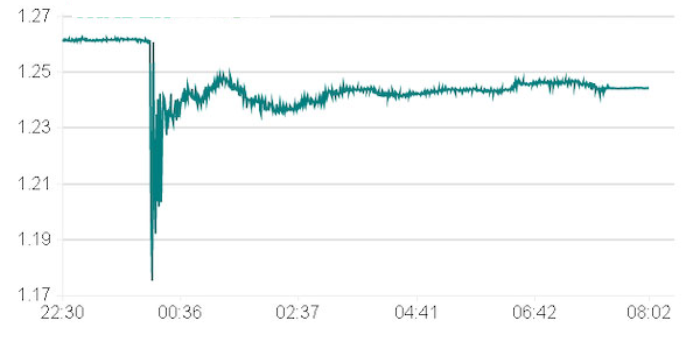
The second flash crash occurred on October 7, 2016. According to reports, the British pound fell 6% within just 2 minutes, causing the GBP/USD pair to hit its lowest value since 1985. Afterward, the pair recovered to its initial levels, but the event left serious consequences for the financial situation.
When the second flash crash occurred, some speculated it was due to “fat finger” trading errors. However, others believed it was related to the relationship and attitudes between the European Union and the United Kingdom during that time.
Flash Crash of 2017
Ethereum, the second-largest cryptocurrency, experienced a significant flash crash on June 22, 2017. The price of Ethereum dropped dramatically, from $300 to as low as $0.10, all within a few minutes. At the time, there was widespread speculation about the cause of the crash, with many suspecting manipulation or fraud, as some traders may have been attempting to manipulate the price of Ethereum.
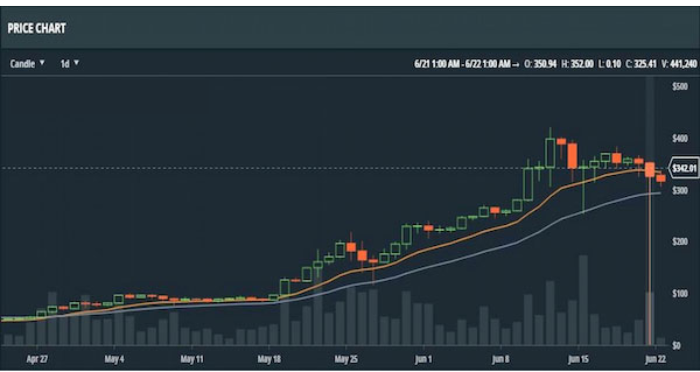
GDAX conducted a swift investigation following the Ethereum flash crash, but ultimately, no fraud was found during the sharp price drop. A large volume of trading was happening within the range at the time, with buy orders being executed between $317.81 and $224.48, representing a 29.4% increase. As Ethereum encountered the crash, 800 sell orders were triggered automatically, causing the price to plummet to as low as $0.10.
Flash Crash in 2019
In 2019, several currencies such as the British pound, Japanese yen, and Australian dollar experienced flash crashes. Notably:
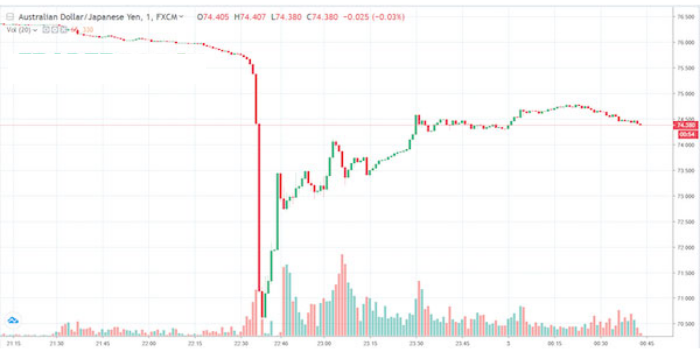
In January 2019, two currency pairs, AUD/USD and USD/JPY, experienced a rapid decline. Within just a few minutes, both pairs dropped by more than 4%. This represented the lowest levels for the Australian dollar against the US dollar since March 2009.
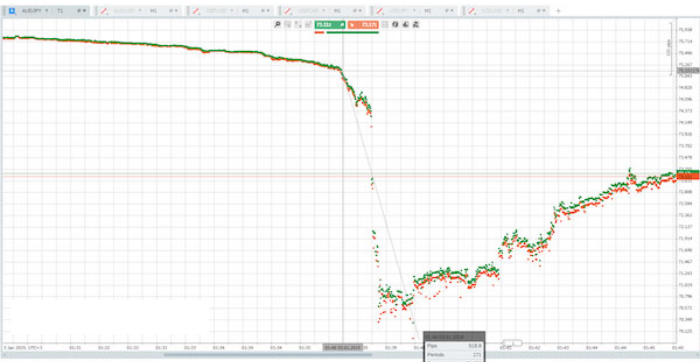
However, the prices of these two currency pairs largely recovered to their initial levels within the next few minutes.
So, what caused the rapid collapse of these two currency pairs? One reason is believed to be the announcement from Apple that sales in China had decreased. However, there are still some contradictions. The flash crash occurred an hour after this report. The lowest price for the USD/JPY pair also changed. The reported minimum price using the FX MARKET API was 104.45. The lowest level was 104.90, according to Reuters.
What lessons should investors draw from the Flash Crash?
From the information above, it is clear that the Flash Crash will trigger different reactions depending on the nature of the market. Always remember one thing from the SNB’s banking theory: it doesn’t matter whether the bank is large or small—if a flash crash occurs, you will still incur significant losses.
The main cause of Flash Crashes in the stock market is likely due to system errors. Nowadays, information on social media platforms is updated rapidly, but there is no guarantee that all information will be conveyed accurately.
Here are a few ways to effectively prevent Flash Crashes:
Today, the use of automated trading, fully controlled by investors, is increasingly developing. They will use pre-programmed systems based on complex algorithms. That is why errors or issues can still occur, affecting either you or the broader market.

This makes sudden crashes more likely to occur. To reduce the frequency of flash crashes in global corridors, Nasdaq, NYSE, and CME have provided solutions or higher security protocols to prevent the risk of severe flash crashes.
Using the circuit breaker principle:
To temporarily or completely halt customer trading, brokers have employed the circuit breaker principle. When market indices fall by 7% or 13%, trading is temporarily suspended for about 15 minutes. If the indices drop by more than 20%, trading will be halted and will only resume the next day.
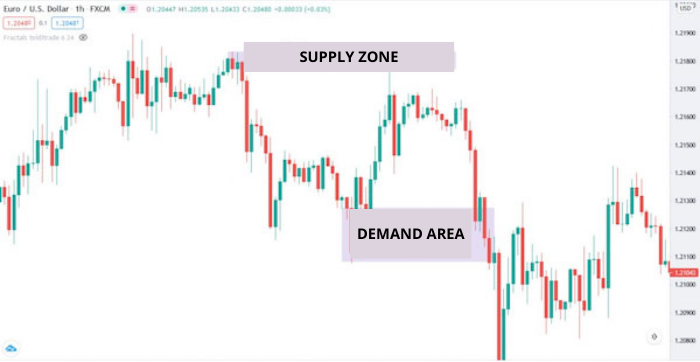
If investors attempt to access directly, the SEC will prohibit links to the exchange.
To prevent flash crashes, the SEC will ban all direct link access to the exchange. Additionally, they also prohibit unauthorized access. However, there is still a way to bypass the transaction connected directly to the operator:

The trading entity or player causing the flash drop can still connect directly to the operator, meaning they use certain methods. Therefore, there is no solution that can completely prevent a Flash Crash, but these measures can still minimize some of the damage caused by such incidents.
Flash Crashes have a significant impact on the market. When they occur, they cause turbulence and increased volatility. For this reason, investors need to closely monitor and stay informed about Flash Crashes to better understand them and react promptly if one occurs, in order to minimize the risks they face.
- t.me/finance_solutes
- Website: https://finance-solutes.com
- Hotline: +1 929 5636 439 ( Hotline )
- 26 Broadway, Suite 934, New York, 10004, US
