
 XM
XM Bybit
Bybit Binance
 Robinhood
 Webull
 IC Markets
 Pepperstone
 OKX
OKX Vantage
 VT Markets
 BingX
BingX Gate.io
 Kucoin
 MEXC
MEXC Exness
 Bitget
What is polygon? The Polygon Network project at the time of its official launch was extremely attractive to investors. And until now, the Polygon token has shown no signs of losing its appeal. So what is the Polygon network, what is the polygon roadmap and how to make money with polygon matic? Let’s find answers to those questions in today’s article.
1. WHAT IS POLYGON?
Polygon, initially known as the MATIC network, is one of the most promising cryptocurrency projects, especially with the increasing demand for NFTs and decentralized finance (DeFi) projects built on its platform. This is why many people, when asked about Polygon, still refer to it as the MATIC network.
Polygon Chains is a secondary scaling solution for Ethereum, one of the two largest blockchains today. The rapid adoption of Ethereum has led to skyrocketing costs, with high demand for dApps causing network congestion and gas fees soaring to double or even triple digits (in USD).
Scaling solutions like Polygon help traders and transactions avoid excessive Polygon fees, which would otherwise be costly if executed directly on Ethereum. Initially designed as a scaling solution, Polygon quickly evolved into a multi-purpose Polygon Ecosystem.
1.1. Development Team and Founders of the Polygon Ecosystem
The Polygon Ecosystem project was founded in 2017 by a team of four individuals: Mihailo Bjelic, Jaynti Kanani, Anurag Arjun, and Sandeep Nailwal in India. All co-founders have technical backgrounds and experience relevant to the project’s development. Among them, Jaynti Kanani is known for his crucial role in implementing the first Plasma MVP and was previously a data scientist at Housing.com.

Sandeep Nailwal also had extensive experience before co-founding Polygon Chains, having previously led a blockchain service company and served as a former Technology Advisor at Deloitte. Meanwhile, Anurag Arjun held the position of Product Manager at IRIS Business, a leading software product company for global regulatory agencies. Lastly, Mihailo Bjelic is an Information Systems Engineer with a bachelor’s degree from the University of Belgrade, the largest and oldest public university in Serbia.
1.2. Polygon Roadmap 2022
Around mid-August 2021, the Polygon Network announced plans to establish a Decentralized Autonomous Organization (DAO) as a means to expand DeFi accessibility for users. This is likely to be the latest Polygon Roadmap for the year.
Additionally, a major event that caught the attention of many traders and investors was a network vulnerability attack by two hackers at the end of 2021. However, the issue was swiftly addressed and fixed by early December.
Apart from the DAO project, the Polygon Roadmap is expected to continue integrating with various projects and new Polygon dApps to expand the Polygon Ecosystem. The latest update from Polygon Chains in early January 2021 introduced Plonky2, which, according to Polygon Network, marks a significant milestone in zero-knowledge cryptography—an advanced cryptographic technique in cryptocurrency.
1.3. What is the Structure of Polygon Network?
Polygon Network operates using the Proof of Stake (PoS) protocol, functioning similarly to other PoS-based systems. As mentioned in the earlier section, Polygon was developed as a solution to Ethereum’s blockchain issues, particularly addressing high gas fees and network congestion.
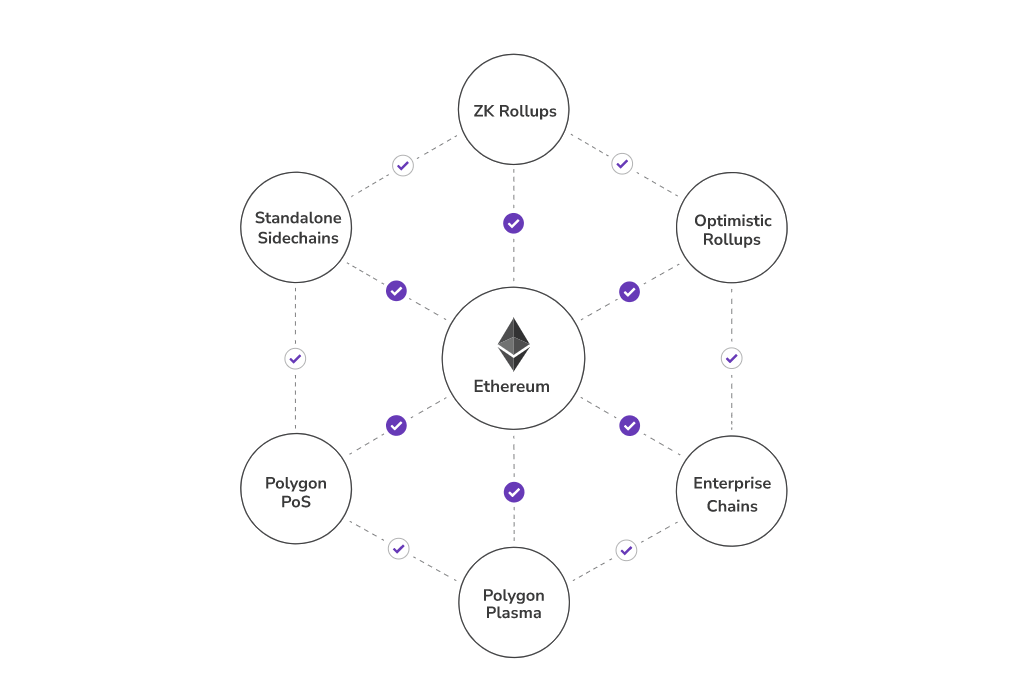
Polygon operates using multiple sidechains to separate from the main platform, ensuring efficiency and cost savings. This leads to the question: What are Polygon Sidechains? Simply put, sidechains are independent blockchains that are linked to the main Ethereum blockchain. They support decentralized finance (DeFi) protocols available on this platform, enhancing scalability and reducing transaction costs.
Polygon Network provides sidechains that support both the Proof of Stake (PoS) mechanism and Plasma. The Polygon platform has a three-layer architecture, including:
- Smart Contracts for Staking and Plasma on Ethereum: Manage staking for PoS, delegation management (including validator sharing), and Plasma contracts, which act as snapshots of the sidechain states.
- Proof of Stake Validators (Heimdall): A set of PoS validator nodes that operate alongside Ethereum staking contracts to enable PoS on Polygon.
- Bor – Block Producer: Responsible for aggregating transactions into blocks.
2. WHAT IS POLYGON COIN?
Does the Polygon Network have a native token? If so, what is the Polygon token? The answer is yes. The Polygon token is MATIC, an ERC-20 token used to power the Polygon Ecosystem. Users utilize Polygon MATIC to pay gas fees, receive staking rewards, and participate in governance. According to Polygon CoinMarketCap, the total circulating supply of MATIC tokens is approximately 7.70 billion tokens, out of a maximum supply of 10 billion.
2.1. MATIC Token Allocation
The total maximum supply of MATIC tokens is 10 billion and is allocated as follows:
- Advisory Team: 4%
- Private Sale: 3.80%
- IEO Event on Binance Launchpad: 19%
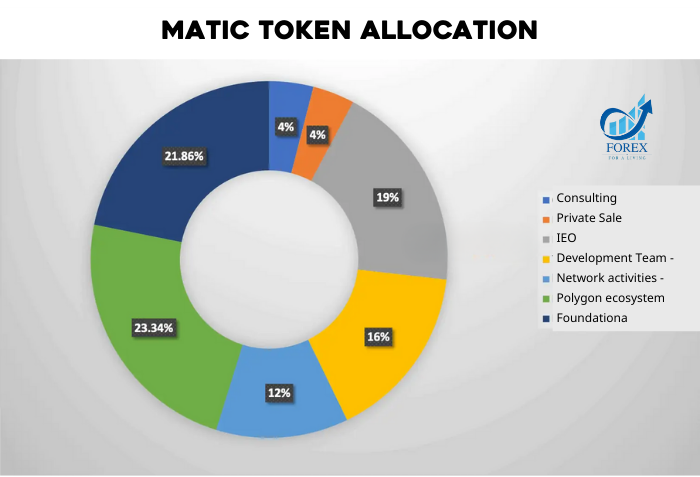
- Development Team: 16%
- Network Operations: 12%
- Polygon Ecosystem: 23.33%
- Foundation Tokens: 21.86%
According to the release schedule, all Polygon Tokens were set to be fully distributed by the end of 2022. The Polygon Contract details can be found on Polygon CoinMarketCap.
2.2. How to buy and sell Polygon Token
Now that we’ve covered what Polygon is and what the Polygon coin (MATIC) is, let’s explore how to buy and sell MATIC and where to purchase Polygon Coin.
Since Polygon plays a crucial role in the Ethereum blockchain ecosystem, MATIC is widely available and listed on most major crypto exchanges, including:
- Binance
- Huobi Global
- Coinbase Pro
- FTX
- KuCoin
For the most accurate and up-to-date MATIC price, you can check CoinMarketCap or CoinGecko.
3. POLYGON MATIC STORAGE WALLETS
As mentioned in the Coin Polygon section, MATIC is an ERC-20 token built on the Ethereum blockchain, meaning it can be stored in Ethereum-compatible wallets, including both hot and cold wallets. For example: Metamask wallet, Trustwallet wallet or cold wallets like Leger, SafePal, …
To seamlessly transfer assets across Polygon sidechains and enhance user convenience, Polygon has developed its own Polygon Wallet, integrated with WalletConnect.
4. EARNING WITH POLYGON YIELD FARMING
Yield Farming has become a core feature in DeFi projects, and Polygon Yield Farming allows traders to earn passive income through the Balance Protocol. To start, visit [HERE] to check the available liquidity pools in the “Invest” tab.
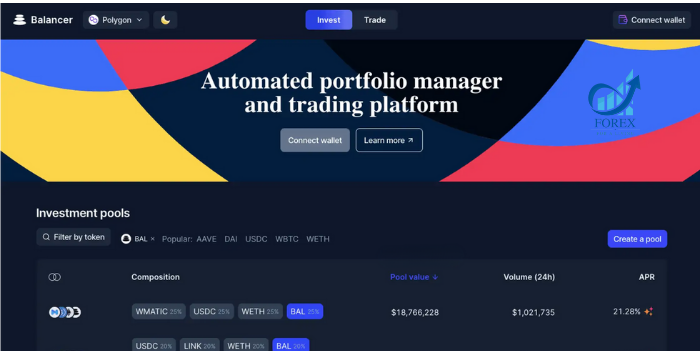
Click on each pool to see detailed information so you can choose the appropriate Pool. Next, connect your wallet to deposit money into the pool.
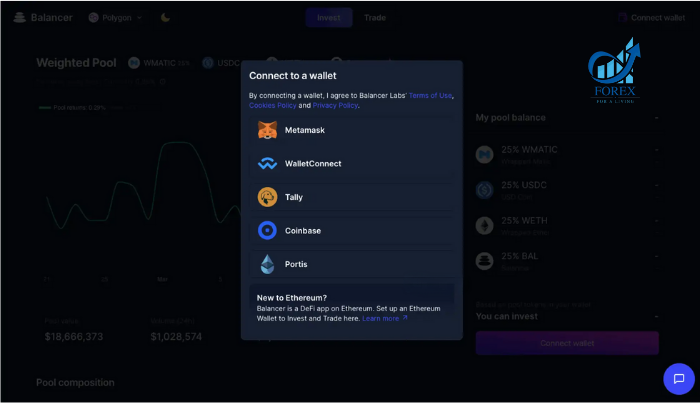
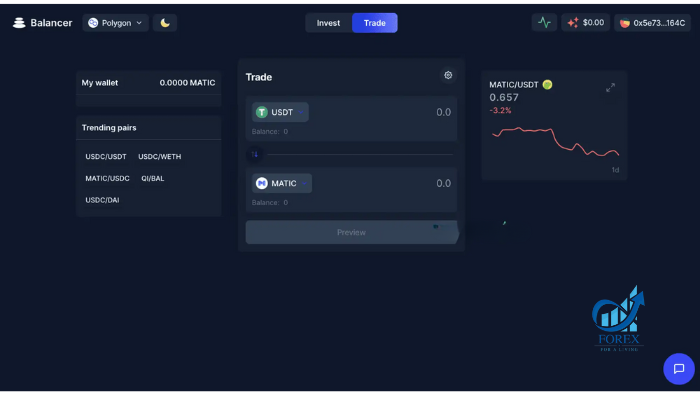
After connecting the wallet, click Invest and enter the amount you want to participate in Polygon Yield Farming. Here will load WMATIC. If it is not available, you can go to the “Trade” section to swap from USDT to MATIC.
When you no longer want to continue farming, you can click on “Withdraw” next to “Invest.”
5. SHOULD YOU INVEST IN MATIC?
After exploring everything in today’s article about Polygon, let’s answer the final question before wrapping up: Should you buy MATIC, or in other words, should you invest in Polygon tokens? Overall, MATIC is a promising token with the potential for significant value growth in the future. Here are three reasons why investing in MATIC could offer substantial profit potential:
- The NFT Boom: Traders witnessed an explosive growth of NFTs throughout 2021, with projects in gaming, metaverse, and more. For NFTs to exist, they must be minted on a blockchain. Polygon Chains offer a much more cost-effective alternative to Ethereum.
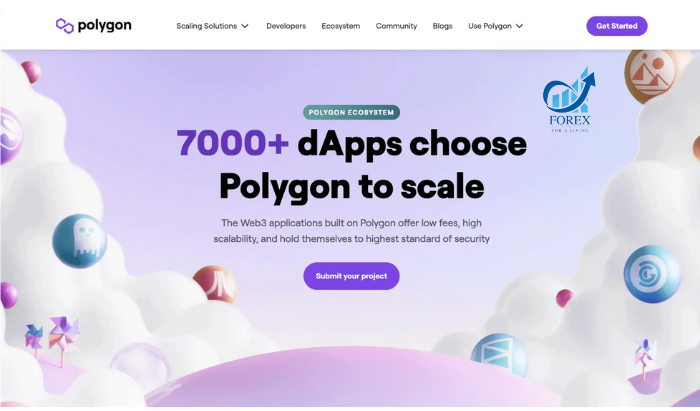
- Expansive Polygon Ecosystem: Currently, over 700 dApps have been developed on the Polygon Network, including some of the most popular DeFi projects and numerous games that are being built on this platform. Compared to other competitors, Polygon stands out with its scaling solution, allowing Ethereum to serve as the most secure base layer for the rapidly growing Polygon Web3 ecosystem.
- Global Partnerships: Thanks to its efficiency and utility, Polygon Network is expected to continue expanding its partnerships with various global partners in the future.
6. CONCLUSION
We hope today’s article on What is Polygon? has provided you with essential knowledge about the Polygon Network, Polygon Token, Polygon MATIC, and Polygon wallet address—where to find it, how to earn through Polygon Yield Farming, and the project’s potential. Based on this information, traders and investors can decide for themselves whether to invest in Polygon MATIC or its future projects. Disclaimer: This article is for informational purposes only and does not constitute investment or trading advice.
- t.me/finance_solutes
- Website: https://finance-solutes.com
- Hotline: +1 929 5636 439 ( Hotline )
- 26 Broadway, Suite 934, New York, 10004, US
