
 XM
XM Bybit
Bybit Binance
 Robinhood
 Webull
 IC Markets
 Pepperstone
 OKX
OKX Vantage
 VT Markets
 BingX
BingX Gate.io
 Kucoin
 MEXC
MEXC Exness
 Bitget
There are many different types of orders in Forex that traders use to manage their trades while participating in the foreign exchange market. Although there are differences between brokers, there are some basic types of orders that all brokers use. Knowing what these orders are and understanding them can help traders enter or exit the market appropriately.
Different types of Forex orders allow traders to operate according to their own trading style, creating a level playing field for every Forex trader. This article will discuss Forex trading orders and how they are used in real trading scenarios.
1. MARKET ORDER
A Market Order is considered the most basic type of order and is often the first encountered in Forex trading. As the name suggests, a market order is executed directly at the market. This means you enter the trade at the market price at that very moment.
Typically, swing traders or day traders use market orders to quickly enter and exit the market according to their strategies.
Example:
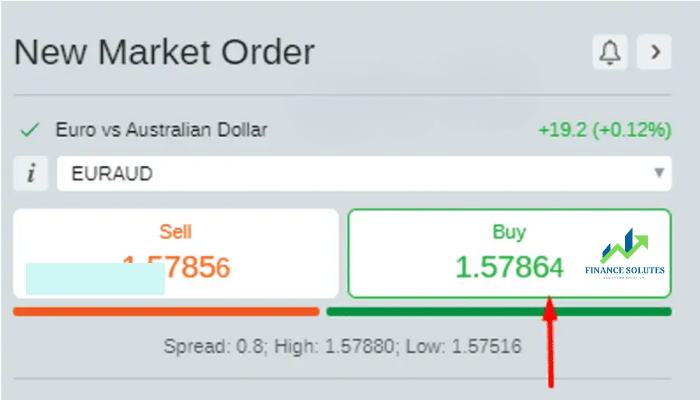
The EUR/AUD trading quote below shows the actual bid and ask prices. A market order to buy at 1.57864 will be executed immediately at the current price. The same applies to a sell position.
2. ENTRY ORDERS
Another popular type of Forex trading order is the Entry Order. What makes these orders special is that they allow you to set a price different from the current market price. The trade will be executed at the pre-selected price according to entry criteria, retest checks, and a new position will be created.
There are many benefits to trading with Entry Orders, including the fact that you don’t need to sit in front of your computer screen to execute your trades.
Typically, Entry Orders can be used for breakout strategies or other strategies that require execution when the price crosses a certain level.
3. LIMIT ORDERS
There are two types of pending orders in Forex trading:
3.1. Opening a Trade with a Limit Order
The first type is using a limit order to secure a better initial price.
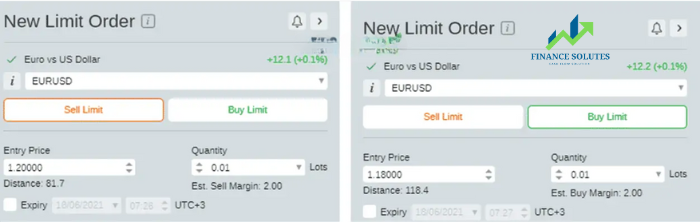
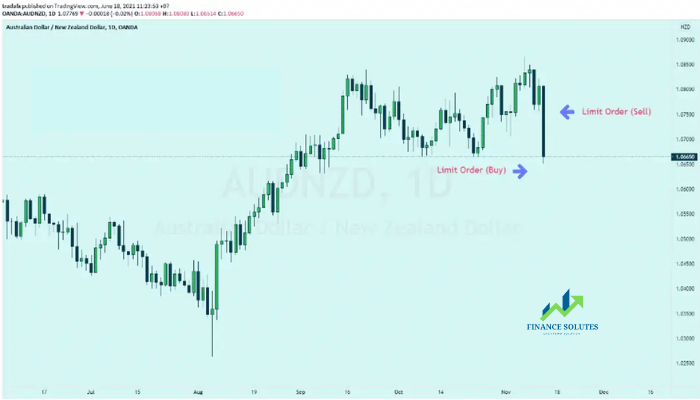
If the EUR/USD pair is trading at 1.19193 and you believe it will rise to 1.2000 before falling again, you can place a Sell Limit at 1.2000.
Conversely, if EUR/USD is trading at 1.19193 and you predict it will drop to 1.1800 before continuing upward, you should place a Buy Limit at 1.1800. When using limit orders, your trade will only be executed at the specified price or better — meaning a lower price for buy orders and a higher price for sell orders.
3.2. Using Limit Orders to Close a Trade
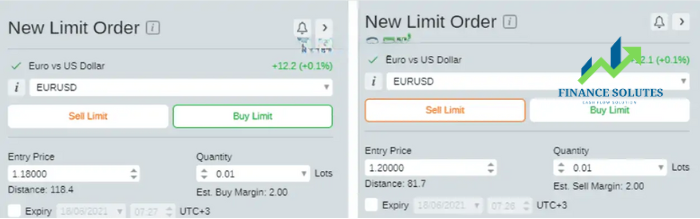
You can also use limit orders to close a trade when the market moves to a specific price that benefits you. If you buy EUR/USD at 1.1900 and want to exit the trade when you gain 100 pips, you should set a Sell Limit 100 pips higher than your entry price — at 1.2000.
Conversely, if you sell EUR/USD at 1.1900 and want to close the trade when you gain 100 pips, you should set a Buy Limit 100 pips lower than your entry price — at 1.1800.
Graph showing limit order on chart:
4. STOP ORDERS
Stop Orders are also commonly used in Forex trading, and there are two types:
4.1. Using Stop Orders to Open a Trade
The first type is using a Stop Order to enter the market. These orders are typically used in breakout strategies. If you predict that the EUR/USD pair will continue to rise after surpassing the 1.2000 level, you would place a Buy Stop at 1.2001. When the market reaches 1.2001, your Buy Stop will turn into a market order and be executed at the best available price.
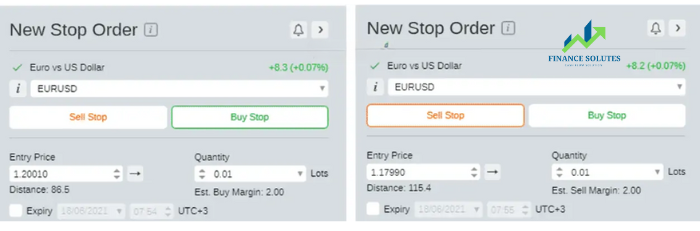
If you predict that the EUR/USD pair will keep falling after dropping below 1.1800, you would place a Sell Stop at 1.1799. When the market reaches 1.1799, your Sell Stop will turn into a market order and be executed at the best available price.
4.2. Using Stop Orders to Close a Trade
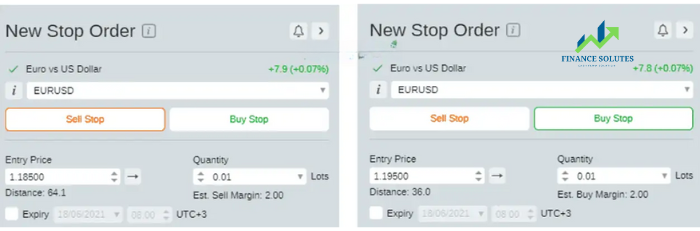
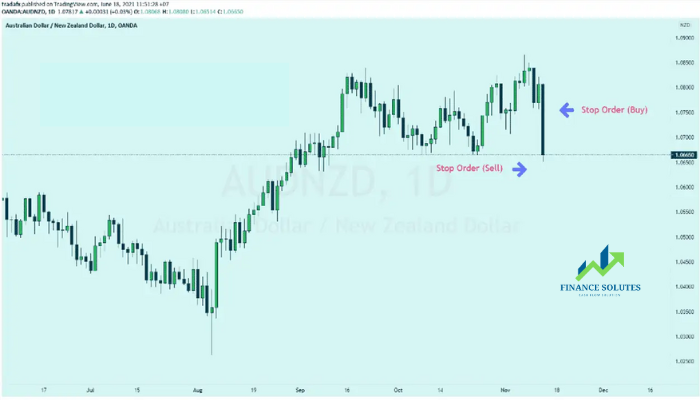
You can also use Stop Orders to close a trade if the price moves against your expectations, helping to limit risk. If you buy EUR/USD at 1.1914 and want to limit your risk to 64 pips, you’d set a Sell Stop 64 pips below your entry price — at 1.1850.
Similarly, if you sell EUR/USD at 1.1900 and want to cap your risk at 36 pips, you’d place a Buy Stop 36 pips above your entry — at 1.1950.
A graphical representation of a stop order on a chart:
5. STEPS TO PLACE A FOREX TRADE
Placing different types of Forex orders is relatively simple. The following steps are based on major trading platforms:
- Open a trade ticket and select the “Order” option.
- Choose your trade position (Buy or Sell).
- Set the price level and select the appropriate order type based on whether the price is above or below the market value.
- Place a Stop or Limit order (if applicable).
- Confirm and execute the order.
It’s essential to familiarize yourself with your trading platform before executing any trades. This helps minimize unnecessary errors when placing or managing trades.
- t.me/finance_solutes
- Website: https://finance-solutes.com
- Hotline: +1 929 5636 439 ( Hotline )
- 26 Broadway, Suite 934, New York, 10004, US
