
 XM
XM Bybit
Bybit Binance
 Robinhood
 Webull
 IC Markets
 Pepperstone
 OKX
OKX Vantage
 VT Markets
 BingX
BingX Gate.io
 Kucoin
 MEXC
MEXC Exness
 Bitget
April 5, 2025 – The trade war between the United States and China has escalated significantly as President Donald Trump imposes new tariffs, triggering strong reactions from countries and global markets. This article provides a detailed analysis of recent developments, responses from stakeholders, and the potential impacts on the global economy.
1. Overview of the New U.S. Tariffs
1.1. Tariff Details
-
34% tariff on imports from China: Intended to reduce the trade deficit and encourage domestic production.
-
20% tariff on imports from the European Union (EU): Focused on major industries such as automobiles and consumer goods.
-
10% base tariff on all imports: A broad measure aimed at protecting the U.S. economy.
1.2. Rationale Behind the Tariffs
President Trump declared the tariffs as a response to an “economic emergency,” aiming to revive domestic manufacturing and adjust the trade balance. He claimed that the trade deficit had cost the U.S. $1.2 trillion in the previous year.
Source: AP News
2. China’s Response
2.1. Trade Retaliation
China responded with a 34% tariff on U.S. goods, condemning the U.S. actions as “economic bullying” and a violation of global trade rules.
2.2. Use of AI-Generated Media
State-run Chinese media launched AI-generated videos mocking U.S. tariffs. These include clips of dancing robots and anxious consumers, highlighting the negative impact of tariffs on American households.
For example, CGTN aired a video with a robotic voice singing:
“‘Liberation Day’, you promised us the stars. But tariffs killed our cheap Chinese cars.”
Another Xinhua video features a robot named TARIFF who chooses to self-destruct instead of following orders to enforce tariffs.
3. Impact on Global Industries
3.1. Automotive Industry
-
BMW in the UK: Faces uncertainty over the future of its Mini plant in Oxford due to the 25% import tariff imposed by the U.S.
The Scottish Sun -
Jaguar Land Rover: Temporarily halts exports to the U.S. in response to the same 25% import tariff on vehicles.
The Guardian
3.2. Technology Sector
-
Taiwan: President Lai Ching-te met with tech executives to discuss how to respond to the U.S. tariffs. He pledged to protect Taiwan’s national interests and global competitiveness.
Reuters
Notably, Taiwan is home to TSMC, the world’s largest contract chipmaker, and a major supplier to companies like Apple and Nvidia.
3.3. Energy Sector
-
OPEC+: Unexpectedly raised oil output by 411,000 barrels/day for May, contributing to a plunge in oil prices and reflecting internal disunity.
The Edge Malaysia
4. Reaction from International Financial Institutions
4.1. European Central Bank (ECB)
ECB board member Isabel Schnabel warned of a “dramatic surge in uncertainty” within the eurozone economy due to U.S. tariffs, suggesting that conditions may worsen.
The Economic Times
Schnabel also refuted Trump’s claim that the EU was created to “screw” the United States, stating:
“Of course, the EU was not born to screw the United States, but it was born to make Europe thrive.”
5. Financial Markets React
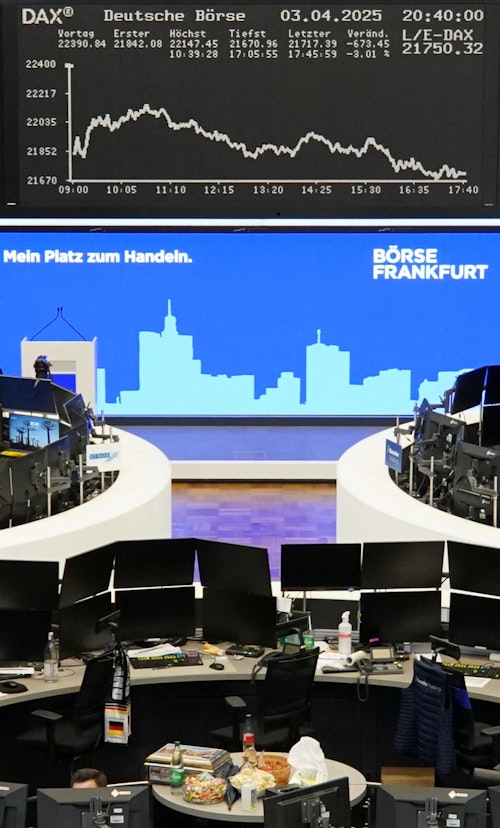
Global stock markets reacted negatively to the new tariffs:
-
S&P 500: Fell 5.7%, closing at $505.28
-
Dow Jones: Dropped 5.4%, ending at $383.22
-
Nasdaq: Declined 6.1%, closing at $422.67
-
Gold prices: Also dropped 2.2%, finishing at $279.72, signaling investor unease
6. Conclusion
The escalating US-China trade war is exerting wide-reaching effects on the global economy, impacting various industries and financial markets. Close monitoring of developments and responses from stakeholders is crucial for adjusting business strategies in this volatile environment.
- t.me/finance_solutes
- Website: https://finance-solutes.com
- Hotline: +1 929 5636 439 ( Hotline )
- 26 Broadway, Suite 934, New York, 10004, US
