
 XM
XM Bybit
Bybit Binance
 Robinhood
 Webull
 IC Markets
 Pepperstone
 OKX
OKX Vantage
 VT Markets
 BingX
BingX Gate.io
 Kucoin
 MEXC
MEXC Exness
 Bitget
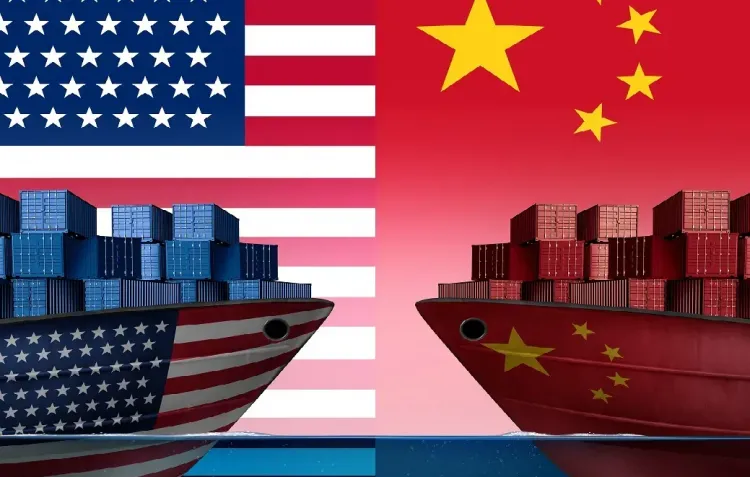
The global market took a sharp dive following China’s announcement of a 34% retaliatory tariff on all U.S. imports, escalating tensions in the ongoing trade war between the two largest economies. The U.S. stock market, already reeling from the escalating trade tensions, witnessed substantial losses, while oil prices plummeted amid global recession fears. U.S. President Donald Trump responded by reaffirming his unwavering stance and accusing Beijing of fear.
China’s Retaliatory Tariff: A Market Shocker
On Friday, China announced that, starting April 10, it would impose a 34% tariff on all U.S. goods, a direct retaliation to President Trump’s recent tariff hikes. This move is part of an ongoing back-and-forth trade war that has intensified since the previous round of U.S. tariffs. The tariff announcement contributed to a significant downturn in global markets, with the S&P 500 falling 4.8% and the Stoxx 600 in Europe dropping 5.1%, the largest one-day decline since 2020. Brent crude oil prices also saw a sharp decrease, dropping 6.9% to $65.33 per barrel.
Trump’s Defiant Stance: ‘They Are Scared’
Despite the growing concerns over the trade war, President Trump maintained his hardline approach, stating on Truth Social that China was “scared” and that he would never back down from his policies. His rhetoric suggested that the U.S. was on the brink of securing significant financial gains, declaring, “This is a great time to get rich, richer than ever before!”

Trump’s tariff increases have already led to an average U.S. tariff on Chinese goods rising to 76%, according to analysis from the Peterson Institute for International Economics. This represents a significant escalation compared to the 60% threat Trump made during his election campaign last year.
The Trade War Impact on U.S. Exports and Chinese Economy
China’s retaliatory tariffs have had a profound impact on U.S. exports, particularly agricultural products like soybeans, wheat, and corn. Moreover, China’s actions could have severe implications for U.S. exports of pharmaceuticals, crude oil, and liquefied natural gas. Meanwhile, China, facing its own economic challenges, including a real estate downturn and deflation, has now escalated its tariffs to around 50% on U.S. imports, marking a considerable rise.
China’s Response: Economic Tactics and Global Repercussions
China’s countermeasures also include restrictions on rare earth exports and investigations into U.S. companies operating in China, such as DuPont. The escalating trade tensions come at a sensitive time for Chinese President Xi Jinping, who has relied on exports to help navigate economic difficulties. Analysts have pointed out that these new tariffs are a calculated effort to position China for high-level negotiations with Washington.
Global Markets React: A Broad Decline
The impact of these tariffs has reverberated across global markets. European stocks saw significant losses, with the FTSE 100 dropping by 5%, and Germany’s DAX falling 4.7%. Investors, seeking safer options, flocked to U.S. Treasury bonds, driving the yield on 10-year bonds down to 3.93%. As the global economy grapples with this trade war, the uncertainty surrounding the situation continues to affect investor sentiment.

Conclusion
The imposition of a 34% tariff by China marks a significant escalation in the ongoing trade war between the U.S. and China, causing major disruptions in global markets. As President Trump stands firm in his stance, the world watches closely, with potential repercussions for international trade and economic stability.
🔗 EXPLORE MORE LATEST NEWS RIGHT HERE!
- Forex: Get the latest trends and effective trading strategies
- Crypto: Stay updated on the hottest cryptocurrency market news
- Stock & Commodities: Discover potential investment opportunities
- Trading Brokers: Choose reliable brokers for your trades
- Expert Advisor: Smart tools to assist your trading
- Finance News: 24/7 updates on financial news
DON’T MISS OUT, CLICK AND READ NOW!
- t.me/finance_solutes
- Website: https://finance-solutes.com
- Hotline: +1 929 5636 439 ( Hotline )
- 26 Broadway, Suite 934, New York, 10004, US
