Global stocks saw a dramatic decline as President Donald Trump’s administration hinted at maintaining comprehensive tariffs despite concerns that they could lead to a global economic recession. This drop sent shockwaves through the Asian markets and U.S. futures, marking one of the most significant sell-offs since the pandemic.
Asian Stocks Plummet Following U.S. Futures Decline
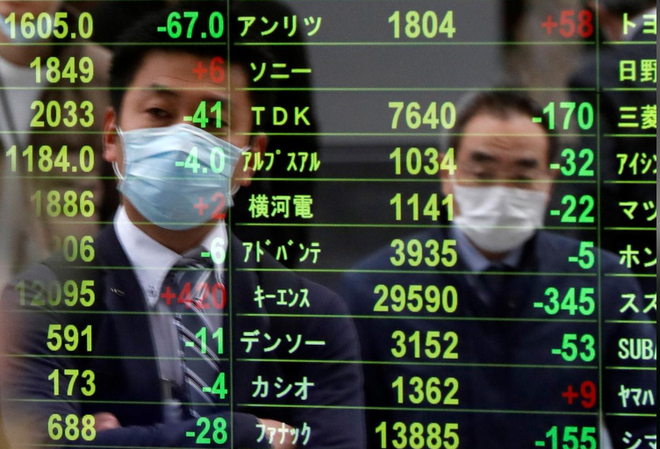
Asian stocks experienced heavy losses, with major indices such as Hong Kong’s Hang Seng dropping by more than 10% and China’s CSI 300 falling by 5.8%. In Japan, the Topix index fell by 6.5%, after reaching a staggering decline of 9.6%. The Nikkei 225 also suffered a significant drop of 6.3%. Australia’s S&P/ASX 200 and South Korea’s Kospi both plunged more than 4%.
This decline comes on the heels of a sharp drop in the S&P 500, which erased over $5 trillion in value on Thursday and Friday, marking the worst week for Wall Street stocks since the COVID-19 pandemic in 2020.
Trump’s Tariffs Trigger Fears of Global Recession
Trump’s reversal of global trade norms by implementing high tariffs on U.S. imports has raised widespread concerns about the trajectory of the global economy. China retaliated with a 34% tariff on U.S. goods, exacerbating trade tensions. The collapse in the commodity markets reflected broader economic fears, with U.S. oil prices (West Texas Intermediate) dropping by 3.4% to $59.80 per barrel, while Brent crude fell to $63.35.
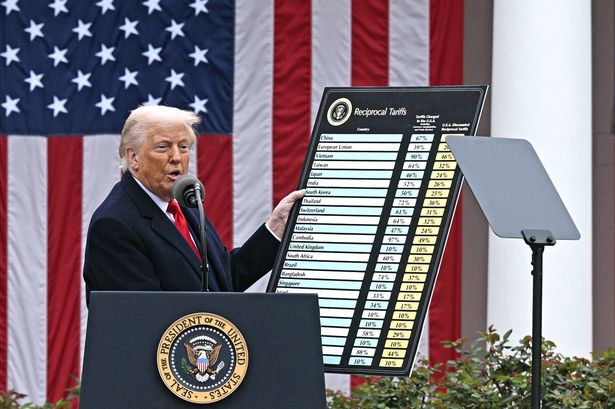
Base metals, viewed as indicators of industrial growth, also took a hit, with LME copper plummeting more than 7% to $8,690 per ton. Even Bitcoin saw a minor dip of 0.8%, dropping to $78,198 per token.
Market Reactions and Global Impact
The volatility triggered massive sell-offs, particularly in Japan, where some stocks saw halted trading due to excessive sell orders. Toyota shares fell nearly 7%, while Nintendo dropped 9.6% after it delayed orders for the new Switch 2 gaming console due to tariff announcements. Meanwhile, SoftBank and MUFG, two major Japanese firms, experienced declines of 12.7% and 15%, respectively.
Jason Lui, Chief Strategist for BNP Paribas, noted that the sell-off was a result of asset managers unwinding their positions, especially foreign investments in Japanese banks and financial companies. The market’s future remains uncertain as investors brace for more volatility.
Trump’s Firm Stance on Tariffs
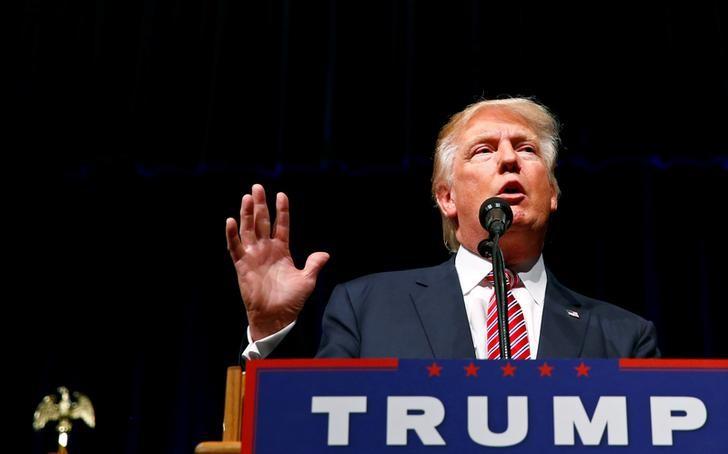
Despite the market turmoil, Trump made it clear he has no intention of backing down on his tariff policies. In a post on Truth Social, he reiterated that tariffs were essential to address the U.S.’s significant trade deficit with China and the European Union. When asked about the market drop, Trump remained resolute, stating, “sometimes you have to take medicine to cure a problem.”
U.S. Treasury Secretary Scott Bessent also defended the administration’s position, downplaying short-term market reactions. Meanwhile, Federal Reserve Chairman Jay Powell warned that these tariffs would lead to higher inflation and slower economic growth.
Conclusion
As global markets reel from the economic implications of Trump’s tariffs, uncertainty looms over the future of international trade and investment. With the situation evolving, investors are left in a delicate balancing act, watching for any signs that might signal a recovery or deeper recession. Only time will tell how long the global economy will feel the ripples of this trade conflict.
🔗 EXPLORE MORE LATEST NEWS RIGHT HERE!
DON’T MISS OUT, CLICK AND READ NOW!

 XM
XM Bybit
Bybit Binance
 Robinhood
 Webull
 IC Markets
 Pepperstone
 OKX
OKX Vantage
 VT Markets
 BingX
BingX Gate.io
 Kucoin
 MEXC
MEXC Exness
 Bitget
