
 XM
XM Bybit
Bybit Binance
 Robinhood
 Webull
 IC Markets
 Pepperstone
 OKX
OKX Vantage
 VT Markets
 BingX
BingX Gate.io
 Kucoin
 MEXC
MEXC Exness
 Bitget
Dubbed the “Ethereum of China,” NEO COIN is a cryptocurrency created with the goal of transforming the traditional economy and ushering in a new era of blockchain in the country. So, what exactly is NEO? What are the standout features of the NEO project? And what is its potential for future growth?
Let’s dive into the details with Finanece Solutes in the article below.
Stay tuned!
1. OVERVIEW OF THE NEO PROJECT FOR INVESTORS
NEO (formerly known as AntShares) is a blockchain project and also the first open-source cryptocurrency developed in China—the world’s most populous country. It was launched with the goal of building a digital economy on a decentralized network, based on three key elements: digital assets, digital identity, and smart contracts.
Many investors refer to NEO as the “Ethereum of China.” Launched in 2014, the project’s main mission is to reinvent the way commerce is conducted and to drive technological advancement in the future. Therefore, it can be understood that the main goal of the NEO project is not to replace China’s fiat currency, but rather to support the country’s economy in transitioning into the blockchain era.
1.1. The history of NEO Coin
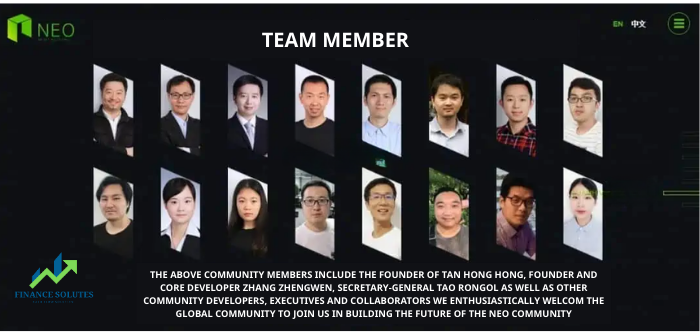
The project was developed by Erik Zhang and Da Hongfei, who previously worked at OnChain, a company focused on blockchain research. Later, they decided to launch their own blockchain in 2014.
The history of the NEO project has gone through several major milestones:
- In 2014: Zhang and Hongfei initiated the project under the name AntShares.
- August 2016: The project entered the market through an Initial Coin Offering (ICO), which was a success and raised over $4.5 million USD.
- June 2017: AntShares officially rebranded to NEO.
- March 2018: The NEO development team began issuing voting tokens aimed at network governance.
1.2. How the NEO Coin Blockchain Works
The core foundation of most cryptocurrencies today is the consensus algorithm. However, many commonly used algorithms tend to consume large amounts of energy and result in lower transaction speeds compared to others.
In contrast, NEO has created its own unique consensus protocol called dBFT (Delegated Byzantine Fault Tolerance).
Here’s how the NEO network operates:
- NEO holders are granted voting rights. These votes are used to select Consensus Nodes, who play a critical role in managing the blockchain.
- Token holders send their transactions to the Consensus Nodes, which then group them into blocks.
- One Consensus Node is randomly selected to validate the current block and then broadcasts it to all other Consensus Nodes in the network.
- If at least 66% of the nodes agree, the block is finalized. If consensus is not reached, another node is selected to propose a new block, and the process restarts.
- To become a Consensus Node, a participant must own a certain amount of GAS tokens. If a node fails to perform its duties properly, the community has the right to vote them out and elect a replacement.
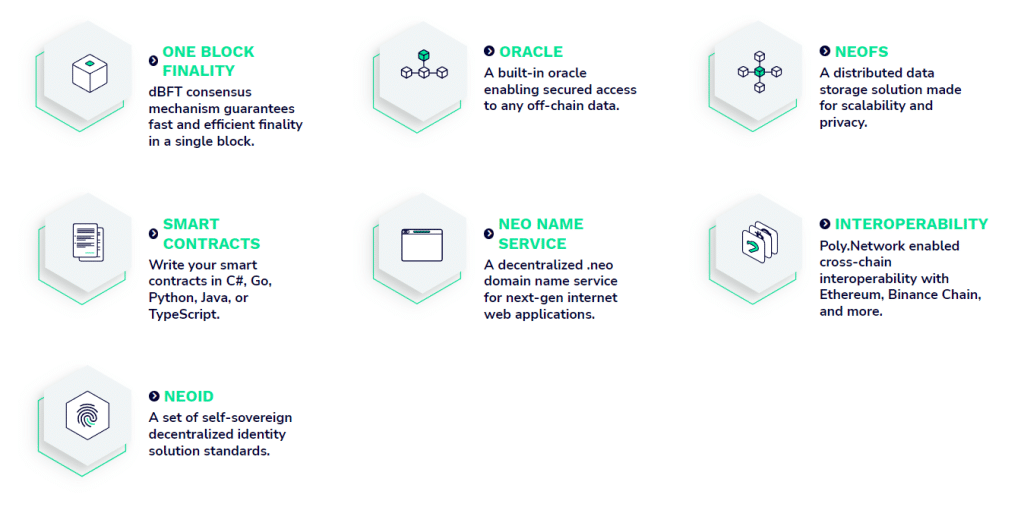
The NEO project’s Smart Contracts support many popular programming languages via its NEOVM (Neo Virtual Machine) compiler, including Java, Go, Python, Kotlin, and more.
1.3. Key Features of the NEO Coin Project
Here are some standout features that set the NEO project apart:
- High Reliability: NEO uses the dBFT consensus algorithm, which provides strong protection against network attacks, ensuring system stability and security.
- High Speed: Thanks to the NEOVM virtual machine, the platform allows users to quickly deploy even the most complex smart contracts. Theoretically, NEO can handle up to 10,000 transactions per second (TPS).
- Simple Mining Process: Unlike traditional cryptocurrency mining, NEO mining does not rely on the miner’s technical resources, making it more accessible to a broader user base.
- Smart Contract Flexibility: Unlike Ethereum, which requires knowledge of its own language (Solidity), NEO allows developers to write smart contracts in familiar languages such as VB.Net, Microsoft .Net, Go, Java, F#, C#, Kotlin, and Python.
- No Transaction Fees (in NEO): While there are still operational costs, these are charged in GAS tokens rather than the NEO token itself, offering a more balanced and efficient fee structure.
2. DETAILED INFORMATION ABOUT TOKENS IN THE NEO ECOSYSTEM
The NEO Coin ecosystem has 2 native Tokens: NEO and NeoGas (GAS). In which:

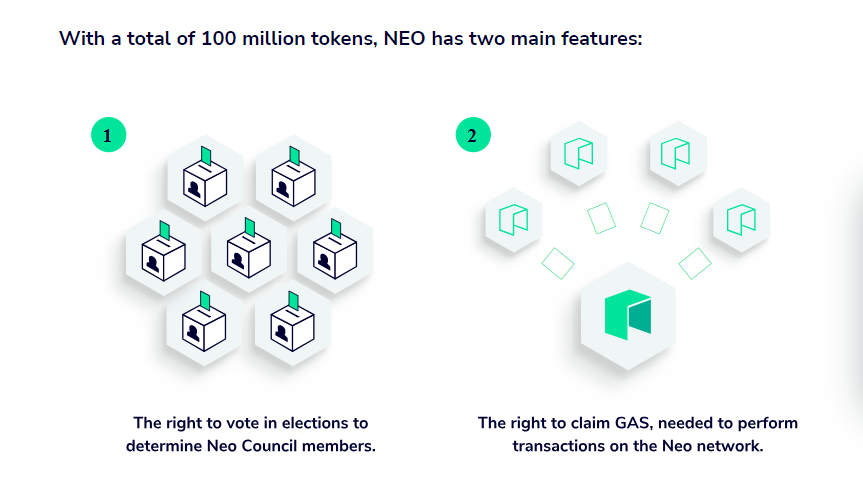
- NEO (formerly known as Antshares – ANS): Used for voting and governance on the network.
- GAS Token (formerly known as Antcoin – ANC): Acts as the fuel of the NEO Blockchain, used to manage and allocate network resources.
2.1. Basic Information about NEO Crypto Coin
- Token Name: NEO
- Symbol: NEO
- Blockchain: NEO Blockchain
- Standard: N/A
- Contract Address: 602c79718b16e442de58778e148d0b1084e3b2dffd5de6b7b16cee7969282de7
- Token Type: Native Token
- Total Supply: 100,000,000 NEO
2.2. NEO Coin Allocation
With a total supply of 100 million tokens, the allocation is as follows:
- 50 million NEO were distributed through the ICO (Initial Coin Offering).
- The remaining 50 million NEO were locked until October 2017. This portion is allocated for ecosystem development, including support for new projects, ongoing platform development, maintenance, and operational expenses.
The plan for the locked 50 million NEO includes:
- t.me/finance_solutes
- Website: https://finance-solutes.com
- Hotline: +1 929 5636 439 ( Hotline )
- 26 Broadway, Suite 934, New York, 10004, US
