
 XM
XM Bybit
Bybit Binance
 Robinhood
 Webull
 IC Markets
 Pepperstone
 OKX
OKX Vantage
 VT Markets
 BingX
BingX Gate.io
 Kucoin
 MEXC
MEXC Exness
 Bitget
In fact, many investors often compare OTC stocks with those on the Upcom exchange and have their own opinions about these two markets.
So, what are the OTC and Upcom exchanges? What are the fundamental differences between OTC and Upcom stocks in securities investment? Let’s explore this in today’s trading knowledge session with Finance Solutes.
Let’s get started!!!
1. OTC EXCHANGE AND UPCOM EXCHANGE
OTC stocks are often compared to those on the Upcom exchange. Many investors have their own evaluations of OTC and Upcom. So, what are the differences between the OTC and Upcom exchanges? Let’s dive into the details with TradaFX in the article below.
1.1. What is the OTC Exchange?
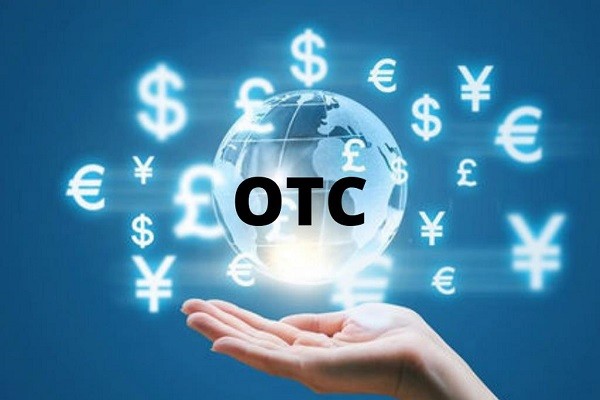
OTC (Over The Counter) refers to over-the-counter or decentralized trading. The OTC market facilitates securities transactions through trading platforms similar to listed stock exchanges. Securities on this market are priced and traded based on agreements between the involved parties.
OTC market securities often have lower trading volumes compared to listed transactions on official stock exchanges. Moreover, they are considered riskier due to the fact that pricing is entirely based on mutual agreements between parties. As a result, stock price fluctuations on the OTC market are highly unpredictable.
The OTC market operates spontaneously and is difficult for the stock exchange authorities to manage. Additionally, new investors often find it challenging to buy and sell, typically having to go through brokers.
1.1.1. Where to buy OTC Stocks?
Holders who want to sell their stocks need to check price information from brokers or continuously updated stock quote websites.
After referencing stock price information, the stock seller will contact the buyer to negotiate the price. During the negotiation process to finalize the price, both parties also need to agree on aspects such as: transaction time, location, and payment methods, etc.
As mentioned, OTC stock prices are constantly fluctuating; therefore, the buyer should place a deposit before the transfer. This helps ensure a more secure transaction, even if the price changes afterward.
1.1.2. Comparison between stock exchange and OTC Market
Below is a comparison table between the stock exchange and the OTC market:
| OTC MARKET | STOCK EXCHANGE MARKET |
|---|---|
| Governed by the Vietnam Securities Law | Governed by the Vietnam Securities Law |
| Operates through digital platforms | Transactions centralized at trading floors |
| Prices are mutually agreed upon | Prices are officially listed on the exchange |
| Reference prices vary by market platform | Uniform prices across all platforms at the same time |
| Higher transaction risk | Lower transaction risk |
| Managed by the securities depository center or issuing company | Managed by the stock exchange |
| Flexible and diverse payment methods | T+2 (Cash) or T+3 (Securities) settlement |
Comparison table between OTC and Upcom markets
1.2.3. Vietnam’s OTC Market
In recent years, OTC stocks have remained one of the attractive investment channels, rivaling those in the centralized market.
According to statistics, Vietnam’s economy has over 1 million enterprises of all sizes; however, only about 1% of them are listed on centralized exchanges. Therefore, the OTC market provides a diverse investment opportunity for investors, allowing you to explore and trade thousands of OTC stock codes at attractive prices. Currently, OTC market exchanges operated by brokerage firms in Vietnam specialize in offering transactions for unlisted company stocks.
Furthermore, the OTC market isn’t limited to stocks; you can also use it to trade foreign exchange, indices, crypto, and other derivatives via international brokers.
1.2. What is the UPCOM Exchange?
UPCOM (Unlisted Public Company Market) refers to the market for unlisted public companies.
The UPCOM exchange—also known as the UPCOM Stock Exchange or UPCOM Market—is a trading platform for preparatory companies that are not yet officially listed on the Hanoi Stock Exchange (HNX) or Ho Chi Minh Stock Exchange (HOSE).
Stocks on this exchange are usually from small and medium-sized companies. This means they do not yet meet the criteria to be listed on larger exchanges like HNX or HOSE. As such, their transparency and quality are generally lower compared to stocks on HOSE and HNX.
1.2.1. Where is the Upcom Exchange located?
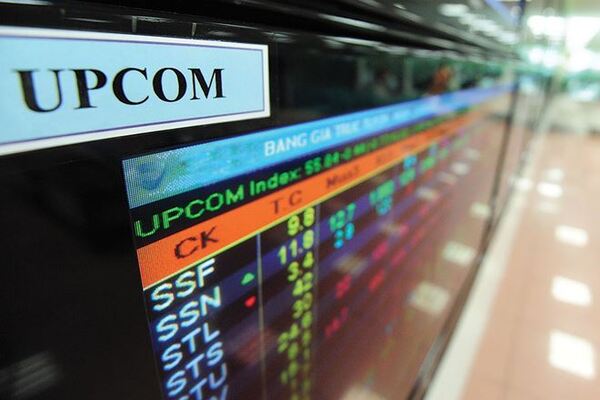
This exchange is managed and operated by the Hanoi Stock Exchange.
1.2.2. How to buy stocks on the Upcom Exchange
So, how do you buy and sell stocks on the Upcom trading platform?
The answer is: trading on the Upcom Exchange is similar to trading stocks on the HNX or HOSE. You simply open the stock price board, then place buy/sell orders through continuous matching or negotiated transactions.
1.2.3. Differences between Upcom, HOSE, HNX, and the Over-The-Counter (OTC) market
As previously mentioned, the OTC market operates in a decentralized manner, meaning that traders must meet in person to negotiate and make transactions. Additionally, the OTC market has no authority acting as an arbitrator to protect both parties, which means it carries a high level of risk.
In reality, companies that incur losses may be delisted from HOSE and HNX, and then get “downgraded” to the Upcom Exchange. This leads many investors to mistakenly assume that Upcom is a “junk stock” exchange.
Many stocks listed on Upcom have low trading volumes (low liquidity), and some stocks are barely traded at all.
1.2.4. Criteria for listing on the Upcom Exchange
According to Decision 108/2009/QĐ-BTC and Decision 108/2015/QĐ-BTC, companies wishing to register for trading on the Upcom Exchange must meet the following conditions:
- Public companies that do not qualify for listing must register for trading on Upcom.
- Public companies that qualify for listing but are not yet listed must register for trading on Upcom.
- Public companies that have been delisted but still meet the criteria of a public company (including cases of mergers, stock swaps, etc.).
- Securities must be deposited at the Vietnam Securities Depository Center.
- The company must have a securities company commit to providing support.
The application dossier to register for trading on the Upcom Exchange includes:
- A securities trading registration form for the Stock Exchange Center.
- A commitment support contract using the form provided by the Stock Exchange Center.
- A securities depository certificate issued by the Stock Exchange Center.
During this registration process, all steps are prepared by the company itself, and it is fully responsible for the accuracy of the information provided. No third party will participate in verifying the company’s information. However, the company’s financial report from the previous year will be audited.
After the registration dossier is submitted, the Hanoi Stock Exchange will decide whether or not to approve the company’s listing on Upcom.
1.2.5. Who is the Upcom Exchange for?
This exchange is open to all types of participants, from investors to traders. However, most participants on this exchange are investors. Investors on Upcom tend to hold stocks for long periods and earn profits based on the long-term growth of the company.
As such, companies listed on this exchange tend to be much smaller in scale compared to those listed on HOSE or HNX.
If you’re a long-term investor, Upcom can be an opportunity to find undervalued stocks with long-term growth potential.
1.2.6. Good stock codes on the Upcom Exchange
With thousands of stocks listed on this exchange, choosing good stock codes is not easy. Below, Finance Solutes highlights some of the largest-cap stocks on the UPCOM Exchange:
- Vietnam Airport Corporation: Code A
- Masan High-Tech Materials Joint Stock Company – Code: MSR
- Masan MeatLife JSC – Code: MML
- An Binh Bank stock – Code: ABB
- Viet Capital Bank stock – Code: BV
2. COMPARISON BETWEEN OTC AND UPCOM EXCHANGES
OTC stocks are often compared to Upcom stocks. Many investors have their own assessments of the OTC and Upcom markets. So, what are the differences between OTC and Upcom?
2.1. Stock Trading
Investors trading on the OTC market have to search for information through forums, groups, or securities brokers. In contrast, trading stocks on the Upcom exchange simply requires placing buy or sell orders. Therefore, finding stocks on the OTC market is considered more difficult than on the Upcom exchange.
2.2. Stock Pricing and Listing
Stock prices on the OTC market are not publicly disclosed but are traded based on negotiations between two parties. Naturally, the buyer always wants to buy at a low price, while the seller wants to sell at a high price. As a result, OTC transactions often suffer from incorrect stock pricing.
On Upcom, stock prices are publicly listed and transparent. When trading on this exchange, you can avoid buying stocks at the wrong price. Most stocks on Upcom fluctuate based on the laws of supply and demand.
2.3. Transaction Risks
Securities on the OTC market are not regulated by any authority; prices and payment methods are negotiated directly between buyers and sellers. This means that if any issue arises during a transaction, investors will not be protected.
As previously mentioned, the Upcom exchange is managed by the Hanoi Stock Exchange (HNX) in a centralized manner. All securities transactions must follow the regulations listed on the exchange. Therefore, risks on the Upcom exchange are lower compared to the OTC market.
2.4. Profits for Investors
The OTC market is often expected to yield higher profits than the Upcom exchange. However, this is not necessarily true.
In general, profit levels entirely depend on the investor’s capabilities, and it cannot be concluded that OTC stocks are always better than Upcom stocks.
3. SUMMARY
Through today’s article, Finance Solutes has introduced you to what the OTC and Upcom exchanges are, while also highlighting the fundamental differences between these two types of trading platforms. We hope that the information provided will be helpful for you in understanding different exchanges for stock investment.
Wishing you success!!
- t.me/finance_solutes
- Website: https://finance-solutes.com
- Hotline: +1 929 5636 439 ( Hotline )
- 26 Broadway, Suite 934, New York, 10004, US
