
 XM
XM Bybit
Bybit Binance
 Robinhood
 Webull
 IC Markets
 Pepperstone
 OKX
OKX Vantage
 VT Markets
 BingX
BingX Gate.io
 Kucoin
 MEXC
MEXC Exness
 Bitget
1. SCALE OF THE FOREIGN EXCHANGE MARKET
The scale and liquidity of Forex make it an ideal trading market. Its liquidity allows traders to easily sell and buy currencies without delays. This results in tight forex spreads for favorable quotes. Low costs, broad access to various markets, and flexible trading hours make forex the most frequently traded market in the world. This article will clarify the scale of the forex market, helping you gain a general understanding of the mechanisms behind it, while also providing a solid foundation for both new and experienced traders.
1.1. How big is the foreign ưxchange market and what is it worth?
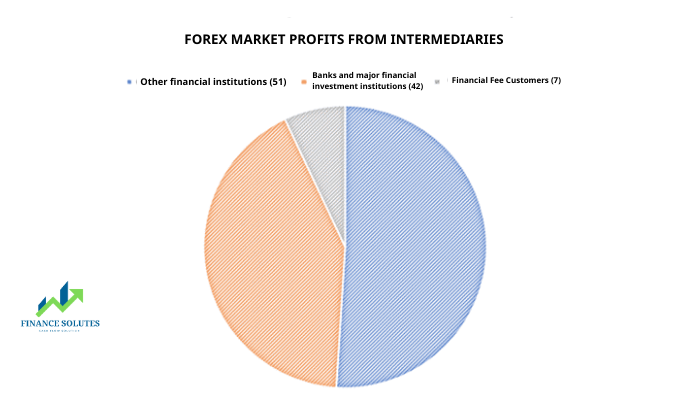
According to the Bank for International Settlements’ triennial report in 2016, the average daily turnover of the forex market reached 5.1 trillion USD. This figure was a decrease compared to the previous report in 2013, which was 5.4 trillion USD. The majority of profits from forex trading come from a few developed countries. The chart below illustrates the main global trading centers, calculated as a percentage of total average turnover.
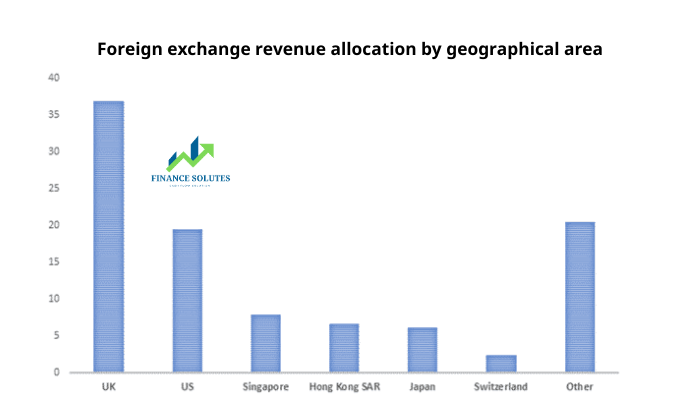
From a trader’s perspective, the large capitalization of the Forex market makes it less volatile; therefore, even the largest traders cannot influence the market price.
Smaller markets can easily be influenced by large institutions/traders; however, in the forex market, such impacts are relatively limited.
The forex market consists of several key participants. The banking system has the greatest influence. The interbank market holds the largest volume of forex transactions, including trading between banks, trading with clients, and transactions generated by the banks’ own trading desks. U.S. banks control the majority of this market. Central banks, investment managers, hedge funds, corporations, and finally, retail traders make up the rest of the market. Approximately 90% of this volume is generated by currency speculators who capitalize on intraday price movements.
As a retail trader, understanding the immense scale of the forex market, as well as how its participants interact with each other, can help you become more successful in your trading.
1.2. Forex Trading Volume
Traders from other markets are drawn to Forex because of its high liquidity. Liquidity is crucial as it allows traders to easily enter and exit positions 24 hours a day, five days a week.
It enables participation with larger trade volumes, and even exiting the market will not cause significant price fluctuations as it would in less liquid markets. This means you will never encounter a situation where you cannot enter the market simply because of a shortage of buyers. This liquidity can vary from one trading session to another and also from one currency pair to another.
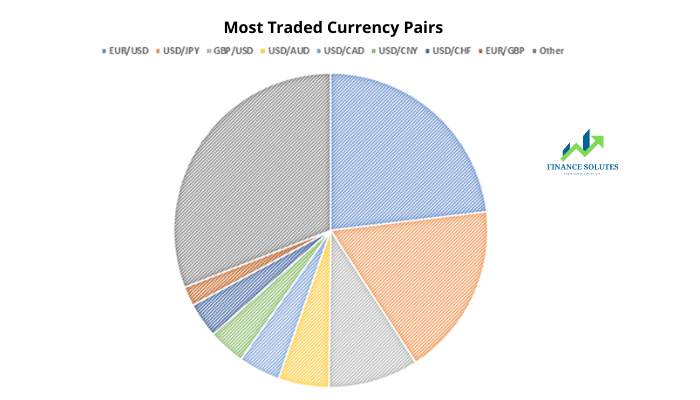
EUR/USD and USD/JPY are the two most traded currency pairs. They account for about 41% of all annual forex transactions. This is a large percentage considering the overall size of the Forex market. Another surprising fact is that most of the currency pairs shown in the chart below involve the USD.
The U.S. dollar accounts for 85% of forex trading volume. With nearly 40% of trading volume, the Euro ranks second. The Japanese Yen comes third, accounting for nearly 20%. With most of the trading volume concentrated in the U.S. dollar, Euro, and Yen, traders can focus their attention on a few major pairs. Additionally, higher liquidity is believed to be beneficial for long, well-defined trends, which respond well to technical analysis and charting methods.
1.3. How to Gain an Advantage in the Forex Market
Traders looking to take advantage of the scale and sheer volume of the forex market need to consider or combine the appropriate analysis methods that suit their trading style. At a basic level, traders need to understand the following components to trade forex:
1.3.1. Fundamental Analysis
Since currencies are traded in the market, you can consider supply and demand. This is called fundamental analysis. Interest rates, economic growth, employment, inflation, and political risk are factors that can affect the supply and demand of currencies.
1.3.2. Technical Analysis
Charts can tell you a lot, and most traders rely on them to make trading decisions. Charts can indicate trends and key price points at which traders may enter or exit the market, if you know how to read them.
1.3.3. Risk Management
An essential part of trading. All traders need to know how to measure their potential risk and reward, and use it to evaluate entry points, exit points, and trade volume. Forex traders use various forms of risk management and performance factors to create a strategy that makes sense to them.
Once traders have sufficient understanding of the factors mentioned above, they will focus on specializing and honing their skills by staying updated on political news, monetary/fiscal policy, etc., allowing them to make informed decisions based on available information. A technical trader might use various indicators/tools and execute trades based on technical signals. Trading psychology can also provide forex traders with internal news about potential reversals, entry, and exit points in the market.
2. LIQUIDITY OF THE FOREX MARKET
In the section on forex trading volume, I briefly mentioned its liquidity. So, what exactly is liquidity in forex? How important is it in this market?
Liquidity in the Forex market allows for easy trading, making the market popular among traders. However, certain factors in Forex need to be reconsidered for liquidity purposes. This article will explain the concept of Forex liquidity as well as liquidity risks, ultimately providing an overall understanding of how liquidity affects trading.
2.1. What is Liquidity and Why is it Important?
Liquidity in Forex is defined as the ability of currency pairs to be traded (bought/sold) as needed. When you trade major currency pairs, you are trading in a market with extremely high liquidity. However, you are trading based on the liquidity available from the financial institution that helps you enter or exit the trade (currency pair) you choose.
Not all currency pairs are liquid. In fact, currencies tend to change their liquidity levels based on whether they are major, minor, or exotic pairs (including currencies from emerging markets). Liquidity decreases as traders move from major currency pairs to minor pairs and eventually to exotic currency pairs.
2.1.1. High Liquidity
High liquidity in Forex refers to a currency pair that can be bought/sold in large quantities without significant differences in exchange rates (price). For example: Major currency pairs such as EUR/USD.
2.1.2. Other Major Pairs (High Liquidity) to Know:
-
GBP/USD
-
USD/JPY
-
EUR/GBP
-
AUD/USD
-
USD/CAD
-
USD/CHF
-
NZD/USD
2.1.3. Low Liquidity:
Low liquidity in Forex refers to a currency pair that cannot be bought/sold in large quantities without a significant difference in its exchange rate. For example: Exotic currency pairs like PLN/JPY.
2.2. 3 Signs to Identify High and Low Liquidity in Forex
From a trader’s perspective, a market with low liquidity will have chaotic fluctuations or gaps, where the buy or sell volumes at any given moment can be very disparate. A high-liquidity market is often known as a deep market; or a flat market where price movements are smoother. Most traders need a market with high liquidity, because it’s very difficult to manage risk if you go in the wrong direction in a large market movement with low liquidity.
Here are the signs to recognize them:
2.2.1. Gaps When Trading
Gaps in Forex trading are different from those in other markets. However, price differences can occur in Forex if major interest rate announcements or impactful news releases are made contrary to expectations.
Gaps can start to appear during the week on Sunday afternoons in the U.S. If there is an announcement over the weekend, the gap in Forex is typically less than 0.5% of the value of a currency.
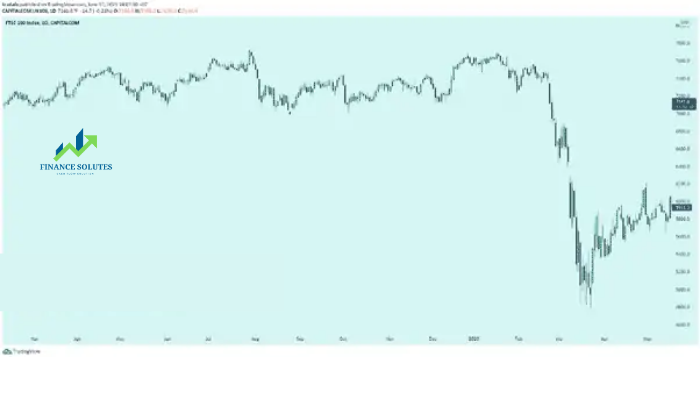
The chart below demonstrates the liquidity differences between equity markets and the Forex market, marked by gaps.
- Equity markets tend to experience gaps: FTSE 100 Index.
- Forex market shows little/no gaps:
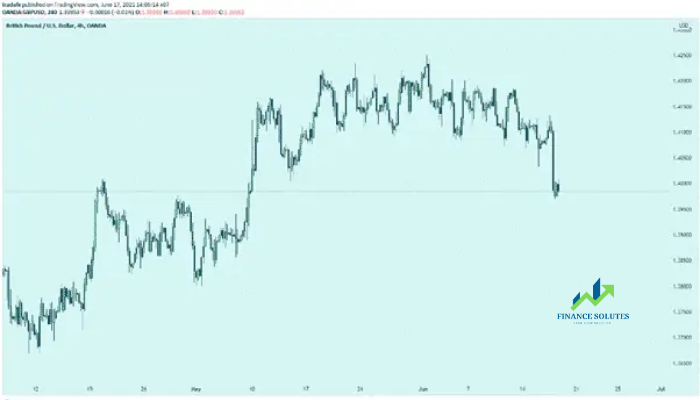
A 24-hour trading market like the Forex market is considered to have higher liquidity; or simply fewer gaps due to the continuous nature of this market. This allows traders to enter and exit the market based on their own decisions. A market that only trades for a small part of the day, such as the US stock market or Future Exchange, may experience price fluctuations if news appears overnight that goes against the crowd’s expectations.
2.2.2. Forex Liquidity Indicators
Brokers often provide trading volumes on charts where traders can assess market liquidity. Forex liquidity indicators can be understood through analyzing volume bars on the chart.
Each volume bar represents the trading volume over a certain period, thus providing traders with a liquidity estimate. It’s important to remember that most brokers only consider liquidity data from their own platform, not the entire Forex market. However, using a broker’s liquidity as a measure can reflect the retail market, depending on the size of the broker.
2.2.3. Different Liquidity at Different Times of the Day
Short-term traders or scalpers should be aware that Forex liquidity changes throughout the trading day. There are quieter hours, such as the Asian session, where the market is often range-bound, meaning support and resistance levels are more likely to hold from a speculative standpoint. Major market sessions such as the London and US sessions tend to break out more, with higher volatility during the day.
The time of day when you can observe the biggest fluctuations is the US trading session, as it overlaps with the European/London session, which alone accounts for over 50% of global daily trading volume. The US trading session accounts for nearly 20%, and during the afternoon in the US session, you will see a significant reduction in volatility unless the Federal Open Market Committee (FOMC) releases an unexpected announcement, though this happens only a few times a year.
2.3. Risks and Opportunities
The relationship between risk and opportunity in the financial markets is almost always proportional, so understanding the risks in a trade should always be taken into consideration.
A simple example of liquidity risk in the Forex market is the Swiss Franc crisis in 2015. The Swiss National Bank announced that it would no longer peg the Swiss Franc to the Euro, causing a disruption in the interbank market as it could no longer price the market. This led to brokers being unable to offer liquidity in CHF. When interbank pricing (the backbone of Forex pricing) resumed, the EUR/USD exchange rate had drastically moved beyond previous levels. This event caused significant impacts on retail traders’ accounts who were trading CHF. While “black swan” events are rare, it doesn’t mean they never happen.
Retail traders need to manage liquidity risk by reducing their leverage or using guaranteed stop-loss points, where brokers are obligated to adhere to your stop prices.
Considering liquidity risk and profit options should not be overlooked. This should be integrated as part of a trader’s analysis process.
- t.me/finance_solutes
- Website: https://finance-solutes.com
- Hotline: +1 929 5636 439 ( Hotline )
- 26 Broadway, Suite 934, New York, 10004, US
