
 XM
XM Bybit
Bybit Binance
 Robinhood
 Webull
 IC Markets
 Pepperstone
 OKX
OKX Vantage
 VT Markets
 BingX
BingX Gate.io
 Kucoin
 MEXC
MEXC Exness
 Bitget
One of the most frustrating experiences in Forex trading is getting caught in a false breakout trap. It often follows a perfect price action pattern where everything seems to be going your way. You place your pending order, the market breaks out as expected. But before you can react, the market snaps back inside the previous pattern. Now, you’re facing the possibility of a loss.
Why does this happen? And is there a way to reduce the risk of encountering this pattern? How can you avoid false breakouts?
That’s exactly what you’re about to learn in this article. We’ll cover the characteristics of false breakouts, why they occur, and what you can do to protect yourself.
1. WHAT IS A FALSE BREAKOUT?
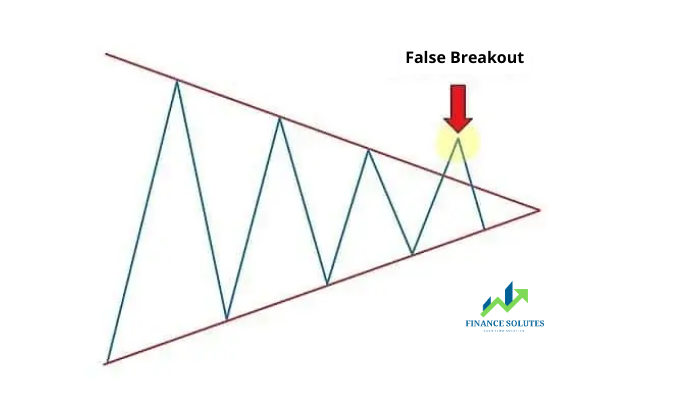
A false breakout, also known as a “failed breakout,” is a price movement beyond a support or resistance level that lacks the momentum needed to sustain direction. In other words, the market does not generate enough supply or demand to confirm the breakout of a key level.
Below is an illustration of a false breakout.
In the example above, the market formed a wedge pattern (either rising wedge or falling wedge). As the resistance and support lines converged, the market broke out of the pattern in an upward direction but failed to maintain enough bullish momentum to keep the price trading above the resistance level. In other words, the market lacked the demand necessary to push the price higher after the breakout occurred.
If you had entered the trade immediately after the market broke above the resistance level, you would have been caught in a false breakout. When you’re in a trade like this, you’re faced with two choices — stay in and “hope the price continues to rise,” or exit with a small loss. Neither option is particularly appealing.
To reduce the chances of this happening in the future, we need to add an extra condition to our forex trading plan.
2. HOW TO AVOID FALSE BREAKOUTS
I recently wrote a post about my breakout strategy in forex trading. In that lesson, I detailed a trading strategy that works effectively to capture the surge in volatility when the market breaks out of a confluence area.
The way to avoid false breakouts is to wait for the price to close below/above the respective support or resistance level. It’s not enough for the market to merely move past a key level — we need to see a close beyond that level to validate the setup.
Let’s compare the difference between the two types using the following daily chart of USD/JPY.
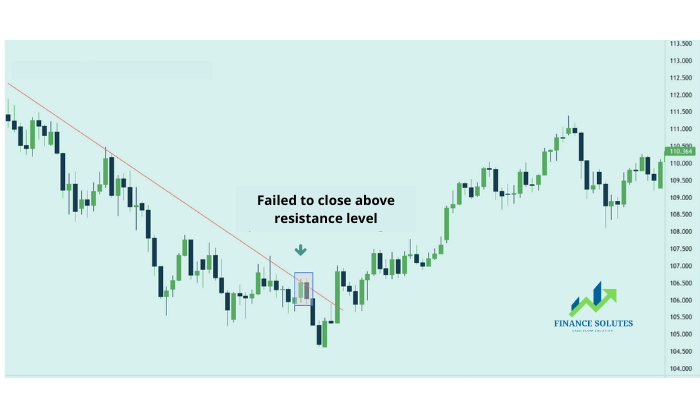
Note that on the first attempt to break through the resistance level, the market failed to maintain enough bullish momentum to close above it. This happened multiple times over a five-day period. Traders who simply placed a Buy Stop order above the resistance level likely didn’t hit their stop loss; at the very least, they didn’t have to worry until they saw the market moving as anticipated.
Traders who waited for a daily close above this resistance level enjoyed a solid gain from this trade. Just waiting for the price to close above the resistance gives confirmation of the breakout’s strength. It offers a higher probability for a successful trade setup.
2.1. What is the best iime frame?
This is the most important topic when it comes to reducing risk with the method of avoiding false breakouts. The technique we just learned works best on higher time frames. So, what are the best trading hours? As a general rule, anything above the 1-hour time frame works well.
Most of the breakouts I trade occur on the 4-hour and daily charts. Both of these time frames perform very well. However, I recommend using the daily time frame for beginners, because higher time frames tend to produce more reliable setups.
2.2. Learn Patience
At first, it may be challenging to wait several hours or even days to confirm a breakout. For most traders, the challenge stems from the fear of missing a trade. Have you ever felt this fear creeping into your mind? If so, remember that there are often plenty of opportunities to catch a breakout setup. In fact, the market will frequently retest the previous support/resistance level after a breakout, giving you a great opportunity to enter.
If you’re worried about missing a trade while waiting for the candle to close, it’s likely that your risk-to-reward ratio isn’t worth it. What I mean is: profit alone is not a reason to justify a trade setup. For example, it’s better to trade a 3R setup with a confirmed breakout than a 4R setup that leaves you anxious while waiting.
2.3. It All Comes Down to Probabilities
As a technical trader, you know that everything comes down to probabilities. The more factors you have in your favor in any given setup, the more likely it is to result in profit. When it comes to the breakout strategy in forex trading, the key factor is waiting for a close above or below a critical level. This is what validates the setup and helps you minimize the risk of false breakouts.
3. SUMMARY
Finance Solutes hopes this article has given you a way to improve your odds of success when trading breakouts in the Forex market. While there is no guaranteed way to avoid false breakouts completely, the information shared in this lesson will certainly help you reduce your risk.
Best practices for avoiding false breakouts:
- A false breakout, also known as a “failed breakout,” occurs when the market moves past support or resistance but lacks the momentum to sustain that direction.
- The best way to reduce the risk of false breakouts is to wait for a candle to close above or below the key level before considering an entry.
- The two best time frames to confirm breakouts are the 4-hour and daily charts.
- Waiting for a close above or below the key level is the best way to increase your success rate when trading breakout strategies in the Forex market.
- t.me/finance_solutes
- Website: https://finance-solutes.com
- Hotline: +1 929 5636 439 ( Hotline )
- 26 Broadway, Suite 934, New York, 10004, US
