
 XM
XM Bybit
Bybit Binance
 Robinhood
 Webull
 IC Markets
 Pepperstone
 OKX
OKX Vantage
 VT Markets
 BingX
BingX Gate.io
 Kucoin
 MEXC
MEXC Exness
 Bitget
Hang Seng Index – a Hong Kong stock market index. Hong Kong is considered one of the world’s leading financial centers. This has, to some extent, contributed to the vibrancy of the Hong Kong stock market.
Investors interested in this market often keep a close eye on the Hang Seng Index. Today’s forex knowledge article will explore the concept of the Hang Seng Index: What is the Hang Seng Index? Why should investors consider investing in the Hang Seng Index? And how to invest in the Hang Seng Index.
1. WHAT IS THE HANG SENG INDEX?
The Hang Seng Index (HSI), also known as the Hang Seng Index, is a stock market index that includes the 50 largest and most liquid companies listed on the Hong Kong Stock Exchange. The Hang Seng Index is often compared to the S&P 500 in the United States.
The Hang Seng Index is designed to reflect the overall performance of the market at any given time. Therefore, it provides international investors with a quick snapshot of the financial health of the Hong Kong stock market.
1.1. History of the Hang Seng Index
The Hang Seng Index was launched in November 1969. It was created by Mr. Ho Sin Hang – the chairman of Hang Seng Bank. His intention was to create a Hong Kong version of the Dow Jones Index.
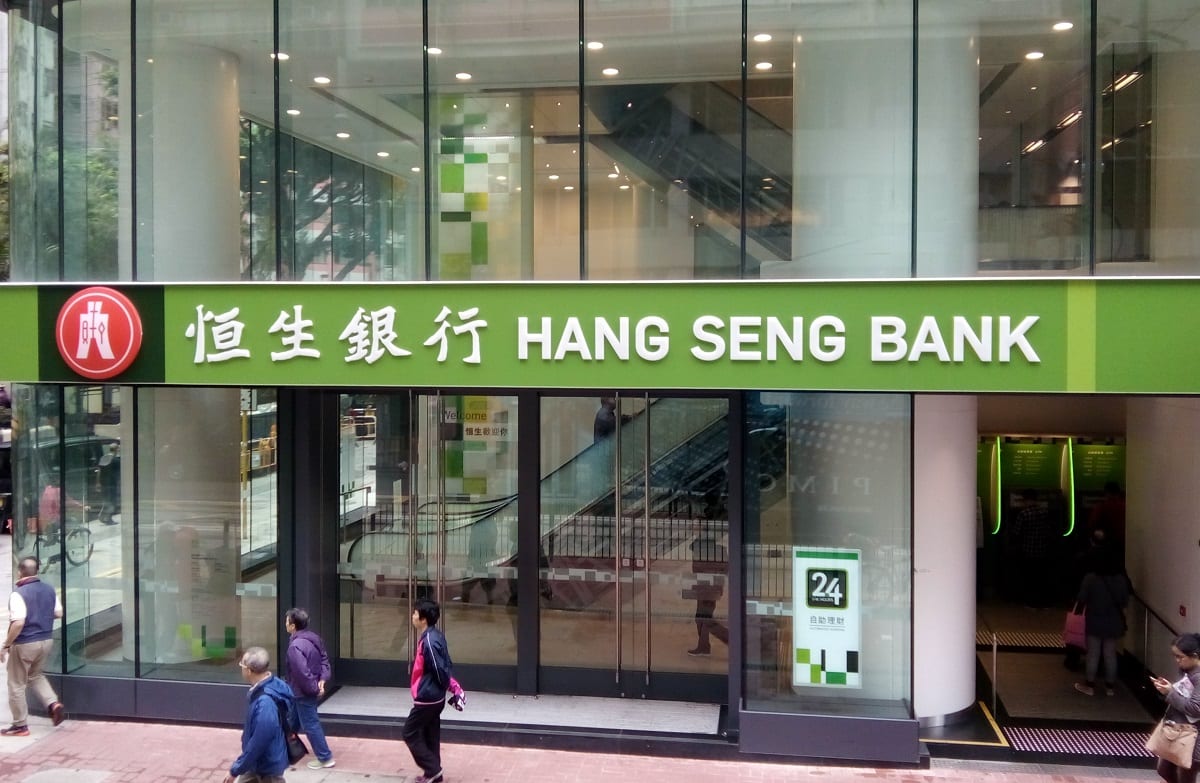
Although officially launched at the end of 1969, the index was calculated retroactively from 1965. Initially, its base value was set at 100 points, equivalent to the total value of the constituent stocks of the Hang Seng Index when the market closed at the end of July 1964.
In August 1967, the Hang Seng Index fell to its historical low of 58.61 points. The first time the Hang Seng Index crossed the 10,000-point mark was in December 1993.
It also surpassed the 30,000-point milestone for the first time in 2007. The highest historical level ever reached by this Hong Kong index was 33,223.58 points in January 2018. As of December 2020, the index was around 26,500 points. The highest annual return over the decade was seen in 2017 when the HSI Index rose by 35.99%, while the lowest was in 2011 when the Hang Seng dropped by 19.97%.
Today, this Hong Kong index is widely recognized globally and is often referred to as the “barometer” of the Hong Kong stock market.
1.2. Components of the Hang Seng Index
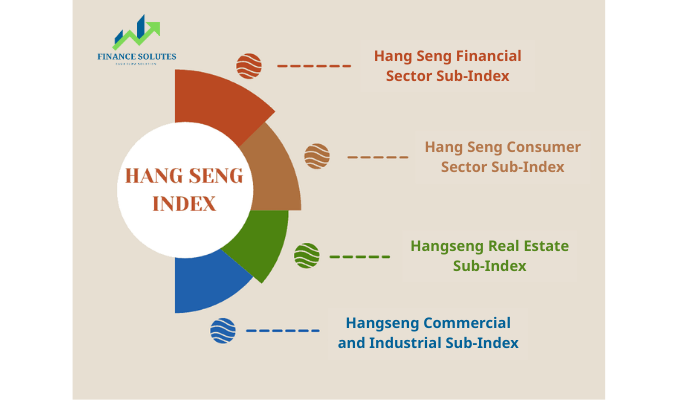
In 1985, four sub-indexes were created to make the Hang Seng Index more transparent. The constituent stocks are now categorized into four distinct sectors:
- Hang Seng Financials Sub-index
- Hang Seng Consumer Goods Sub-index
- Hang Seng Properties Sub-index
- Hang Seng Commerce and Industry Sub-index
The constituent stocks of the Hang Seng Index include major banks, real estate companies, and entertainment corporations. Notable stocks in the Hang Seng Index include:
- HSBC Holdings plc
- Hang Seng Bank Ltd
- China Construction Bank
- China Life
- Hong Kong and China Gas Company Limited
- Country Garden
- China Resources Land Limited
- Swire Group
- Geely Auto
- China Mobile Ltd
- Mengniu Dairy
A stock being considered for inclusion in the Hang Seng Index must meet minimum requirements and is selected based on several criteria:
- Market capitalization and turnover ranking
- Financial performance
- Representation of relevant sub-sectors within the Hang Seng Index (e.g., the Financials sub-sector)
2. TOP 3 REASONS TO INVEST IN THE HANG SENG INDEX
For decades, when it comes to stock indices, investors have often favored popular benchmarks like the S&P 500. However, the appeal and explosive growth of the Hang Seng Index cannot be overlooked. Below are the top 3 reasons to invest in the Hang Seng Index:
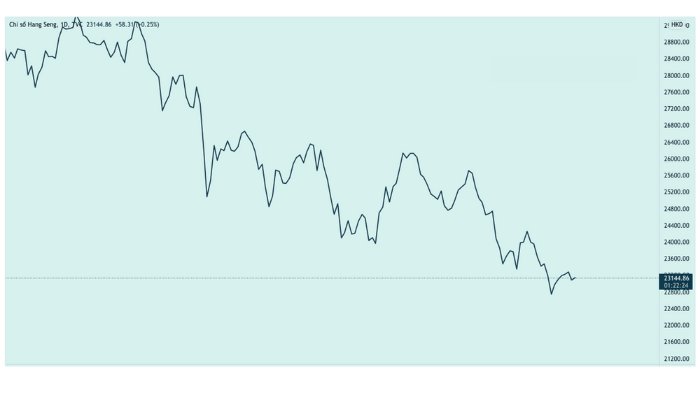
2.1. Capital Flows from China
In the investment world, there is a belief that stock prices rise or fall based on capital inflows and outflows. However, while some capital flows can be tracked, it’s difficult to accurately predict where they originate and where they’re heading.
Capital tends to flow into markets with higher-than-expected growth prospects. The rapid growth of companies in Hong Kong is partly fueled by investment capital from mainland China. According to reports, an estimated $43 billion was invested in the Hang Seng Index over the past year through the Shanghai and Shenzhen Stock Connect programs. These Chinese capital inflows have the potential to significantly boost the performance of the Hang Seng Index.
2.2. Strong Index Structure
The inclusion of Tencent Holdings in the Hang Seng Index brought a significant transformation since the index hit record highs in 2007. This change is largely due to Tencent’s strong stock performance. Even during the 2008 global financial crisis, Tencent experienced a loss of only 14.8%—a relatively moderate impact compared to the widespread economic downturn.
Moreover, Tencent’s 15% share in the Hang Seng Index helps reduce the negative impact caused by the previous dominance of state-owned enterprises (which once made up nearly half the index). This is significant because state-owned enterprises do not always align with the objectives or interests of private shareholders.
2.3. Undervalued but high potential
According to many economists, the Hong Kong market is currently undervalued. Uncertainties surrounding real estate giant Evergrande and China’s tightening regulations on tech stocks have made many investors hesitant and unsure.
During the pandemic, a look at the P/B (Price-to-Book) ratio of the Hang Seng Index showed that it lagged behind indices like the Nikkei and KOSPI. This suggests that, if legal and economic conditions improve, the index has strong potential for future growth. Therefore, investors may consider building or re-evaluating their portfolios based on these prospects.
3. HOW TO INVEST IN THE HANG SENG INDEX
The simplest way to invest in the Hang Seng Index is through an ETF (Exchange-Traded Fund). However, there is currently no ETF that tracks the Hang Seng Index traded in the U.S. The best alternative is to invest in the iShares MSCI Hong Kong Index Fund ETF (EWH).
To monitor daily updates on the Hang Seng Index, investors can refer to the following reports:
- Hang Seng Index Daily Bulletin
- HSI Constituent Stock Performance
- Index Performance Summary
- Daily Return Index Series Bulletin
4. READ MORE: OTHER HONG KONG INDICES TO WATCH
For international investors, there are various versions of the Hang Seng Index that cover industries and sustainable companies across different sectors.
Important Hang Seng indices include:
- Hang Seng China Enterprises Index
- Hang Seng China-Affiliated Corporations Index
- HK 35 Index
- HIS Volatility Index
- Hang Seng Mainland 100 Index
- Hang Seng Industry Top Index
- Hang Seng Corporate Sustainability Index
- Hang Seng Mainland 100
- Hang Seng REIT Index
However, investing in the Hang Seng Index must be approached with careful consideration. Risks associated with this index can be greater than with others. Naturally, greater risks also come with the potential for higher returns if successful. In all cases, traders should have a well-thought-out trading plan and sound risk management strategy.
- t.me/finance_solutes
- Website: https://finance-solutes.com
- Hotline: +1 929 5636 439 ( Hotline )
- 26 Broadway, Suite 934, New York, 10004, US
