
 XM
XM Bybit
Bybit Binance
 Robinhood
 Webull
 IC Markets
 Pepperstone
 OKX
OKX Vantage
 VT Markets
 BingX
BingX Gate.io
 Kucoin
 MEXC
MEXC Exness
 Bitget
Two sizzling headlines to kick off: Millennium Management is negotiating with Goldman Sachs’ Petershill Partners to identify potential buyers for a minority stake in Millennium’s management company, the latest chapter in Izzy Englander’s effort to institutionalize his hedge fund.
And BlackRock, the world’s largest asset manager, is asking senior executives to return to the office five days a week, another sign that major financial services firms are tightening their flexible work policies.
In today’s newsletter:
-
Milken’s Mission: Trump Sends Bessent to Reassure the Financial Elite
-
Pimco: Investors Are Underestimating Trump’s Resolve on Tariffs
-
Copper Rush to the U.S. Sparks Shortages in Europe
-
‘The Most Self-Censoring Milken Conference… Ever’
Table of Contents
ToggleRetaining Wall Street Tycoons is Crucial for Trump as He Pushes His Trade Agenda
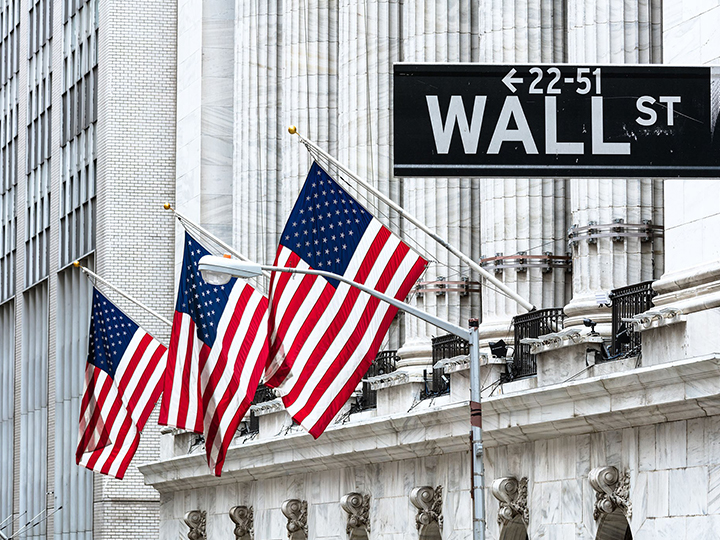
And perhaps nowhere has the crowding been greater than at the Milken Institute’s annual conference in Beverly Hills. Enter left of the stage: Scott Bessent. As my colleagues report in this newsletter, the U.S. Secretary of the Treasury was very present at last week’s event. His mission? To assure investors that the president and his team have a strategy to drive growth and secure new deals with the country’s most critical trade partners.
“Scott Bessent is here to tell everyone that everything is fine,” said Mathieu Chabran, co-founder of private equity firm Tikehau Capital. “He knows there’s money flowing out, and foreign investors are no longer operating as they once did.”
The reception wasn’t always warm. At a private dinner at Wolfgang Puck’s Spago restaurant, where Bessent was joined by former Treasury Secretary Steven Mnuchin, attendees were stunned when Mnuchin interrupted an investor who warned that they might pull out of the U.S. if tariff plans were fully implemented. Mnuchin retorted: Where could they invest with the same opportunities?
In private meetings, executives criticized the administration’s approach to trade policy, warning it could weaken U.S. businesses and fail to achieve deficit reduction goals. However, in public, few dared to criticize the president, fearing retaliation.
“This is the most self-censoring Milken conference I’ve ever attended,” said one asset management executive.
“It has an unstable quality,” added the founder of a credit investment firm. “People are preparing mentally in a cautious way. Last year, the mood was ‘go for it, darling.’ No ‘go for it, darling’ this year.”
Meanwhile, Wall Street banks report signs that investors managing trillions in assets are beginning to cut back on U.S. positions due to concerns over erratic policy making, Trump’s attacks on the Federal Reserve chairman, and the fallout from the trade war.
Investors say the selloff of U.S. assets to move into Europe’s recovering markets signals the start of a long-term move from pension funds and other large money managers to reduce their enormous dollar-denominated investments.
Why Pimco Thinks Wall Street Should ‘Believe’ in the President’s Tariff Threats
Pimco, the bond giant, is warning investors that they are underestimating Trump’s determination to restore the high tariffs that roiled the markets last month, with the company’s chief investment officer noting that the risk of a recession is at its highest in years.
“Trust Trump. He believes in tariffs,” Dan Ivascyn, Pimco’s CIO, said in an interview with the Financial Times alongside CEO Emmanuel Roman.
Trump imposed “reciprocal” tariffs on several major trade partners during his “liberation day” event on April 2, a move that sent U.S. stocks and some corporate debt tumbling. A week later, the president’s decision to suspend tariffs on most trade partners for 90 days calmed the markets, with the S&P 500 reversing the decline triggered by the announcement.
However, Ivascyn said investors were mistaken in thinking that Trump’s tariffs would be completely scrapped or less severe than originally announced.
“People still believe there will be an escape route [for tariffs], and that we’ll return to something resembling the pre-‘liberation day’ period,” he added. “We’re not so sure.”
However, Ivascyn noted that “we think we’ll see a lower final tariff level,” saying the $2 trillion asset management firm would closely monitor how Trump adjusts his policies based on market reactions and feedback from policymakers such as those at the Federal Reserve.
Ivascyn also said tariffs could lead to “a stagflation scenario” with higher prices when the economy slows.
“We’re very likely to have a recession,” he added. “The probability is the highest it’s been in several years.”
Ivascyn’s comments came after the Fed warned on Wednesday that Trump’s policies had added to uncertainty about the world’s largest economy and could drive up inflation and unemployment.
Pimco has been cautious in its allocations to economically sensitive sectors, with Ivascyn noting that there are “a lot of bubbles or complacency” in corporate debt markets.
“We continue to play defense there,” Ivascyn said.
Copper’s Rush to the U.S. Creates Shortages in Europe
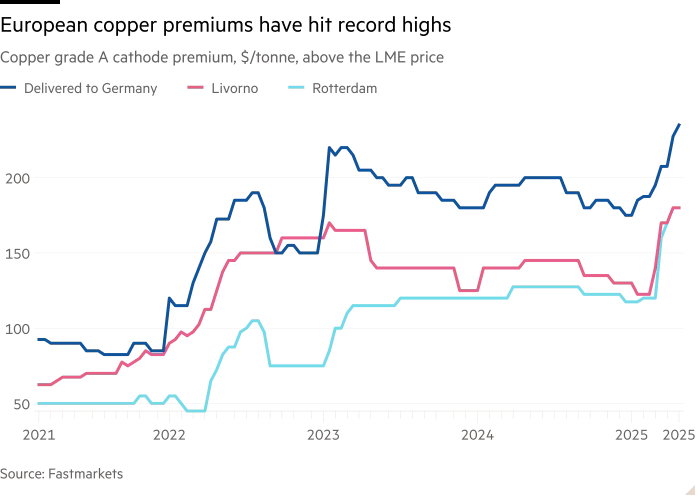
Camilla Hodgson in London writes that the rush to bring copper to the U.S. ahead of potential tariffs has caused shortages and price volatility for the red metal across Europe.
Analysts at Argus Media said the region’s spot market has been affected by a lack of copper available for immediate delivery.
This has pushed premiums to record highs on the continent, paid over the benchmark price on the London Metal Exchange (LME), Europe’s largest hub, which holds most of the stock.
According to Fastmarkets data, copper premiums to Germany have risen to $250 a ton, while premiums to Livorno and Rotterdam reached $180 a ton by the end of April.
Although the market has cooled since Trump’s “liberation day” announcement, the record premiums show the persistent distortion caused by the threat of tariffs in a sector critical to the industry. Copper is used in many applications, from wiring systems to industrial machinery and electronics.
Chinese stocks have also fallen sharply recently due to capital flowing into the U.S., where prices and warehouse supply are surging.
Copper prices on the LME, the global benchmark exchange, traded around $9,400 a ton on Friday—about $700 a ton cheaper than the U.S. Comex exchange.
LME copper prices spiked above $10,000 a ton in March amid tariff fears after Trump launched an investigation into the market that could lead to tariffs on the red metal. Meanwhile, U.S. Comex copper surged above $11,500 a ton at the same time.
European copper giant Aurubis said in its earnings report on Thursday that there was “surplus demand” for copper on the global spot market. The company added it is only operating in the spot market “on a limited basis” and has sold most of its copper under long-term contracts.
Five Stories to Catch Up On This Week
U.S. financial commentator Robert Armstrong writes that Warren Buffett succeeded not only because of great stock picks and premiums but also because of how Berkshire Hathaway has evolved over the years.
Stefan Hoops, CEO of $1 trillion asset manager DWS, part of Deutsche Bank, argues that Trump’s tariff policy has proven a powerful but troublesome catalyst for long-overdue economic reforms in Europe.
Bill Ackman has effectively taken control of the publicly listed real estate development company Howard Hughes and is creating a new buyout machine, realizing his long-held ambition of building a conglomerate in the image of Warren Buffett’s Berkshire Hathaway.
Top fund managers, including Newton Investment Management, Schroders, and M&G Investments, have warned the UK government that sentiment towards the London stock market is at an “all-time low” and urged local pension funds to increase their allocations to domestic equities.
Mubadala, Abu Dhabi’s second-largest sovereign wealth fund, saw its investments surge by a third last year, driven by increases in North America deals, private equity, and artificial intelligence.
And Finally

The National Gallery in London has launched the biggest rehang of its Trafalgar Square collection since the Sainsbury Wing opened in 1991. This is a spectacular achievement, writes FT’s visual arts critic Jackie Wullschläger. However, through countless small changes, the museum acknowledges its unavoidable role in today’s cultural wars.
- t.me/finance_solutes
- Website: https://finance-solutes.com
- Hotline: +1 929 5636 439 ( Hotline )
- 26 Broadway, Suite 934, New York, 10004, US
