
 XM
XM Bybit
Bybit Binance
 Robinhood
 Webull
 IC Markets
 Pepperstone
 OKX
OKX Vantage
 VT Markets
 BingX
BingX Gate.io
 Kucoin
 MEXC
MEXC Exness
 Bitget
QTUM is a cryptocurrency project that was launched in 2016. Since its release, this token has solidified its position in the Crypto Market by continuously increasing in value. So, what is QTUM Coin? What special functions does the QTUM project have? What is the potential of this coin in the future? In the article below, let’s dive into a detailed exploration of the overview as well as the operational principles of this project!
1. BASIC OVERVIEW OF THE QTUM COIN PROJECT FOR TRADERS
QTUM (pronounced as “Quantum”) is an open-source Blockchain platform built on Proof of Stake (PoS) smart contracts and a value transfer protocol. The goal of this project is to leverage the strengths of both Ethereum and Bitcoin in a single chain.
QTUM is built on Bitcoin’s UTXO model with functionality for executing smart contracts and decentralized applications (dApps). As of March 2021, over 20 tokens have been created on QTUM’s Blockchain platform.
The main goal of the QTUM project is to change the way application databases are stored. Instead of centralized storage on a single server, applications on QTUM will be stored in databases similar to those on Blockchain.
1.1. How did the QTUM Project Come About?
Behind the QTUM project is the Qtum Foundation – an organization headquartered in Singapore. This foundation includes numerous developers, Blockchain and Internet experts, notably Jordan Earls and Neil Mahi, two figures with extensive experience in Blockchain and Cryptocurrency. The project was launched in March 2016, leading to a successful Crowdsale one year later. Over 72,000 ETH and 10,000 BTC were raised in less than five days, making QTUM one of the largest projects in history with $15.6 million.
1.2. What is the Operational Principle of the QTUM Ecosystem?

Smart Contracts based on the QTUM platform are similar to the Smart Contracts you see with NEO and Ethereum. These smart contracts are provided through QTUM when combined with Bitcoin’s UTXO, and are used by Nodes to match and validate the legitimacy of transactions from new databases.
QTUM Coin will combine ideas from Bitcoin’s smart contracts with other Smart Contracts to create opportunities for using Blockchain technology in the real world, something that many businesses are still waiting for. By merging Bitcoin Core’s modified infrastructure with a compatible version of the Ethereum Virtual Machine (EVM), the project is integrating Bitcoin’s Blockchain with the limitless potential provided by other smart contracts.
With stability, modularity, and interoperability, the project will serve as an important toolkit for building reliable decentralized applications that are suitable for real-world use cases. Additionally, the integration with a PoS consensus protocol will allow QTUM applications to be compatible with key Blockchain ecosystems, as well as support IoT devices and mobile devices.
QTUM understands that improving current Blockchain technology and primarily focusing on introducing practical business solutions is crucial for its success. The goal of QTUM Coin is to unite Blockchain and the business world together.
2. KEY FEATURES THAT MAKE QTUM STAND OUT
Here are some of the features of the QTUM project that make it stand out:
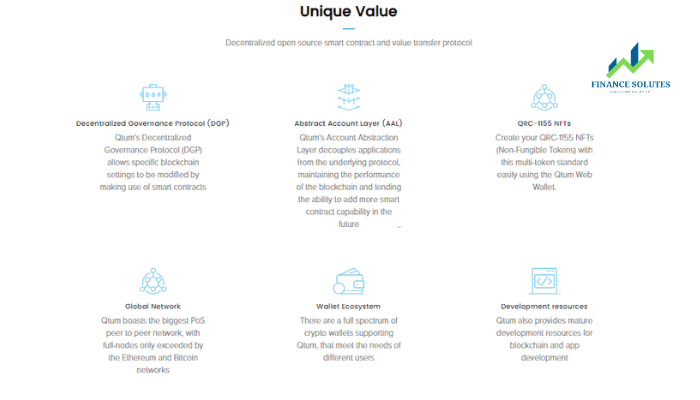
- Decentralized Governance Feature: QTUM allows the modification of Blockchain settings through the use of Smart Contracts. Additionally, the project is developing more tools and methods to standardize workflows and improvements, as well as develop Smart Contracts.
- AAL Layer (Account Abstraction Layer): The AAL of QTUM will prevent applications from being separated from the core protocol, while maintaining the performance of the blockchain and increasing the ability to create future Smart Contracts.
- Industry Standard Setup: The project aims to establish a type of smart contract. It can also be applied in various use cases such as supply chain management, social networks, telecommunications, IoT, and more.
- Global Network: QTUM is known as one of the largest peer-to-peer networks based on Nodes. It can even be compared to the networks of Bitcoin and Ethereum.
- x86 Virtual Machine: QTUM’s x86 virtual machine supports programming languages such as C, C++, Python, Rust, and other popular programming languages with the goal of providing the most favorable conditions for Smart Contract development.
- Cross-Platform and Backward Compatibility: The QTUM platform is compatible with existing contracts from the Ethereum network and BTC gateways. QTUM will ensure that a backward-compatible system is maintained and always updated.
- Mobile Device Support: Applications within QTUM can be compatible with key Blockchain ecosystems, as well as support mobile devices and some IoT devices.
3. DETAILED INFORMATION ABOUT THE QTUM COIN TOKEN OF THE PROJECT
Next, let’s dive into the details of the QTUM Token for the project!
3.1. Basic Information About QTUM Coin Crypto
- Ticker: QTUM
- Blockchain: Qtum (Quantum)
- Consensus Mechanism: PoS (Proof of Stake)
- Token Type: Coin
- Token Standard: QRC20 & QRC721
- Total Supply: 100,000,000 QTUM
3.2. QTUM Coin Allocation (QTUM Token Allocation)
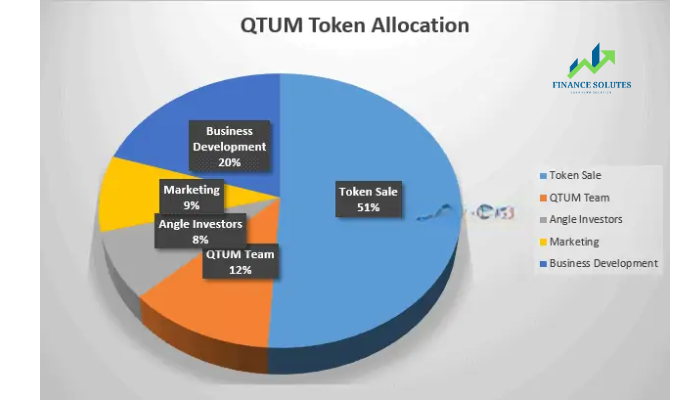
QTUM Tokens are allocated as follows:
- Token Sale: 51% released to the market through Token Sale
- QTUM Team: 12% held by the project development team, unlocked after 4 years
- Angel Investors: 8% held by investors
- Marketing: 9% allocated for marketing budget to expand the market
- Business Development: 20% for business development and supporting dApps development on the QTUM platform.
3.3. What is the Function of QTUM Coin?
The QTUM Coin is used with the following main functions:
Similar to many coins from other Blockchain platforms, QTUM serves as a medium of payment for activities on the QTUM network. These include:
- Transaction Fees: QTUM is used to pay transaction fees within the QTUM network. This helps Nodes to validate transactions quickly.
- Block Rewards: QTUM is used as block rewards for Stake Nodes. This enhances the security of the network and ensures stable operation.
How to Mine QTUM?
As mentioned earlier, this project uses the PoS (Proof of Stake) consensus mechanism. Therefore, QTUM Coin cannot be mined using devices like CPU/GPU/ASIC, similar to Bitcoin, and can only be obtained through Staking.
QTUM Token has an inflation rate of 1% per year, and new blocks are created every 2 minutes with a block reward of 4 QTUM.
3.4. Liquid Supply Curve and QTUM Coin Roadmap
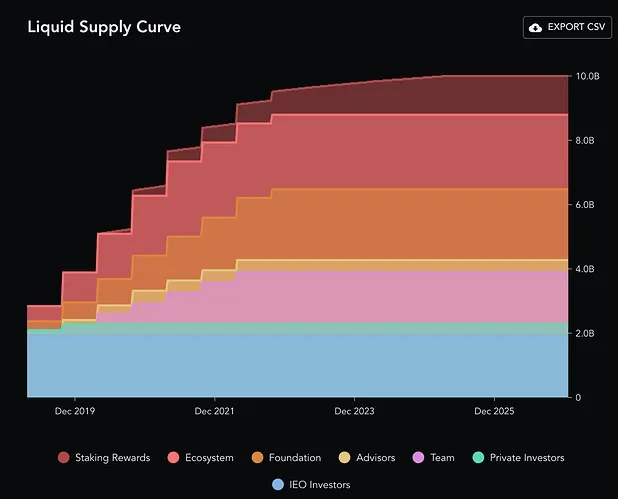
Liquid Supply Curve
The token distribution roadmap for QTUM is as follows:
QTUM Coin Roadmap
Investors can track the important events of this project through the image below:
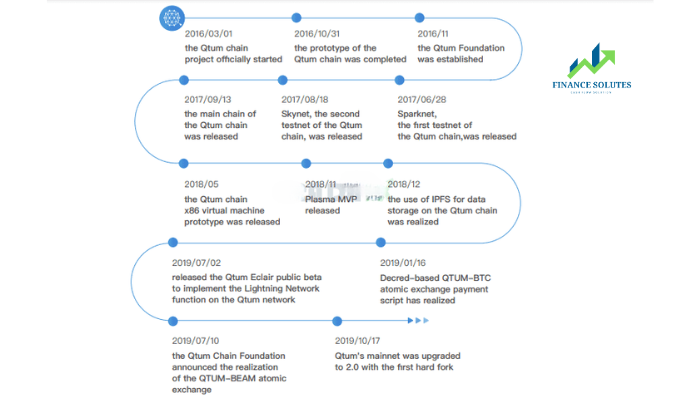
In Q1 and Q2 of 2019, there were 3 key points to note:
- QTUM X: Launched with the ability to scale transactions up to 10,000 TPS.
- Lightning Network: Still under development.
- x86 VM: Completed, allowing users to write smart contracts on QTUM using the C programming language.
4. QTUM COIN WALLET STORAGE
QTUM Token is developed on its own QTUM Blockchain. Therefore, traders can store this token on the official wallet released by QTUM called Qtum Core Wallet.
Qtum Core Wallet is available for both desktop and mobile versions and supports popular operating systems such as MacOS, iOS, Linux, Windows, and Android.
Additionally, you can also store QTUM Coin on the following wallets:
- Desktop Wallet: Qtum Electrum (Windows, macOS)
- Web Wallet: Qtum Wallet
- Hardware Wallet: Ledger Nano S, etc.
- Mobile Wallets: Trust Wallet, QBao, Bitpie, Atomic Wallet, etc.
![Qtum [Qtum] криптовалюта: Курс, Кошелек, Майнинг (2025)](http://finance-solutes.com/wp-content/uploads/2025/05/holodnyy_koshelek_qtum.png)
5. DEVELOPMENT TEAM, INVESTORS, AND PARTNERS OF THE QTUM COIN PROJECT
So, who are the development team, investors, and partners of the QTUM project?
5.1. The Development Team of the QTUM Ecosystem
The development team consists of 30 people, with key members including Patrick Dai, Jordan Earls, Baiqiang Dong, and Neil Mahi:
- Patrick Dai: Founder of the QTUM project and a graduate of Draper University. Additionally, he has experience working at Alibaba and has been involved in several Blockchain technology development groups. Patrick has deep expertise in Blockchain engineering as well as other fields.
- Neil Mahi: With 20 years of experience in software development, including 4 years in Blockchain technology, Neil Mahi is one of the few computer scientists fluent in four languages.
- Jordan Earls: One of the four key figures in the development of the QTUM project. Moreover, he started researching software development when he was only 13 years old.
- Baiqiang Dong: A graduate of Peking University with a degree in Theoretical Mechanics. He previously gained experience working for prominent companies, such as Cheetah Mobile.
5.2. Key Investors and Partners of the Project
The investors of QTUM are individuals with deep knowledge of cryptocurrencies and have made significant contributions to the development of this Token.
Here are some of the names we can mention:
- Roger Ver: A major investor in Bitcoin startups.
- Ash Han: A blockchain evangelist and early investor.
- Jeremy Gardner: Co-founder of Augur EIR at Blockchain Capital.
- Anthony Di Iorio: Founder of Ethereum and CEO at JAXX Wallet.
- Matthew Roszak: Co-founder of Bloq.
- Jeffrey Wernick: An investor with over 40 years of experience. He began his career at CBOE, CBOT, and CME while studying at the University of Chicago in 1981. In addition, his investments include banking transactions, Blockchain, and Bitcoin, among others.
6. FAQS ABOUT THE QTUM PROJECT AND QTUM TOKEN
In the final part of this article, let’s review some frequently asked questions about the QTUM project and its token.
6.1. Which social media platforms provide updates on the QTUM project?
Investors can follow the latest information about this project through the following media channels:
- QTUM Coin Twitter: https://twitter.com/qtum
- GitHub: https://github.com/qtumproject
- Reddit: https://www.reddit.com/r/Qtum/
- QTUM Coin Telegram: https://t.me/qtumofficial
- Facebook: https://www.facebook.com/QtumOfficial/
6.2. On which exchanges can investors buy and sell QTUM Coin?
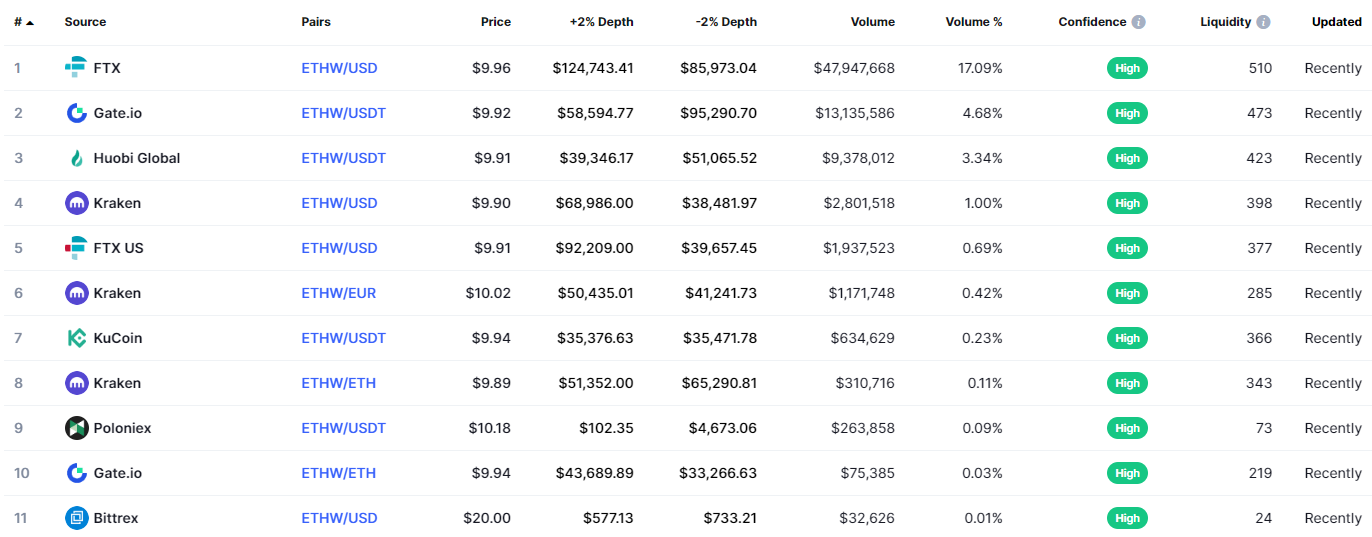
Investors can buy and sell QTUM Coin on exchanges that list this token, such as Binance, Gate.io, Houbi, Bybit, Bittrex, OKX, Poloniex, etc.
6.3. Should You Invest in the QTUM Coin Project?
You can track the price movements of the QTUM Token in the image below:
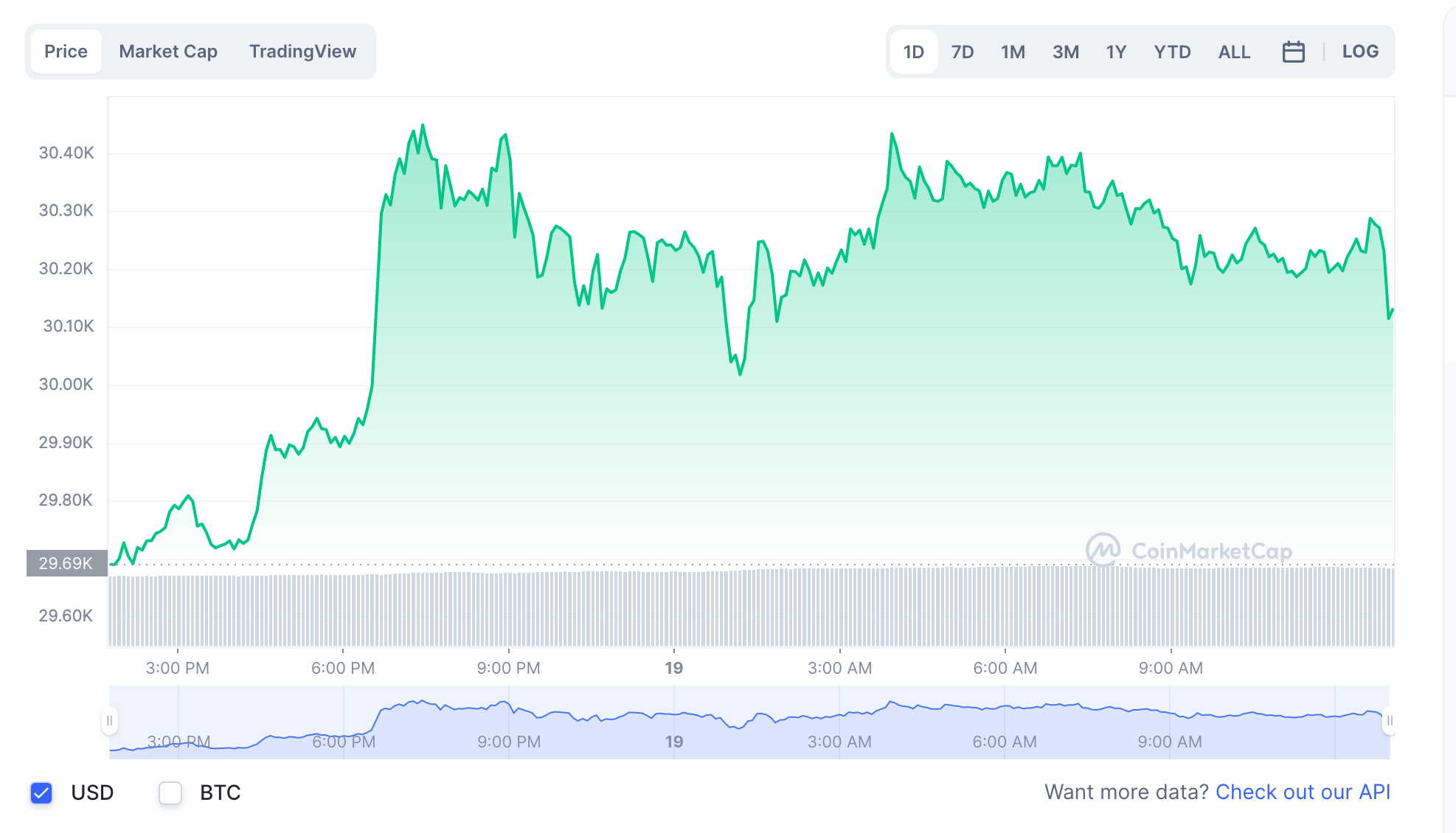
As seen on the chart, QTUM Coin is still on a growth trajectory despite the general downward trend in the current market. Additionally, QTUM is a token that is not backed by any individual, company, or organization. All of its success comes from the contributions of a team with a deep understanding of cryptocurrency and blockchain technology.
Furthermore, QTUM Token has gained the full support of major players in the crypto market. Therefore, this project has the potential to grow and compete fairly with any coin currently on the market.
7. SUMMARY
This article has compiled information about QTUM, helping you understand what QTUM Coin is and the unique features it offers to investors. As it continues to develop, this coin is seen as highly promising in the near future.
If you have any further questions about this project, feel free to leave a comment below, and we’ll provide answers for you.
Wishing you success!!!
- t.me/finance_solutes
- Website: https://finance-solutes.com
- Hotline: +1 929 5636 439 ( Hotline )
- 26 Broadway, Suite 934, New York, 10004, US
