

U.S. Set to Roll Back Post-2008 Banking Regulations in Major Capital Rule Overhaul

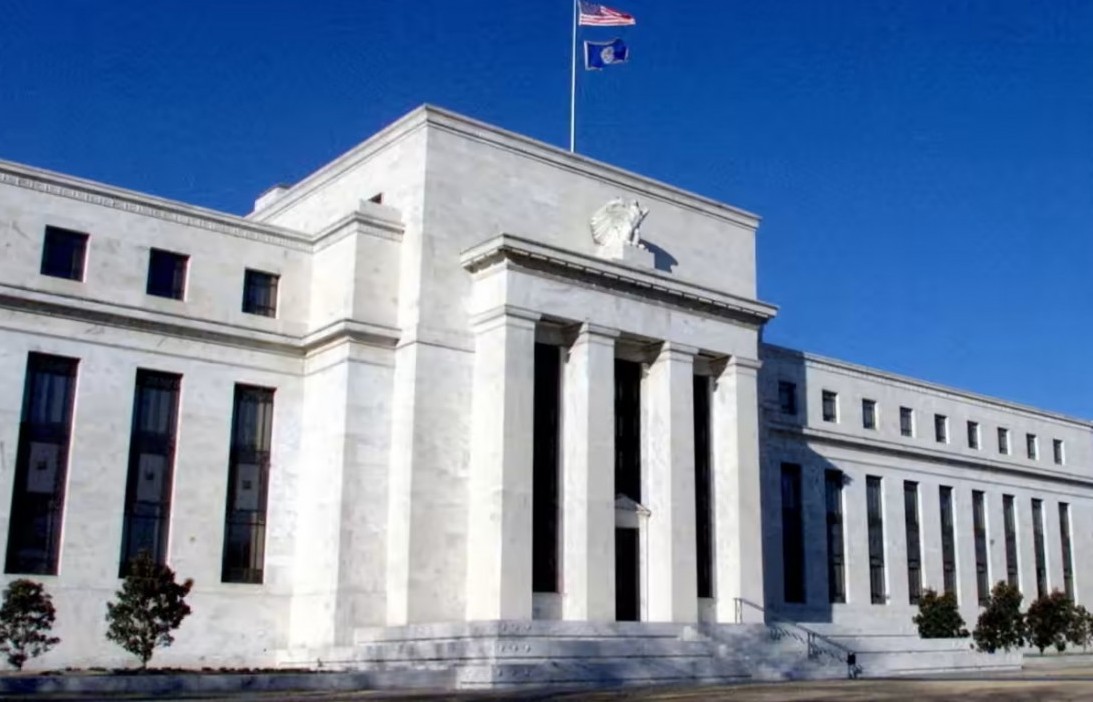
WASHINGTON, D.C. – The United States is preparing to implement one of the most significant rollbacks of bank capital requirements since the 2008 financial crisis, signaling a renewed push toward deregulation under the Trump administration. Regulatory agencies are expected to unveil proposals this summer to ease key rules, despite growing concerns about financial market volatility and global economic risks.

Regulatory Shift: Supplemental Leverage Ratio Under Review

At the center of the reform is the Supplemental Leverage Ratio (SLR)—a rule introduced in 2014 requiring large banks to hold a minimum level of high-quality capital relative to their total leverage exposure, including loans and off-balance-sheet items like derivatives. The SLR was one of several measures adopted after the 2008–09 crisis to ensure the resilience of the banking system.

However, bank lobbyists have long criticized the regulation, arguing that it penalizes institutions for holding low-risk assets such as U.S. Treasuries and limits their ability to support the $29 trillion government bond market.

Kho bạc Mỹ chỉ còn 88 tỷ USD để thực hiện các biện pháp trong giới hạn nợ |  Thời báo Tài chính Việt Nam

Industry Pushback and Regulatory Response

Banking industry advocates, such as Greg Baer, CEO of the Bank Policy Institute, argue that the SLR weakens banks’ capacity to provide market liquidity in times of stress. “Punishing banks for holding low-risk assets like Treasuries undermines their ability to support the market when it’s most needed,” Baer stated, urging regulators to act swiftly.

Bank Policy Institute - MKDA

Key policymakers, including Treasury Secretary Scott Bessent and Fed Chair Jay Powell, have expressed support for revising the rule. Powell noted that reforms could improve the structure of the Treasury market and said SLR recalibration “will be part of the answer.”

International Standards and Strategic Impact

Currently, the eight largest U.S. banks must maintain Tier 1 capital equal to at least 5% of their leverage exposure—higher than global peers. European, Chinese, Canadian, and Japanese banks typically face requirements of only 3.5%–4.25%. Industry groups hope reforms will align U.S. standards with these international norms.

Các ngân hàng lớn ở Mỹ: 10 cái tên bạn không thể bỏ qua

One option under consideration is to exclude low-risk assets such as Treasuries and central bank reserves from SLR calculations, a measure temporarily adopted during the pandemic. Analysts estimate this could free up nearly $2 trillion in balance sheet capacity for major U.S. lenders.

However, such a move may make the U.S. an international outlier and spark pressure on European regulators to relax capital rules for eurozone and UK government bonds.

Critics Warn of Untimely Deregulation

Opponents of the reform caution against loosening bank capital standards amid current market instability. Nicolas Véron, a senior fellow at the Peterson Institute for International Economics, remarked: “Given global uncertainties—including the role of the dollar and economic outlook—now is not the time to weaken capital standards.”

Moreover, most large U.S. banks are already constrained more by other regulatory measures, such as the Fed’s stress tests and risk-weighted capital rules, limiting how much they could benefit from SLR changes. Morgan Stanley analysts recently noted that only State Street is meaningfully restricted by the SLR.

Looking Ahead

As federal agencies—the Federal Reserve, Office of the Comptroller of the Currency (OCC), and Federal Deposit Insurance Corporation (FDIC)—prepare to announce their proposals, lobbyists hope for a realignment with global capital standards rather than piecemeal exemptions.

Sean Campbell, chief economist at the Financial Services Forum, emphasized that aligning with international norms would provide more flexibility to U.S. banks than simply excluding Treasuries from leverage calculations.

For now, the Fed, OCC, and FDIC have declined to comment publicly on the forthcoming changes.

Conclusion

The upcoming revision of U.S. bank capital requirements could reshape the financial regulatory landscape once again. While proponents hail it as a necessary modernization, critics warn it may expose the system to greater risk during uncertain times. The balance between market efficiency and systemic stability will soon be tested.

🔗 EXPLORE MORE LATEST NEWS RIGHT HERE!

DON’T MISS OUT, CLICK AND READ NOW!

🌍 Finance Solutes
  • t.me/finance_solutes
  • Website: https://finance-solutes.com
  • Hotline: +1 929 5636 439 ( Hotline )
  • 26 Broadway, Suite 934, New York, 10004, US