
 XM
XM Bybit
Bybit Binance
 Robinhood
 Webull
 IC Markets
 Pepperstone
 OKX
OKX Vantage
 VT Markets
 BingX
BingX Gate.io
 Kucoin
 MEXC
MEXC Exness
 Bitget
What is the Dow Jones Index? You may have seen news about Dow Jones appearing frequently in the media, in articles, and on news reports. If you’re not particularly interested in global stock markets, you might not know what the Dow Jones Index is, why the Dow Jones Index is so important, or how the Dow Jones Index is calculated. Today’s article about the Dow Jones Index will help you better understand this stock market indicator.
1. WHAT IS THE DOW JONES INDEX?
Dow Jones — often mistakenly written as “Dow John” — is a stock market index that reflects the average stock price of leading companies listed on stock exchanges in the United States. Similar to the Vietnamese stock market, the Dow Jones Index also operates on a set trading schedule. So, what time does the Dow Jones open? The Dow Jones trades from Monday to Friday, 09:30 AM – 04:30 PM EST, which corresponds to 08:30 PM – 03:00 AM Vietnam time.
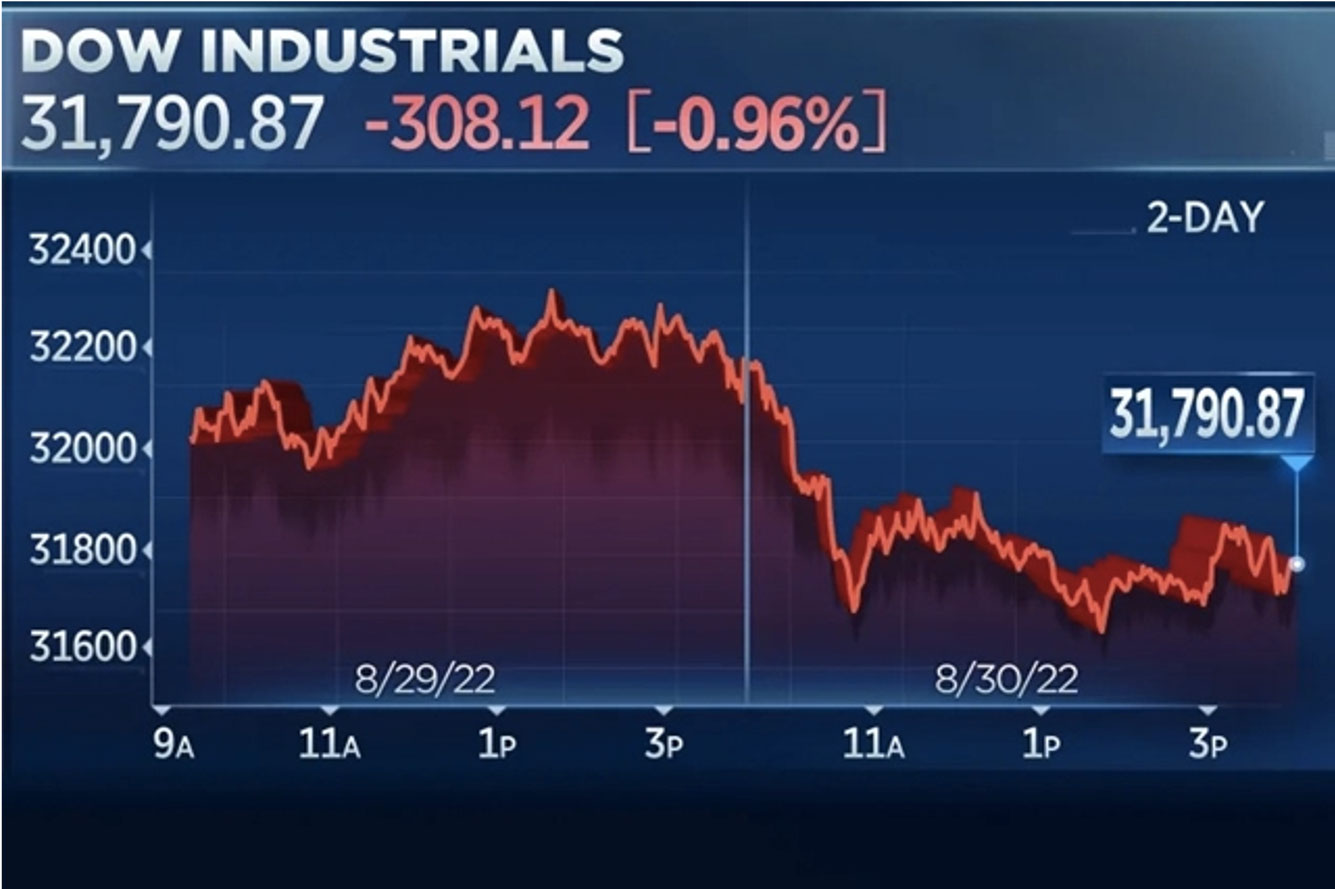
The Dow Jones Index is considered one of the most widely used benchmarks of the U.S. stock market. The stocks that make up this index are not fixed and may be adjusted if they no longer meet certain criteria. The selection and adjustment of the components of the Dow Jones Index are carried out by The Wall Street Journal.
1.1. The History of the Dow Jones Index
“Dow Jones” in the Dow Jones Index is not the name of a person, but rather a combination of the names of two out of the three founders of Dow Jones & Company, established in 1882 — Charles Dow and Edward Jones. In case you didn’t know, Charles Dow was the person who developed and published the Dow Theory, which is now one of the most favored tools among professional traders. Seven years later, in 1889, The Wall Street Journal was founded — the very team that is now responsible for deciding which stocks are included in the Dow Jones Index today.

In 1902, after Charles Dow passed away, Dow Jones & Company was acquired by Clarence Barron and Jessie Waldron. Later, the Bancroft family inherited the company and became its new owners. By 2007, Dow Jones & Company was acquired by News Corp. However, the company no longer directly controls the index it originally created. Today, the Dow Jones Index is owned by S&P Dow Jones Indices LLC, a joint venture between CME Group and S&P Global.
1.2. Where to view the Dow Jones Index Chart?
As one of the most important stock market indices, traders and investors can easily view the Dow Jones Index chart online through various popular financial platforms. Some notable examples include:
- Dow Jones Index Chart on Investing.com
- Dow Jones Index on TradingView
- Dow Jones chart on Google Finance
The Dow Jones Industrial Average chart is displayed similarly to regular stock charts. Therefore, traders can fully review and analyze price movements using the chart.
2. GROUPS OF DOW JONES INDICES
The most well-known and popular is the Dow Jones Industrial Average. However, Charles Dow developed four groups of Dow Jones indices, including:
- Dow Jones Transportation Average – DJTA: This was the first Dow Jones index created, reflecting price fluctuations of transportation sector stocks in the U.S. DJTA includes 20 stock symbols from companies in waterways, aviation, and railroads listed on the NYSE.
- Dow Jones Utility Average – DJUA: This Dow Jones index represents the public utilities sector and was first published in early 1929 in The Wall Street Journal. It includes 15 stock symbols from the 15 strongest companies in electricity and gas industries.
- Dow Jones Industrial Average – DJIA: This is the most widely used Dow Jones index. Therefore, when people ask what is the Dow Jones, most investors think of the DJIA. This article will focus on this particular Dow Jones index.
- Dow Jones Composite Average (DJA): A combination of the three Dow Jones groups mentioned above. The DJA includes 65 stock symbols from the large corporations in DJTA, DJUA, and DJIA. It was once considered a broad measure reflecting the U.S. economy. However, this is no longer accurate today as the DJA mainly focuses on long-established, traditional companies.
3. WHAT IS THE DOW JONES INDUSTRIAL AVERAGE?
Known as the Dow Jones Industrial Average (DJIA), this index does not only include stocks from the industrial sector. In fact, the 30 stocks that make up the DJIA come from a diverse range of industries. For a company’s stock to be included among the 30 stocks of the Dow Jones, it must play a significant role in the U.S. economic market. At the same time, the stock must be listed on either the NYSE or NASDAQ.

The changes and adjustments of the Dow Jones stocks aim to most accurately reflect the fluctuations in the economy. The 30 stocks currently comprising the Dow Jones Industrial Average are:
| Company | Ticker Symbol | Sector |
|---|---|---|
| 3M | MMM | Conglomerate |
| American Express | AXP | Financial Services |
| Apple | AAPL | Technology |
| Boeing | BA | Aerospace |
| Caterpillar | CAT | Construction |
| Chevron | CVX | Oil & Gas |
| Cisco | CSCO | Technology |
| Coca-Cola | KO | Food & Beverage |
| Disney | DIS | Entertainment |
| DowDuPont Inc | DWDP | Chemical Industry |
| Exxon Mobil | XOM | Oil & Gas |
| Goldman Sachs | GS | Financial Services |
| Home Depot | HD | Retail |
| IBM | IBM | Technology |
| Intel | INTC | Technology |
| Johnson & Johnson | JNJ | Pharmaceuticals |
| JPMorgan Chase | JPM | Financial Services |
| McDonald’s | MCD | Food |
| Merck & Company | MRK | Pharmaceuticals |
| Microsoft | MSFT | Technology |
| Nike | NKE | Apparel |
| Pfizer | PFE | Pharmaceuticals |
| Procter & Gamble | PG | Consumer Goods |
| Travelers Companies Inc | TRV | Insurance |
| United Technologies | UTX | Conglomerate |
| UnitedHealth | UNH | Healthcare |
| Verizon | VZ | Telecommunications |
| Visa | V | Financial Services |
| WalMart | WMT | Retail |
| Walgreens Boots Alliance | WBA | Retail |
4. HOW TO CALCULATE THE DOW JONES INDEX
Most stock indices are calculated based on market capitalization — that is, stock price multiplied by the total number of outstanding shares. However, the Dow Jones Index is calculated as a price-weighted average. Specifically:
Dow Jones Value = Total Price of Stocks/Number of Shares
However, sometimes the Dow Jones value may fluctuate even when the prices of component stocks don’t change much. This is due to other factors such as stock splits, reverse splits, additional share issuance, etc. For this reason, the calculation method of the Dow Jones index has been adjusted to:
DOW = Total component stock price/Dow Divisor
Where Dow Divisor is a figure that accounts for stock splits, dividends, and other corporate actions. This divisor is not fixed and is frequently adjusted. In January 2022, the Dow Divisor was set at 0.152.
5. HOW TO INVEST IN THE DOW JONES INDEX?
In reality, the Dow Jones is just one of several indices in the U.S. stock market. Therefore, investors who do not live in the U.S. cannot invest directly in the index itself. However, there are several ways for interested investors to gain exposure to the Dow Jones Index, including:
- Dow Jones futures contracts: Investing in the Dow Jones via futures contracts traded on the Chicago Mercantile Exchange (CME Group). One of the most popular futures contracts is the E-mini Dow futures.
- Exchange-Traded Funds (ETFs): ETFs accurately reflect the performance and fluctuations of the Dow Jones Index. Investing in ETFs is simpler than buying all 30 individual stocks that make up the Dow Jones and is also more cost-effective.
- Dow Options Investment: Besides futures contracts, investors can also choose to invest in options through the CBOE Global Markets options exchange. Investing via options and futures contracts is generally more suitable for experienced traders due to the higher risk involved.
6. SUMMARY
The above is an overview of the essential information traders and investors need to know about the Dow Jones Index. Considered the “backbone” of the stock market, the Dow Jones Index provides investors with a broad picture of the economy’s condition. Therefore, even if you are not interested in investing directly, it is still valuable to understand and follow this stock market index.
- t.me/finance_solutes
- Website: https://finance-solutes.com
- Hotline: +1 929 5636 439 ( Hotline )
- 26 Broadway, Suite 934, New York, 10004, US
