
 XM
XM Bybit
Bybit Binance
 Robinhood
 Webull
 IC Markets
 Pepperstone
 OKX
OKX Vantage
 VT Markets
 BingX
BingX Gate.io
 Kucoin
 MEXC
MEXC Exness
 Bitget
What is an Option? What is a Buy Call Option? What is an Option Contract? One of the widely used financial trading instruments in the market – the option. However, there are quite a few terms related to this type of trading that traders may find a bit unfamiliar. In fact, many people even confuse option contracts with futures contracts. That’s why today’s article by Finance Solutes on “What is an Option?” will help you gain a better understanding of this financial instrument.
1. WHAT IS AN OPTION?
Option is a type of derivative instrument that gives the trader the right to buy or sell an underlying asset on a specified date (the expiration date) at a predetermined price. However, the trader is not obligated to exercise this right. If the option is not exercised by the expiration date, the contract becomes void and worthless.

The underlying assets mentioned here are quite diverse, including stocks, commodities, gold, silver, indices, and more. Essentially, options allow investors to still have the opportunity to make money from the market even when prices are falling sharply — something that is difficult to achieve when trading the actual underlying assets.
2. TYPES OF OPTIONS
Options are divided into two types: calls and puts. So, what are call and put options? A call option refers to the right to buy, while a put option refers to the right to sell.
2.1. Call Option – The Right to Buy
A call option is a type of option that gives the holder the right to buy a stock at a specific price, known as the strike price, at a specific point in time. The buyer of a call option pays a premium to the seller (writer) of the call option. An investor would buy a call option if they believe the price of the underlying asset will rise and hope to profit from that price movement. Conversely, when you sell a call option, you receive the premium from the call option buyer.
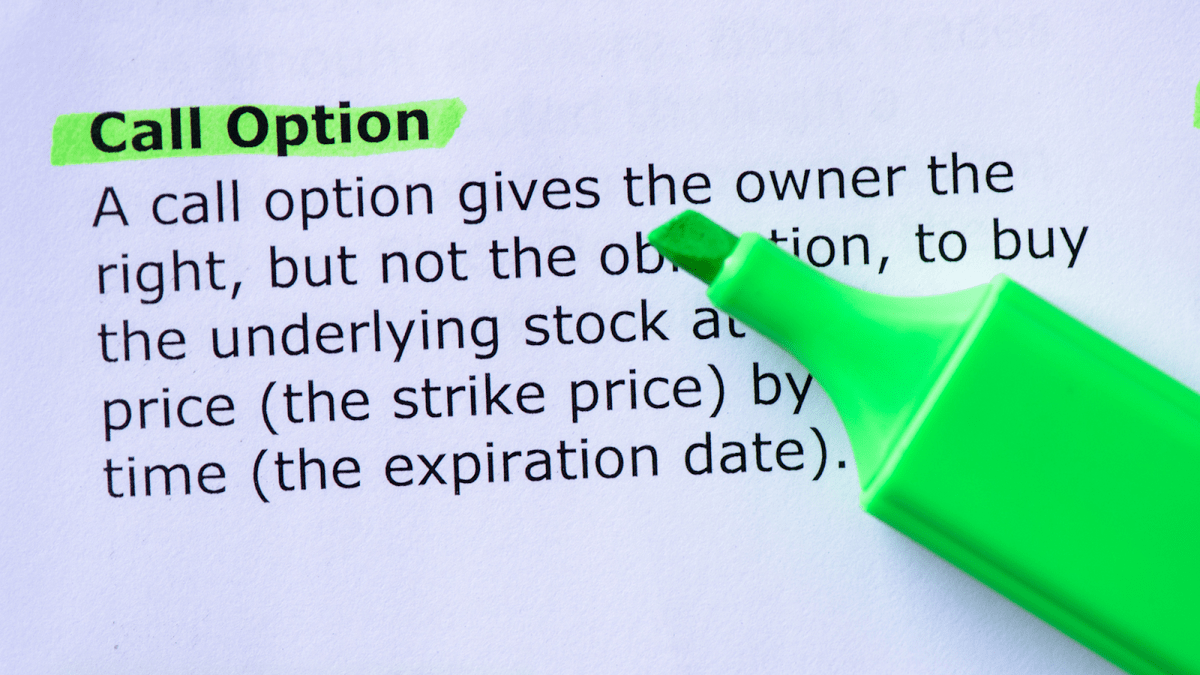
If the spot price of the underlying asset does not rise above the strike price, the investor will lose the premium paid. However, selling a call option comes with a major downside — the potential loss is unlimited. When the spot price exceeds the strike price, the investor incurs a loss equivalent to the profit gained by the call option buyer.
2.2. Put Option – The Right to Sell
Similar to a call option, investors can also choose to buy or sell a put option. An investor would buy a put option if they believe the price of the underlying asset will decrease, allowing them to potentially profit from that downward movement.
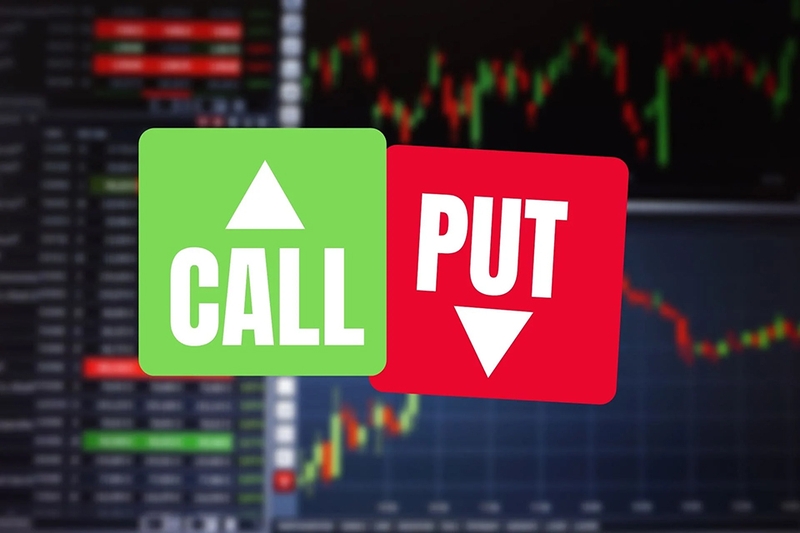
The profit for the buyer of a put option depends on how much the spot price of the underlying asset falls below the strike price. If the spot price is lower than the strike price, the buyer will earn a profit. Conversely, if the spot price is higher than the strike price, the put option expires worthless.
For both types of options, there is always the possibility that market price movements will not match investors’ expectations. However, the potential loss is limited to the premium paid, as specified in the option contract. More details on what an option contract is will be explained in the final section of this article.
3. HOW DOES AN OPTION WORK?
To trade an option contract, investors need to understand at least four key components of an option contract:
- Contract Size: The number of underlying assets that can be delivered under the option contract. The contract size is fixed and clearly stated in the agreement.
- Strike Price: As mentioned multiple times earlier, the strike price is the predetermined price at which the contract holder can exercise the option.
- Expiration Date: This concept is quite self-explanatory—as the name suggests, it refers to the date when the option contract expires. Every option contract has a fixed expiration date. After this date, if the contract is not exercised, it becomes worthless.
- Premium or Down Payment: This is the fee required to execute the contract—essentially, the amount the investor pays to gain the right to hold the option contract.
If the market does not move as expected and the price goes in the opposite direction, the option holder has the full right not to exercise the contract. In this case, the investor will lose only the initial premium paid to acquire the option. In the U.S. market, options can be exercised at any time before the expiration date (American-style options). However, in Europe, options can only be exercised on the expiration date (European-style options).
4. WHAT IS TRADE OPTION?
“Trade option” or “playing options” both refer to the act of trading options. Simply put, there are four basic positions when trading options: buying or selling a call option, and buying or selling a put option.
Trading options is primarily used by investors for purposes such as:
- Hedging: This refers to protecting against risk. Hedging is used when an investor holds a position in an underlying asset that may decrease in value but they do not want to close the position because it is part of a long-term investment strategy. In this case, the most optimal solution is to buy a put option on that underlying asset. If the price indeed falls as predicted, the profit from the option contract can offset part of the actual loss on the asset.

- Speculation: This strategy is divided into two smaller approaches: buying call or selling put options, and selling call or buying put options. For the first case, investors expect the price of the underlying stock to rise. Conversely, the second strategy is applied when the stock market is expected to decline.
Basically, the process of trading options can be summarized in four steps:
- Open an options trading account
- Choose the type of option contract and the position you want to open
- Predict the expected strike price
- Determine the contract’s expiration date
5. DIFFERENTIATING OPTION CONTRACTS AND FUTURES CONTRACTS
If you only read the definition of what an option is, many people are likely to confuse option contracts with futures contracts. This is quite understandable since their concepts are relatively similar. Essentially, both futures and options are derivative instruments.
However, the biggest difference is that with futures contracts, the holder has the obligation to buy or sell the asset on a specified date at a predetermined price stated in the contract. In contrast, an option contract gives the investor the right, but not the obligation, to execute the transaction upon expiration.
6. SUMMARY OF COMMON TERMS IN OPTION TRADING
As mentioned at the beginning of the article, option trading involves many terms that differ significantly from those in other financial markets. Therefore, understanding the concept of what an option is is not enough to trade effectively. Let’s explore some other common terms used in this market!

6.1. What is an Option Contract?
An Option Contract is an agreement between a buyer and a seller to trade a specific asset at a predetermined price and within a set time frame. For example, if an investor expects and predicts that the price of stock X will rise to $80 next month, and sees an option contract being sold at a price of $5 with a strike price of $65 per share, the investor would pay $500 (which is $5 × 100 shares).
If the price of stock X rises as expected and reaches $100 before the option contract expires, the investor exercises the option to buy 100 shares of X at $65 (the strike price) for a total of $6,500. The investor can then sell the shares at $100 each, receiving $10,000. The total profit would be $3,000 (= $10,000 – $500 – $6,500).
6.2. What is Theta in Options?
Theta, Delta, Gamma, Vega, and Rho are some common “Greek” terms used in options trading that represent measurable parameters. Among them, Theta indicates how the option’s price is expected to change as the expiration date approaches, specifically measuring the rate of time decay of the option’s value as one day passes.
6.3. What is Block Option?
Block Option is the name of a trading platform for BO — Binary Options.
6.4. What is a Stock Option?
A stock option, also known as an equity option, is translated into Vietnamese as “quyền chọn cổ phiếu.” In the stock market, is this option the same as a warrant? The answer is no—they are two completely different financial instruments. Warrants are traded in the cash market, whereas stock options are traded in the derivatives market.
- t.me/finance_solutes
- Website: https://finance-solutes.com
- Hotline: +1 929 5636 439 ( Hotline )
- 26 Broadway, Suite 934, New York, 10004, US
