
 XM
XM Bybit
Bybit Binance
 Robinhood
 Webull
 IC Markets
 Pepperstone
 OKX
OKX Vantage
 VT Markets
 BingX
BingX Gate.io
 Kucoin
 MEXC
MEXC Exness
 Bitget
As Yields Hit Record Highs, Global Bond Giant Sees Opportunity Amid Market Disruptions
A Bold Move in Turbulent Times
Bond investment heavyweight Pimco has made a strategic bet on long-term Japanese government bonds (JGBs), capitalizing on what it views as a rare “dislocation” in the country’s yield curve. According to Andrew Balls, Chief Investment Officer for global fixed income at Pimco, the firm has increased its exposure to the long end of the JGB curve, including 30-year bonds, in portfolios aiming to benefit from recent market inefficiencies.

Market Under Pressure
Japan’s bond market has come under intense pressure in recent months due to resurgent inflation and a sharp drop in demand from traditional domestic investors, particularly life insurers. This has driven long-term yields to record levels—above 3% in May for 30-year bonds—compared to below 1% for much of the past decade. The bond sell-off has been more severe than in other major economies, prompting the Bank of Japan to delay reductions in its bond purchases.

Government Response and Strategic Shift
The Ministry of Finance recently discussed plans with bond-trading banks to cut super-long bond issuance by ¥3.2 trillion ($22 billion) for the current fiscal year. The move, targeting 20-, 30-, and 40-year bonds, is highly unusual in the absence of a new budget and reflects deep concern within the government. The cut will be balanced by increased issuance of short-term debt, aligning more closely with current investor demand.
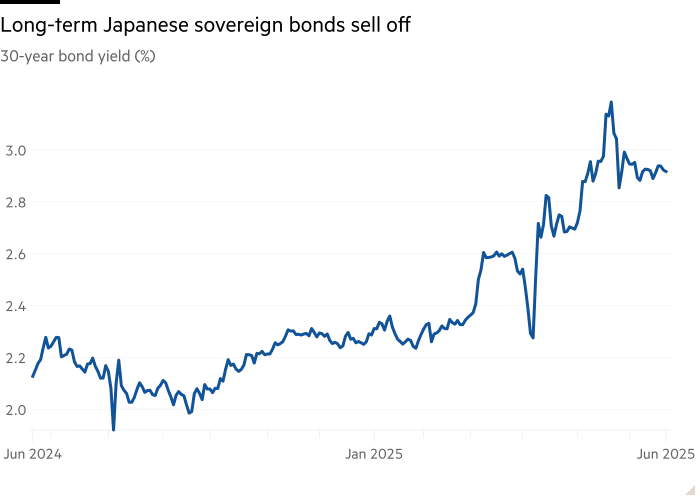
Pimco’s Balls supports this strategic realignment, citing a “strong case” for issuing where demand is concentrated. He emphasized that declining interest from life insurers in long-term debt should prompt Japan to rebalance its issuance priorities.
Global Implications and Investor Landscape
Japan’s struggle mirrors challenges in other advanced economies like the US and UK, where governments are also facing resistance to long-term borrowing. The UK, for instance, is already shortening debt maturities. Despite the surge in Japanese yields, they remain below those of the US, where the 30-year yield hovers around 4.9%.

Balls noted that global long-term rates have a ceiling, beyond which they could trigger volatility in equity and credit markets, compelling central banks to lower policy rates and thereby boost bond prices.
Fragile Stability and Foreign Exposure
The recent wave of poorly received bond auctions in Japan signals a potential “buyers’ strike” from domestic institutions. Analysts warn that this leaves Japan more reliant on foreign investors—who, while providing liquidity, are known to react swiftly to rate changes, possibly destabilizing the market.
Koichi Sugisaki, rates strategist at Morgan Stanley MUFG, emphasized that this shift could harm market stability. Moreover, concerns loom over the upcoming Upper House election, where fiscal promises from all parties may further elevate spending expectations and market stress.
Conclusion
Pimco’s aggressive play on long-dated Japanese debt highlights both the risks and opportunities in a bond market at a critical juncture. As traditional buyers retreat and policy uncertainty rises, the actions of global investors and Japan’s fiscal decisions will be pivotal in shaping the future of its debt market.
🔗 EXPLORE MORE LATEST NEWS RIGHT HERE!
- Forex: Get the latest trends and effective trading strategies
- Crypto: Stay updated on the hottest cryptocurrency market news
- Stock & Commodities: Discover potential investment opportunities
- Trading Brokers: Choose reliable brokers for your trades
- Expert Advisor: Smart tools to assist your trading
- Finance News: 24/7 updates on financial news
DON’T MISS OUT, CLICK AND READ NOW!
- t.me/finance_solutes
- Website: https://finance-solutes.com
- Hotline: +1 929 5636 439 ( Hotline )
- 26 Broadway, Suite 934, New York, 10004, US
