
 XM
XM Bybit
Bybit Binance
 Robinhood
 Webull
 IC Markets
 Pepperstone
 OKX
OKX Vantage
 VT Markets
 BingX
BingX Gate.io
 Kucoin
 MEXC
MEXC Exness
 Bitget
The credit market is flashing warning signs once again. Liquidity conditions have deteriorated to levels not seen since the early days of the COVID-19 pandemic in March 2020. Below is a breakdown of the current situation, highlighted by Torsten Sløk, chief economist at Apollo, who provided key data insights into the growing illiquidity in corporate bonds.
A Sharp Divergence in Bid-Ask Spreads
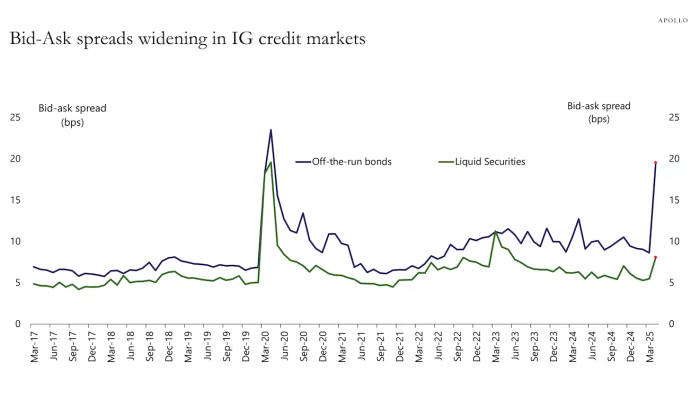
Torsten Sløk’s recent charts point to a dramatic widening in the bid-ask spreads between on-the-run and off-the-run investment-grade corporate bonds. While on-the-run bonds—those recently issued—remain relatively liquid, older off-the-run bonds are becoming increasingly difficult to trade. The bid-ask spread for the latter has reached levels not seen since March 2020, a striking development in a supposedly stable part of the market.
Understanding “Off-the-Run”
For those unfamiliar with fixed-income jargon, off-the-run refers to bonds that are no longer the most recently issued series. These tend to trade less frequently and are typically held in long-term portfolios such as pension funds or insurance companies. As a result, they are less liquid by nature. This also means trading them can involve a wider spread, making them more expensive to buy or sell.
Example: While a freshly issued IBM bond might trade at a tight spread of $100.05 (ask) / $99.95 (bid) per $100 face value, an older bond could see spreads as wide as $100.10 / $99.90—or worse.

What the Data Shows?
Apollo defines liquid corporate bonds as those issued in the past year with at least $1 billion in face value. In contrast, illiquid (off-the-run) bonds are typically over two years old and have less than $900 million in outstanding issuance. These off-the-run bonds make up nearly half of the investment-grade bond market.

The striking takeaway? While liquid bonds have only seen a minor increase in bid-ask spread—less severe than during the banking sector crisis of 2023—the cost of trading off-the-run bonds has surged, making them virtually untradable in some cases.
The Growing Divide in Credit Markets
Unlike 2020, where the entire market experienced a liquidity crunch, the current disruption is more selective. Liquid, high-volume bonds continue to see steady demand and tighter pricing. However, lower-liquidity issues have seen a significant breakdown, reflecting a growing “liquidity divide” within the investment-grade bond universe.
This implies that while new bonds remain tradable, older issues are turning into “buy-and-hold” investments by necessity rather than choice.

Why the Disparity?
The natural question arises: why are liquid bonds maintaining relatively tight spreads, while illiquid ones are falling off a cliff?
Some speculate it’s a side effect of market participants chasing yield in only the most tradable assets—avoiding off-the-run securities altogether. Trading volumes have hit record highs in 2023, but that activity appears concentrated solely in the most liquid segment of the market, potentially rendering other bonds obsolete or “untradeable,” as Sløk puts it.
Conclusion
The current dislocation in credit markets may not be as broad-based as in March 2020, but the depth of the illiquidity in off-the-run investment-grade bonds is alarming. As liquidity becomes increasingly concentrated in fewer instruments, the rest of the bond market may be quietly freezing. Whether this is a temporary phenomenon or a sign of deeper structural stress remains to be seen.
🔗 EXPLORE MORE LATEST NEWS RIGHT HERE!
- Forex: Get the latest trends and effective trading strategies
- Crypto: Stay updated on the hottest cryptocurrency market news
- Stock & Commodities: Discover potential investment opportunities
- Trading Brokers: Choose reliable brokers for your trades
- Expert Advisor: Smart tools to assist your trading
- Finance News: 24/7 updates on financial news
DON’T MISS OUT, CLICK AND READ NOW!
- t.me/finance_solutes
- Website: https://finance-solutes.com
- Hotline: +1 929 5636 439 ( Hotline )
- 26 Broadway, Suite 934, New York, 10004, US
