
 XM
XM Bybit
Bybit Binance
 Robinhood
 Webull
 IC Markets
 Pepperstone
 OKX
OKX Vantage
 VT Markets
 BingX
BingX Gate.io
 Kucoin
 MEXC
MEXC Exness
 Bitget
The precious metal is the ultimate shock absorber against geopolitical maelstroms, inflation, and lower interest rates. Where can you find investment outperformance in 2025? Defense stocks, Chinese tech giants, and Warren Buffett’s Berkshire Hathaway have all beaten the market. Yet, whenever the flight to safety begins, gold continues to shine.
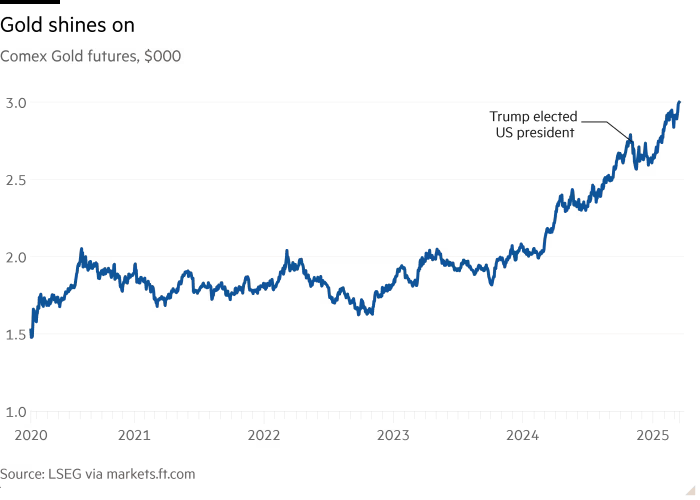
The precious metal has surged past $3,000 per ounce, echoing its climb past $2,000 during the 2008 financial crisis and $1,000 during the pandemic 12 years later. Gold’s luster is unlikely to fade anytime soon, serving as the ultimate shock absorber against geopolitical upheavals, inflation, and — as a non-yielding asset — lower interest rates.
Key Drivers of Gold Prices
These three forces are now accelerating. Natural orders are being torn apart as U.S. President Donald Trump pursues bold ideas like modern colonization, civil service purges, and hefty tariffs — the latter of which could potentially push the U.S. into recession. Since November’s election, U.S. gold reserves have more than doubled.
This accumulation may slow as vaults reach capacity, but trust in gold as a stable store of value remains unwavering, especially as currencies and capital markets continue to wobble. Analysts scrambled to revise their gold forecasts upward last month and are already doing so again. Goldman Sachs projects $3,100 by year-end, while other institutions believe it could hit that mark within just a few months.
Who’s Buying Gold?
A broad range of buyers is driving the surge. Central banks, purchasing over 1,000 tons annually for the past three years, continue to pile in. Emerging market banks have long followed their wealthier counterparts by diversifying away from U.S. dollar holdings and increasing gold reserves.
Last year, investors even outpaced central banks, buying 1,180 tons of gold, mainly in bars and coins. Notably, gold-backed exchange-traded funds (ETFs) — which had seen three years of outflows — reversed course, pulling in $9.4 billion just last month.

Keep an eye on potential newcomers, too, such as Chinese insurance companies and U.S. mutual funds. Beijing recently unveiled a pilot project allowing 10 insurance companies to buy gold. In the U.S., a bill proposed last Friday could, if passed into law, redirect a small portion of the trillions managed by mutual funds into gold.
Is Gold Always a Safe Investment?
Gold investors are often anxious amid market fluctuations, but history has proven them right. According to the World Gold Council, gold has consistently outperformed other asset classes over one-year, three-year, and even ten-year periods. Since the gold standard was abandoned in 1971, gold has delivered annual returns of around 8%.

However, even an asset designed to mitigate risks carries its own uncertainties — particularly if the future turns out to be less volatile than expected. At least stocks like Rheinmetall, Alibaba, and Berkshire Hathaway promise future cash flows, which gold does not. But in a world where new shocks seem to emerge daily, shock absorbers reign supreme.
Conclusion
With geopolitical tensions rising, inflation persisting, and interest rates staying low, gold continues to solidify its place as a reliable safe haven for investors. The increasing demand from central banks, individual investors, and financial institutions highlights gold’s enduring appeal during uncertain times. Indeed, as new shocks keep unfolding, gold remains the “king” in investment portfolios.
🔗 EXPLORE MORE LATEST NEWS RIGHT HERE!
- Forex: Get the latest trends and effective trading strategies
- Crypto: Stay updated on the hottest cryptocurrency market news
- Stock & Commodities: Discover potential investment opportunities
- Trading Brokers: Choose reliable brokers for your trades
- Expert Advisor: Smart tools to assist your trading
- Finance News: 24/7 updates on financial news
DON’T MISS OUT, CLICK AND READ NOW!
- t.me/finance_solutes
- Website: https://finance-solutes.com
- Hotline: +1 929 5636 439 ( Hotline )
- 26 Broadway, Suite 934, New York, 10004, US
