
 XM
XM Bybit
Bybit Binance
 Robinhood
 Webull
 IC Markets
 Pepperstone
 OKX
OKX Vantage
 VT Markets
 BingX
BingX Gate.io
 Kucoin
 MEXC
MEXC Exness
 Bitget
The first article will give you the most comprehensive overview of the Forex market. The path to achieving stable profits from this market is long and challenging, so equip yourself with the best Forex knowledge.
1. WHAT IS FOREX?
Forex is an abbreviation for Foreign Exchange, also known as FX, spot FX, or the Forex market. It is the largest financial market in the world, with a daily trading volume reaching $5.1 trillion (World Bank report, 2016).
Forex is a decentralized market for the exchange of global currencies.
2. HISTORY OF FOREIGN EXCHANGE TRADING
Foreign exchange trading involves the exchange of fiat currencies and is believed to have existed for centuries—dating back to the Babylonian era. Today, the Forex market is one of the largest, most liquid, and most accessible markets globally. It has been shaped by significant global events such as the Bretton Woods system and the Gold Standard.
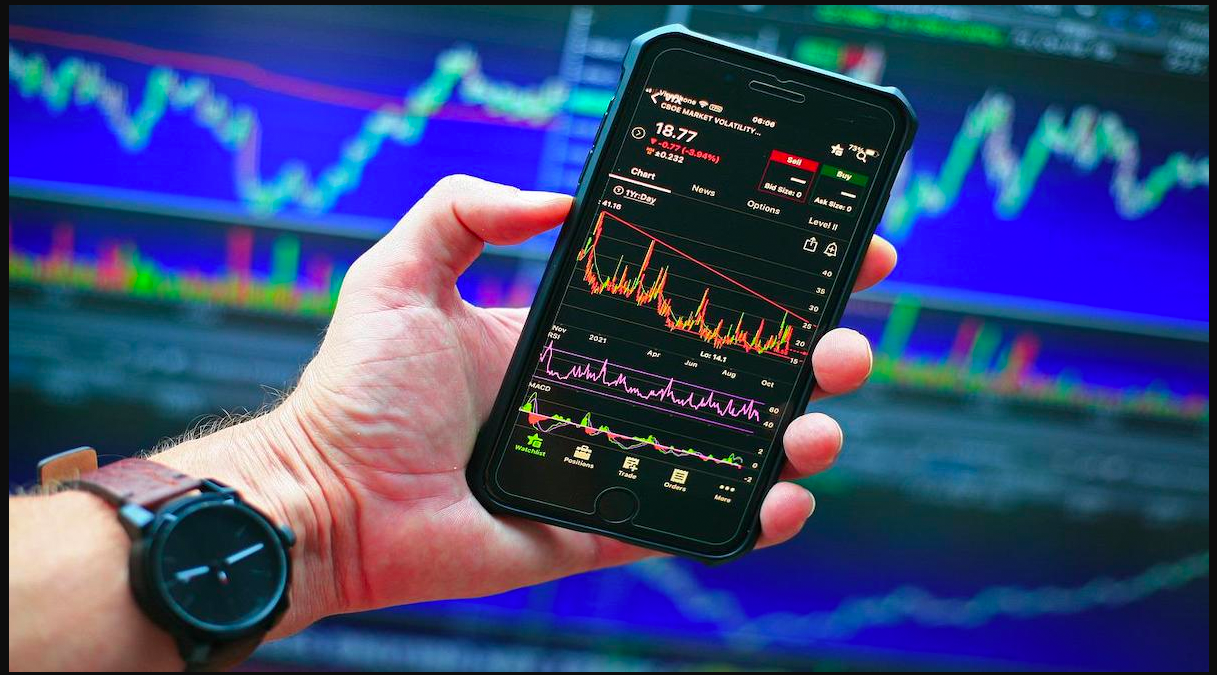
It is important for forex traders to know the important historical events that shaped the market. Because similar events can happen again in different forms. History has a tendency to repeat itself.
The events that have been decisive in the forex market are:
2.1. The Gold Standard
Gold was widely accepted as a medium of exchange, but it was impractical due to its weight.
In the 1800s, nations adopted the gold standard. The gold standard ensured that governments would exchange any amount of paper money for its equivalent value in gold.
The gold standard lasted until World War I when European countries had to suspend it due to the need to print more money to fund the war.
At that time, the forex market was protected by the gold standard, and this remained the case throughout the early 1900s.
2.2. The Bretton Woods System
The Bretton Woods system, established at the end of World War II, is considered the foundation for the development of the forex market.
World War II transformed the U.S. dollar from a low-value currency following the 1929 stock market crash into the benchmark currency against other international currencies.
The Bretton Woods Agreement was created to establish a stable environment in which global economies could recover. It aimed to achieve this by creating a regulated forex market.
Ultimately, the Bretton Woods system failed to maintain the fixed exchange rate between gold and the U.S. dollar. The reason was that gold reserves were insufficient to support the government’s spending and lending of dollars.
In 1971, President Richard M. Nixon ended the Bretton Woods system. This led to the free-floating exchange rate of the U.S. dollar against other foreign currencies.
Today, the forex market is the largest financial market in the world, with over $5 trillion traded daily.
3. FOREX TRADING PRODUCTS
3.1. Currency Pairs
| Trading in Pairs | Currencies are always traded in pairs. In forex trading, traders buy one currency while simultaneously selling another.
Examples: EUR/USD, EUR/GBP, EUR/CAD |
| Currency Code Format | The first 2 letters are the abbreviation of the country name. The last letter represents the currency of that country. |
3.2. Types of Currency Pairs
Currency pairs are classified into different types based on liquidity. These include: Major currency pairs, cross currency pairs and exotic currency pairs.
Examples:
- Major currency pairs: EUR/USD, USD/JPY, GBP/USD, USD/CHF, USD/CAD…
- Cross currency pairs: EUR/CHF, EUR/GBP, GBP/CAD, EUR/AUD, EUR/NZD…
- Exotic currency pairs: USD/BRL, USD/HKD, USD/SAR, USD/SGD, USD/ZAR…
4. TRADING HOURS
The forex market operates 24 hours a day, 5 days a week.
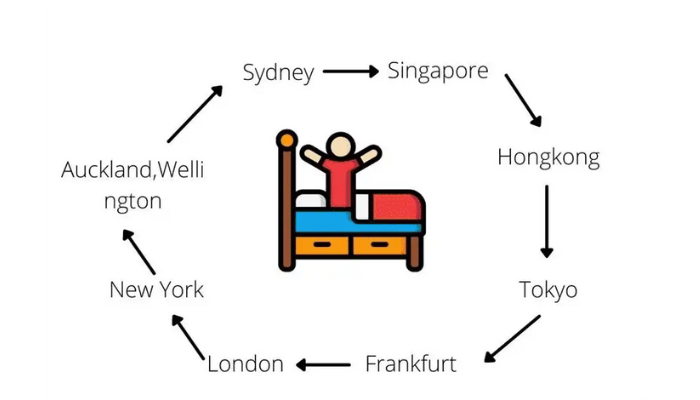
It consists of different Forex trading sessions: Sydney session, Tokyo session, London session, and New York session.
The forex market functions in a continuous cycle across financial centers worldwide.
Example: A trading day begins when traders wake up in Auckland/Wellington, then moves to Sydney, Singapore, Hong Kong, Tokyo, Frankfurt, London, and finally New York before the cycle restarts in Wellington!
5. HOW DOES FOREX TRADING WORK?
Forex trading takes place on technology-based platforms through the interbank market, rather than at a centralized exchange.
You may have already participated in the forex market when exchanging money for travel.
The forex market operates similarly to most other markets. However, it differs in that it is driven by supply and demand.
Example: When European citizens have a high demand for U.S. dollars, they will exchange euros for dollars. As a result, the value of the U.S. dollar increases while the value of the euro decreases. However, this transaction only affects the EUR/USD currency pair and does not impact other currency pairs.
5.1. How Do We Buy/Sell Currency Pairs?
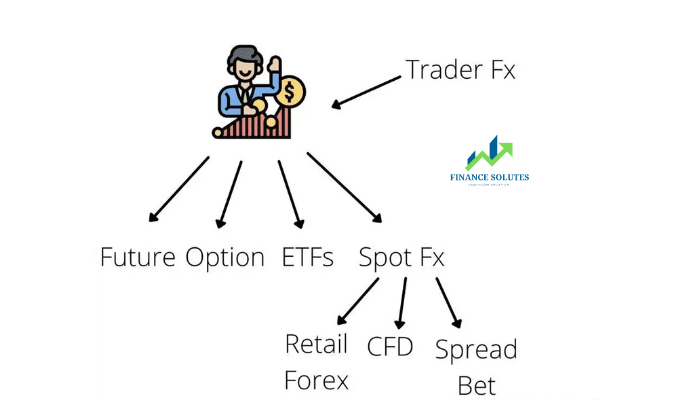
Before the widespread use of the Internet, the only way to trade forex was through direct transactions. Today, with rapid technological advancements, new trading methods have emerged, making forex trading more accessible than ever.
A popular method for participating in the Forex market today is CFDs
Several factors influence the Forex market, including major macroeconomic events such as presidential elections and country-specific factors like interest rates, GDP, unemployment, inflation, and debt-to-GDP ratio.
Top traders use economic calendars to stay updated on important news that may impact the forex market.
The forex market enables both institutions and individuals to trade via the interbank market.
Why Are Traders Attracted to the Forex Market?
- Market Size: The forex market reaches trillions of dollars in size. Additionally, it operates globally, 24 hours a day, 5 days a week.
- Ease and Variety of Trading: With just an internet-connected device, anyone can participate. There are also many different currency pairs available for trading.
- High Liquidity: Around 90% of trading volume comes from investors, ensuring high liquidity at most times.
6. SUMMARY
We’ve just covered a lot of fundamental knowledge about the forex market. Everyone has their own starting point, but remember: learning never stops.
The knowledge from today’s lesson will be a solid foundation for your future in forex trading. Stay tuned for more articles from Finance Solutes!
- t.me/finance_solutes
- Website: https://finance-solutes.com
- Hotline: +1 929 5636 439 ( Hotline )
- 26 Broadway, Suite 934, New York, 10004, US
