
 XM
XM Bybit
Bybit Binance
 Robinhood
 Webull
 IC Markets
 Pepperstone
 OKX
OKX Vantage
 VT Markets
 BingX
BingX Gate.io
 Kucoin
 MEXC
MEXC Exness
 Bitget
Stablecoins — once hailed as the future of digital finance — have come under fire from the world’s top central banks. In a pointed chapter of its annual economic report, the Bank for International Settlements (BIS) concluded that stablecoins “perform poorly” as money and fail to meet basic standards of reliability, flexibility, and integrity.
Failing the “Triple Test” of Sound Money
The BIS asserts that stablecoins fall short on three fundamental functions of money:
-
Singleness: Stablecoins often trade at varying exchange rates, undermining uniformity.
-
Elasticity: Their one-to-one backing model prevents the flexibility needed to expand credit.
-
Integrity: Lacking robust know-your-customer (KYC) systems, they remain vulnerable to illicit use.
According to Hyun Song Shin, head of the BIS monetary and economic department, stablecoins pose systemic risks due to the potential for rapid investor withdrawals during crises.
Exploited for Crime and Loopholes
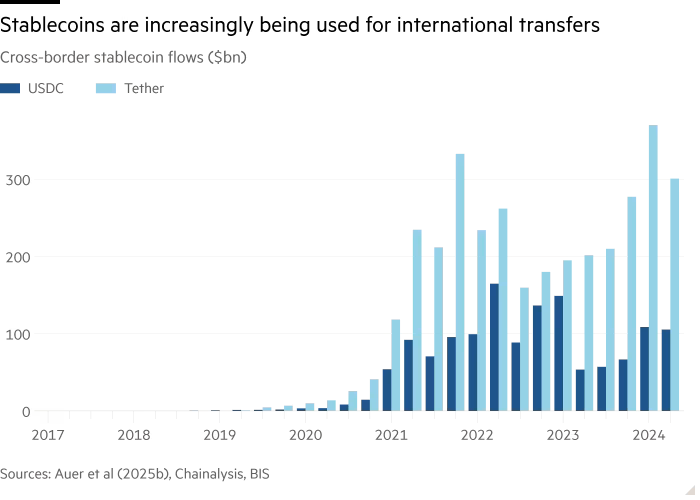
Despite claims of transaction efficiency, stablecoins have gained notoriety for enabling money laundering and drug trafficking due to their pseudonymous nature. The BIS flagged their widespread use in circumventing traditional financial safeguards, calling them the “go-to choice for illicit use.”

Regulatory Push vs. Political Backing
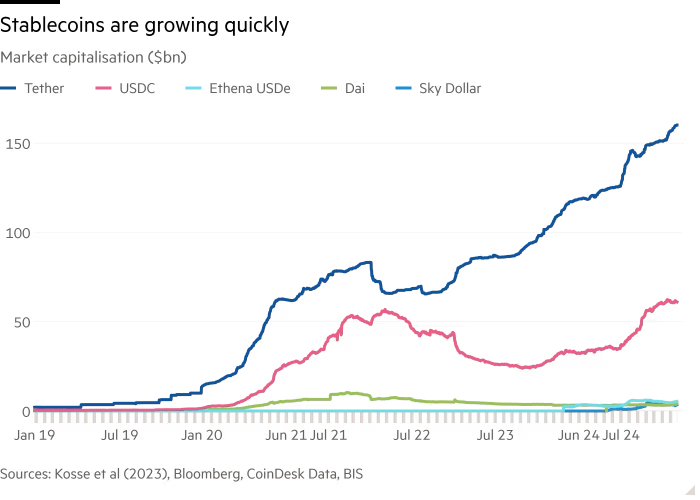
Governments in the US and UK are racing to regulate the sector. Currently, stablecoins like Tether and USDC account for about $250 billion in circulation. Yet, political tides are shifting. Since President Trump’s return to office, he has actively promoted pro-crypto policies, including support for World Liberty Financial and its stablecoin, USD1.
Central Banks Offer an Alternative
Rather than rely on privately issued digital currencies, the BIS is championing a centralized infrastructure for tokenized deposits. Under Project Agorá, seven central banks and 43 commercial institutions are trialing a cross-border payments solution aimed at efficiency and trust.
Conclusion
The BIS warns that society faces a crucial decision: evolve the monetary system using proven institutional foundations, or gamble on private digital currencies that fail the test of singleness, elasticity, and integrity. The message is clear — without robust backing and regulation, stablecoins remain a risky detour rather than a financial revolution.
🔗 EXPLORE MORE LATEST NEWS RIGHT HERE!
- Forex: Get the latest trends and effective trading strategies
- Crypto: Stay updated on the hottest cryptocurrency market news
- Stock & Commodities: Discover potential investment opportunities
- Trading Brokers: Choose reliable brokers for your trades
- Expert Advisor: Smart tools to assist your trading
- Finance News: 24/7 updates on financial news
DON’T MISS OUT, CLICK AND READ NOW!
- t.me/finance_solutes
- Website: https://finance-solutes.com
- Hotline: +1 929 5636 439 ( Hotline )
- 26 Broadway, Suite 934, New York, 10004, US
