
 XM
XM Bybit
Bybit Binance
 Robinhood
 Webull
 IC Markets
 Pepperstone
 OKX
OKX Vantage
 VT Markets
 BingX
BingX Gate.io
 Kucoin
 MEXC
MEXC Exness
 Bitget
Stocks partially recovered from Monday’s sharp losses, while currency markets fluctuated as investors struggled to keep up with Donald Trump’s sweeping tariff plans against key U.S. trading partners.
Tariff Threats and Market Impact
On Saturday, the U.S. President threatened to impose a 25 percent tariff on imports from Mexico and Canada, a 10 percent tariff on Canadian energy, and a 10 percent tariff on imports from China, triggering a major sell-off in global stock markets at the start of the trading day. He also threatened tariffs on the EU.
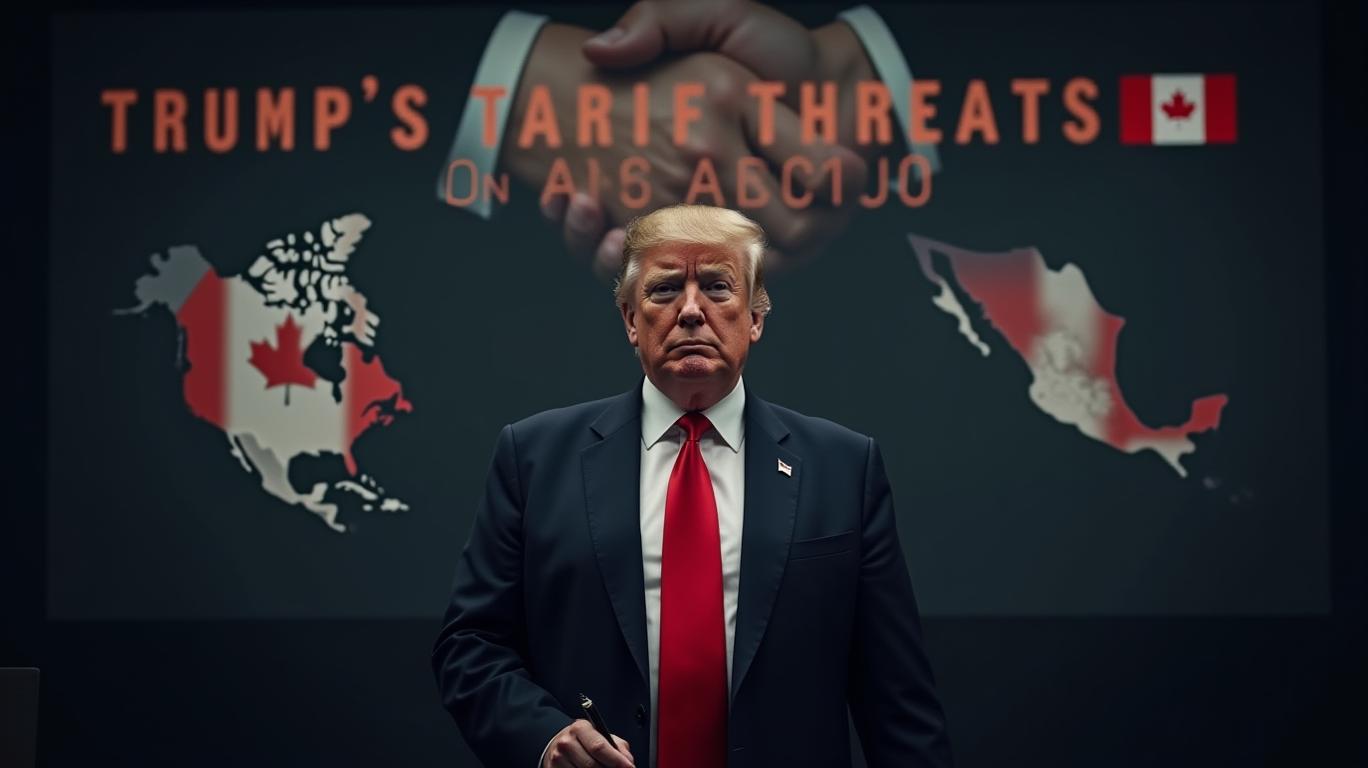
However, markets rebounded strongly after Trump agreed to delay tariffs on Mexico for a month following a call with Mexican President Claudia Sheinbaum on Monday. He also agreed to postpone similar tariffs on Canada for 30 days after a call with Prime Minister Justin Trudeau later in the day.
Stock Performance
The S&P 500 index, which had earlier dropped nearly 2 percent, closed down 0.8 percent, with utility and technology stocks being the worst performers.
Investors noted that Trump’s sudden shift on Mexico underscored how difficult it was for markets to keep up with rapidly changing tariff plans.
“What is clear in this new environment is that one should not overinterpret immediate reactions and market moves,” said Guy Miller, chief market strategist at Zurich Insurance.
European stocks also partially recovered as investors scrambled to assess the shifting dynamics of a potential global trade war. The pan-European Stoxx Europe 600 index closed down 0.9 percent, bouncing back from steeper losses earlier in the day.
Currency Market Volatility
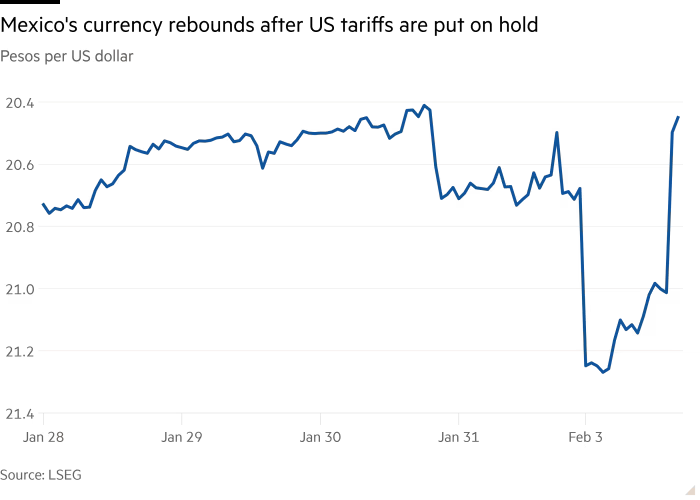
Currency markets were also highly volatile. The Mexican peso, which had earlier fallen as much as 3 percent against the U.S. dollar, rebounded and traded slightly higher on the day. The Canadian dollar also pared losses to 1.457 per U.S. dollar.
The U.S. dollar rose 0.5 percent against other major currencies after gaining more than 1 percent earlier.
“My head hurts,” said a foreign exchange trader at a major European bank. “It’s almost impossible to trade, there’s just too much [news] to process. Buy. No, wait, sell. No, actually buy. [Or] just give up,” he added.
Economic Projections
Global investment banks warned that the tariffs would impact the U.S. economy along with the rest of the world. Analysts at UBS and Morgan Stanley projected that if the tariffs were maintained, they could halve U.S. real GDP growth this year—reducing it by more than 1 percentage point.
Bond Market Movements
The yield on the U.S. 10-year Treasury bond fell 0.04 percentage points to 4.53 percent as investors moved into safe-haven assets. Bond yields fall as prices rise.
However, economists also cautioned that tariffs could accelerate U.S. inflation, preventing the Federal Reserve from cutting interest rates and boosting the dollar.
“The most obvious implication is a stronger dollar,” said Eric Winograd, chief economist at AllianceBernstein. “A long dollar position is the clearest, most transparent expression of the trade war that is now unfolding.”
Earlier in Asia, Japan’s Nikkei 225, a heavyweight export index, closed down 2.7 percent. After dropping early in the session, Hong Kong’s Hang Seng index erased losses and finished flat. Mainland Chinese stock markets remained closed until Wednesday.
China’s offshore yuan, which trades freely, fell as much as 0.7 percent to 7.37 yuan per dollar on Monday morning before trimming losses to 7.32.
Other commodities seen as indicators of Chinese and global economic growth also declined. LME copper fell 0.7 percent to $9,048 per ton, while nickel and aluminum both dropped more than 1 percent.
Cryptocurrency Market Decline
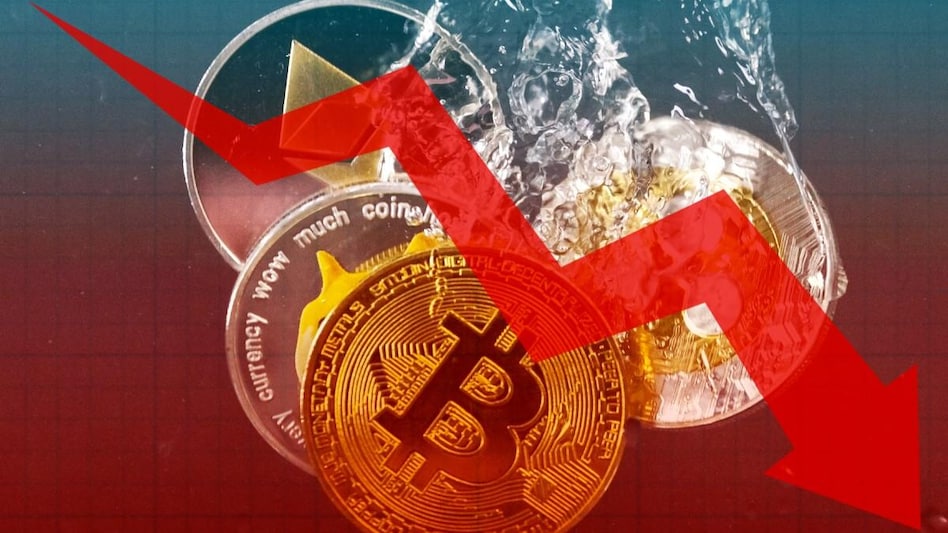
Cryptocurrency markets also slid as traders reduced exposure to riskier assets. Ethereum, the second-largest cryptocurrency, dropped as much as 27 percent before partially recovering. Bitcoin fell 1 percent to $101,098 per coin.
Trade War Risk Premium
George Saravelos, an analyst at Deutsche Bank, said the tariff announcement was “the most extreme level of protectionism we could have imagined” and that markets needed to “significantly and structurally reprice the trade war risk premium.”
Conclusion
The market’s volatility underscores the deep uncertainty surrounding trade policies and their economic consequences. While temporary tariff delays provided some relief, investors remain wary of sudden policy shifts. Moving forward, market participants will closely watch further developments in trade negotiations and economic indicators to assess potential long-term impacts.
- t.me/finance_solutes
- Website: https://finance-solutes.com
- Hotline: +1 929 5636 439 ( Hotline )
- 26 Broadway, Suite 934, New York, 10004, US
