
 XM
XM Bybit
Bybit Binance
 Robinhood
 Webull
 IC Markets
 Pepperstone
 OKX
OKX Vantage
 VT Markets
 BingX
BingX Gate.io
 Kucoin
 MEXC
MEXC Exness
 Bitget
If you are a trader in the markets, you are certainly familiar with the term forward contract. However, there will be some traders who know this term but do not understand what it is and how it is used. So to know clearly what the characteristics of futures contracts are? How it is applied in trading floors and what to note when using it, do not miss the following article of Forex.
What is a Forward Contract?
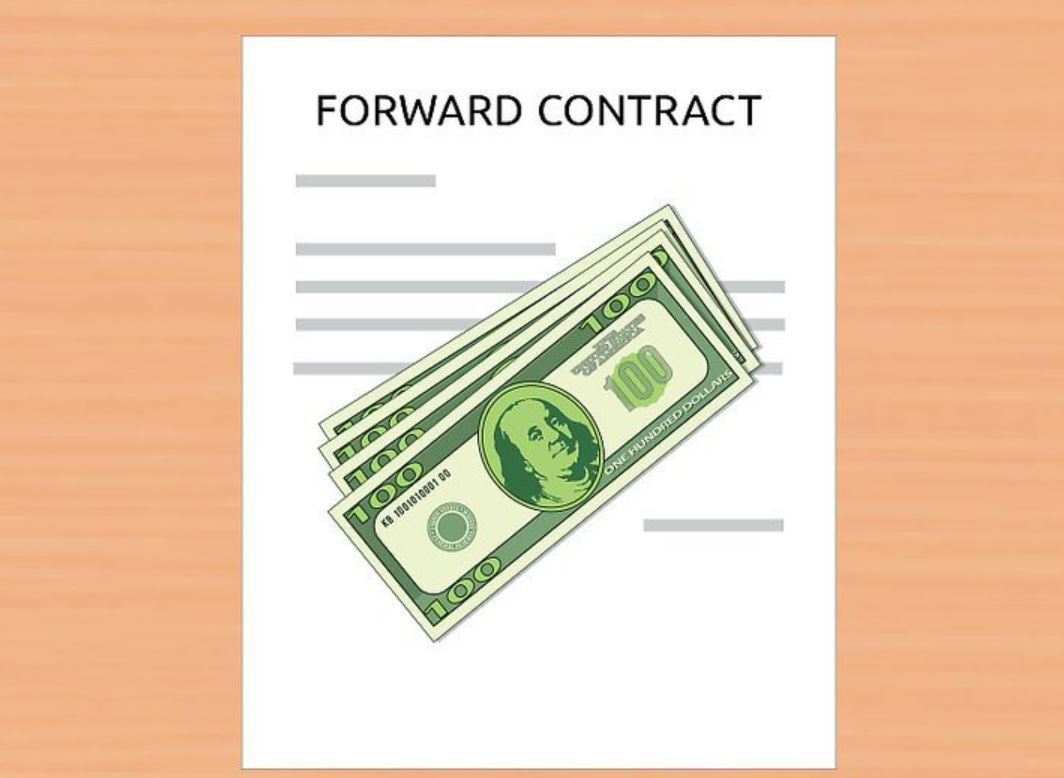
A Forward Contract is one of the types of derivative securities. In this contract, the buyer and seller agree to exchange and trade assets at a specific time in the future (known as the Forward Date) at a price agreed upon today (called the Forward Price).
Forward contracts are a type of contract that differs from spot contracts. In contrast, spot contracts involve assets that are typically delivered within 2 days from the signing of the contract (T+2). For forward contracts, the settlement period is longer than T+2. The difference between the forward price and the spot price can be referred to as a premium or discount. When the forward price is higher, it’s called a forward premium, and when the forward price is lower, it’s called a forward discount.
Generally, forward contracts are used for speculation on future price movements. However, their primary purpose is to limit the risks and impacts related to price fluctuations and interest rates in the future.

Common Types of Forward Contracts Used Today
Currently, participants in standard market transactions typically choose from several types of forward contracts, including:
- Equity Forward Contract: This type of forward contract is used for assets such as stocks. It involves the agreement to buy or sell equities at a future date at a predetermined price.
- Forward Contract on Bonds: This contract is used for trading bonds. It allows the buyer and seller to agree on buying or selling bonds at a specific price in the future.
- Commodity Forward: This forward contract is used for trading commodities such as wheat, corn, rice, etc. It allows participants to agree on future transactions for these physical assets.
- Currency Forward Contract: This contract involves the exchange of currencies at a specified future date for a determined exchange rate. It is used by participants who want to hedge against foreign exchange risk.
- Forward Rate Agreement (FRA): This is a type of forward contract where two parties agree on the interest rate they will receive or pay on future payments. It’s commonly used to hedge against interest rate fluctuations.
- Non-Deliverable Forward (NDF): This type of forward contract does not involve physical delivery of the underlying asset. Instead, it is settled in cash. NDFs are typically used in markets where the underlying asset cannot be delivered.
- In the Vietnamese market, forward contracts are most commonly used for foreign exchange transactions. Participants include commercial banks, export/import companies, and organizations involved in hedging against currency exchange rate risks.
Some regulations related to the type of forward contract for foreign exchange:

This is the agreement of the parties when conducting a foreign exchange transaction at a price that has been previously set and will be paid at a future specified time.
The underlying asset of the forward contract is defined as foreign currency, and the forward price is the exchange rate between the two currencies. On the maturity date, the exchange rate will be applied and is referred to as the forward exchange rate.
Similar to other types of forward contracts, the forward price of the contract will be agreed upon by both parties, but this exchange rate will be within the limits of the current forward exchange rate set by the central bank. In Vietnam, the forward exchange rate is usually quoted by commercial banks and is determined through spot exchange rates and interest rates in the money market.
The forward exchange rate is determined using the formula:
F0 = S0 * (1 + rd) / (1 + ry)
Where:
- F0 is the forward exchange rate
- S0 is the spot exchange rate
- rd is the interest rate of the quoted currency
- ry is the interest rate of the base currency
This calculation is formed through the theory of interest rate parity, where the interest rate differential between two countries equals the differential between the forward exchange rate and the spot exchange rate. To help you better understand what the formula for a forward contract is, let’s take a look at the following example:
An exporting company, X, wants to obtain 500,000 USD to import goods next month. To hedge against the risk of the exchange rate increasing, company X needs to enter into a forward foreign exchange contract with bank Y. At this point, company X can buy 500,000 USD at an exchange rate of 21,500 VND. One month later, the exchange rate of USD/VND will increase and exceed 21,500 VND, and at this point, company X will have successfully limited and hedged the risk.
Elements that make up a futures contract
The types of underlying assets used for buying and selling are:
- Real assets such as rice, coffee, etc.
- Financial assets such as foreign currency, stocks, money, etc.
The parties involved in the contract are:
- Buyer: The person who agrees to buy the asset at a specific time in the future, and the price will be agreed upon today.
- Seller: The person who agrees to sell the asset at a specific time in the future, and the price will be agreed upon today.
The specific time defined in the future is the time when the contract will be settled, meaning from the contract signing date to the payment date, which is called the contract’s maturity.
The settlement price is the price applied at the time of payment in the future for those underlying assets but has been determined at the present time, usually based on the spot exchange rate and interest rates in the market.
Example: On 05/04/2022, a 3-month forward contract was signed between Mr. X and Mr. Y to purchase 10 tons of rice, with the agreed price of 15,000 VND per kg.
At this point:
- Mr. X (the buyer) and Mr. Y (the seller)
- Maturity date: 05/07/2022
- Forward price: 15,000 VND per kg
What is the value of a futures contract?
A forward contract involves the participation of both a buyer and a seller of assets, with a price agreed upon in the present and the payment to be made in the future.
The buyer will receive the value of the forward contract as S(t) – K
- K is the forward price agreed upon in the contract.
- S(t) is the spot price in the market at the time the contract expires.
The forward price is set when both parties sign the contract and will not change, even if the asset’s market price fluctuates over time.
At maturity, the buyer must purchase the asset at the market price S(t), while the forward price K was predetermined.
The price the seller receives for each unit of the asset is: K – S(t)
When S(t) > K, the buyer will profit and the seller will incur a loss.
When S(t) < K, the seller will profit and the buyer will incur a loss.
The profit or loss from the forward contract is calculated as the value received – the contract fee.
Since the contract is executed directly between the buyer and the seller without intermediaries, no additional costs are incurred. Therefore, the profit or loss is equal to the value received from the contract.
Example: On 03/02/2022, Company A enters into a forward contract with Company B to purchase 1000 tons of rice, with a 3-month maturity and a forward price of 8 million VND per ton. In this case, Company A is the buyer and Company B is the seller.
With the agreed price, neither party will have a price advantage, so the contract value will be zero when the contract is signed. However, if the rice price in the market changes, the value of the contract will also change.
Features of futures contracts

A forward contract will have the following characteristics:
- On the day the contract is signed, the two parties will not proceed with payment or exchange of goods/underlying assets; this will occur when the contract reaches maturity.
- The forward contract will be signed, and the terms will be agreed upon between the buyer and the seller without involving any intermediaries, meaning no additional costs will be incurred.
- At maturity, both parties are required to fulfill the terms agreed upon in the contract.
- The underlying asset can be any type of asset and does not need to be standardized in terms of quantity, quality, value, etc.
- It will not be listed or traded on neutral markets but can only be traded on over-the-counter (OTC) markets.
- Participants in the forward contract can close their positions by opening an opposite position in a similar forward contract.
- No margin requirements are necessary.
- Forward contracts have low liquidity, making them relatively high-risk.
Significance and Risks of Forward Contracts
Significance:
Basically, forward contracts help hedge and mitigate risks against sudden and abnormal price fluctuations of goods, financial assets, and interest rates. Companies use forward contracts to fix certain costs (such as raw material costs) to limit risks when prices escalate unexpectedly.
For commercial banks, multinational companies, financial investors, and import/export companies, as well as individuals who are heavily affected by exchange rate fluctuations, forward contracts serve as one of the tools to mitigate risk.
Risks:
Participants in forward contracts face two types of financial risks: liquidity risk and payment risk.
- Liquidity Risk: Forward contracts typically do not develop as much as futures contracts, especially in the Vietnamese market. They are not listed on any exchange and are considered private contracts between the two parties. As such, these contracts are not traded in the market, and their liquidity is relatively low. If a participant needs to change the underlying asset or liquidate the contract, it will be difficult to transfer or close the contract by taking an opposite position.
- Payment Risk: There is no margin between the buyer and the seller, and no intermediary to facilitate clearing. Profits and losses from the contract are settled when the contract reaches maturity. Therefore, the payment risk is quite high, as there is no mechanism in place to guarantee payment or mitigate defaults before the maturity date.
How are forward contracts different from futures contracts?
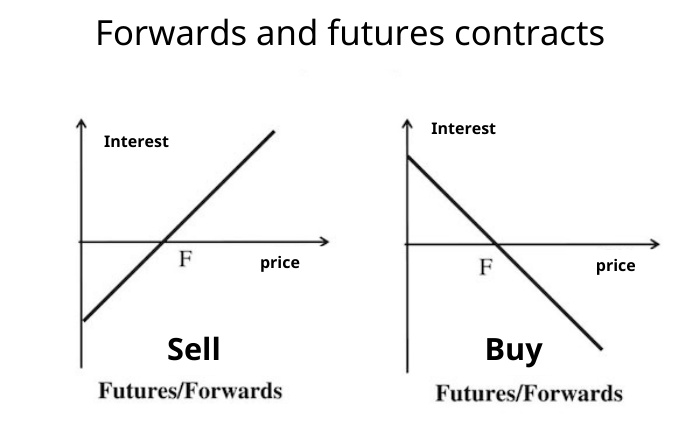
The basic difference between futures contracts and forward contracts can be highlighted by comparing their characteristics, liquidity, payment risks, and standardization as follows:
In terms of nature: There is an exchange responsible for intermediary in conducting the exchange and execution of the contract. This is the most important difference with the futures contract. The exchange allows anonymous investors to trade with futures contracts without having to identify a specific counterparty. In addition, the exchange also helps futures contracts have high liquidity in the market, making the partners carry out their tasks effectively.
In terms of contract standardization, futures contracts are more standardized. Futures contracts can be executed on any type of commodity, large or small quantity, regardless of quality, and the two parties will determine the payment time. But for futures contracts, because they are listed on the exchange, they are regulated on the types of commodities, must meet minimum quality standards, and have a specified delivery time.
Payment Risk: Payment risk is managed differently in futures contracts. When entering into a futures contract, neither the buyer nor the seller knows the identity of the other party. The clearinghouse acts as an intermediary, ensuring that payment and settlement are handled effectively, with all trades being cleared through it.
In the case of a futures contract, profits and losses are calculated after the expiration date. Meanwhile, the changes in value of the two parties to the contract for the futures contract will be changed and adjusted daily depending on the value in the market. In addition, the futures contract has margin requirements so that payments take place daily and these requirements will limit the risks that may occur when making payments in the futures contract.
Liquidity: Futures contracts are more liquid due to the involvement of exchanges and the ability to trade them in a secondary market. This liquidity allows for easier entry and exit from positions.
In summary, futures contracts are more standardized, liquid, and have more predictable payment and risk management mechanisms, making them suitable for larger-scale trading. Forward contracts offer flexibility and customization but come with higher risks and lower liquidity. Depending on your goals, you may choose one over the other based on these differences.
- t.me/finance_solutes
- Website: https://finance-solutes.com
- Hotline: +1 929 5636 439 ( Hotline )
- 26 Broadway, Suite 934, New York, 10004, US
