
 XM
XM Bybit
Bybit Binance
 Robinhood
 Webull
 IC Markets
 Pepperstone
 OKX
OKX Vantage
 VT Markets
 BingX
BingX Gate.io
 Kucoin
 MEXC
MEXC Exness
 Bitget
What is a futures contract? This is a question that many traders wonder about even though they have made many transactions with this type of contract. Most investors do not clearly understand its nature. So to better understand the nature of futures contracts, in what cases it is used and what are its advantages and limitations, follow Forex to find out right away.
What is a futures contract?
In finance, a futures contract is a standardized contract between a seller and a buyer. The two parties agree to exchange a certain asset in standardized quantities and quality. The agreed price or starting price is today (futures price or futures price), and the delivery date and time are in the future. They trade futures contracts through a futures exchange called a futures exchange. When the buyer of the contract agrees to buy the underlying product in the future, it is called a long position. and the seller agrees to sell their product, which is called a short position.
This term reflects that both the buyer and the seller will have their own expectations. The seller expects the price to continue decreasing, while the buyer hopes the price will increase. However, traders should be aware that there is no cost incurred when signing the contract. The positions of both the buyer and the seller are represented through the terms “sell” and “buy.”
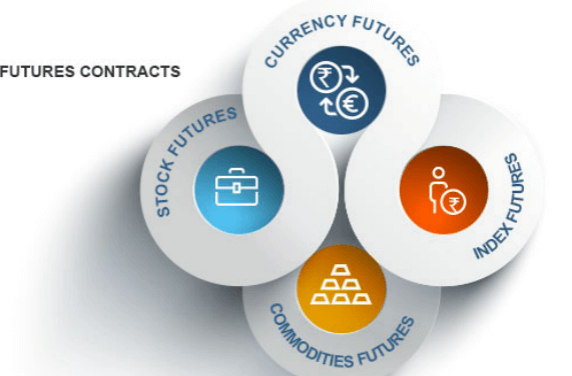
It is also possible for futures contracts to involve underlying products that are not traditional products. This means the underlying assets for futures contracts could be financial contracts, such as securities, intangible assets, financial instruments, currencies, and even items like interest rates or indices of various securities.
Example of a Futures Contract
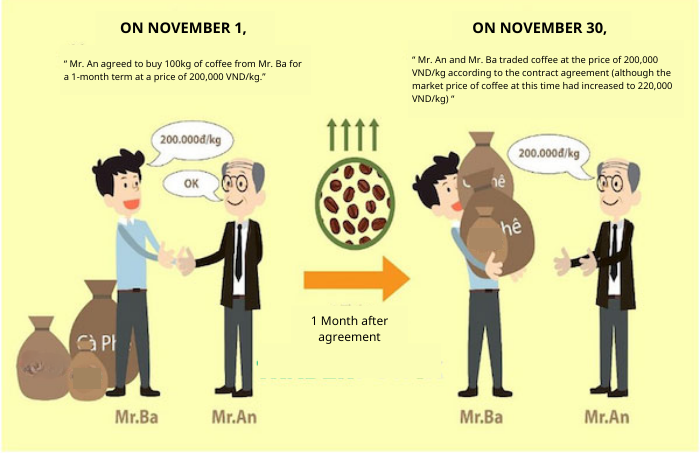
Futures contracts have been used to satisfy both buyers and sellers in transactions that will occur in the future, with the price of the traded product being considered at the time the contract is signed.
For example: Company 1 enters into a futures contract with Company 2 to trade 100,000 barrels of oil at a price of 1,500,000 VND per barrel in May 2018. By September 2018, if the price increases to 2,000,000 VND per barrel, Company 1 will have two options:
- Sell the 100,000 barrels of oil at the agreed price of 1,500,000 VND per barrel to Company 2.
- Company 1 will pay Company 2 the difference between the initial agreed price and the new price, without selling the oil. The difference could be up to 50,000,000 VND.
Related Concepts to Futures Contracts
A futures contract is an agreement between the buyer and the seller to exchange products at a future date for a predetermined price.
Underlying Asset: The asset involved in the derivative contract that both parties agree upon when conducting transactions.
Margin: The deposit required to participate in derivative securities transactions. It ensures that both parties will be able to settle their obligations.
Closing Position: When a trader opens a position that counteracts the position held by other investors, using the same underlying asset and the same expiration date.
End-of-Day Settlement Price: The price of the futures contract used to settle any profits or losses incurred during the day within the contract.
Contract Multiplier: The factor used to convert the value of an index in a futures contract into a monetary amount.
Open Interest: The number of futures contracts that exist at a given time for a specific derivative security.
Characteristics of a Futures Contract
To help traders better understand the nature of futures contracts, here are some characteristics of futures contracts that will clarify the potential benefits when engaging in the derivatives market.
Standardization
Futures contracts are traded and listed on derivative securities exchanges, which means the first characteristic of a futures contract is that its terms are standardized.
For example, specific details in the contract are regulated by the exchange (which is where the futures contract is listed). These details include the type of asset, the quantity of the underlying asset, delivery methods, contract size, and payment terms.
Listed Contracts
This type of contract has been listed and meets the standard requirements of the derivatives exchange. This is why the values, terms, and quantities of underlying assets in a futures contract are standardized.
Margin and Clearing
In futures markets, both buyers and sellers must ensure that the payment for these contracts can be made through margin, as this measure guarantees that both parties will fulfill their obligations in the contract. Traders participating in futures markets must meet the margin requirements. However, the clearing center, along with the exchange, will establish specific regulations for the types of contracts traders need to comply with.
The primary purpose of participating in margin for futures contracts is to ensure mandatory payment obligations.
Clearing and settlement are based on actual market prices. The trader’s account will be credited or debited for gains and losses based on the actual value, and if necessary, additional margin may be required. This ensures that payments from both the seller and the buyer are more secure and the risks are minimized.
Easily Closing a Position
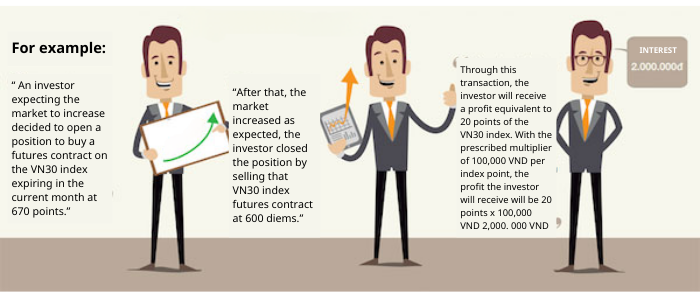
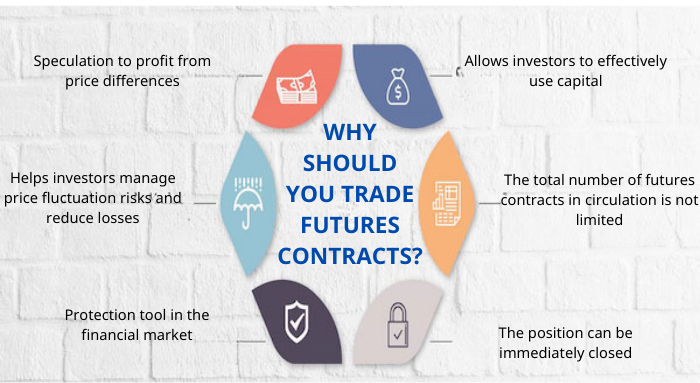
Traders can take positions in the opposite direction in a futures contract, just like they can close positions at any time. This flexibility allows the capital they invest in futures contracts to be more adaptable.
Using Financial Leverage
When participating in markets using futures contracts, traders can start with a small initial investment and potentially earn impressive profits compared to other markets.
To trade in futures contracts, traders must meet margin requirements, as it is a commitment in the financial field to ensure payment as per the terms of the contract.
When there is price volatility in the products that aligns with what the trader has predicted, the futures position allows the trader to earn substantial profits. The effect of leverage amplifies profits, especially in futures markets, and can generate higher returns than those available in underlying markets.
Future commitment to performance obligations

When trading futures contracts, both the buyer and the seller have specific rights and mandatory duties to fulfill.
If the futures contract reaches its expiration date, the buyer must make payment according to the contract’s terms and receive the purchased product from the seller. The seller, in turn, transfers the agreed quantity of the asset to the buyer and receives payment.
Liquidity
Through the terms outlined in the contract, traders participating in futures contracts will have information about the assets they are buying and selling, allowing them to understand how and when these assets will be traded.
Therefore, traders can easily open and close positions in the market, which enhances liquidity in futures markets. For this reason, traders also use futures contracts as tools for various purposes.
The process of executing a transaction with a futures contract
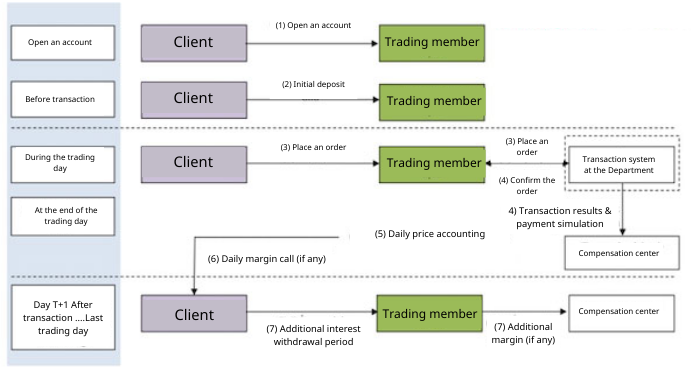
The mechanism that allows futures contracts to function is quite similar to stock trading, but it attracts investors because they can buy and sell without owning the underlying asset. This type of contract is based on traders’ expectations of price movements, enabling them to execute trades based on these predictions. Therefore, when a trader believes the market will decline, they may protect their portfolios by short-selling futures contracts, then cut losses and take profits by buying back the contracts. By implementing risk management strategies in futures trading, price fluctuations in the contracts help offset the increase or decrease in the value of the portfolio.
Effective Futures Trading Strategies
Trading with Price Trends:

This futures trading strategy is quite simple, yet it is very attractive to investors, making it widely applied. However, when compared to other strategies, it carries significant risks. Therefore, traders should make their investment decisions in futures contracts based on their own market analysis, anticipating when prices are about to rise and waiting to sell. If prices rise, they should then close their position.
Conversely, if a trader predicts that the market will decline, they should sell futures contracts and then close their position by buying back.
Day Trading
In a narrow sense, day trading refers to a strategy where buying and selling are completed within the same day. By the end of the day, both the selling and buying positions are closed, bringing the trader’s position to zero in order to avoid the impact of overnight market fluctuations. In a broader sense, day trading can also involve holding positions overnight until the next trading day.
Disadvantages of futures contracts
Traders who practice scalping or those who have the time to monitor and analyze charts and market data are well-suited for using futures contracts.
However, the potential risks of leverage are high because leverage is considered a double-edged sword. If market movements do not align with a trader’s predictions about the changes in underlying assets, they will likely incur losses. These losses can be significant when calculated as a percentage of the initial capital.
When using futures contracts for risk hedging, it may limit the opportunity to capitalize on favorable market fluctuations.
Benefits of Futures Contracts
Easy and Convenient Trading
Trading futures contracts is similar to trading stocks. Traders place orders to buy if they predict that the market will rise, allowing them to open a position in the futures contract. If the market behaves as expected, investors can earn additional profits. Conversely, if the market trend is downward, traders can profit by opening a position to sell the futures contract.

High Leverage, High Profit
Futures contracts have unique characteristics, where investors only need to provide a margin for a portion of the contract’s value, allowing them to leverage larger positions. Compared to stock investments, futures contracts can yield higher profits. However, with higher leverage comes increased risk if the market trend is predicted incorrectly. Therefore, once you hold a futures contract, it’s important to be cautious and closely monitor the market.
Continuous Trading Throughout the Day
In stock trading, traders can sell once the stocks are in their account, but typically they need to wait for two days. In contrast, when trading futures contracts, traders can close a newly opened position, whether it’s a buy or sell position, on the same day. This enables investors to profit from market fluctuations by continuously opening and closing positions throughout the day.

More Profit Opportunities When the Market is Declining
In stock market trading, when the market is trending downward, it can be difficult for investors to find opportunities for profit. However, traders can take advantage of this situation through futures contracts. At any time, traders can take on a selling position in the futures contract market. But to participate in this market, one requirement is to meet the margin requirements. If the market moves as predicted, selling futures contracts can yield significant profits for traders.
How Do Futures Contracts Differ from Contracts for Difference (CFD)?
Futures Contracts
As explained earlier, futures contracts are agreements that facilitate transactions in the financial market, with the underlying asset and its price determined on the day of the contract and set for a future period.
The position, quality, and quantity of the physical asset, as well as the delivery time, are standardized in futures contracts. If the contract reaches its expiration date, it can be settled in cash. At this point, both the seller’s and buyer’s assets are recorded as debits and credits, and the actual delivery of the asset may be recorded as per the terms of the agreement. Transactions are then carried out according to the contract’s stipulations.
Contracts for Difference (CFD)
As the name suggests, contracts for difference are agreements that facilitate buying and selling based on the price difference of assets from the moment the contract is initiated to its conclusion. In this case, traders must predict the upcoming trends in the market.
If you predict that the price will rise, you should place a buy order. However, if you feel that the price will decrease, you can place a sell order. From the time you open the position until it is closed, the price will fluctuate, and these fluctuations represent the profit you can earn or the loss you may incur. Profit or loss depends on how accurately you can identify market trends and the strategy you apply when executing trades.
Where the Transactions Are Executed
The official market is where futures contracts are executed. This is typically a derivatives market such as the New Zealand Stock Exchange (NZX), Euronext, and others. This is why futures contracts are standardized and strictly regulated.
Meanwhile, contracts for difference (CFDs) are usually traded over-the-counter (OTC), facilitated by brokers who are not required to be listed on official exchanges.

Spread Fee
The difference between the buying and selling prices of a given asset is called the “spread.” Both Contracts for Difference (CFD) and futures contracts have specific spreads. However, the spread for futures contracts is typically lower and more attractive compared to CFDs.
Contract Size
Futures contracts are designed for organizations with large capital to execute trades on major exchanges, which is why their contract sizes differ significantly from CFDs. For example, with CFDs, an investor can easily trade 5 ounces of gold worth about $7,250. In contrast, for a futures contract on gold (such as the Comex), the minimum trading volume is typically 100 ounces, which equals around $145,000. As a result, small traders find CFDs more suitable, while futures contracts are less practical for them due to their larger contract sizes.
Leverage
Leverage allows investors to execute large trades with a small amount of capital. For futures contracts, the leverage ratio is not fixed and can vary depending on the type of contract. However, the flexibility of leverage is generally lower compared to other instruments. The initial margin, which is the minimum amount an investor needs to deposit to engage in a futures contract, is clearly defined for each specific contract type. Typically, margin requirements for futures contracts range from 5% to 10% of the contract’s actual value.
On the other hand, CFDs are provided by brokers, and the initial margin requirement can be determined by the broker. As a result, leverage in CFDs can be more flexible, and investors can choose their leverage based on the regulations set in the Forex market.
Expiration Date
For futures contracts, the expiration date is always predetermined, whereas for CFDs, it is not specified.
The underlying assets will set the expiration date and follow the agreed-upon price, so when the maturity time arrives and a new period begins, transitioning to a new contract type, the contract must have a termination date.
On the other hand, if there is no expiration date in the future and the stock doesn’t have a preset price, the contract for difference (CFD) will also have no end date. If the price of a product does not align with the trader’s preferences, they will need to liquidate the contract.
Because of this, when executing overnight trades, investors will not incur any swap fees. At the time of contract maturity, investors will only need to pay the rollover fee once.
When executing overnight orders, investors need to pay swap fees, especially when trading CFDs. Additionally, when transitioning from Wednesday night to Thursday, traders will incur three times the swap fees. However, unlike futures contracts, this type of contract does not have an expiration date.
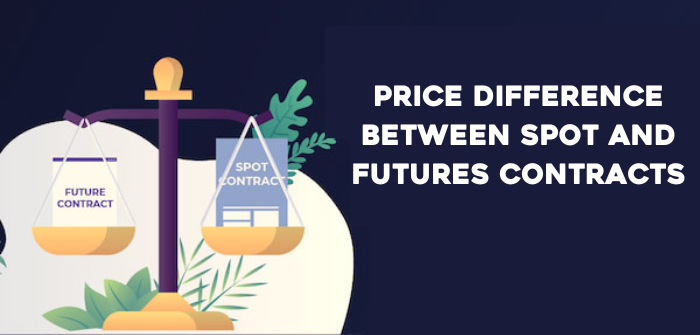
Distinguishing between spot contracts and futures contracts.
In Forex, any trading platform has the ability to offer foreign exchange assets in the form of spot contracts. For different products, both futures and CFD contracts can be applied.
If you want to know which type of contract your trading platform supports, you simply need to check the overnight fee. If your platform does not charge an overnight fee for the products you are trading, this means the contract is being applied in the form of a futures contract. However, if the products you are trading incur overnight fees, this indicates that the platform is using spot contracts. Although spot contracts do not have an expiration date, traders should carefully consider the overnight costs, as these can be significant.
With the information on futures contracts that Forex has shared, we hope that traders will have suitable strategies and methods to carry out trades that yield the highest profits.
- t.me/finance_solutes
- Website: https://finance-solutes.com
- Hotline: +1 929 5636 439 ( Hotline )
- 26 Broadway, Suite 934, New York, 10004, US
