
 XM
XM Bybit
Bybit Binance
 Robinhood
 Webull
 IC Markets
 Pepperstone
 OKX
OKX Vantage
 VT Markets
 BingX
BingX Gate.io
 Kucoin
 MEXC
MEXC Exness
 Bitget
What is the CAPM Model? – One of the key tasks for financial managers is measuring a company’s cost of capital. This article will introduce a tool to calculate that figure — the CAPM model.
So, what is the CAPM model? How is it applied in practice?
1. THEORETICAL FRAMEWORK OF THE CAPM MODEL
CAPM is a crucial area of financial management. In fact, some even argue that financial management became a distinct discipline when William Sharpe introduced the concept in 1964.
1.1. What is the CAPM Model?
The CAPM model is widely used across the financial industry to value risky securities and calculate expected returns for assets based on their risk and cost of capital.
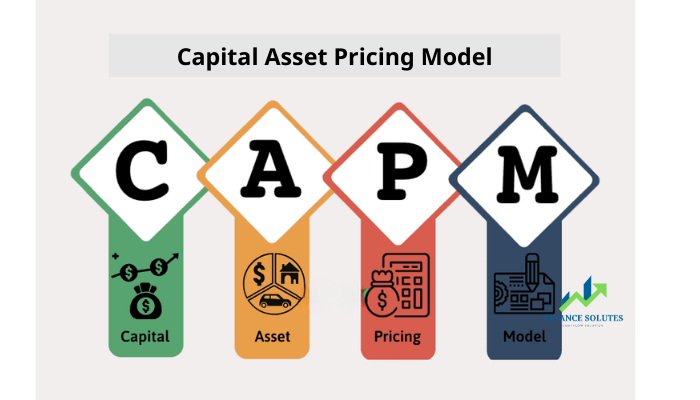
CAPM (Capital Asset Pricing Model) is a model that describes the relationship between expected returns and risk when investing in assets, particularly stocks.
1.2. What is a Capital Asset?
In English, a capital asset refers to significant assets such as real estate, cars, or financial investments like stocks and bonds.
For businesses, a capital asset is an asset with a useful life of more than one year that isn’t intended for sale during regular operations. This also makes it a type of production cost.
For example, if a company purchases a printer for office use, it is considered a capital asset. However, if the same printer is bought for resale, it would be classified as inventory rather than a capital asset.
Note: The APT model (Arbitrage Pricing Theory) is considered an alternative to the CAPM (Capital Asset Pricing Model).
1.3. CAPM Formula
The Capital Asset Pricing Model (CAPM) is calculated using the following formula:
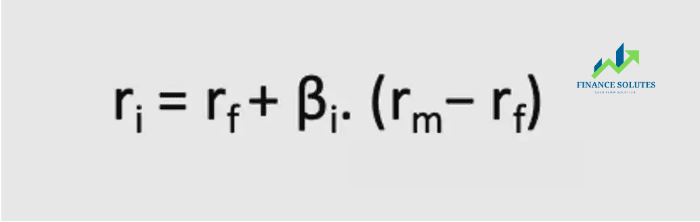
Where:
- ri = Expected return on a security
- rf = Risk-free rate
- βi = Beta coefficient
- rm = Expected return of the market
- (rm – rf) = Risk premium
Assumptions of the CAPM model include:
- The stock market is competitive and efficient, meaning that company-related information is quickly distributed and reflected in prices.
- Investors diversify their portfolios.
1.3.1. Expected Return
The expected return on a security (ri) represents the anticipated profit of a capital asset over time, influenced by other variables in the CAPM formula.
It’s a long-term assumption about how an investment will perform until the investment cycle concludes.
1.3.2. What is the Risk-Free Rate?
The risk-free rate (rf) is the return investors expect to earn from an investment with zero risk.
Typically, government bond yields are used to determine the risk-free rate, as they carry little to no risk.
However, the risk-free rate in the CAPM model is theoretical. In reality, all investments carry some level of risk. Although a government could default on its securities, the likelihood is extremely low.

1.3.3. The Meaning of Beta in the CAPM Model
The Beta coefficient (denoted as β) measures a stock’s risk (its return volatility) by comparing its price changes to the overall market.
In other words, Beta reflects a stock’s sensitivity to market risk. For example, if a company’s β is 1.3, it means the stock is 130% more volatile than the market average.
When β = 1, the expected return on the security equals the market’s average return.
Can Beta be negative? Yes. If β < 1, the formula assumes that the security reduces the market risk of the portfolio.
When β = -1, the security has a completely negative correlation with the market.
1.3.4. Risk Premium
The risk premium is the additional return that investors expect (or receive) for holding a risky market portfolio instead of a risk-free asset.
In the Capital Asset Pricing Model (CAPM), the risk premium helps analysts and investors calculate the acceptable rate of return for an investment.
There are three key concepts related to the market risk premium:
- Required Market Risk Premium – The minimum return an investor should accept. If the return of an investment is lower than the required rate, the investor won’t invest.
- Historical Market Risk Premium – A measure of past investment performance, calculated from a financial instrument to determine the premium.
- Expected Market Risk Premium – Based on investors’ expectations of future returns.
The required and expected risk premiums vary for each investor. When calculating, investors should consider the costs involved in acquiring the investment.
2. MEANING OF THE CAPM MODEL
Regarding its applicability, the CAPM model is widely used in the financial industry. The significance of the CAPM model is to assess whether a stock is relatively fairly valued; when its risk and the time value of capital are compared to its expected return.
The CAPM model holds significance in providing investors with a simple calculation; that they can use to make a preliminary estimate of the return they can expect from an investment relative to the risk of allocating capital.
The Capital Asset Pricing Model (CAPM) helps you understand the importance of diversifying your investment portfolio. Investors following the CAPM select assets that lie on the capital market line by either lending or borrowing at the risk-free rate.
Portfolio diversification is the action of including different types of assets in an investment portfolio. Diversifying your portfolio assets can help you hedge risks.
3. LIMITATIONS OF THE CAPM
Some argue that several assumptions of the CAPM do not hold true in practice. The limitations of the CAPM include:
– Experts believe it is overly simplistic, as it does not account for all risks associated with investing.
– It does not accurately assess fair returns.
– It assumes that you can lend and borrow at the risk-free rate.
– The calculated returns are based on past performance. They may not accurately reflect future returns.
4. REAL-WORLD APPLICATIONS OF THE CAPM
The CAPM is widely used in equity markets to calculate the cost of equity. Therefore, it is used to calculate the weighted average cost of capital (WACC) for valuation and investment appraisal.
(*): Weighted Average Cost of Capital (WACC) is a calculation of a company’s cost of capital where each type of capital is proportionately weighted. All capital sources — including common stock, preferred stock, bonds, and any other long-term debt — are factored into the WACC calculation.
With insights into securities valuation in financial markets and determining expected returns, the CAPM has clear applications in investment management, derived directly from trading knowledge. The CAPM also plays a crucial role in corporate finance.
In stock valuation models, traders can assess or value stocks based on the Dividend Discount Model (DDM).
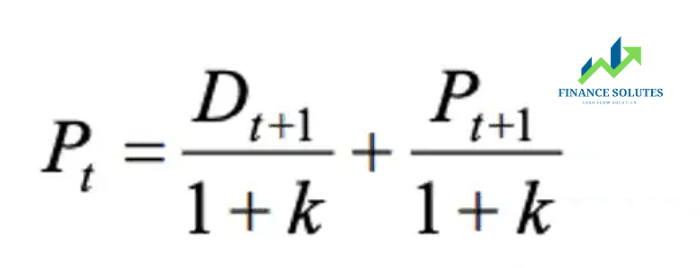
In this formula, the discount rate k depends on the level of risk associated with the stock. The most commonly applied method to determine the k factor is based on the Capital Asset Pricing Model (CAPM).
Additionally, you can refer to the Capital Asset Pricing Model (CAPM) – Fulbright PDF below.

- t.me/finance_solutes
- Website: https://finance-solutes.com
- Hotline: +1 929 5636 439 ( Hotline )
- 26 Broadway, Suite 934, New York, 10004, US
