
 XM
XM Bybit
Bybit Binance
 Robinhood
 Webull
 IC Markets
 Pepperstone
 OKX
OKX Vantage
 VT Markets
 BingX
BingX Gate.io
 Kucoin
 MEXC
MEXC Exness
 Bitget
Carry Trade – a term related to borrowing a low-interest currency to purchase a higher-interest currency in an attempt to profit from the interest rate differential.
This is also known as “Rollover forex” and constitutes an integral part of forex trading strategies based on the interest rate differential between two currencies in a currency pair. Traders focus on this strategy with the hope of earning the difference from the daily interest rates of actual trades.
This article will explain in detail the concept of Carry Trade, the Carry Trade forex strategy, and also provide examples and present top trading strategies to use in your trading.
1. WHAT IS CARRY TRADE?
Carry Trade (or Currency Interest Rate Differential Trading) involves borrowing a currency from a country with a low-interest rate (low yield) to purchase a currency from a country with a high-interest rate (high yield).
Holding this position overnight generates a profit for traders based on the “positive value” of the trade.
The lower-yielding currency is referred to as the “Base Currency (Funding Currency),” while the higher-yielding currency is referred to as the “Target Currency.”

1.1. What is Rollover?
“Rollover” is a process where brokers extend the settlement date of trades beyond the daily cut-off. Brokers will debit or credit the trader’s account.
This depends on the trade direction (buy/sell) and whether the interest rate differential is positive or negative. Since interest is specified annually, these adjustments are calculated as daily interest rate adjustments.
1.2. Interest Rates
Interest rates are set by a country’s Central Bank in line with its monetary policy, which varies between nations. A trader can profit based on their position by buying the currency in a pair with the higher interest rate.
Example: If the AUD offers an interest rate of 4% and the JPY offers 0%, traders can go long (buy) AUD/JPY to take advantage of the net 4% interest rate differential.
There are two key components in currency carry trade (forex carry trade):
1.2.1. Interest Rate Differential
The core element of this trade focuses on the interest rate differential between the two currencies. Even if the exchange rate between the two currencies remains unchanged, traders can earn profits through overnight interest payments.

However, over time, Central Banks consider interest rate adjustments necessary, which introduces potential risks to the carry trade strategy.
1.2.2. Exchange Rate Fluctuations
Another component of the currency carry trade strategy focuses on the exchange rate differential between two currencies. A trader seeks a target currency with the expectation that it will appreciate (gain value) after purchase.
When this happens, the trader’s return is substantial, including daily interest payments and any profits from currency appreciation. However, these profits from the target currency’s appreciation can only be realized when the trade is closed.
A trader can incur losses if the target currency depreciates against the funding currency, and the depreciation risk may erase the profits gained from positive interest rate differentials.
2. FOREX CARRY TRADE EXAMPLE
Continuing with the earlier example, if the AUD interest rate is 4% and the JPY interest rate is 0%, a trader might decide to enter a long position with AUD/JPY if this pair has the potential to appreciate.
Traders looking to capitalize on the forex carry trade strategy would borrow Japanese Yen at a much lower interest rate and acquire Australian Dollars with a higher rate. In practice, retail traders would earn less than the 4% due to brokers typically applying spread fees.
3. RISKS ASSOCIATED WITH CURRENCY CARRY TRADE
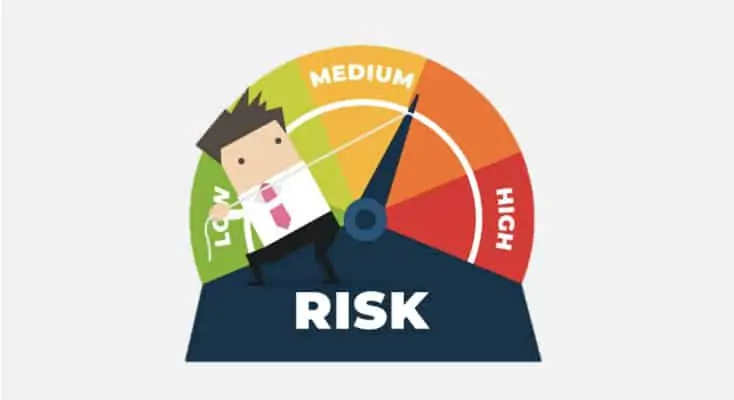
Like other trading strategies, the forex carry trade strategy carries a certain degree of risk, necessitating proper risk management.
Risk management has become increasingly important since the 2008/2009 financial crisis, which led to lower interest rates in developed countries. This forced risk-tolerant traders to seek higher-yielding currencies from emerging markets until interest rates stabilized.
– Exchange Rate Risk: If the target currency weakens against the funding currency, traders holding a long position will see the exchange rate move against their action. However, they will still receive daily interest payments.
– Interest Rate Risk: If the target currency’s country reduces its interest rate while the funding currency’s country raises its rate, this will lower the net interest rate differential, potentially reducing the profit from the carry trade.
4. FX CARRY TRADE STRATEGY
The Forex Carry Trade strategy is among the strategies employed by top traders. Being a long-term strategy, it is particularly useful for analyzing markets with strong trends.
To engage in higher-probability trades, traders should first look for confirmations of upward trends. As illustrated in the chart below, an upward trend is confirmed when each subsequent low is higher than the previous one.
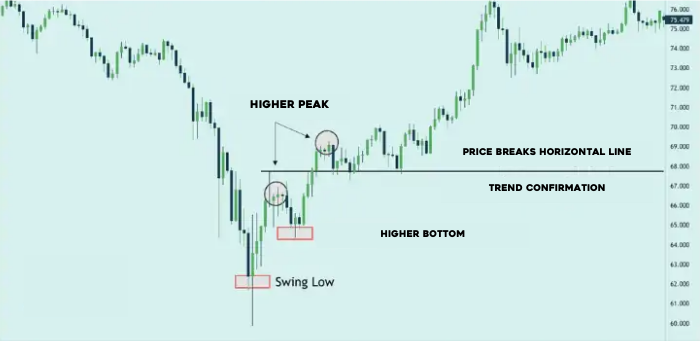
The chart illustrates a higher low followed by a breakout, represented by a horizontal line drawn at a higher level, confirming the upward trend. Traders can then utilize multi-timeframe analysis along with indicators to identify ideal entry points for buy positions.
5. CONCLUSION
While the FX Carry Trade strategy offers traders two revenue sources for potential profits (exchange rate differentials and interest rate differentials), risk management is essential as losses can occur if the currency pair moves against the trader’s expectations or if the interest rate differential narrows.
For higher-probability trades, traders should look for entry points aligned with the upward trend while mitigating downside risks through prudent risk management tools.
- t.me/finance_solutes
- Website: https://finance-solutes.com
- Hotline: +1 929 5636 439 ( Hotline )
- 26 Broadway, Suite 934, New York, 10004, US
