
 XM
XM Bybit
Bybit Binance
 Robinhood
 Webull
 IC Markets
 Pepperstone
 OKX
OKX Vantage
 VT Markets
 BingX
BingX Gate.io
 Kucoin
 MEXC
MEXC Exness
 Bitget
What is EBITDA? This is a familiar and quite important financial investment index for many people. When using this index, investors must pay attention to how to use it effectively as well as the specific meaning of the index to be able to apply it most proficiently and effectively. In this article, let’s learn in detail about the content of EBITDA with Forex.
What is EBITDA?
EBITDA stands for Earnings Before Interest, Tax, Depreciation, and Amortization. Investors can understand it as income before interest expenses, taxes, depreciation, and amortization.
- Depreciation refers to the reduction in value of tangible assets such as equipment, machinery, and factories.
- Amortization refers to the reduction in value of intangible assets such as patents, trademarks, etc.
- EBITDA is a tool used to analyze business performance through net profit. After eliminating differences in debt structure, income taxes, and depreciation, investors can use EBITDA to compare the profits of companies within the same industry.
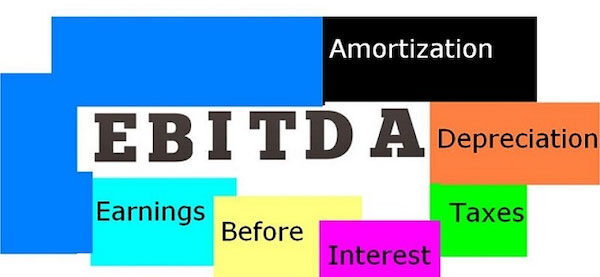
This is also an important basis for assessing the future development potential of the enterprise.
Standard EBITDA calculation formula
Below is the formula to calculate EBITDA most accurately and quickly that investors can apply:
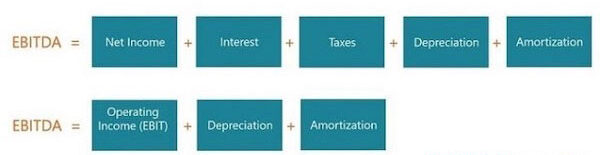
Specifically, EBITDA can be calculated in three ways:
- EBITDA = Net Profit + Taxes + Interest Expenses + Depreciation
- EBITDA = Pre-Tax Profit + Interest Expenses + Depreciation
- EBITDA = EBIT + Depreciation
Here’s a concrete example to help investors better understand how to calculate EBITDA quickly:
For an ABC company with revenue of about 100 million rupiah, pre-tax profit of 30 million rupiah, interest on loans of about 20 million rupiah, corporate income tax of about 20 million rupiah, other depreciation expenses of about 10 million rupiah and 10 million rupiah after tax. These figures will be taken from the specific business reports of the company.
These figures are taken from the company’s financial statements.
The EBITDA will be calculated as follows:
- EBITDA = Net Profit + Taxes + Interest Expenses + Depreciation = 10 + 20 + 20 + 10 = 60 million rupiah
- EBITDA = Pre-Tax Profit + Interest Expenses + Depreciation = 30 + 20 + 10 = 60 million rupiah
Significance of the EBITDA Indicator
Every financial indicator has its own meaning for both businesses and individual investors. Below are some specific insights you can learn about the practical benefits when analyzing business performance.

- EBITDA helps business managers make accurate and effective assessments of the company’s operations. This allows them to develop plans that align with business activities according to the proposed schedule.
- EBITDA provides the most accurate financial reports for a company, which is quite “good” and stable. The business primarily operates in the information technology sector, with high depreciation costs and low net profit. In this case, EBITDA will be one of the key factors driving the rest of the financial report’s figures. Only in this way can companies attract more investment funds in the market.
- EBITDA is also a useful financial tool often used in mergers and acquisitions of SMEs.
- EBITDA helps investors gain a more comprehensive and effective understanding of a company’s operations, assess the future growth rate of its business, and make reasonable investment choices.
- Additionally, EBITDA is used to compare earnings between different companies. Through the EBITDA indicator, investors can gain further insights into the potential of each company, enabling them to make wise investment decisions.
Compare EBITDA and EBIT

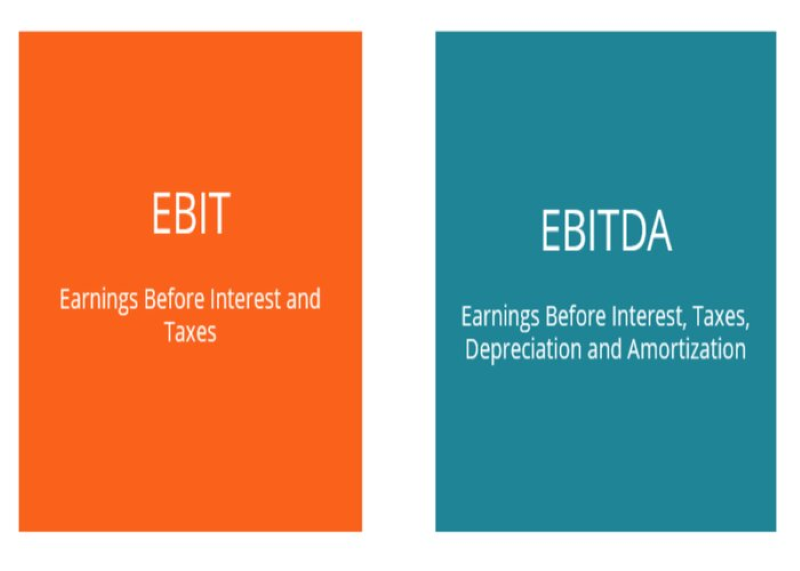
It can be said that for many professional financial investors, both EBITDA and EBIT are well-known indicators. Many people may make a general observation that these two indicators are quite similar. Essentially, the purpose of both indicators is to provide effective assessments of a company’s business activities in the market. However, if we look deeper, EBIT and EBITDA are two completely different indicators, each with its own meaning and method. Despite that, they are still closely related to each other.
| Criteria | EBIT | EBITDA |
|---|---|---|
| Definition | EBIT refers to earnings before interest and taxes. | EBITDA refers to earnings before interest, taxes, and depreciation. |
| Meaning | EBIT primarily focuses on evaluating the profits a company can achieve after deducting expenses and taxes. | EBITDA mainly focuses on assessing the operational performance of a business. |
| Formula | EBIT = Earnings before tax + Interest expenses | EBITDA = EBIT + Depreciation |
When is EBITDA used?
EBITDA is one of the most important financial metrics. It is used for businesses with a large total asset value to help limit the depletion of fixed assets. Typically, EBITDA is primarily used in the following situations:

- EBITDA is used to enhance and complete the financial reports of businesses with significant assets, ratios, and scale. This way, companies can more easily build trust with investors.
- EBITDA is primarily used for comparison with other businesses in the same industry over a specific period of time. This helps investors gain a better understanding of the business sectors they are interested in.
- EBITDA is also used to calculate valuation models such as EV/EBITDA, EBITDA Margin, Debt/EBITDA, or to replace operating cash flows in a company’s business processes.
Applications of EBITDA in Financial Investment
As mentioned above, the EBITDA indicator is used to calculate EBITDA Margin, the Net Debt/EBITDA ratio, and the EV/EBITDA ratio. Specifically, the following methods are used:

Calculating EBITDA Margin
EBITDA Margin represents the profit margin before taxes, interest, and depreciation. This indicator is calculated using the following formula:
EBITDA Margin = EBITDA / Net Sales (net revenue)
EBITDA Margin is used as a measure of a company’s profitability, determining whether the company is currently operating smoothly. In addition to reflecting the financial performance of a company, this ratio is also used to make objective and accurate assessments of companies within the same industry or to easily compare companies over time. If the EBITDA is high (over 15% and sustained over several years), it indicates that the business is performing well and has better cash flow management compared to companies with lower ratios.
Net Debt / EBITDA Ratio
The net debt/EBITDA ratio indicates how long a company would need to operate to pay off its debts at the current EBITDA level. If this ratio is low (below 1 or 2), it suggests that the company is not overly leveraged and can likely meet its debt obligations.
Conversely, a high net debt/EBITDA ratio (above 4 or 5) signals that the company is burdened by debt. Investors should carefully consider any investment in such companies. However, this ratio may vary by industry due to different capital requirements, so investors should use this ratio primarily to compare companies within the same industry.
EV/EBITDA Ratio
The EV/EBITDA ratio is used to quickly value stocks and assess a company’s growth potential after eliminating equity capital and debt. Investors typically favor stocks of companies with strong market presence. They tend to avoid companies with low EV/EBITDA ratios and those whose EV/EBITDA ratios are excessively high.
Some limitations when using the EBITDA index
As analyzed above, the EBITDA ratio can help companies proactively enhance the financial ratios in their reports. However, this very advantage can also be a double-edged sword that may lead to limitations or mistakes that will undoubtedly cause you or the company to face the consequences of “losing money without gaining benefits.”
At the same time, it is important to recognize that any financial indicator has its specific advantages and limitations, and no indicator is 100% perfect. Therefore, below, TraderForex will outline the key limitations of the EBITDA ratio to help businesses and investors avoid common pitfalls when applying it.
Misinterpreting EBITDA as Cash Flow
EBITDA eliminates most depreciation costs, leading many investors to mistakenly believe that this ratio represents market cash flow. However, EBITDA is essentially an indicator of a company’s profitability potential, not a specific measure of cash flow. This ratio typically does not account for changes in working capital, financial cash flows, or investment cash flows.
EBITDA Can Mislead Investors About Interest Costs
The EBITDA ratio may distort interest expenses because it usually doesn’t consider the costs of equipment and machinery repairs and maintenance. In reality, as a company enters its operational phase, its equipment and machinery will gradually depreciate, requiring regular repairs and upgrades.
EBITDA Can Mislead Performance Assessments
A common limitation that many investors face is that EBITDA tends to eliminate many business expenses, making it appear as a much better number than EBIT or net income. This can lead to companies using this ratio to “boost” profits. This profit inflation can mislead investors about the operational efficiency of the business, causing them to make misguided investment decisions that result in significant losses, leaving both the company and the investors regretting their choices.
EBITDA Can Lead to Underpricing the Company
Typically, using EBITDA can lead to companies being undervalued compared to their actual value. This happens when businesses focus solely on the EBITDA ratio while ignoring the company’s net income figures.
In conclusion, we have explored what EBITDA is, its major advantages, and the challenges associated with using it in financial investment. We hope the information provided by Forex proves useful to you. Wishing you success in your financial endeavors.
- t.me/finance_solutes
- Website: https://finance-solutes.com
- Hotline: +1 929 5636 439 ( Hotline )
- 26 Broadway, Suite 934, New York, 10004, US
