
 XM
XM Bybit
Bybit Binance
 Robinhood
 Webull
 IC Markets
 Pepperstone
 OKX
OKX Vantage
 VT Markets
 BingX
BingX Gate.io
 Kucoin
 MEXC
MEXC Exness
 Bitget
In the Foreign Exchange (Forex) market, we often encounter the occurrence of Gaps. These gaps in the chart typically appear at the opening of the Forex trading session at the beginning of the week or in some very special cases. This gap is referred to as a Gap. In the stock market, however, Gaps occur more frequently. Daily candlesticks often have Gaps in the following day
What is a Gap in Forex? What is a Gap in the Stock Market? Let’s analyze both the fundamental and in-depth aspects of Gaps with Finance Solutes
1. WHAT IS A GAP?
Gap is a price gap that occurs between two consecutive trading sessions. It can also be understood as a gap created when the price rises or falls too sharply, causing it to jump significantly higher or lower than the previous candlestick’s closing price, forming a gap on the chart.
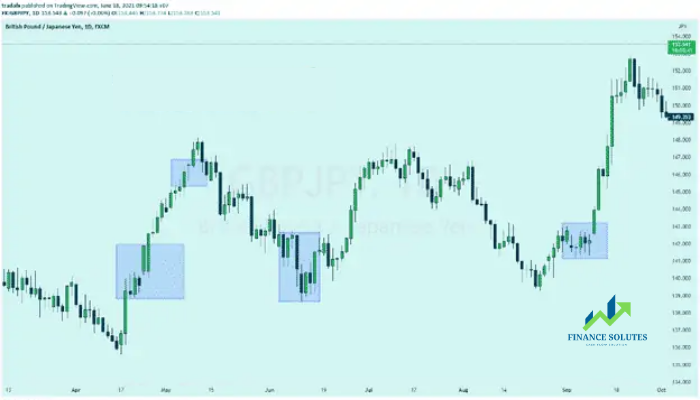
2. WHEN DOES A GAP OCCUR?
What causes Gaps in the Forex market? Gaps usually appear at the following times:
– On Monday at the start of the week because the market is closed on Saturday and Sunday.
– When a major financial event strongly impacts the market, such as the FED announcing an interest rate change or a central bank attempting to sell off a currency.
– During major global holidays like Christmas, when banks and financial institutions worldwide cease operations.
3. COMMON TYPES OF GAPS
There are four most common types of Gaps:
– Common Gap: This is the most frequent type, often appearing at the market opening on Monday.
– Breakaway Gap: This occurs when there is an extremely unexpected or impactful news event that shifts investor sentiment, causing the price to change direction into a new trend.
– Continuation Gap: More common in the stock market, this type of Gap appears when an uptrend or downtrend in stock prices is well established.
– Exhaustion Gap: Frequently seen in the stock market, this type of Gap appears at the peak or bottom when a trend has just ended after a prolonged period.
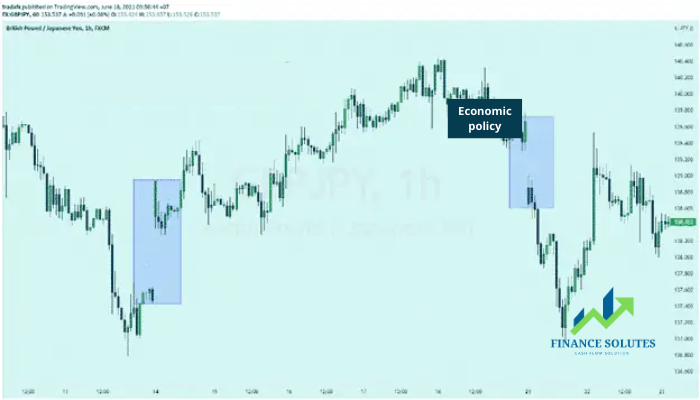
4. WHEN IS A GAP FILLED?
When a Gap appears, it often tends to retrace and fill the empty space. Many traders take advantage of these moments to place orders and earn additional income. However, not all Gaps will necessarily be filled. Typically, Gaps are filled in the following cases:
– When they occur at strong support or resistance levels, the price tends to return to these zones to retest and confirm the current trend before continuing to rise or fall.
– When they appear within a price pattern, they are often filled by that pattern.
5. HOW TO TRADE FOREX GAP
Determine whether the Gap falls within resistance, support levels, or familiar candlestick patterns. If it does, the Gap is likely to be filled.
The Exhaustion Gap and Continuation Gap are the two types most likely to be filled. You can identify them and place trades accordingly when either of these Gaps appears.
Additionally, as mentioned earlier, not all Gaps are filled, or they may be filled at an unpredictable time. Therefore, it is crucial to have appropriate risk management strategies to protect your account.
6. SUMMARY
This article has introduced the concept of What is a Gap? and the different types of Gaps in Forex. Trading with Gaps is not simple, as traders cannot predict exactly when a Gap will be filled. Therefore, you should combine Gap trading with technical analysis tools to develop a solid Forex trading strategy.
Wishing you success, and don’t forget to follow Finance Solutes for more insightful articles!
- t.me/finance_solutes
- Website: https://finance-solutes.com
- Hotline: +1 929 5636 439 ( Hotline )
- 26 Broadway, Suite 934, New York, 10004, US
