
 XM
XM Bybit
Bybit Binance
 Robinhood
 Webull
 IC Markets
 Pepperstone
 OKX
OKX Vantage
 VT Markets
 BingX
BingX Gate.io
 Kucoin
 MEXC
MEXC Exness
 Bitget
It is easy to recognize that inflation is always among the most frequently used terms in economic discussions, yet many people still do not fully understand this concept. There are various schools of thought regarding inflation; however, there is a common point among economists’ views that inflation is manifested through the continuous increase in prices.
Let’s explore with Finance Solutes what inflation is, the causes and impacts of inflation on the economy, and why inflation is important for cryptocurrencies in this article!
1. WHAT IS INFLATION?
Simply put, inflation describes an economic situation where the prices of goods and services generally increase continuously. Inflation can be defined as “a continuous rise in prices measured by an index such as the Consumer Price Index (CPI) or by a deflator tool for the Gross National Product (GNP).”
Inflation is often described as a state of “too much money chasing too few goods.” In other words, when there is inflation, the currency loses purchasing power.
The purchasing power of a certain amount of Nigerian Naira will decrease over time when the economy experiences inflation. For example, suppose N10.00 can buy 10 shirts in the current period; if the price of shirts doubles in the next period, then N10.00 would only be able to buy 5 shirts.
1.1. Identifying Inflation
So, what are the signs to recognize inflation? In the definition of inflation, two keywords must be remembered. First, aggregate or general, implying that the price increase that constitutes inflation must cover the entire group of goods in the economy. This is different from a price increase of a single good or a specific group of goods. The implication here is that changes in individual prices or any combination of prices cannot be considered as the emergence of inflation.
However, a situation may arise where a change in the price of one item can cause other prices to rise. An example is the price of petroleum products in Nigeria. This again does not signal inflation unless the price adjustment in that group leads to an increase in the aggregate price level.
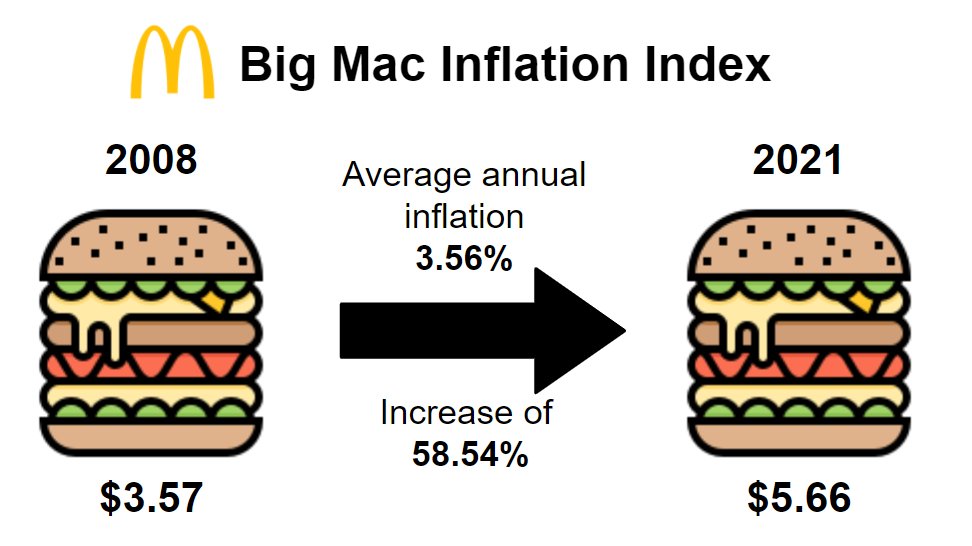
Second, the increase in the aggregate price level must be continuous for inflation to be recognized as having occurred.
The aggregate price level must show a sustained and continuous upward trend over different periods. This must be distinguished from a one-time price increase.
1.2. Classification of Inflation
Generally, inflation can be grouped into four types, depending on its severity.
-
Creeping Inflation: This occurs when prices rise very slowly. A sustainable annual price increase below 3% falls into this category. Such a price rise is considered safe and necessary for economic growth.
-
Walking Inflation: This inflation occurs when prices increase moderately, and the annual inflation rate is a single digit. This happens when the rate of price increase ranges from 3 to under 10 percent. Inflation at this rate is a warning signal for the government to control it before it turns into Running Inflation.
-
Running Inflation: When prices rise rapidly at a rate of 10 to 20 percent per year, it is called Running Inflation. This type of inflation has severe adverse effects on the poor and middle class. Controlling it requires strong fiscal and monetary measures.
-
Hyperinflation: Hyperinflation occurs when prices rise very rapidly at a two- or three-digit rate. This can lead to an unmeasurable and completely uncontrollable inflation rate. Prices may increase many times daily. Such a situation leads to a total collapse of the monetary system because the purchasing power of the currency continuously declines.
2. WHAT CAUSES INFLATION?
Basically, two causes of inflation have been identified: demand-pull and cost-push.
-
Demand-pull inflation is caused by an increase in demand conditions. This can be an increase in purchasing power or an increase in the willingness to buy.
-
Cost-push inflation arises from anything that reduces supply conditions. Some of these factors include increased production costs, higher government taxes, and a reduction in the quantity of goods produced.
3. WHAT ARE THE EFFECTS OF INFLATION?
Inflation affects different groups or economic agents differently. Broadly speaking, in every society, there are two economic groups: the fixed-income group and the flexible-income group.
During inflation, those in the first group lose while those in the second group gain. This is because the price movements of various goods and services are uneven.
During inflation, most prices increase, but the rate of increase for each type of price will vary. The prices of some goods and services increase faster than others, while some may not change at all.
The poor and middle class suffer losses because their wages and salaries are more or less fixed, but the prices of goods continue to rise. On the other hand, entrepreneurs, industries, merchants, property owners, speculators, and others with variable incomes benefit from rising prices. The latter group becomes wealthier at the expense of the former group. There is a transfer of income and wealth from the poor to the rich.
More generally, which income group in society gains or loses from inflation depends on who can or cannot predict inflation. Those who accurately forecast inflation can adjust their current income, purchasing, borrowing, and lending activities to counteract the loss of income and wealth caused by inflation.
To more clearly determine the impact of inflation on individuals, it is necessary to discuss the effects of inflation on different groups.
a) Creditors and Borrowers: When inflation occurs, creditors generally face more difficulties because the real value of their future claims is reduced according to the inflation rate. On the other hand, when inflation happens, borrowers tend to repay less in real terms than the amount they originally borrowed. Therefore, it can be said that inflation benefits borrowers and disadvantages creditors.
b) Wage Earners: Wage earners are often disadvantaged during inflationary periods because their wages are slow to adjust when prices rise.
c) Salaried Employees: Salaried employees may gain or lose depending on how quickly their wages adjust to rising prices. If their unions are strong, they may receive wages linked to the cost of living index. In this way, they can protect themselves from the negative effects of inflation. Usually, in real life, there is a lag between wage increases for employees and price increases.
d) Fixed-Income Group: This group includes people receiving transfers such as pensions, unemployment insurance, social security, etc. Those receiving interest payments and rents also live on fixed income. These individuals suffer losses because they receive fixed payments while the value of money continues to decline as prices rise.
e) Shareholders and Investors: This group benefits during inflationary periods when high prices expand business activities and, consequently, increase profits. Thus, dividends on shares also rise. However, those investing in debt securities, bonds, etc., with fixed interest rates will suffer losses during inflation because they receive fixed amounts while purchasing power declines.
f) Entrepreneurs: Producers, business owners, and real estate holders gain profits during periods of rising prices. Conversely, their costs do not increase as much as the prices of their goods. When prices rise, the value of the producers’ inventories also increases at the same rate. The same applies to short-term traders.
Real estate owners also profit during inflation because land and property prices rise much faster than the general price level. However, business decisions become more difficult in an unstable price environment. In the long run, rising wages may reduce profits, thereby negatively affecting future investment.

g) Agricultural workers: There are three types of agricultural workers: landlords, tenant farmers, and landless agricultural laborers. Landlords incur losses during periods of rising prices because they receive fixed rental income. Tenant farmers who own and cultivate their farms benefit. The prices of agricultural products increase more than the cost of production.
The prices of input factors and land revenue do not increase at the same rate as the prices of agricultural products. On the other hand, the wages of landless agricultural laborers are not raised by farm owners due to the absence of labor unions. However, the prices of consumer goods rise rapidly. Therefore, landless agricultural laborers are the losers.
h) Government: Inflation has both positive and negative effects on the government. As a debtor, the government benefits from households, its main creditors. This is because the interest rates on government bonds are fixed and are not increased to compensate for expected price rises.
In turn, the government collects less tax to serve and repay debts. With inflation, even the real value of taxes is reduced. Inflation helps the government finance its operations through inflationary finance. As people’s nominal incomes increase, the government collects more revenue in the form of taxes on income and goods. Thus, government revenue rises during periods of price increases.
4. WHY IS INFLATION IMPORTANT FOR CRYPTOCURRENCY?
So, what is the relationship between cryptocurrency and inflation? High inflation rates of fiat currencies can drive individuals to invest more in digital currencies because dollars or euros saved in bank accounts are actually losing value over time. Bitcoin and some other cryptocurrencies like Ethereum offer investors an alternative. The economics of the Bitcoin market are complex, but there are certain features designed in digital currencies that can help them resist inflation.
Bitcoin cannot be manipulated by governments adjusting interest rates or printing more money to meet policy goals.
Like gold and other scarce stores of value, Bitcoin is commonly seen as likely to increase in value during uncertain times. (However, this does not always happen — for example, at the start of the COVID pandemic, it dropped sharply along with stock markets.) It is also a much more convenient way to store and transfer value compared to gold — it can simply be sent over the internet.
Scarcity is one of the keys to creating a store of value capable of resisting inflation. There will never be more than 21 million bitcoins. To date, about 19 million bitcoins have been mined. Approximately every ten minutes, miners process a new “block” and 6.25 bitcoins are added to the network. (In 2024, the mining reward will decrease to 3.125 bitcoins and will be halved every four years until all bitcoins are mined. This mechanism, designed into the Bitcoin protocol, is called “halving.”)
The gradually declining new supply according to this schedule allows Bitcoin to be uniquely predictable — unlike gold, no new bitcoins can be “discovered.”
5. DOES INFLATION OCCUR WITH CRYPTOCURRENCY?
Technically, even Bitcoin experiences inflation as more bitcoins are mined (similar to gold). But because the new bitcoin supply automatically halves every four years, Bitcoin’s inflation rate will decrease over time.

As a practical matter, as long as Bitcoin’s purchasing power continues to increase relative to the fiat currencies we tend to compare it with, Bitcoin’s annual inflation rate of a few percentage points is not the main factor investors consider. However, not all cryptocurrencies are designed like Bitcoin.
For example, a type of digital currency that is becoming increasingly popular is called stablecoin — many of which are pegged to fiat currencies such as the US dollar — which can be a useful, less volatile place to save some money. But if a stablecoin is pegged to a fiat currency, your investment will be affected by inflation and may lose value over time because their reserve currency is losing value.
Some stablecoins offer rewards that work like an interest-bearing savings account, which can change the value equation — especially since non-crypto interest rates are hovering around zero.
6. SUMMARY
This article has shared information with readers about what inflation is, its causes, and its impacts on the economy, as well as why inflation matters for cryptocurrency.
In summary, inflation is the increase in the prices of goods and services over time, describing the general rise in the overall price level of goods and services in an economy. Inflation can have both positive and negative effects on the entire economy, depending on the different groups involved.
- t.me/finance_solutes
- Website: https://finance-solutes.com
- Hotline: +1 929 5636 439 ( Hotline )
- 26 Broadway, Suite 934, New York, 10004, US
