
 XM
XM Bybit
Bybit Binance
 Robinhood
 Webull
 IC Markets
 Pepperstone
 OKX
OKX Vantage
 VT Markets
 BingX
BingX Gate.io
 Kucoin
 MEXC
MEXC Exness
 Bitget
Since its launch in 2014, the LTO Network (LTO) project has made a strong impression on the cryptocurrency investment community due to its exceptional potential in improving work efficiency without compromising security and productivity. With a prominent development team, the project quickly captured 10% of the total market in the Netherlands after its establishment.
So, what is LTO Coin? How has LTO Network solved the problem of work efficiency? Let’s dive into the details in the article below with Finance Solutes.
1. WHAT IS LTO NETWORK?
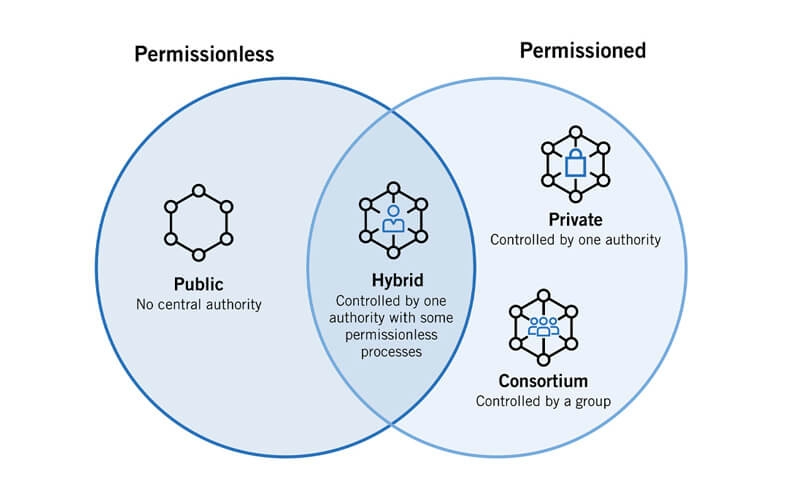
LTO Network is a hybrid blockchain platform designed to connect organizations and departments through Decentralized Workflow, including B2B functionalities. For those who are unfamiliar, a hybrid blockchain is a combination of public and private blockchains, where users have control over whether to make data public or keep it private.
LTO Network has established itself as the leading blockchain in Europe, with strong real-world applications. It was created to provide B2B business solutions such as decentralized workflows, data verification, and validation.
1.1. Key Features of LTO Network
Two main features of LTO Network are the user-friendly Live contracts and the implementation of the hybrid blockchain mechanism.
Live contracts allow parties to create mutually beneficial agreements in real-time. When parties reach an agreement and launch these Live contracts, the LTO’s parent system generates a special private blockchain to record the history of events and the current status of the contract.
When the agreement is completed, one of the parties will send feedback to the blockchain, and the other party will sign it, allowing the node to confirm that the action has taken place. All contract data is only accessible to the parties involved in the contract.
Live contracts enable users to register actions, add/remove participants, and record discussions on the blockchain. They facilitate conflict resolution and the insertion of subsidiary processes within the framework of an existing agreement.
The blockchain’s functionality is divided into two layers: public and private. The public layer is designed for collaboration, data exchange, and automating processes efficiently, while the private layer provides high-level security, thanks to distributed nodes and a reward system.
1.2. Consensus Mechanism
LTO Network employs a Proof-of-Stake (PoS) consensus mechanism. In LTO Network’s Leased Proof of Stake variant, nodes are selected to validate transactions and create the next block based on the number of LTO tokens held and staked on the network.

Unlike other Leased PoS systems, LTO Network applies a “lottery coefficient” to the node selection algorithm for creating the next block. In theory, this model is fairer than previous Leased PoS systems because it does not overly favor a node with a higher number of staked tokens.
LTO also promotes the NG protocol. NG allows the network to generate two different types of blocks: lock blocks and micro blocks. When the network selects a node to create a block, that node will generate a lock block from all the prominent micro blocks. New lock blocks form after 30-90 seconds, while new micro blocks are created every 1.1 seconds.
1.3. Roadmap
Important milestones and the development roadmap of the LTO coin project are summarized as follows:
- May 2015: Launch of LegalThings
- January 2016: Launch of LegalFlow v1.0
- February 2018: Proof-of-Concept (PoC) for the Dutch Ministry of Justice
- June 2018: Proof-of-Concept (PoC) for Waste Transportation
- January 2019: Launch of LTO Network (Mainnet)
- July 2019: Open-source Codebase
- March 2020: Launch of Marketplace
- April 2020: Launch of Proofi
- October 2020: Launch of Leased Proof-of-Importance (POI)
2. WHAT IS LTO COIN?
LTO Coin is the native token of the LTO Network, based on the Ethereum ERC-20 standard, providing liquidity and serving as a bridge for customers within the LTO network.
There are four types of LTO coin holders:
- Developers and partners: Those who maintain the network and receive project funds as rewards.
- Customers: Users who utilize the chain and/or Live contracts for transactions.
- Passive stakers: Individual users responsible for validating transactions on the blockchain.
- Inactive holders: Those who are not part of the community and only invest in LTO coins for future profit.
2.1. Basic Information about LTO Coin
LTO Mainnet Token:
- Symbol: LTO
- Blockchain: LTO Network
- Total Supply: 268,586,028 LTO coins
- Circulating Supply: 140,363,930 LTO coins
LTO ERC-20:
- Symbol: LTO
- Blockchain: Ethereum
- Circulating Supply: 41,846,248 LTO coins
- Standard: ERC-20
2.2. Purpose of LTO Coin
Participants in the LTO Network can use LTO coins to pay transaction fees on the mainnet, hold coins for speculation, or stake them to gain participation in network consensus as block validators. There is no protocol inflation, so validation rewards depend on network usage fees.
2.3. Initial Coin Supply Allocation
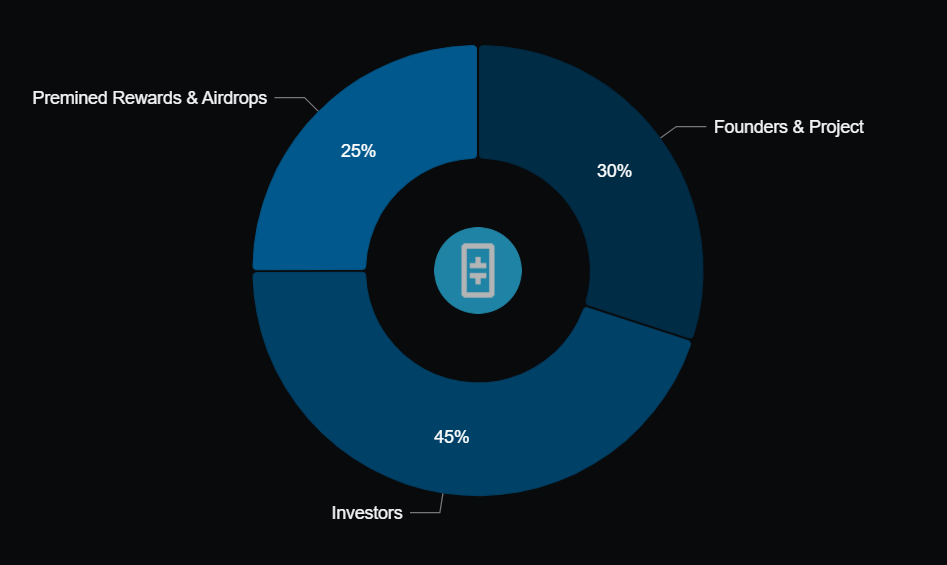
The initial supply structure is as follows:
In December 2017, LTO Network raised $1.4 million from European community members and early adopters of the project, with an average bonus of 40%. After a year, LTO Network launched a private sale in December 2018 with bonuses ranging from 15-30%, raising $1.7 million.
The final sale was a crowd sale (public sale) in January 2019. The smart contract was open for 60 hours, from January 14 to January 16. In total, 7990 ETH ($990,000 USD) was raised, and the unsold tokens were burned, accounting for more than 50% of the crowd sale supply. Participants in the crowd sale received ERC-20 tokens (which could be traded directly), while private sale and seed participants received mainnet tokens (which could not be traded directly).
2.4. LTO Coin Price and Chart
The price of LTO Coin on Coin Market Cap today, April 27, 2022, is $0.175687 USD, with a 24-hour trading volume of $3,980,951 USD.

3. DEVELOPMENT TEAM
Firm24 initially began developing LTO Network under the name LegalThings One in 2014. In 2017, they decided to integrate blockchain into the product and rebranded it as LTO Network.
CEO: Rick Schmitz is an experienced entrepreneur and the co-founder of LTO Network. Previously, he worked in private equity and mergers and acquisitions at Deloitte and PwC.

CFO: Martijn Migchelsen is the CFO, CEO, and co-founder of LTO Network. He previously served as a corporate finance advisor at PwC.
Chief Architect: Arnold Daniels is the co-founder and chief architect of the project. Arnold has extensive experience in open-source development and leading the core development team focused on building the LTO Network platform. Before LTO Network, Daniels was the lead software engineer at Cloud9.
CTO: Sven Stam is the CTO of LTO Network. He holds a master’s degree in artificial intelligence and has over 15 years of experience in the industry.
4. WHERE TO BUY AND SELL LTO COIN?
Here are some exchanges where investors can trade LTO Coin:
- Binance
- Kucoin
- AscendEX
- Bitrue
- Uniswap (V2)
- Gate.io
- PancakeSwap
- Bitvavo
- Omgfin
5. SUMMARY
This article has summarized all the detailed information about the LTO Network Coin project, including its operating mechanism, key features, basic specifications, total supply, project development roadmap, and the development team. We hope this article has provided you with useful insights to help guide your investment decisions.
- t.me/finance_solutes
- Website: https://finance-solutes.com
- Hotline: +1 929 5636 439 ( Hotline )
- 26 Broadway, Suite 934, New York, 10004, US
