
 XM
XM Bybit
Bybit Binance
 Robinhood
 Webull
 IC Markets
 Pepperstone
 OKX
OKX Vantage
 VT Markets
 BingX
BingX Gate.io
 Kucoin
 MEXC
MEXC Exness
 Bitget
Certainly, the phrase PEG is currently a well-known phrase when it comes to the financial field. So what exactly is PEG? What are the things that investors should pay attention to when using this index for financial evaluation and analysis? Let’s find out the detailed content in the following article to better understand the PEG index – an index that evaluates stock price, stock income and the company’s growth rate.
What is the PEG Ratio?
PEG stands for Price-to-Earnings Growth, which is a ratio that clearly shows the relationship between the P/E ratio (Price-to-Earnings) and the earnings per share growth rate (EPS) for a specific stock. Investors can use the PEG ratio to assess a stock based on its growth rate. Therefore, it helps identify undervalued stocks that are worth purchasing early.
How to Calculate PEG
To proficiently apply the calculation of PEG, investors must first understand exactly what PEG is. The current formula to calculate PEG is as follows:
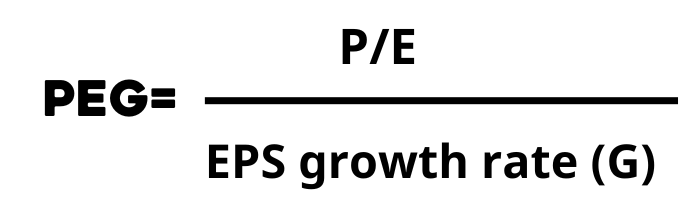
In which:
- G is the projected future EPS growth rate.
- P/E is the ratio used to evaluate the relationship between the market price of stocks (Price) and earnings per share.
Example: Suppose Company A currently has a P/E ratio of 12, and the projected EPS growth rate in the future is approximately 15%. In this case, the PEG ratio is calculated as = 12/15 = 0.8
Meaning of the PEG ratio:
Every ratio has a specific meaning. In the stock market, the PEG ratio currently holds specific significance in certain cases as follows:

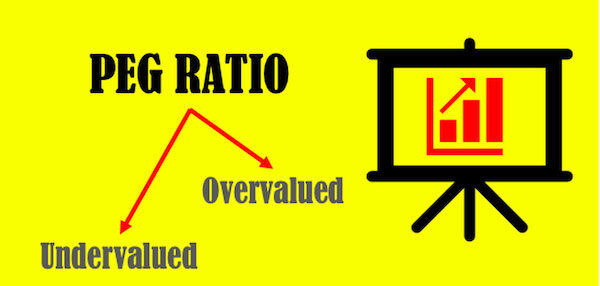
PEG = 1: The stock price can be compared to its intrinsic value.
PEG > 1: The stock price is overvalued compared to its intrinsic value.
PEG < 1: The stock price is undervalued in the market.
An example to help you understand better: Suppose Company A currently has a P/E ratio of 15:
If G = 10%, then PEG = 1.5 => PEG > 1: significantly higher than the intrinsic value, not a good time to buy but to sell.
If G = 15%, then PEG = 1 => PEG = 1: At the intrinsic value, you should neither buy nor sell the stock at this moment.
If G = 20%, then PEG = 0.75 => PEG < 1: Below the actual market value, you should buy the stock.
What PEG ratio is considered good?
From the meaning and characteristics mentioned above of the PEG ratio, we can also recognize that the smaller the PEG ratio is below 1, the better the time to buy. This is when investors can buy stocks to hold, and as the stock price increases above 1, investors will sell to profit based on the difference between the buying and selling prices.
When PEG = 1
If the P/E ratio and the expected growth rate (G) of the company are equal, then PEG = 1. This means that the market is currently valuing the stock at a rate corresponding to its expected growth rate. In this case, investors should do nothing and wait for the right moment to buy or sell, or they might negotiate because the benefits are not significant. In reality, a PEG of 1 is very rare because stock prices on the market are always fluctuating due to various factors, such as the emergence of market news or investor sentiment. Therefore, the PEG ratio typically hovers around the value of 1.
When PEG < 1
PEG < 1 means that the stock is undervalued compared to its actual value on the market. At this point, many investors will start investing because they can easily make significant profits in the future with high growth rates. The lower the PEG, the better.
When PEG > 1
PEG > 1 means that the stock price is currently valued much higher than its actual value in the market. Right now, many investors will start investing quickly because they can expect to make enormous profits with high growth rates in the future. The lower the PEG, the better.
How to Handle Negative PEG
Many may wonder how to handle situations when the PEG is negative—should we buy, sell, or just stand by and observe? Let’s follow the appropriate approach outlined below.

Negative PEG due to Negative P/E
A negative P/E ratio indicates that the company’s performance is losing money, meaning earnings per share are negative. Therefore, the stock price or market value has no significance in this case. If the P/E ratio is negative, investors should not consider this case further. Additionally, since we cannot bet on investing in a stock with a negative value, these companies are not capable of paying investors to buy their shares.
Negative PEG due to Negative G
A negative value of G indicates that the future growth rate of the company’s stock is lower than its past growth rate. Negative G will occur in the following situations: The company is newly established, its operations are still unstable, facing temporary operational difficulties, or impacted by macroeconomic fluctuations and economic conditions. Due to industry changes, such as the application of new technologies or changes in business models, the company must compete with stronger rivals in the market. Moreover, these companies face numerous internal issues. When G is negative, buying stock in such companies becomes riskier. At this point, investors need to pay attention to the level of negativity and how strong or weak G growth is. Additionally, investors should estimate the expected growth rate of G in the next 3 to 5 years. They should also combine the use of other indicators to increase the accuracy of their decisions.
Some Notes When Using the PEG Ratio
When using PEG, people must pay special attention to the usage notes to maximize its effectiveness. In this section, Traderforex will provide you with ways to apply the PEG ratio in stock valuation effectively. Investors should note the following points:
- The PEG Ratio can only be valued on a relative basis, so investors should combine it with other indicators.
- There are other indicators that you can evaluate more thoroughly to gain the most detailed overview of the potential actions you might take.
- Estimating the growth rate of a stock is very difficult to achieve with absolute precision. Therefore, this impacts the accuracy of the PEG ratio.
- When using the PEG ratio, investors should apply it to analyze stocks over a longer period (starting from 3 years or more) in the future.
- If the PEG ratio has a very high G value, investors should avoid investing in stocks with a high PEG ratio, as this can lead to significant risks.
7 things to know to calculate the PEG ratio more accurately – How to calculate the G ratio
It is impossible to calculate G with 100% accuracy, that is the case with any index. We know exactly what P/E is because it is a historical figure. But G is the long-term growth rate in the future and there is no basis for us to predict how the future will change. However, the following 7 tips will help you increase your G score accurately.
- You cannot calculate the 100% growth rate of a stock. Many stocks are volatile, so it’s best to stay away from them. Buffett often invests in companies from sectors that are predictable.
- Be cautious with stocks that have too high a G value. For example, a technology stock growing at 50% per year with a P/E ratio of 50 is reasonable, so you can be confident that the 50% growth rate will last for a long time.
- Consider the growth rate and the average earnings growth over the past 3 to about 5 years of the company.
- Evaluate the company’s expenses and profits. Do the gross profit/revenue ratios change significantly when assessing other financial factors like ROE? Is it stable?
- Does the business currently have any competitive advantages? Sustainable competition or monopoly? How is the current business performing (expanding stores, factories, increasing capacity)?
- Assess the business environment in detail. Are macroeconomic conditions stable?
- If you don’t understand the business, don’t buy stocks with too high a price-to-earnings ratio (e.g., a price-to-earnings ratio > 20) unless assessed by other methods.
Above are all the basic points to keep in mind when learning about PEG. I hope these notes and tips on using PEG effectively will help you make reasonable and reputable financial investment decisions. Wishing you success!
- t.me/finance_solutes
- Website: https://finance-solutes.com
- Hotline: +1 929 5636 439 ( Hotline )
- 26 Broadway, Suite 934, New York, 10004, US
