
 XM
XM Bybit
Bybit Binance
 Robinhood
 Webull
 IC Markets
 Pepperstone
 OKX
OKX Vantage
 VT Markets
 BingX
BingX Gate.io
 Kucoin
 MEXC
MEXC Exness
 Bitget
RSR Coin will be the next coin introduced in the cryptocurrency-themed article series by tradafx. This coin belongs to the Reserve Right protocol. Details on what Reserve Right is, what the RSR token is, information about the RSR coin, as well as evaluations of the RSR coin and the potential of the RSR token will be revealed in detail in the sections below.
1. WHAT IS RESERVE RIGHT?
Reserve Right is a protocol designed for buying, holding, and spending US dollars in digital form. The main goal of the Reserve Protocol is to provide a stable platform for transactions in countries experiencing hyperinflation. The protocol is built to ensure security and reliability as a viable alternative to widely used fiat currencies.
The core focus of the RSR coin project lies in the belief that it can offer access to a trustworthy currency and minimize the impact of hyperinflation. The Reserve Protocol adopts a peer-to-peer (P2P) approach, eliminating external oversight — a fundamental drawback of traditional economic models.
1.1. The Foundation and Development of the Reserve Coin Project
The cryptocurrency market has no ceiling or floor limits, so price fluctuations in this space are often highly volatile. This is also one of the reasons why stablecoins were created. They help the crypto market have a type of digital currency with stable value, pegged to a fiat currency in the real-world economy, serving as a safe haven asset for many investors.
The development team behind the Reserve Right (RSR) coin believes that certain cryptocurrencies can function more efficiently than fiat currencies. However, at that time, no digital currency could scale globally, maintain stable purchasing power, and remain resistant to shutdowns.
The Reserve Protocol project was born from this idea. Its initial purpose was to create a stablecoin that is accessible, economically resilient, capable of storing value, and over time, could reach underdeveloped financial systems in certain countries and replace their fiat currencies with this cryptocurrency.
1.2. The Reserve Right Development Team and Investors
The RSR Reserve Right coin protocol was co-founded by Nevin Freeman, Matt Elder, and Miguel Morel in May 2019, along with a team of highly experienced professionals with impressive domain expertise. Therefore, the RSR coin project is considered to have a strong backing from a talented development team. Among them, three individuals are regarded as the core members of the protocol:
- Nevin Freeman: Co-founder and CEO of Reserve Right, with over 10 years of industry experience. In addition, Nevin is an entrepreneur and co-founder of three companies: Paradigm Academy, MetaMed Research, and RIABiz.com.

- Matt Elder: Former engineer at major tech corporations such as Google, IBM, and Quixey. In addition to being a Co-Founder, Matt currently oversees the architectural implementation of the Reserve Protocol as the project’s Chief Technology Officer (CTO).
- Miguel Morel: Co-founder responsible for overseeing the strategic business operations of the RSR coin project. Before joining the project, Miguel worked with Nevin at Paradigm Academy and was involved in a startup developing and providing complete platforms similar to Amazon, Alibaba, Taobao, and others.
The investors and reputable organizations backing Reserve Right include many familiar names such as: Coinbase Ventures, Velorim Capital, Fenbushi Capital, among others. Additionally, the RSR coin project has received strong support from Peter Thiel (co-founder of PayPal), Sam Altman (President of Y Combinator), and several other influential investors in the cryptocurrency industry and Silicon Valley.

2. CHALLENGES AND SOLUTIONS OF RESERVE RIGHTS
The primary challenge that the Reserve Rights (RSR) coin project aims to address is the inherent volatility or instability of cryptocurrencies. This was already mentioned by tradafx in the first section. The fluctuations in the crypto market have hindered the widespread adoption of digital currencies as a reliable medium of exchange.
Achieving stability without compromising other key characteristics is no simple task. To meet this goal, the Reserve Protocol has been designed with a set of essential requirements:
- Requirement for collateralized external assets
- Short-term pegging to fiat currency, while utilizing a basket of assets in the long run
- 100% value backing support
- Short-term value pegging to fiat, with a gradual transition toward a stable digital currency
3. OVERVIEW OF THE RESERVE COIN RSR PROTOCOL MECHANISM
The Reserve Rights project can be deployed and developed on any smart contract platform. Initially, the team built it on the Ethereum blockchain, but they later aimed for bi-directional bridges to enable full interoperability of the RSR coin across all major smart contract platforms.
3.1. Core Features of the Protocol
The Reserve Rights network is planned to operate in three distinct phases, which include:
- Phase 1: The initial phase will be centralized, in which the project’s stablecoin (RSV) will be backed by the US Dollar.

- Phase 2: The next stage is the decentralized phase, where the protocol begins to support and develop a basket of diversified assets, transitioning toward a decentralized model while still maintaining the stability of the RSV coin relative to the USD.
- Phase 3: The final phase is the independent phase. In this stage, the coins will no longer be pegged to the US Dollar. Instead, the system aims to stabilize purchasing power in real terms, regardless of fluctuations in the value of the USD.
3.2. Reserve Protocol’s Price Stabilization Mechanism
The price stabilization mechanism in the Reserve Rights protocol is designed to support the value of the project’s stablecoin – the RSV token. When the demand for RSV drops, its price will inevitably fall on the secondary market. Two possible scenarios can occur:
- RSV coin price falls below $1: In this case, arbitrage traders are incentivized to purchase RSV via the smart contract using $1 worth of collateral tokens. The purchased RSV is then burned to reduce the circulating supply. This process continues until the price returns to $1.
- RSV coin price rises above $1: In this case, new RSV tokens are minted using $1 worth of collateral and sold on open markets. However, this option is only available to RSR token holders. After the purchase is made, the corresponding RSR tokens are burned.
This mechanism theoretically allows the RSV coin to maintain a peg above $1. However, in practice, market supply and demand dynamics and consensus among users play crucial roles in sustaining the target price.
3.3. Reserve Rights Collateralization Mechanism
When there is a diversified basket of collateral assets, price volatility among those assets may affect the ability to maintain RSV’s target value. In such scenarios, the Reserve Protocol mints RSR coins and sells them in order to acquire additional collateral assets. This mechanism helps ensure the protocol remains adequately collateralized, even in the face of fluctuations in asset values within the collateral pool.

RSR coin holders have the opportunity to engage in arbitrage trading when the RSV token is no longer pegged to the USD. During this process, the RSR coin may increase in value through RSR token burns. On the other hand, asset depreciation within the smart contract collateral pool may trigger the issuance of additional RSR coins at any time.
4. WHAT IS RSR COIN?
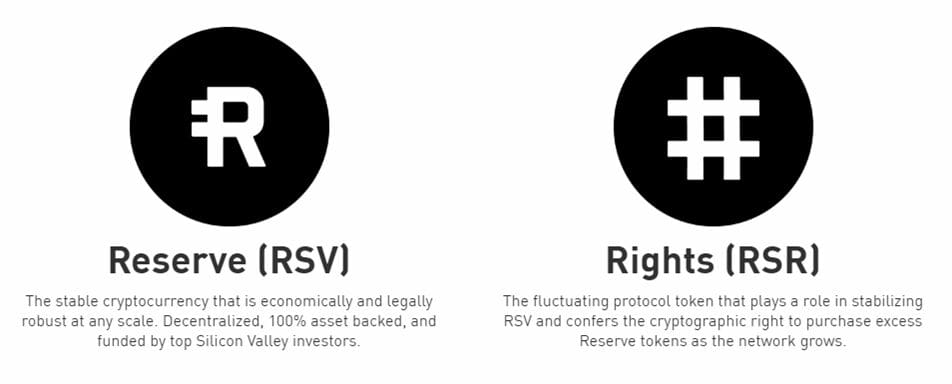
RSR is the name of the Reserve Rights token used within the Reserve Protocol. The RSR coin project includes three types of tokens:
- RSV Token: A stablecoin within the Reserve Protocol designed to maintain price stability.
- RSR Token: Supports the price stability of the RSV token.
- Collateral Tokens: Other tokens held in smart contracts to support the RSV token. This mechanism is similar to how the U.S. government uses gold reserves to back the value of the dollar.
In addition, although not mentioned in the Reserve Rights whitepaper, there is another type of token called the Reserve token (RSD). In Phase 1 (as mentioned above), RSD coins were issued instead of RSV, with a 1:1 value ratio to the U.S. dollar.
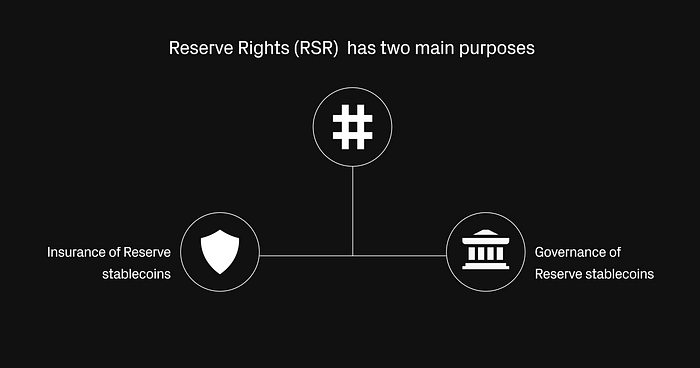
The RSR coin serves as a governance token within the Reserve Rights network. Unlike the RSV token, RSR does not have price stabilization mechanisms supported directly by the project. Instead, it is used to help maintain the value of the RSV coin. The profits generated from these mechanisms are used to fund the Reserve Rights project.
4.1. Basic Information About RSR Coin
Below are some essential facts about the RSR coin that investors should know. You can also check the live RSR coin price on RSR token Coingecko or RSR token CoinMarketCap.
- Symbol: RSR
- Token Standard: ERC20
- Blockchain: Ethereum
- Token Type: Governance
- Current RSR Coin Price: $0.00456
- RSR Token Address: 0x320623b8e4ff03373931769a31fc52a4e78b5d70
- Market Cap: $67,414,694.00
- Maximum Total Supply: 100,000,000,000 RSR
- Circulating Supply: 14,801,148,904 RSR tokens

The RSR coin is listed on most major exchanges, including leading platforms such as Binance, KuCoin, Huobi, and more. The storage options for RSR are also diverse, covering both cold wallets and hot wallets.
4.2. RSR Coin Allocation
Based on the collateral mechanism, RSR tokens will be either newly issued or burned (token burn) according to different phases. The maximum supply of 100 billion RSR coins is allocated as follows:
- Foundation: 58.6%
- Partners: 5%
- Development Team and Advisors: 20%
- Funding: 16.4% (of which 3% is allocated for the Reserve Right IEO event via Huobi Prime)
Token Lock-up and Vesting Schedule by Allocation:
| Allocation | Vesting/Lock-up Schedule |
|---|---|
| Seed Sale | Gradually released over 6 months after the official launch of the Reserve Right mainnet |
| Private Sale | 25% released after listing on exchange, then gradually released over 3 months |
| RSR IEO on Huobi | No lock-up |
| Team & Advisors | Gradually released over 6 months after mainnet launch |
| Partners | |
| Foundation | RSR tokens are stored in both hot and cold wallets:
|
The lock/unlock mechanism for RSR tokens is designed by the project’s development team, providing the project flexibility in raising funds or additional capital.
5. DOES RSR COIN HAVE POTENTIAL?
Following recent market news, you probably know that the sharp decline in Bitcoin’s price has affected other coins, including many top market tokens. RSR coin is no exception. Let’s take a look at the RSR coin price chart on TradingView over the past year:
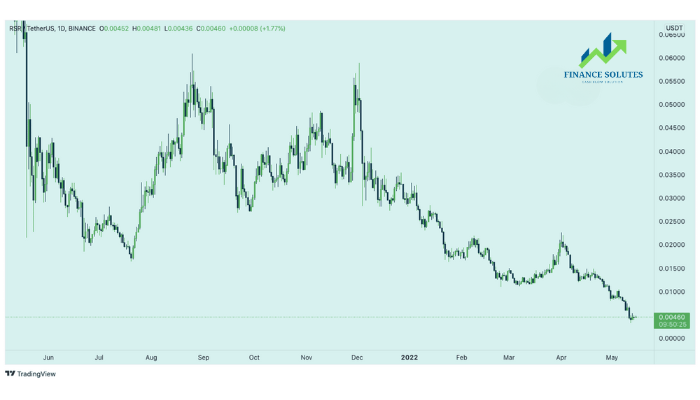
Not only the RSR coin itself, but the Reserve Right project also has certain drawbacks, despite having proposed solutions to the basic problems it aims to solve. One major challenge is competing with established stablecoins like USDT, BUSD, and USDC, which already have a solid presence in the market. Currently, there is no updated Reserve Right roadmap for 2022, so it is difficult to accurately assess whether this is a good investment. You can follow the latest news about the project through the RSR token Twitter account.
6. CONCLUSION
Behind the Reserve Right project are outstanding team members supported by reputable investors who can help the Reserve Protocol develop sustainably in the long term. With the information provided in this article, tradafx hopes you have gained a clear understanding of what RSR coin is and the operating mechanisms within this project.
- t.me/finance_solutes
- Website: https://finance-solutes.com
- Hotline: +1 929 5636 439 ( Hotline )
- 26 Broadway, Suite 934, New York, 10004, US
