
 XM
XM Bybit
Bybit Binance
 Robinhood
 Webull
 IC Markets
 Pepperstone
 OKX
OKX Vantage
 VT Markets
 BingX
BingX Gate.io
 Kucoin
 MEXC
MEXC Exness
 Bitget
Coin SUSHI – another coin developed on the Ethereum blockchain network. This coin belongs to the decentralized exchange (DEX) project SushiSwap. Today’s article from Finance Solutes will also help you gain the most basic understanding and the essential knowledge about the SushiSwap project, what the Sushi coin is, and whether the products in the Sushiswap ecosystem have any special features.
1. WHAT IS SUSHISWAP?
SushiSwap is one of the products within the Sushi ecosystem. The Sushi project was established to address issues related to liquidity. If you don’t know yet, SushiSwap is the result of a fork from UniSwap – a well-known automated market maker (AMM) project, which was the most popular at that time and continues to be so today.
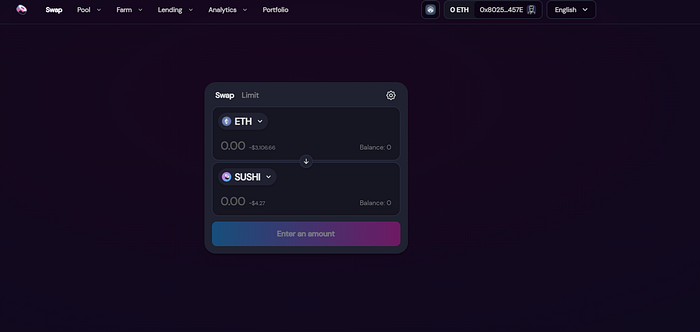
SushiSwap initially operated as a branch of UniSwap, using Uniswap’s codebase to build the platform and then developed the Sushi coin as a reward distributed to users. However, unlike UNI tokens from the Uniswap project, holders of SUSHI tokens continue to receive rewards even after they stop providing liquidity in the SUSHI pools.
1.1. Who Founded SushiSwap?
The SushiSwap project was originally rebranded as SuShi. It was founded in 2020 by a group or individual using the pseudonym Chef Nomi. Information about Chef Nomi and the motivations behind the founder’s decision to split the SUSHI coin project from Uniswap is scarce, or more precisely, almost nonexistent. Besides that, the SUSHI coin project also has two co-founders who go by the nicknames sushiswap and 0xMaki (Maki). These two are responsible for coding, product development, and business operations of SushiSwap.
Although forked from Uniswap, the goal of the SUSHI coin project was to surpass Uniswap and potentially become the most popular decentralized exchange on Ethereum. The founders devised a plan to withdraw liquidity from Uniswap by offering SUSHI tokens in exchange for Uniswap LP tokens, which would then be moved into special pools on Uniswap. However, before switching to SushiSwap, Chef Nomi withdrew about 13 million dollars from the Sushi pool.

This controversy led many to believe it was a “rug pull” scam. However, amid concerns that Chef Nomi had fled with the money, the project’s legal representative handed over control to Sam Bankman-Fried – the head of Alameda Research and the FTX exchange. A few days later, Chef returned the funds and apologized to the users. The coins in the pool were transferred as planned, with Sam overseeing the entire process.
1.2. The Distinctive Features That Make SushiSwap Special
In reality, people always remember that SushiSwap was founded and based on Uniswap, but the SUSHI coin project has also undergone significant changes and improvements to create differences compared to Uniswap, which is also its competitor. The first is the SUSHI coin itself, which is provided to users and led Uniswap to adopt a similar approach by increasing users’ impact and influence on the project’s operations and future.
Moreover, while Uniswap raised investment capital from venture funds and has a core development team behind it, the SUSHI coin project centers its development around the community, making it the core focus to grow beyond the typical concept of a DEX.
2. HOW SUSHISWAP (SUSHI COIN) WORKS
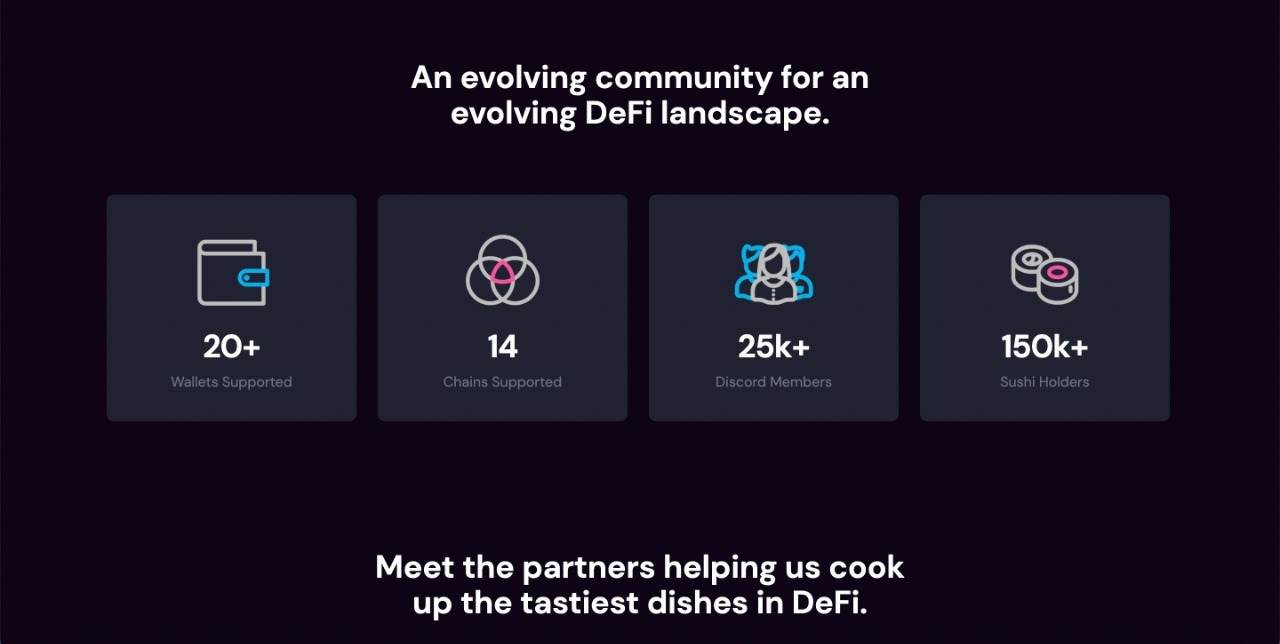
Similar to Uniswap, SushiSwap is built on an automated market maker (AMM) system using smart contracts to execute transactions. The SUSHI coin is provided by other Sushi holders through liquidity pools. They stake their Sushi tokens in these pools and receive rewards from a portion of the transaction fees.
The SushiSwap community provides liquidity of over 3 billion dollars for more than 1,000 token pairs. Anyone can become a liquidity provider for the protocol and earn Sushi Coin as a reward proportional to their contribution. To stake Sushi tokens, users can use the SushiBar application.
3. PRODUCTS IN THE SUSHI ECOSYSTEM
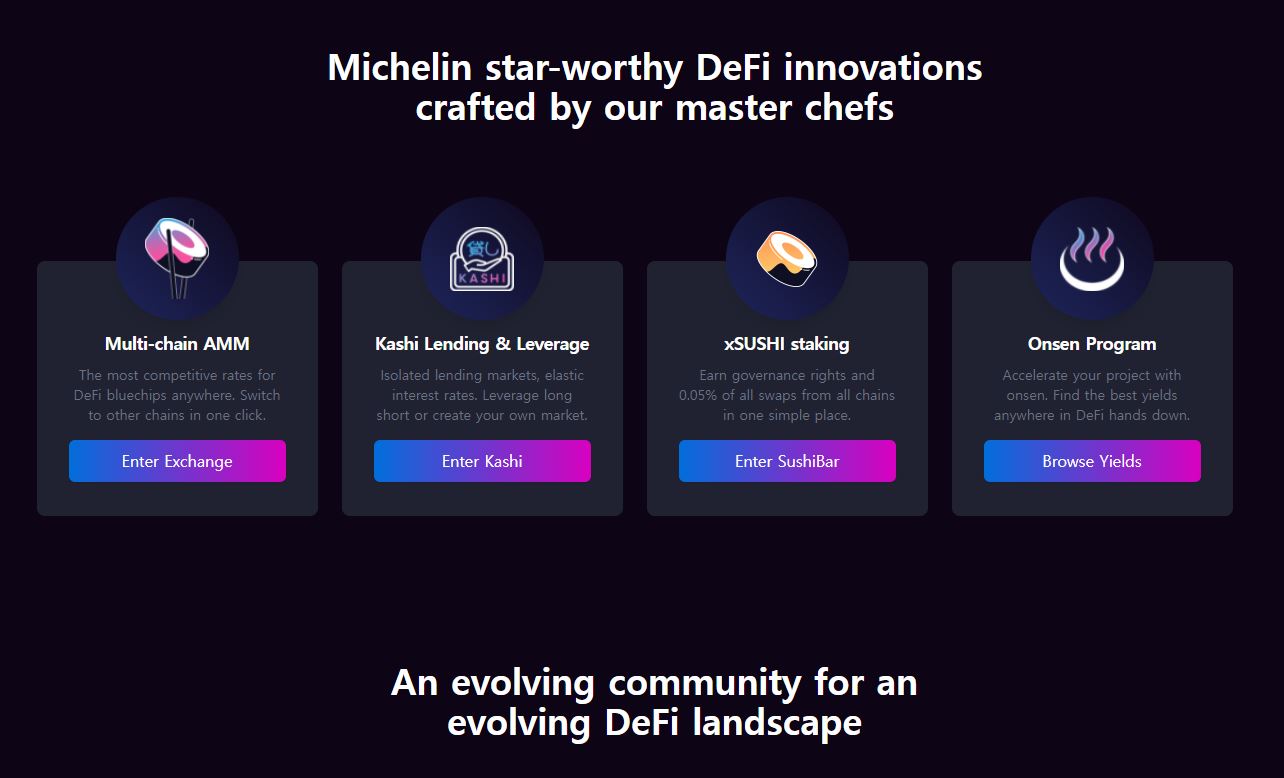
Not only limited to developing the decentralized exchange SushiSwap, the Sushi coin ecosystem has also developed other products including: Bento Box dApps, Kashi Lending & Borrow, and Miso auctions. The above sections have covered almost every aspect of the SushiSwap exchange, so in this part, tradafx will only mention the Limit Order feature.
3.1. Limit Orders in SushiSwap
The concept of limit orders is probably familiar to most traders in both the forex and crypto markets, so tradafx will only briefly recap the basic idea. A limit order is an order to buy or sell an asset, currency pair, coin, etc., at a predetermined price. Limit orders in SushiSwap are no different.
Recently, the Sushi coin project upgraded the Limit Order to version 2 (v2) to improve several aspects, including:
-
Capital Efficiency: On some traditional exchanges, traders may be limited in the number of limit orders they can place. On SushiSwap, users can place multiple different limit orders for various tokens using the same base capital.
-
Profitability: Limit orders in SushiSwap are stored in Bento Box, which truly generates profits for traders. More details about the reasons and Bento Box will be explained in the later part of this article.
- Fairness Among Parties: Those who have traded extensively in the crypto market probably know that sometimes there can be a sudden large imbalance of liquidity on either the buy or sell side. The limit order system on SushiSwap is a continuously operating AMM, increasing the matching rate for a coin or token. This means there is always an opportunity to buy and sell.
3.2. Bento Box
Bento Box is where tokens are stored to generate profits for the capital deposited. Although there are some dApps with similar functions in the decentralized finance market, Bento Box has differences compared to other similar dApps. First, it has the ability to track users’ funds on SushiSwap through “artificial balances,” which are used to calculate their idle capital.
Just as banks serve as the foundational layer in traditional financial markets, Bento Box acts as the foundational layer for all financial tools provided by the SUSHI coin ecosystem. For example, liquidity pool systems like Trident or Mirin – a system for users on the whitelist to interact amicably and trade fairly.
3.3. Kashi Lending & Borrow
Within the SUSHI coin ecosystem, Kashi is a lending and margin trading platform. It is also an application built on top of Bento Box. Kashi is designed with a new lending and borrowing model. Its ability to isolate risks in individual lending markets allows users to add any token. At the same time, separating risks across different lending pools enables users on the SushiSwap platform to access leverage directly within the platform.
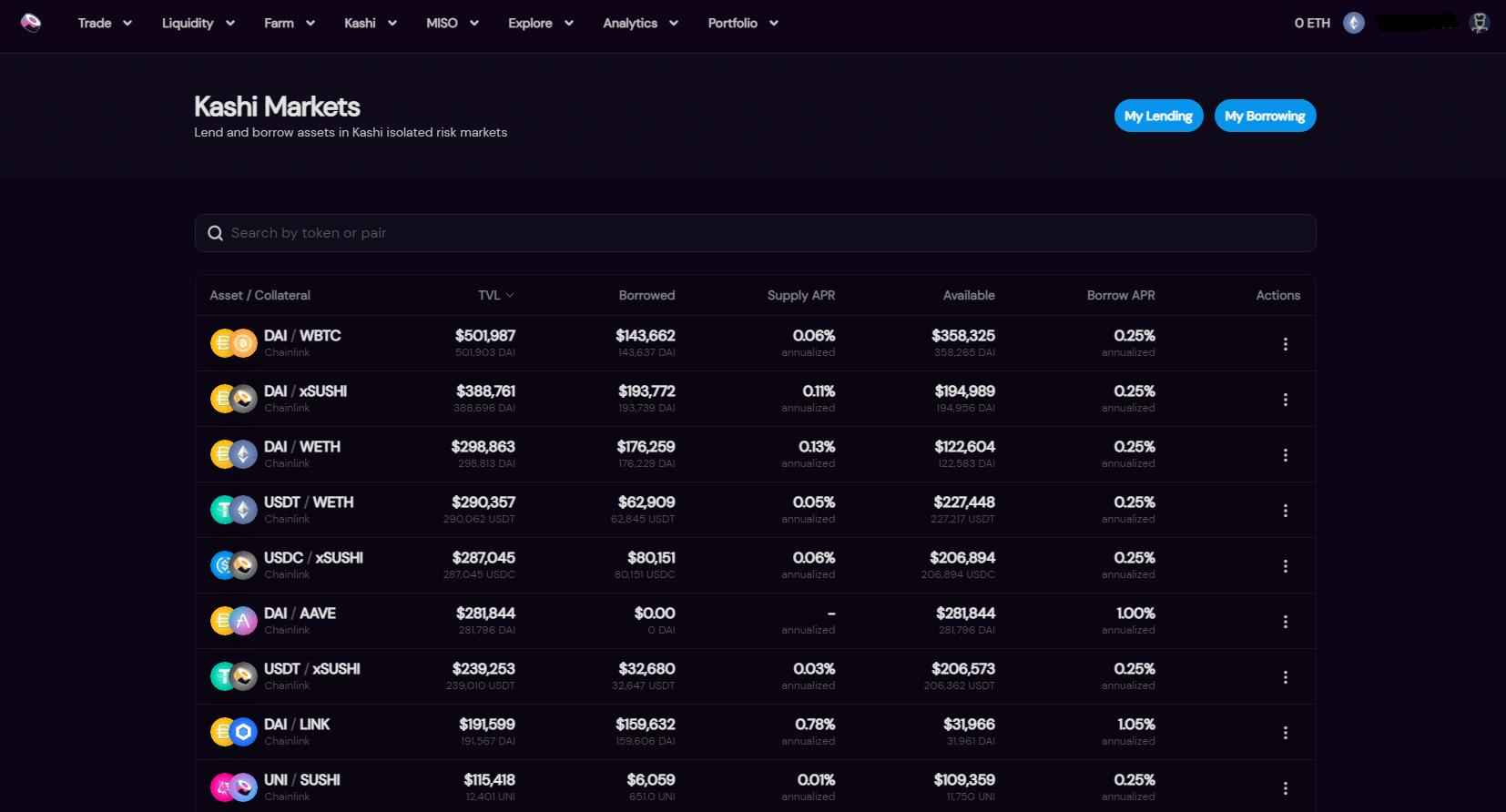
The main difference of Kashi is that it builds lending markets and risk markets independently from each other, while other lending platforms assess risk across the entire market, causing the solvency of one market to affect the solvency of other asset markets. At the same time, interest rates in Kashi of the Sushi coin ecosystem are elastic and respond to supply and demand.
3.4. MISO Launchpad
MISO is a suite of open-source smart contracts that make launching new projects on SushiSwap easier. The purpose of developing MISO is to boost capital and new trading activity on the exchange by increasing SushiSwap’s attractiveness. It can be seen as a launchpad for both technical and non-technical developers.
Components of the MISO smart contract suite include:
-
Token – Allows each project to select its token. Available token types include fixed supply tokens, mintable tokens, and SUSHI coins.
-
Market – Contracts for initial token distribution. Each project can choose Crowdsale, Dutch auctions, Batch auctions, and how to manage user participation.
- Liquidity – Easy liquidity transfer. This feature is for a portion of the raised capital to create a new SushiSwap pool and transfer it reliably.
- Fermentation – Option to store/escrow tokens as well as a token vesting schedule over time.
- Yield Farming – New tokens can be yield-farmed by users to receive rewards.
To create the best conditions for new projects to launch on the SushiSwap exchange, the above components can be combined in various ways, with no fixed formula, allowing developers to choose.
4. WHAT IS SUSHI COIN?
SUSHI is the SushiSwap token, playing a vital role in maintaining its network. The primary use of SUSHI coin is as a staking reward on the decentralized SushiSwap exchange. Additionally, Sushi holders — those who own SUSHI tokens — have voting rights on decisions related to the SushiSwap exchange’s functions.
The main uses of SUSHI coin are:
-
Governance
-
Profit from trading fees
-
Rewards from SUSHI liquidity pools
Note: Proposals and votes on SushiSwap are not mandatory; thus, SUSHI holders who wish to participate in voting must manually register proposals that have been approved before they are implemented on the protocol.
4.1. Basic Information of SUSHI Coin
Here is some basic information tradafx compiled for traders to have a quick look at this coin. This information can be easily found on Sushi Coingecko and Coinmarketcap:
-
Symbol: SUSHI
-
Token standard: ERC-20
-
Blockchain: Ethereum
-
Current price of SUSHI: ~$1.94
-
Market cap: $245,872,466.12
-
Maximum supply: 250,000,000 SUSHI tokens
-
Circulating supply: 127,244,443 SUSHI tokens
-
Token contract address: 0x6b3595068778dd592e39a122f4f5a5cf09c90fe2 (Ethereum)
4.2. SUSHI Token Allocation
SUSHI coins are issued through a mining phase lasting about 2 weeks, with a Fair Launch model — no pre-sale, no allocation to funds, open to everyone.
Starting from Ethereum block #10,750,000, SUSHI began minting with an initial supply of zero:
-
Liquidity Mining Phase: For the first 100,000 blocks (approximately 2 weeks), about 1,000 SUSHI coins are minted per block and distributed to anyone staking Uniswap tokens from approved pools.
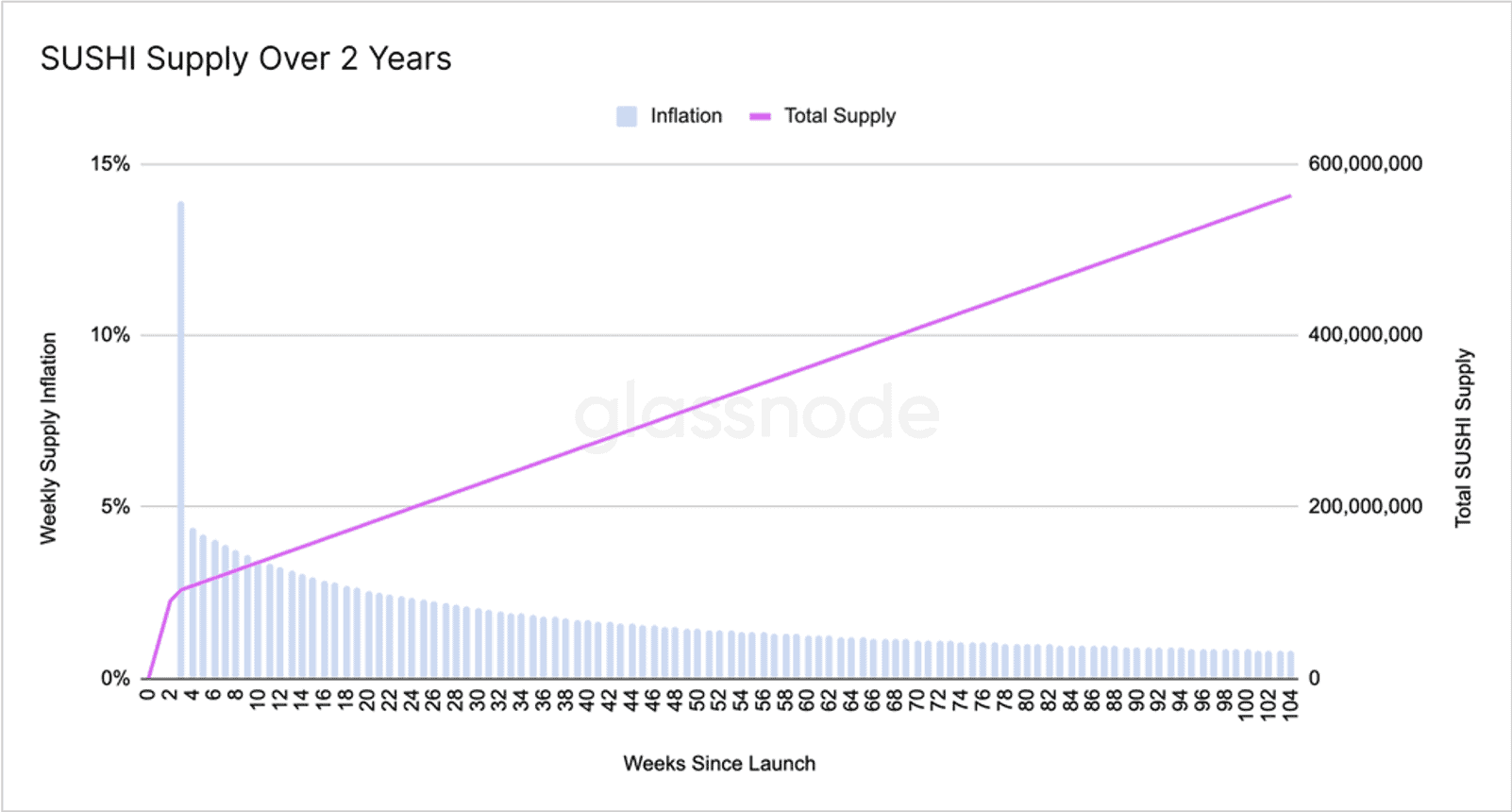
- After Launch: After the initial phase, about 100 SUSHI coins will be minted per block. These will be distributed among SUSHI holders — that is, users who hold SushiSwap tokens providing liquidity to the protocol.
At this rate, with an estimated 6,500 blocks minted daily, the SUSHI coin supply will reach over 300 million tokens after one year and about 600 million tokens after two years.
4.3. Guide to Staking SUSHI Coin
Besides SushiBar, SUSHI coin holders can also provide liquidity in the Sushi Coin Binance pool or other decentralized exchanges. The steps to stake Sushi tokens are:
-
Go to the Sushi homepage interface, select “Enter App”
-
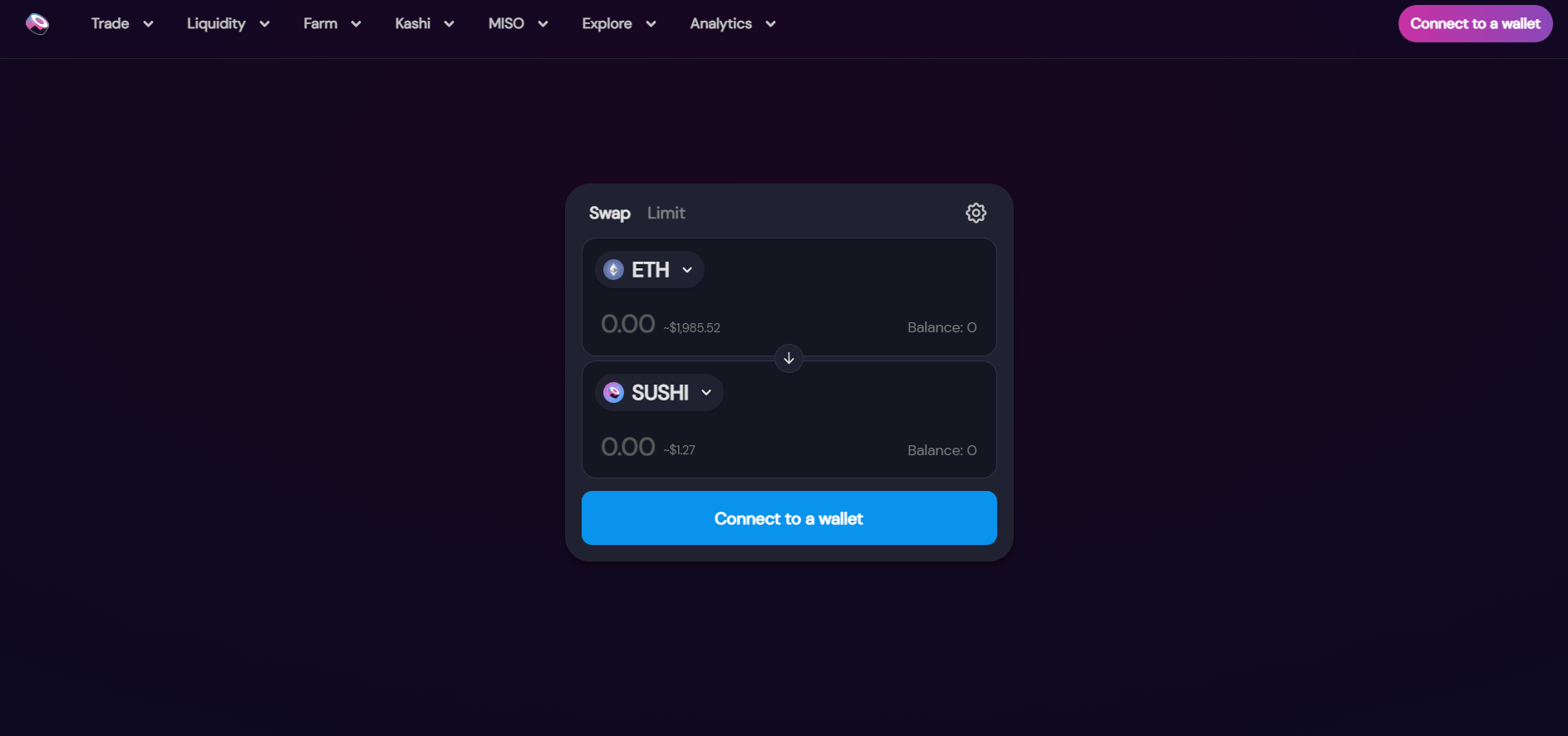
Connect your wallet to the platform. Currently, SushiSwap supports: Metamask, WalletConnect, Coinbase Wallet, Fortmatic, Portis, Binance, and Clover Wallet.
-
After selecting the wallet, the system will automatically connect to the wallet you have chosen. If you don’t have one, you can create a new wallet and connect it.
-
Once the wallet is successfully connected, the system will redirect you back to the SushiSwap pool. Click “Add” to start providing liquidity.
-
Select the input token and then select the SUSHI coin, then enter the amount for a notification (e.g., 1 BNB). The system will automatically calculate the corresponding amount of SUSHI coins. Then click “Approve” to confirm.
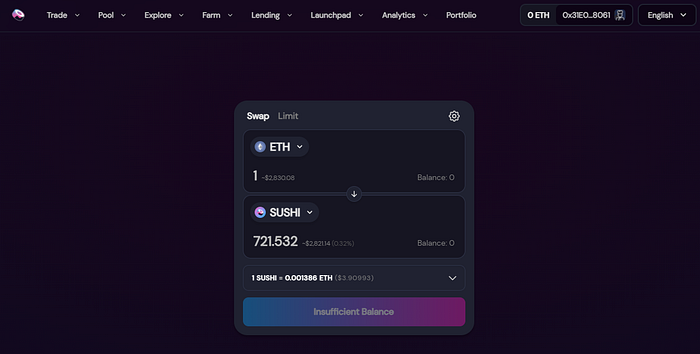
- A pop-up window will appear with transaction details along with gas fees; click “Confirm” to complete.
- Finally, click “Confirm Adding Liquidity” and confirm in the next pop-up window.
- Once the process is complete, you will see your position displayed at the bottom of the window; positions can be managed under the “Pool” tab.
5. SHOULD YOU BUY SUSHISWAP COIN?
SushiSwap itself faces many competitors as the number of DEX exchanges in the market is not small. Some competitors also operate on different blockchain networks, serving completely different audiences who may not need to use SushiSwap. First, let’s take a look at the recent SUSHI coin price chart on TradingView to see how the SUSHI price has fluctuated:
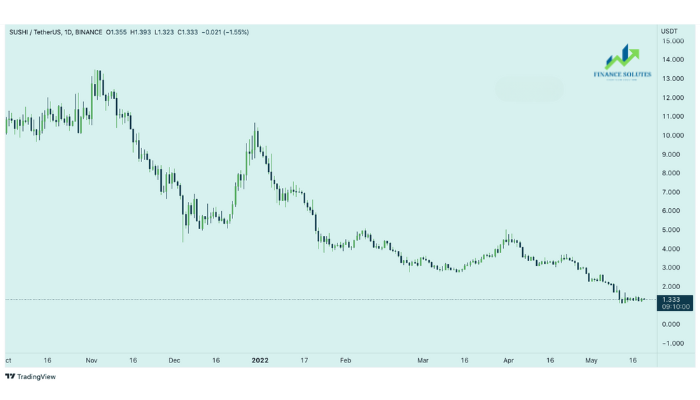
The all-time high (ATH) price of SUSHI coin reached $33.25 in March 2021. After that point, the price did not drop sharply but fluctuated with a downward trend, then recovered somewhat but has not reached the ATH level again. Looking at the long-term price chart of SUSHI coin, it can be seen that the coin’s price is in a downward trend, partly affected by the overall recent condition of the cryptocurrency market. However, with innovations and developments from the project, investors are hopeful that the SUSHI token price can rise again within this year.
6. SUMMARY
There is no denying that the SUSHI coin project is an interesting experiment following the unexpectedly successful Uniswap fork. Breaking out of Uniswap’s “shadow,” SushiSwap has developed an ecosystem that no longer revolves solely around the SushiSwap exchange but also supports other DeFi features. The most important information about the project has been provided by tradafx in today’s article “What is SUSHI Coin,” and the decision whether to buy or invest is yours.
- t.me/finance_solutes
- Website: https://finance-solutes.com
- Hotline: +1 929 5636 439 ( Hotline )
- 26 Broadway, Suite 934, New York, 10004, US
