
 XM
XM Bybit
Bybit Binance
 Robinhood
 Webull
 IC Markets
 Pepperstone
 OKX
OKX Vantage
 VT Markets
 BingX
BingX Gate.io
 Kucoin
 MEXC
MEXC Exness
 Bitget
Many traders may have heard of the concept of the FED. For traders participating in the Forex trading market, information surrounding the FED as well as the policies it implements plays a crucial role in investors’ decisions. However, not everyone fully understands the structure and operational mechanism of this powerful institution, especially new Forex players, for whom learning about the FED is extremely important.
So, what is the role of the FED? Why is the FED considered one of the most powerful institutions in the world? How does the FED impact the U.S. economy in particular and the global economy in general? The following article will answer these questions for you. Stay tuned!
What is the FED?
Overview of the FED
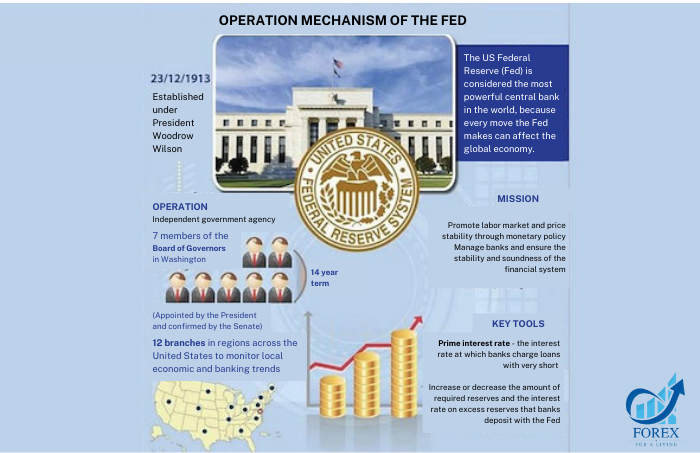
The FED – the Federal Reserve System, also known as the central bank of the United States, is the only central banking institution in the country. The FED was established on December 23, 1913, under the “Federal Reserve Act,” signed by President Woodrow Wilson, with the goal of maintaining a stable, flexible, proactive, and secure monetary policy for the United States.
Today, the FED is considered the most powerful financial institution in the world, exerting influence not only on the U.S. but also on other countries across the globe. It is the only entity authorized to print U.S. dollars—the key currency affecting global interest rate fluctuations. The FED’s reserves also serve as a major repository of money and gold worldwide. One notable example is the Federal Reserve Bank of New York, which holds approximately 25% of the world’s gold reserves, most of which belong to foreign countries.
What are the Functions of the FED?
The establishment of the FED has provided the United States with an extremely secure, flexible, and stable monetary and financial system. It has also enabled the country to implement policies to respond to and resolve financial crises, both large and small, that have caused severe economic damage in the past—such as the major financial crisis of 1907.
The U.S. Congress has established three core and continuous objectives for monetary policy in the Federal Reserve Act: maximizing employment to reduce unemployment, maintaining stable and effective prices, and adjusting interest rates.
Over the years, as the economy has continuously evolved, the FED’s responsibilities have also expanded significantly. By 2009, the FED had gained the authority to supervise and regulate banks, maintain the stability of the monetary and financial system, and provide financial resources to the U.S. government as well as domestic and international organizations.
What is the Nature of the FED?
In 1910, financial and economic crises led the U.S. financial sector to believe that a national banking system was essential to manage and regulate state finances. At that time, a heated debate erupted between the Democratic and Republican parties. However, both sides eventually reached a consensus on the necessity of establishing a monetary system to revive and develop the U.S. economy.
How was the FED born?
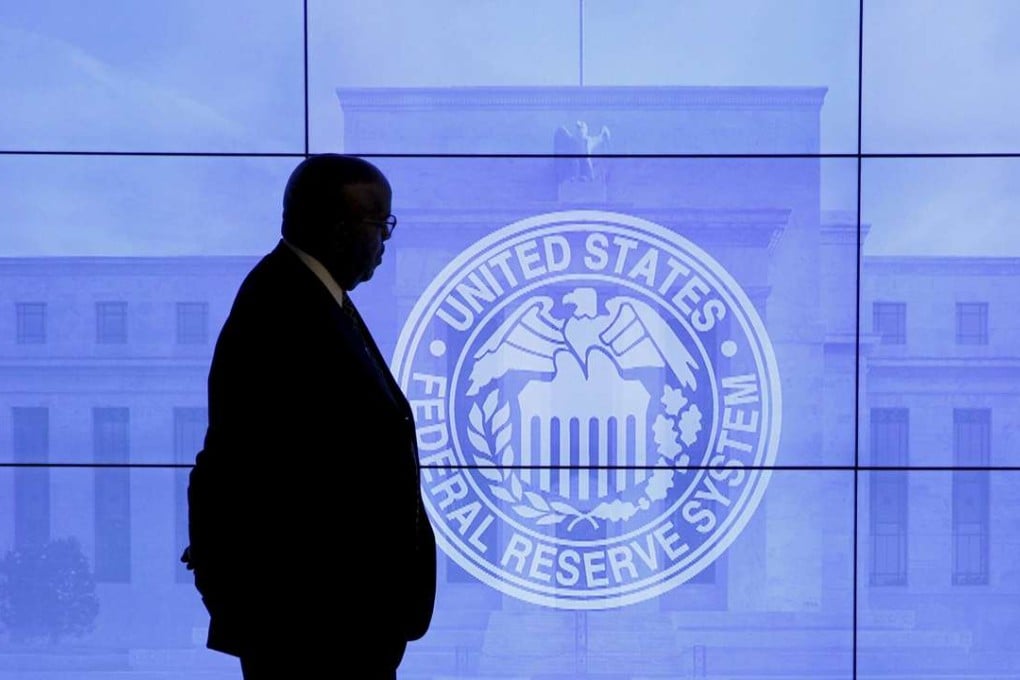
After intense debates among political parties regarding the establishment of a central financial bank, in November 1913, Congress officially passed the “Federal Reserve Act” based on the ideas of the Aldrich Plan.
At that time, Paul Warburg, along with many other experts, was appointed to oversee the operations of this still-young national banking system. Two years later, the Federal Reserve officially began operations, playing a key role in financing and supporting the U.S. and Allied forces during World War I.
The Federal Reserve is one of the few central banks in the world that operates without any government control. Thanks to this independence, the FED’s decisions and policies are not influenced by any political party but are instead focused solely on the actual economic and financial conditions at the time.
The Independence of the FED
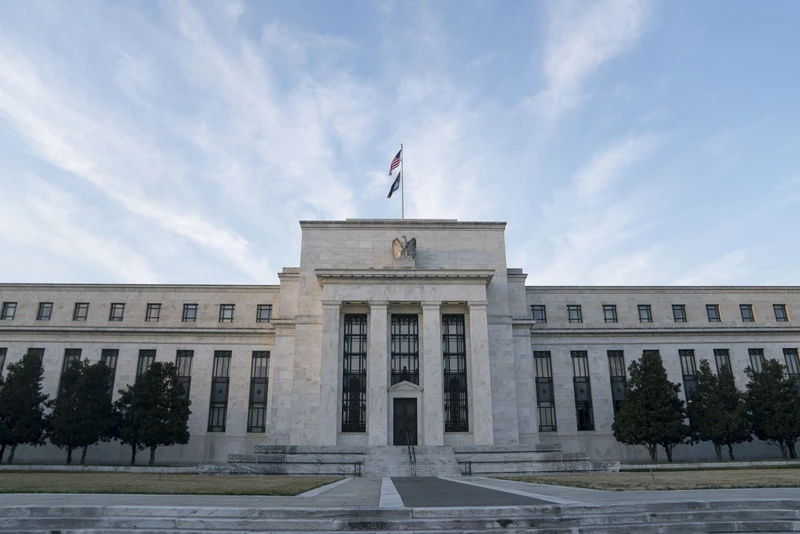
There are currently three common models of central banks worldwide:
- Independent central banks that operate separately from the government.
- Government-owned central banks that function as state agencies.
- Central banks that are part of the Ministry of Finance.
The degree of independence of a central bank determines its authority and level of control, aiming to minimize political interference in the implementation of monetary policies.
According to the International Monetary Fund (IMF), central bank independence is classified into four levels:
- Level 1: Full autonomy in setting operational objectives.
- Level 2: Autonomy in defining performance targets.
- Level 3: Autonomy in choosing operational tools.
- Level 4: Limited autonomy.
Among these, the FED has the highest level of independence—Level 1, meaning it has complete authority in setting its operational objectives.
Policy Independence
The FED can make monetary policy decisions without requiring approval from the President, the government, or any executive or legislative body.
It has full discretion over interest rates, exchange rates, reserve requirements, and open market operations to achieve its policy goals. All decisions are ultimately aimed at price stability, job creation, and sustainable economic growth.
Financial Independence
The FED does not receive any funding from Congress or the U.S. government. Instead, it operates on an independent budget and generates revenue from its own assets. After paying a mandatory 6% dividend, all remaining profits are transferred to the U.S. Treasury.
In reality, the FED is a highly profitable entity. In 2010, the FED earned $82 billion in profit and transferred $79 billion to the U.S. Treasury.
Organizational and Personnel Independence
The FED’s personnel structure is also independent. Board members serve 14-year terms, spanning multiple presidential and congressional terms. They can only be removed by the President under specific circumstances.
Organizational Structure of the Federal Reserve
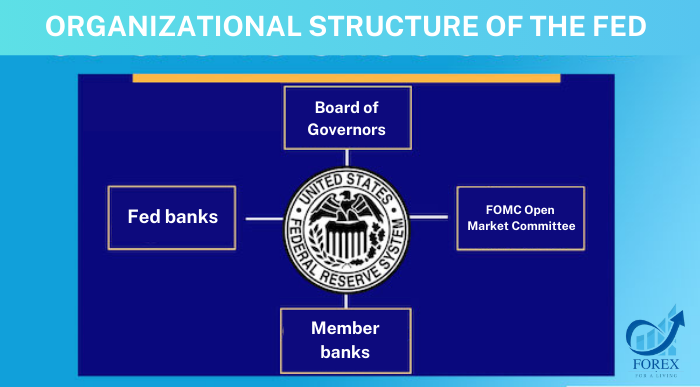
The key difference between the FED and other central banks lies in its organizational structure and operational system. The FED consists of four levels:
- Board of Governors
- Federal Open Market Committee (FOMC)
- 12 Federal Reserve Banks serving as the FED’s headquarters, distributed across various cities
- Member Banks
Board of Governors
This is the most important and highest decision-making body, playing a central role in the FED’s operational framework:
- The Board consists of seven members appointed by the President of the United States and confirmed by Congress.
- Each member serves a 14-year term and cannot be reappointed after completing a full term (unless removed by the President).
- The Board of Governors operates independently from the federal government.
- It does not receive any government funding.
- Members work autonomously and are not subject to legislative or executive directives.
- The Board is fully responsible for formulating and implementing monetary policies.
- It oversees and regulates the activities of 12 Federal Reserve Banks and the entire U.S. banking system.
Federal Open Market Committee (FOMC)
- The FOMC is responsible for establishing and implementing monetary policies for the U.S. economy, which is considered one of the largest and most powerful economies in the world.
- The structure of the FOMC will include 7 Governors on the Board of Directors and 5 Federal Reserve Bank Presidents.
- It plays a crucial role within the FED and enforces major financial policies impacting the economy.
- The FOMC holds eight meetings per year to determine interest rates and adjust the money supply. Additional emergency meetings are conducted as needed.
- FOMC decisions often greatly affect the credit of domestic and foreign banks and investment corporations as well as interest rates for businesses and consumers.
Federal Reserve Banks
There are 12 Federal Reserve Banks spread across different regions of the U.S., with ownership primarily held by member banks (each member bank holds non-transferable shares).
According to the U.S. Supreme Court, regional Federal Reserve Banks operate independently and are classified as private institutions.They are not federal government agencies and function under the legal framework of their respective states.
Many private entities own shares in these Federal Reserve Banks, and some banks even issue stocks on financial markets. The U.S. dollar notes issued by the FED are the largest source of circulating money, distributed into the economy through regional Federal Reserve Banks.
The Role and Responsibilities of the Federal Reserve (FED)
Responsibilities of the FED
- By influencing monetary and credit conditions, the FED helps stabilize the domestic economy, promote growth, create job opportunities for citizens, and regulate long-term interest rates.
- It supervises, adjusts, and issues regulations for banking institutions to ensure a unified, safe, and stable national financial and banking system. This, in turn, protects the rights and interests of consumers.
- The FED analyzes economic development trends to facilitate growth while maintaining economic stability. It also minimizes systemic risks that could arise at any time in the market.
- It contributes to providing financial and monetary services to asset management organizations, official foreign institutions, and the U.S. government. The FED plays a crucial role in the operation of the national payment system, significantly impacting both domestic and international economies.
The Role of the FED
The core role of the FED is explicitly outlined in the amended Federal Reserve Act of 1977, specifically as follows:
- The FED is an extremely important entity in the monetary market, directly influencing both the U.S. economy and the global economy.
- Holding key economic relationships and connections, the FED’s policies and information must be closely monitored by investors looking to enter the domestic and international financial markets to respond promptly to market changes.
- The FED ensures that monetary policies are implemented correctly and effectively through its three primary tools.
- It acts as the lender of last resort and as a guardian of monetary stability. Therefore, if any member bank under the FED’s supervision falls into financial distress and risks bankruptcy, the FED will provide loans to help these banks navigate out of the crisis.
Why can the FED Influence the Global Economy?

It can be said that the U.S. dollar (USD) is inherently a highly valuable currency with a crucial role in influencing global economic changes and financial values. On the other hand, the FED is the sole institution with full authority to regulate the printing, increase, and decrease of the U.S. dollar supply. Therefore, if the FED raises USD interest rates to curb inflation in the country, it inadvertently strengthens the USD in the international currency market. This leads to several consequential effects, such as increased imports, decreased exports, and reduced investment in the U.S.
Moreover, due to the significant value of the USD in the international monetary system, many essential commodities, such as oil and gold, are currently priced in USD. Since the FED is the only institution authorized to influence the value of the USD through buying and selling USD and other foreign currencies, its control over the USD indirectly influences the global market as well.
For these reasons, nearly every decision made by the FED impacts the global economy. Therefore, in the forex market, traders cannot afford to overlook information related to the FED if they do not want to suffer losses or fall behind in the latest economic trends.
Factors Influencing the FED’s Monetary Policy
Interest Rate Changes
Types of Interest Rates
- Discount Rate: This is the interest rate at which commercial banks can borrow from the FED. If the discount rate increases, commercial banks will borrow less, reducing the demand for money, which significantly lowers inflation. Conversely, if the interest rate is reduced, commercial banks will have more opportunities to borrow, and businesses will have better access to credit for investment, thus boosting business activities and economic growth.
- FED Funds Rate (FFR): This rate is similar to interbank lending, where banks lend to each other. The FFR is agreed upon by commercial banks, but the FED can use open market operations to influence the money supply and guide the FFR towards the target interest rate.
Reasons for the FED to Raise Interest Rates
As mentioned earlier, the USD is a key currency in the global economy. Therefore, any policy decision by the FED that changes its value will directly and powerfully affect the economy. So, why would the FED decide to raise interest rates?
- The Economy is Growing Too Quickly: If the economy is growing too rapidly, raising interest rates slowly might not be sufficient to slow down the economy.
- Current Interest Rates are Low: If the interest rates applied to the economy are still low, the real interest rate (nominal interest rate minus inflation) might be extremely low, which doesn’t effectively curb inflation.
- Achieving a “Neutral” Interest Rate: The FED might raise interest rates to bring the real interest rate to a neutral level, which is the rate that neither stimulates nor suppresses demand. Experts believe that the neutral rate has significantly decreased in recent years.
- Preventing Overconsumption and Economic Bubbles: The FED may raise rates to curb excessive consumer borrowing and to control emerging bubbles in the housing and other asset markets.
Buying and Selling Government Bonds (OMO – Open Market Operations)
This is a useful tool for the FED to manage and monitor its policies. Buying and selling government bonds impacts the money supply in the market. When the FED buys bonds, it increases the money supply, which leads to lower interest rates due to reduced demand for loans.
Conversely, if the FED sells bonds, the money supply contracts, which causes interest rates to rise significantly, potentially creating financial difficulty in the economy.
Reserve Requirements
As previously mentioned, the FED oversees many banks in various regions. Any policy or directive regarding the required reserve ratio forces these banks to adjust their reserves accordingly. Specifically, if the FED assesses that the money supply is too large, banks must reduce the amount of lending. This makes borrowing more difficult, which leads to higher interest rates.
Conclusion about the FED
What is the FED? If you’re a smart financial investor in the Forex market, you should thoroughly understand and be able to answer this question. The information related to the FED and the policies it implements has a significant impact on the economic and financial situation of the United States as well as the entire world.
This organization is considered the most powerful financial authority globally. The FED is the most effective manager and custodian of money.
We hope that the information provided above has helped you gain a comprehensive understanding of the organizational structure of the FED – the Federal Reserve System of the United States, as well as how it operates and its influence on the Forex trading and investment markets.
In conclusion, to participate in the Forex trading market, you must understand, correctly interpret, and stay updated on the information released by the FED to easily engage and make the most profitable transactions. We wish you success!
- t.me/finance_solutes
- Website: https://finance-solutes.com
- Hotline: +1 929 5636 439 ( Hotline )
- 26 Broadway, Suite 934, New York, 10004, US
