
 XM
XM Bybit
Bybit Binance
 Robinhood
 Webull
 IC Markets
 Pepperstone
 OKX
OKX Vantage
 VT Markets
 BingX
BingX Gate.io
 Kucoin
 MEXC
MEXC Exness
 Bitget
The Federal Reserve System (FED) was established in 1913 by the United States Congress. The operations and policies of the FED have a significant impact on the value of the currency, influencing transactions involving the USD. Explore the history of the FED, its influence on the USD, and how to trade based on the FED’s monetary policies in this series of trading knowledge lectures.
1. WHAT IS THE FEDERAL RESERVE (FED)?
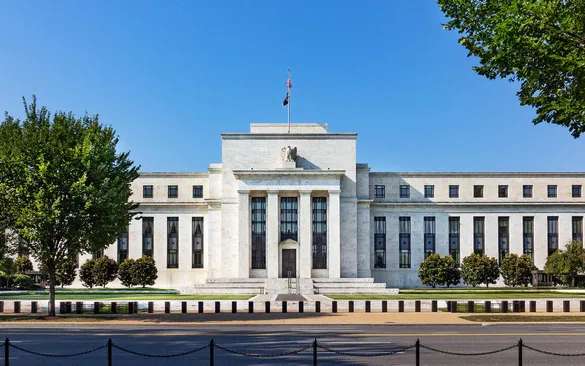
The Federal Reserve (FED) is the central bank of the United States. It was established to create a stable and flexible monetary and financial system for the nation. The FED’s general mission is to set monetary policy and oversee efficient economic operations, ultimately serving the national interest.
The 5 main functions the FED must perform:
-
Promote maximum employment, stable prices, and moderate long-term interest rates.
-
Minimize risk where possible to create a stable financial system.
-
Promote safety within the financial system.
-
Maintain the security of the payment and settlement system.
-
Protect consumers through supervision.
To ensure daily operations, the country is divided into 12 Federal Reserve Districts. Each district is represented by a Federal Reserve Bank. These districts and member banks operate independently under the supervision of the Federal Reserve Board of Governors.
1.1. Who Owns the FED?
The Federal Reserve System (FED) is both a private and a public organization. The Board of Governors is a government agency, while the banks themselves are structured like private organizations—members hold shares and receive dividends.
1.2. Who Is the Chairman of the Federal Reserve?
As of August 2019, the Chairman of the Federal Reserve is Jerome Powell. He has served in this position since February 5, 2018. He is the 16th person to hold this role, with a 4-year term. Before becoming Chairman, he served as a member of the Board of Governors starting May 25, 2012. He also currently serves as the Chairman of the Federal Open Market Committee (FOMC), which is the body that oversees monetary policy.
1.3. The FED’s Member Banks
The 12 Federal Reserve Districts, each with a Reserve Bank, are:
-
Boston
-
New York
-
Philadelphia
-
Cleveland
-
Richmond
-
Atlanta
-
Chicago
-
St. Louis
-
Minneapolis
-
Kansas City
-
Dallas
-
San Francisco
1.4. The Responsibilities of the FED
The FED is accountable to the public as well as the United States Congress. The Chairman and FED officials testify before Congress to ensure clear and transparent monetary policies. For accountability, the Federal Open Market Committee (FOMC) publishes statements after every meeting each year. All financial statements are independently audited annually to guarantee financial accountability.
2. KEY ISSUES OF THE FEDERAL RESERVE
U.S. monetary policy is the primary concern of the Federal Reserve (FED). The statutory goals of monetary policy, outlined by Congress, are:
-
Maximize employment: The monetary policy set by the FOMC should ensure low unemployment rates. It aims to stimulate the economy when necessary so businesses can grow, generate profits, and hire more employees.
-
Price stability: The FED defines stable prices as a long-term inflation rate of 2%.
-
Moderate long-term interest rates: This goal is pursued alongside price stability. When the economy is stable, long-term interest rates remain moderate.
The FED’s objective is to achieve monetary policy goals through its influence on prices and the overall financial environment. This can lead to fluctuations in the USD, especially following announcements and policy changes from the FED.
Federal Open Market Committee (FOMC)
Monetary policy is set by the Federal Open Market Committee (FOMC), which oversees the open market operations of the Federal Reserve System. They set a target for the federal funds rate at FOMC meetings; this is the rate the FOMC wants banks to charge each other for overnight loans. Although the FOMC doesn’t directly control interest rates, it can influence them through three methods:
-
Open market operations: This refers to the buying and selling of government bonds in the open market. Selling bonds decreases the money supply to raise interest rates. Buying bonds injects money into the economy to lower interest rates.
-
Discount rate: This is the interest rate banks pay to borrow money from the FED. A lower discount rate often leads to lower federal funds rates.
-
Reserve requirements: Banks must keep a certain percentage of customer deposits in reserve. When reserve requirements are increased, banks can lend less money and may charge higher interest rates. When reserve requirements are reduced, banks can lend more, and interest rates may drop.
3. THE IMPACT OF THE FEDERAL FUNDS RATE ON THE USD
The interest rate set by the Federal Reserve (FED), known as the federal funds rate, is determined by the Federal Reserve Board of Governors. Changes in the current rate and expectations for future rates influence the value of the U.S. dollar. If traders anticipate changes in rates based on announcements from the Board of Governors, this can cause the dollar to appreciate or depreciate relative to other currencies.
The table below shows how market expectations and rate changes can affect the dollar’s value:
| Market Expectation | Actual Result | Impact on Forex Market |
|---|---|---|
| Rate hike expected | Rate remains unchanged | Currency depreciates |
| Rate cut expected | Rate remains unchanged | Currency appreciates |
| Rate unchanged | Rate increases | Currency appreciates |
| Rate unchanged | Rate decreases | Currency depreciates |
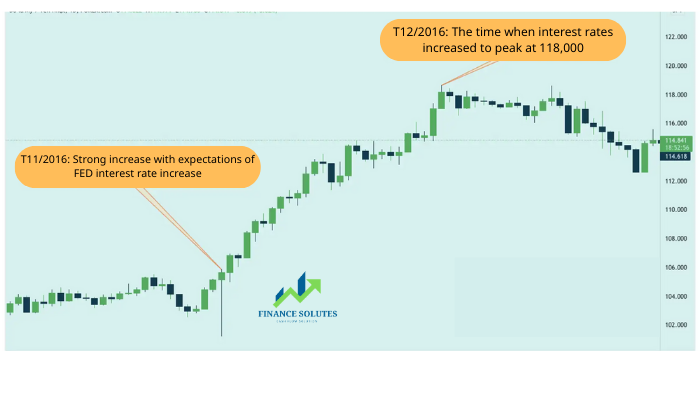
As you can see in the chart below, the dollar strengthened against the yen before the FED’s rate hike announcement in December 2016. This was because many anticipated an increase in the federal funds rate. The pair peaked around 118.371 on the announcement day, December 14, 2016.
Chart: Before and After the FED’s Rate Hike in 2016:
4. HOW TO TRADE BEFORE FED’S MONETARY POLICY DECISION
To prepare for the Federal Reserve’s (FED) interest rate decision, traders should follow two important steps:
- Monitor news from the FED: The FOMC holds 8 regular meetings each year. This is where policies and interest rates are discussed and finalized. Keeping track of news before these meetings is the best way to predict interest rate decisions and whether you should buy or sell the US dollar.
- Stay updated with market news: Rest assured, you’re not the only one speculating about interest rates. Before the meetings and announcements, many other forex traders will be closely watching the situation. Keep an eye on others’ predictions and expectations, and stay fully updated so you can form your own opinion and add your own logic to theirs.
There is no tool that can predict interest rate decisions with complete accuracy, and surprises do happen. The key is to protect yourself when trading forex. Make sure to place stop-loss orders to limit your losses if the market moves against you.
Remember to stick to your forex trading plans. Note that you should never enter a trade that you cannot afford to lose. Trading can go both ways. Even if you’re confident in the trade, there’s always the possibility that things won’t go as expected.
- t.me/finance_solutes
- Website: https://finance-solutes.com
- Hotline: +1 929 5636 439 ( Hotline )
- 26 Broadway, Suite 934, New York, 10004, US
