
 XM
XM Bybit
Bybit Binance
 Robinhood
 Webull
 IC Markets
 Pepperstone
 OKX
OKX Vantage
 VT Markets
 BingX
BingX Gate.io
 Kucoin
 MEXC
MEXC Exness
 Bitget
Following the KAVA project that Finance Solutes covered in a previous article, TROY Network is the 11th IEO project on Binance Launchpad. With the mission of combining the features of both DEX and CEX exchanges, the TROY project quickly attracted significant attention from the investor community.
So, what is the TROY coin? What are the outstanding features of TROY Network? And what is the future potential of this project? Let’s dive into the details with Finance Solutes in today’s review.
Table of Contents
Toggle1. OVERVIEW: WHAT IS THE TROY NETWORK PROJECT?
The TROY Network project is an ecosystem that integrates various crypto products, similar to Alpha or Coin98. It aims to build a suite of decentralized financial (DeFi) products that offer users utilities for trading, swapping, and options to generate profit through DeFi, CeFi, staking, and more.
According to materials researched by Finance Solutes, the core idea of TROY Network is to create an intermediary layer between brokers, financial services in the crypto space, blockchain platforms, enterprises of all sizes, and traditional financial market traders.
This idea is implemented by developing a set of decentralized protocols built on TROY’s blockchain infrastructure. Specifically, the solution and structure adopted by the project include:
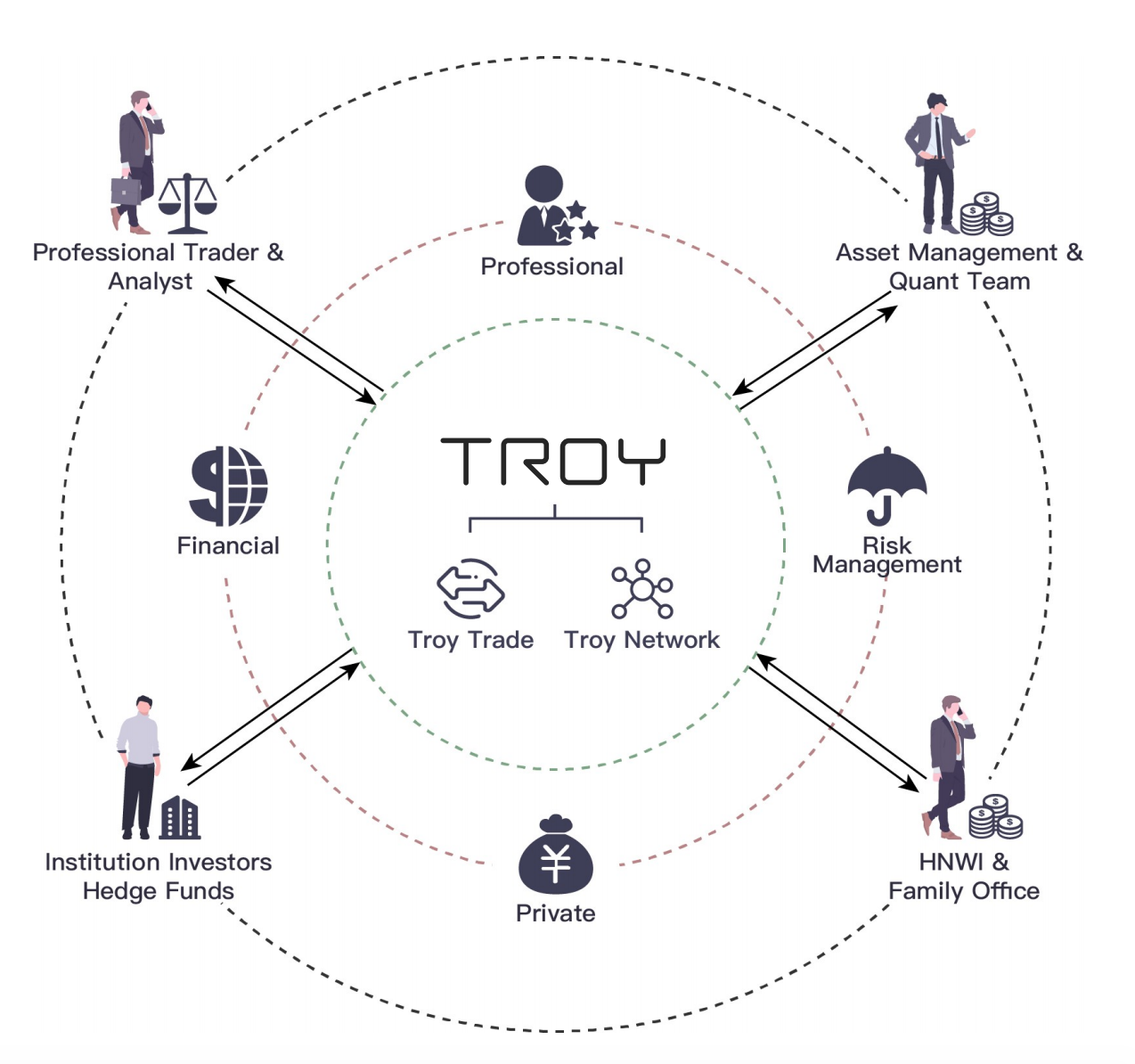
- Layer 1 (First Layer): This layer provides the security foundation for the system and is referred to as the Public Chain.
- Layer 2 (Second Layer): This is the layer that helps accelerate transaction speed and is referred to as Offchain.
- Layer 3 (Third Layer): The network layer used to execute transactions and interact with all applications.
Thus, this model allows trading with centralized platforms while still ensuring security, transaction speed, and liquidity suitable for user demands.
1.1. What problems does TROY Network aim to solve?
In reality, there are numerous issues with both CEX (centralized exchanges) and DEX (decentralized exchanges).
Specifically, Finance Solutes lists a few problems that CEX platforms encounter, as outlined by TROY Network:
- Poor Security: This is an age-old issue for CEX users. Once KYC is completed and personal information is provided, a security breach can jeopardize both your assets and private data.
- Market Manipulation: “Whales” on the exchange can easily manipulate prices — either pumping or dumping — depending on their intentions.
- Users are “Passive” with Their Own Assets: When you deposit funds into an exchange, you are essentially placing full trust in the broker. Therefore, if any issues occur with pricing or if the platform suddenly locks accounts, you — the user — are the one who bears the loss.
Decentralized Exchanges (DEXs) no longer face the aforementioned issues of CEXs. However, DEXs still have certain limitations such as:
-
Unstable Transaction Speed: Since transactions occur directly between wallets on the blockchain, the execution speed can slow down, especially when there is network congestion.
-
Low Liquidity: Due to unstable transaction processing speeds, liquidity levels are also not high.
-
Limited Trading Tools and Options for Traders: Mostly limited to Limit Orders and Market Orders.
-
Poor User Experience: For users accustomed to CEX platforms, transitioning to a DEX can be a significant barrier.
Therefore, the TROY Network project was developed with the goal of combining the strengths of both DEX and CEX platforms through its Layer 1 and Layer 2 architecture, as mentioned above by TradaFX. With the Settlement Network, user orders can be matched with those from the project’s partner brokers. Additionally, the Cross-Chain feature allows transactions across different blockchains to be processed seamlessly.
As a result, TROY Network helps reduce risks during blockchain hard forks and eliminates scalability barriers commonly found in decentralized exchanges (DEXs).
1.2. Key Features of the TROY Network Project
TROY Network’s product suite includes:
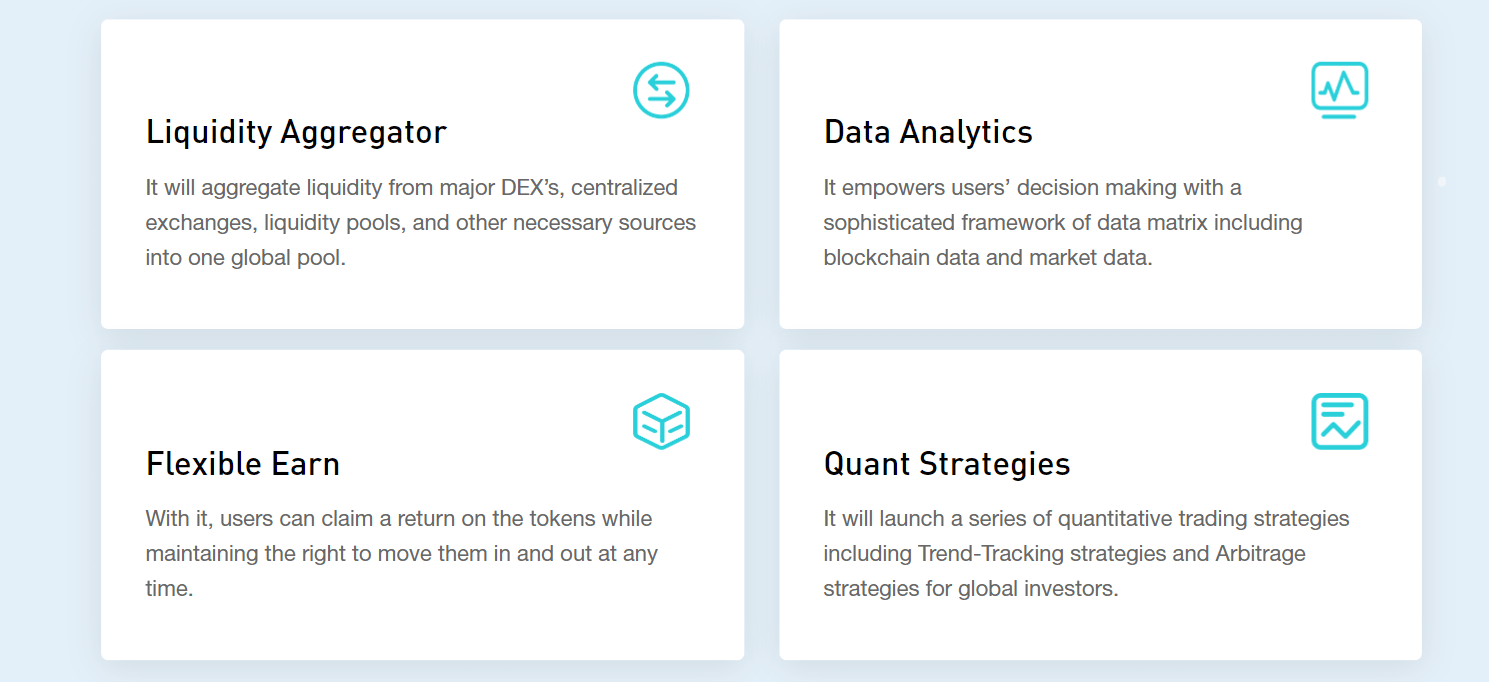
- Liquid Aggregator: The project aggregates liquidity not only from DEXs but also from CEXs. This allows users to trade with higher liquidity and lower slippage.
- Quant Strategies: TROY Network offers a range of quantitative trading strategies, including Arbitrage and Trend Tracking strategies for investors.
- Flexible Earn: This feature enables traders to earn passive income while still holding their tokens, through options like Saving, Farming, and more.
- Data Analytics: Includes a wide variety of data to help users make informed trading decisions. These data points are diverse, such as trading volume or Grayscale’s BTC holdings, etc.
2. DETAILED INFORMATION ABOUT THE TROY TOKEN
Now, let’s dive deeper with Trada into the TROY Token and what it offers within the project!
2.1. Basic Information about the TROY Coin
-
Token Name: Chainlink
-
Ticker: TROY
-
Blockchain: Ethereum (TGE)
-
Token Type: Utility Token
-
Token Standard: ERC20
-
Contract: 0x514910771af9ca656af840dff83e8264ecf986ca
-
Total Supply: 10,000,000,000 TROY
2.2. TROY Coin Crypto Allocation (TROY Token Allocation)
With a total supply of 10 billion tokens, TROY Coin is allocated as follows:
-
Private Sale: 12%
-
Public Sale: 5%
-
Genesis Auction: 3%
-
Team & Advisory: 10%
-
Ecosystem: 10%
-
Mining Rewards: 60%
2.3. Purpose & How to Own TROY Coin
As Finance Solutes previously mentioned, TROY Coin plays an operational role within the TROY Network ecosystem with the following purposes:
-
TROY Coin is used for transaction fees and payments
-
Used as a reward for the Relayer Network to encourage fast, timely, and accurate order execution
-
TROY Token is staked as a Supernode for the Relayer network
-
Supports the operations of the TROY Network ecosystem
So how can investors own this Coin?
In fact, there are 4 ways for Traders to acquire TROY Tokens:
-
Become a Relayer to receive TROY Token rewards
-
Stake TROY Coin to become a Supernode and receive TROY Token rewards
-
Purchase directly during the IEO on Binance Launchpad
-
Buy directly from exchanges where TROY Coin is listed, such as Binance, Gate.io, Uniswap, etc.
Note: TROY Coin can only be staked within the Relayer network and does not operate under a PoS mechanism like ETH or BTC.
2.4. TROY Token Release Schedule & TROY Coin Roadmap
TROY Token Release Schedule
The TROY Token release schedule is shown in the chart below:
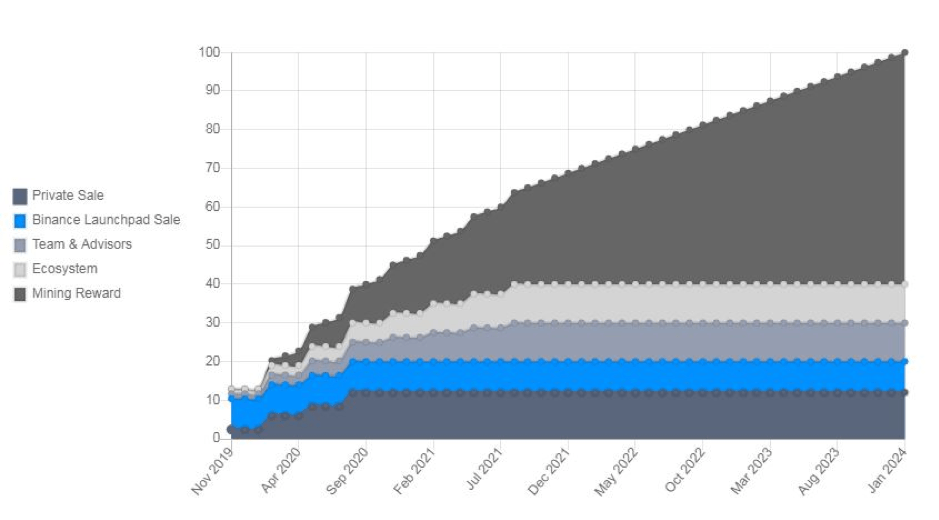
TROY Coin Roadmap
Investors can refer to the Roadmap of the TROY Network project HERE.
Accordingly, here are some important milestones:
Q4/2020:
- Research and planning for product launch
- Redesign of the project’s website structure
Q1/2021:
- Product completion
- Development of the Liquid Aggregator for TROY Coin
Q2/2021:
- Design and construction of the TROY Token trading interface
- Development of an asset management toolkit
Q3/2021:
- Build arbitrage trading strategies for the Toolkit
- Test Data Sync and review code
Q4/2021:
- Official product launch
3. TROY WALLET COIN STORAGE WALLET
Because TROY Coin is an ERC20 Token, investors can store this coin in any wallet that supports ERC such as:
- Hot wallet: Metamask, Mycrypto, Myetherwallet, Trust Wallet,….
- Cold wallet: Ledger, Trezor,…
- Wallets on exchanges that support TROY Coin: typically Binance, Gate.io, Uniswap, Bitrue,…
4. TROY NETWORK’S TEAM, INVESTORS & PARTNERS
So, who are the developers, investors, and partners behind the TROY Network project?
4.1. TROY Token Development Team
The TROY Network development team includes the following members:

4.2. Investors & Partners of TROY Network Project
TROY Network project has received support from many large investment funds (TROY Coin Partners), typically Binance Launchpad, AlphaCoin Fund, NGC Capital, Signum Capital, Consensus Lab,…

5. FAQS ABOUT THE TROY NETWORK PROJECT AND ITS TOKEN
In the final part of today’s article, let’s wrap up with some frequently asked questions about the TROY Network project and its token.
5.1. Where can investors follow the latest updates about this project?
Investors can stay up to date with the latest information about the TROY project through the following communication channels:
- TROY Coin Website: https://www.troytrade.com/
- TROY Coin Twitter: https://twitter.com/troytrade
- TROY Telegram: https://t.me/TroyTrade_Official
- Email: support@troytrade.com
5.2. On which broker exchanges can traders buy and sell TROY Coin?
Currently, traders can buy and sell the TROY Token on various exchanges, such as Binance, Gate.io, Uniswap, Bitrue, Hoo, and more. However, after the IEO on Binance Launchpad, TROY Coin will be officially traded on Binance.
5.3. Assessing the potential of TROY Token
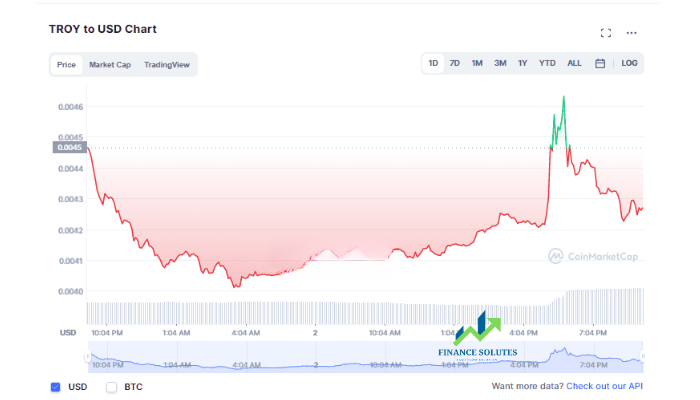
As Finance Solutes has mentioned, the combination of Layer 1 and Layer 2 will enhance both speed and security features for exchanges. In general, this is a relatively risky direction, as many projects have tried similar approaches but have yet to achieve significant success.
The TROY Coin is used for staking in the Relayer Network and also serves as a transaction fee payment token on TROY Trade. This means that if the TROY platform attracts a large user base, the demand for TROY Coin will increase accordingly. As transaction volume grows, the Supernodes in the Relayer Network must scale up to handle the increased traffic. Consequently, the demand for TROY Token is expected to rise sharply.
Regarding investment decisions, Finance Solutes advises everyone to thoroughly research and form their own opinions to make well-informed choices.
6. SUMMARY
In today’s article, Finance Solutes has provided you with comprehensive information on what TROY Coin is, the outstanding features of the TROY Network project, and its future potential. We hope that the knowledge we’ve shared has helped you gain a clear and accurate overview of this project.
All the information presented in this article reflects Finance Solutes objective research — the final investment decision is entirely up to you.
Wishing you success!!!
- t.me/finance_solutes
- Website: https://finance-solutes.com
- Hotline: +1 929 5636 439 ( Hotline )
- 26 Broadway, Suite 934, New York, 10004, US
