
 XM
XM Bybit
Bybit Binance
 Robinhood
 Webull
 IC Markets
 Pepperstone
 OKX
OKX Vantage
 VT Markets
 BingX
BingX Gate.io
 Kucoin
 MEXC
MEXC Exness
 Bitget
Web 3.0 is a term you’ve likely encountered and heard about frequently on social media channels. In general, it represents the next phase of Internet development. Its immense impact is bringing us exciting experiences, making life easier and more efficient. So, what exactly is Web 3.0? What are its future development potentials? And what are the strengths and limitations of this technology? All these questions will be answered in today’s article by Forex.
Let’s dive in!
1. OVERVIEW OF WHAT IS WEB 3.0?
Before diving deeper into Web 3.0, you need to understand the basic concept of what the Web is.
The Web or Website is a collection of information that can be accessed through the Internet. This collection of information consists of data developed and uploaded to the Web, such as articles, social media, entertainment websites, blogs, etc.

Many people often confuse the two terms Website and Internet. However, they are completely different concepts, where the Internet is the infrastructure, and the Website is what is developed on that infrastructure. All of these elements form the cyberspace that we access daily.
1.1. What is Web 3.0?
In the previous section, the term Website has been clarified by Forex. Now, let’s explore the concept of what Web 3.0 is!
Web 3.0, or Web3, is the third generation of Internet technology based on machine learning, artificial intelligence (AI), and Blockchain. This term was developed by Gavin Wood (the founder of Polkadot and co-founder of Ethereum) with the aim of creating smart Web pages and Web applications that are interconnected and increasingly integrated. While Web 2.0 focuses heavily on user-generated content stored on centralized Websites, Web 3.0 will allow users to have more control over the data they provide.
The focus of the digital economy also plays an important role in Web 3.0. Additionally, you should understand that Web 3.0 is a changing concept with no single definition or exact meaning. It can vary depending on the time and the target audience.
1.2. Comparing Web 3.0 with Previous Versions
In the comparison table below, let’s explore the differences between Web 3.0 and its previous versions, Web 2.0 and Web 1.0, with Forex.
| Web 1.0 | Web 1.0 | Web 2.0 | Web 3.0 |
|---|---|---|---|
| Content | Passive interaction for users | Community platform and user-generated content | Ownership of content creator properties |
| Technology | HTML | Dynamic HTML, Javascript | Blockchain, AI, machine learning |
| Virtual Environment | None | Basic 3D | 3D, VR, AR |
| Advertising | Annoying (banners, etc.) | Interactive | Targeting based on user behavior |
| Data Storage | Stored on individual website servers | Owned by big tech giants | |
| Audience | Individual users | Specific user communities |
As you can see, the trend of change started with Web 1.0, where information providers offered static content for users to read but rarely interact with. For Web 2.0, it was a social network with interaction between users. Finally, it can be concluded that Web 3.0 is the technology that will change the way Websites are created and how users interact with them.
1.3. Key Features That Make Web 3.0 Blockchain Great
Web 3.0 inherits the good features of Web 2.0, and at the same time, it introduces additional elements to solve the limitations of the previous version, including:
- Verifiable: All information is transparent and can be verified on-chain.
- Self-Governing: User-centric, where users can manage their own information and assets.
- Trustless & Permissionless: Minimizes trust issues and anyone can participate.
- Distributed: Full distribution rights to users, with decisions being made and implemented by decentralized organizations (DAO), all without control from any third-party centralized entity.
- Native built-in payments: Web 3.0 applications do not require users to provide personal information. Additionally, they cannot interfere with your payments or transactions.
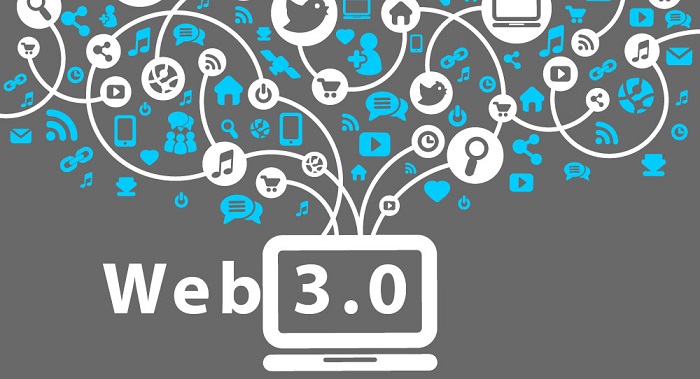
With the characteristics mentioned by Forex above, we can see a strong correlation between what Web 3.0 and Blockchain bring to human life. It’s not a coincidence that Blockchain technology has been able to develop so rapidly; it is an indispensable part of the formation of Web 3.0. Simply put, thanks to Blockchain, Web 3.0 exists, and thanks to Web 3.0, Blockchain technology can thrive.
2. THE POTENTIAL OF WEB 3.0 IN THE FUTURE
The standout features and potential of Web 3.0 are opening up a large door, helping to shape new business models and industries that we once could hardly imagine.
The clearest example at this moment is the rapid growth of the Crypto market. The application of Blockchain technology, with its ability to eliminate trust issues and the need for a third party in transactions, has created truly amazing experiences and products for users.
With just a Non-Custodial wallet, you can send money to anyone, anywhere in the world.
- Thanks to decentralized finance (DeFi), you can send money to a bank without ever needing to visit the bank, while earning higher interest rates. Additionally, you can borrow money without even knowing the lender’s face, or optimize your profits through capital rotation or Farming.
- Thanks to Play-to-Earn games and NFT tokens, in-game assets belong to the players and cannot be attacked, while also creating a significant income source from gaming.
- …
You may not know this, but Crypto is just one of the first applications discovered among many that Web 3.0 could bring in the future. With the incredible development achievements in the cryptocurrency market, Forex is very optimistic that this technology will have a transformative impact on humanity, just as Web 2.0 did—and even more so.
3. SOME PROMISING WEB 3.0 COIN PROJECTS
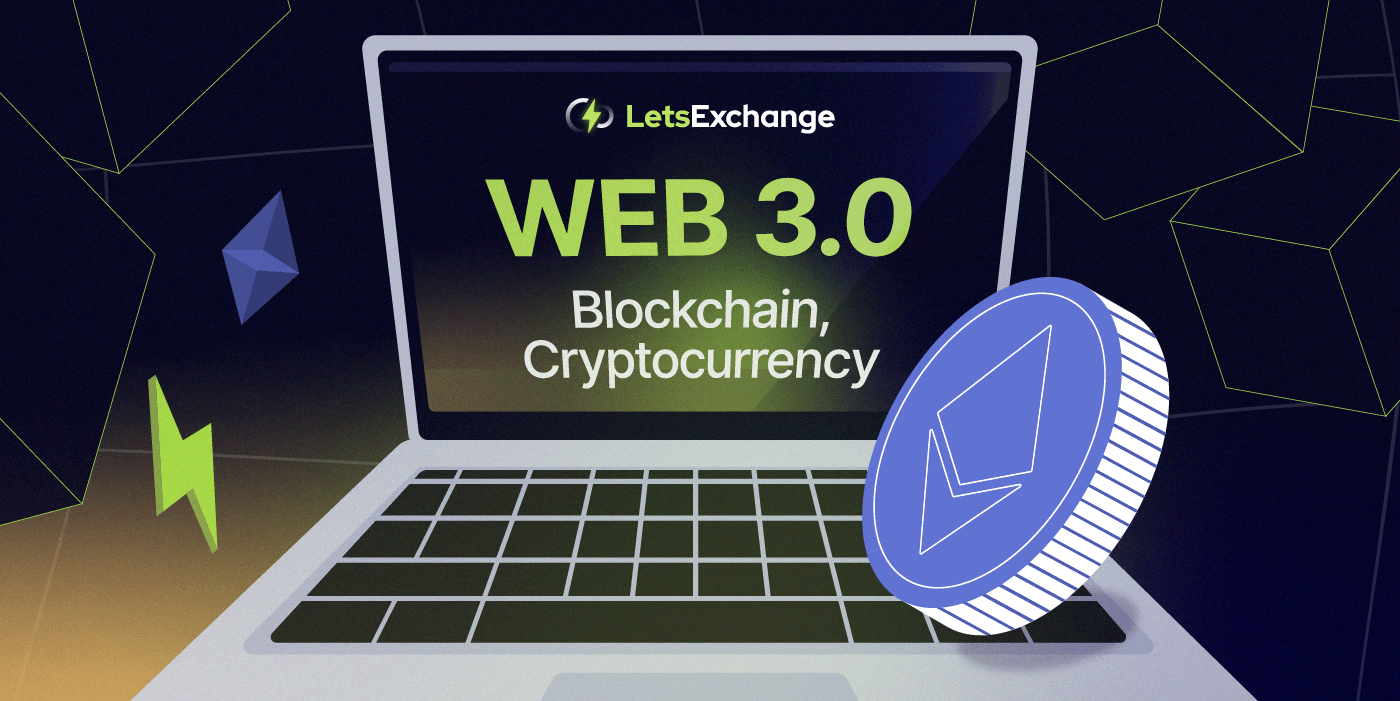
Below are some promising Web 3.0 coin projects that investors should consider adding to their investment portfolios.
3.1. Livepeer
Livepeer, or LPT, is an infrastructure that supports decentralized video streaming. This technology leverages the decentralization of Blockchain to allow users to own the content they create and share it more effectively and freely.
3.2. Arweave
Arweave, or AR, is a Blockchain data storage protocol based on the new generation consensus algorithm, Proof of Access, with the aim of creating the world’s first permanent data storage.
3.3. Filecoin
Filecoin, or FIL, is similar to AR, as it is a project within the Decentralized Storage sector. FIL is known as one of the pioneers in the Storage field and stands out due to its use of the open-source distribution protocol (IPFS).
3.4. The Graph
The Graph, or GRT, is a protocol that allows for indexing and querying data from the Blockchain. This technology enables anyone to access and build as well as publish APIs called Subgraphs. Subgraphs help users access data from the Blockchain more easily.
4. STRENGTHS AND LIMITATIONS OF WEB 3.0
In this section, let’s summarize the strengths and limitations of Web 3.0 technology.
4.1. Strengths of Web 3.0
The advantages that this technology offers include:
No intermediaries to control data
In practice, Ethereum will provide a platform where data will be decentralized, and no entity can alter the code without the consent of other entities in the network. Additionally, no one has the right to block websites or services.
Ability to operate on all devices
Web 3.0 will provide users with applications that are not customizable but easy to use. These applications will run on all devices, including TVs, microwaves, refrigerators, smartphones, sensors, and many other devices.
Prevention of data breaches
In Web 3.0 technology, data will be decentralized and distributed. As a result, it is very difficult for hackers to control the entire network.
Furthermore, data cannot be deleted or altered once it is stored in the Blockchain. This ensures the flow of accurate information and prevents data loss.

4.2. Limitations of Web 3.0
As mentioned, Web 3.0 can make human life easier. However, there will always be drawbacks that we need to address, including:
Massive data sets
It’s no surprise that we currently have billions of websites and terms. The current technology does not have the capacity to eliminate duplicate content. As a result, the system will have to deal with an enormous amount of input data.
Visualization
With the current overload of information, visualization will play an important role in easily identifying relevant content and user intent.
Scalability
Businesses will have to worry about managing data in a scalable way. This means organizing data, where to store it, and how to find relevant content.
5. FREQUENTLY ASKED QUESTIONS ABOUT WEB 3.0 COIN FOR INVESTORS
Here are some frequently asked questions about Web 3.0 Blockchain for investors:
5.1. What technology will play a dominant role in Web 3.0 Crypto?
According to Free Code Camp, in the future, artificial intelligence (AI) technology, and especially Blockchain, will play a dominant role in the development of the Web 3.0 platform.

5.2. Will Web 3.0 become a new standard in the future?
According to research from various industry experts, they hope that Web 3.0 will be a complementary technology that develops alongside the previous version, Web 2.0, rather than completely replacing it.
6. SUMMARY
So, in today’s article, Forex has explored the concept of Web 3.0, the development journey of websites, the potential that Web 3.0 will bring in the future, as well as the strengths and limitations of this technology. We hope that with the knowledge we’ve just provided, you will have a comprehensive and accurate understanding of the Web 3.0 concept.
If you have any further questions or suggestions to help us improve, don’t hesitate to comment below and let us know!
Wishing you success in your trading career!!!
- t.me/finance_solutes
- Website: https://finance-solutes.com
- Hotline: +1 929 5636 439 ( Hotline )
- 26 Broadway, Suite 934, New York, 10004, US
