
 XM
XM Bybit
Bybit Binance
 Robinhood
 Webull
 IC Markets
 Pepperstone
 OKX
OKX Vantage
 VT Markets
 BingX
BingX Gate.io
 Kucoin
 MEXC
MEXC Exness
 Bitget
What is a Node? When we start learning about a new field, understanding the key concepts is crucial for long-term success. The concept of a “Node” in the cryptocurrency field is no exception. In this technical context, a Node is simply a physical network device—such as a computer or server—that functions as a vital point of connection within a decentralized system. But why are they so essential to digital finance? How are they used in cryptocurrency, and what are the specific functions they perform to keep your assets secure? Let’s dive into the details of the Node concept today, brought to you by the expert team at Finance-Solutes.com, to demystify how these digital anchors power the global blockchain revolution.
How Does Blockchain Work? The Foundation of Nodes
First, it is important to recognize that a Node is a fundamental component of a Blockchain network—the decentralized ledger used to maintain any type of cryptocurrency. Therefore, before diving into the specifics of what is a node, we must first understand how Blockchains function as a whole. Today, Blockchain technology has become globally popular because it provides a secure environment for financial transactions while self-regulating to prevent unauthorized manipulation or “double-spending.”
Whenever a transaction takes place on the Blockchain, a record is created and instantly distributed to every Node in the network. This transaction is recorded on a “block,” which can contain thousands of different financial transaction records. Because a copy of this financial record is distributed to every active Node simultaneously, manipulating a record becomes nearly impossible. To change one block, a hacker would theoretically need to overpower the majority of Nodes in the system, which is computationally and financially unfeasible in large networks.
How is a Financial Transaction Recorded in a Blockchain Network?
Due to the decentralized nature of the Blockchain network, the system automatically validates a financial transaction through a multi-step process. In the first step, the transaction is initiated and validated by the user, who uses their private and public keys to access the network. Once the digital signature is confirmed, a block is created representing that specific transaction. This data packet is then broadcasted across the entire network to every participating Node for a secondary layer of scrutiny.
Once the transaction is broadcast, the Nodes validate the details against the existing ledger rules. If the majority of the Nodes reach a consensus that the transaction is legitimate, it is officially added to the existing chain of blocks. Any subsequent update or new block is then distributed across the entire network, completing the transaction cycle. This redundant verification process ensures that no single entity has the power to forge transactions or alter the history of the ledger.

What Is a Node? Defining the Digital Infrastructure
Now, let’s explore the core question: what actually is a Node? In cryptocurrency, a Node is a device in a Blockchain network and a foundational element that allows Blockchain technology to operate and exist. These Nodes are distributed across a wide geographical network and perform various tasks depending on their configuration. Without Nodes, a blockchain would simply be a static file; Nodes provide the “life” and communication that make the network dynamic and secure.
A Node can be almost any electronic device—such as a phone, a high-powered computer, or even a specialized server—as long as it is connected to the internet and possesses a unique IP address. Collectively, these Nodes form the physical and digital infrastructure of the Blockchain. Simply put, a Node is a strategic point where messages (transaction data) are created, received, or transmitted to other points in the web.
Why Are Nodes Needed in Blockchains? Core Functions
As we have established, a Node is the decentralized ledger’s guardian. Its primary purpose is to store the transaction record and perform essential functions like validating and authenticating new data. Without these independent “checkpoints,” a decentralized network would have no way to reach an agreement (consensus) on which transactions are real and which are fraudulent.
Beyond just storage, Nodes serve as the primary security layer. They keep records synchronized with the latest transactions across the globe. The sheer volume of Nodes ensures that even if several hundred go offline or are compromised, the data remains safe and accessible on thousands of others. This level of redundancy is what makes blockchain “immutable”—meaning once data is written, it is virtually impossible to erase or change.
Key Roles and Responsibilities of a Node
Each Node in the network may perform one or several of the following critical roles:
- Accepting or Rejecting Transactions: Checking if a transaction follows the network rules.
- Validating Blocks: Ensuring that the “miners” have followed the correct protocol.
- Storing Ledger Data: Keeping a partial or full history of all transactions.
- P2P Communication: Acting as a bridge to share data with other Nodes.
Importantly, each Node has a unique identifier, allowing users to track data flow through the network. Similar to a digital record keeper, Nodes ensure that everyone can access transaction records without any restrictions. Users can easily trace a specific transaction on the Blockchain by using its transaction ID, which is verified and hosted by these Nodes.

Types of Nodes in a Blockchain: A Comparison
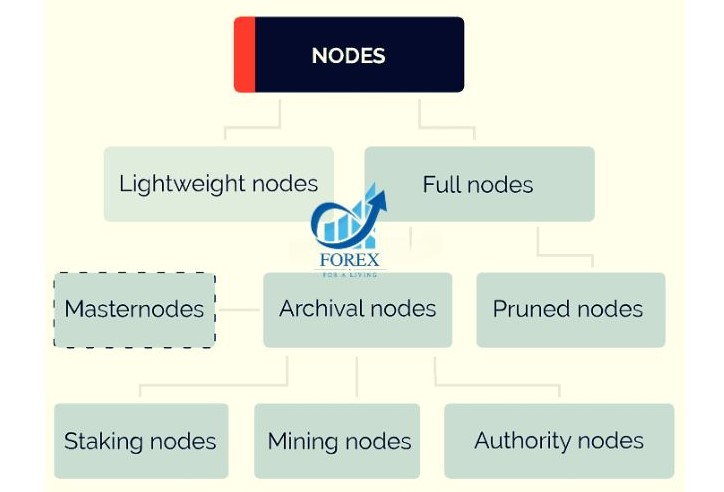
A Blockchain network is not a monolith; it consists of various types of Nodes, each serving a specific niche. These include Full Nodes, Light Nodes, Listening Nodes, and Lightning Nodes. Understanding the distinction between them is vital for anyone looking to participate in the network or develop blockchain-based applications.
While Full Nodes are the most heavy-duty, Light Nodes allow users with limited hardware (like mobile phones) to interact with the blockchain. This diversity allows the network to be inclusive while maintaining high security standards. Below, we break down the specifics of the most common Node architectures.
Full Nodes: The Network Backbone
Full Nodes contain the complete history and information of all blocks from the very first transaction (the Genesis Block) to the present. They are the true backbone of the Blockchain because they are essential for independently verifying the entire state of the ledger. Whenever a transaction is initiated, Full Nodes verify the digital signature—typically the private key used by the sender—to ensure the funds exist and the signature is authentic.
Light Nodes and Listening Nodes
Light Nodes (or SPV nodes) store limited information. Instead of the full ledger, they only store “block headers” to confirm the validity of transactions they are specifically connected to. They typically connect to Full Nodes to retrieve data like account balances. Listening Nodes (Supernodes) are Full Nodes that are publicly accessible. They act as communication hubs, handling off-chain functions and providing gateway services to ensure data propagates quickly across the network.
Lightning Nodes: Speeding Up Payments
These are specialized Nodes within the Lightning Network (a Layer-2 solution). Instead of validating every transaction on the main blockchain, Lightning Nodes validate transactions by directly interacting with individual payment channels. This allows for nearly instant, low-cost transactions. Their main function is to exchange funds and route payments through a peer-to-peer (P2P) network, only settling the final balance on the main blockchain.
Bitcoin Nodes vs Ethereum Nodes: Key Differences
The requirements for running a Node vary significantly between different ecosystems. A Bitcoin Node is a participant in the original decentralized network. As of 2026, there are tens of thousands of active Bitcoin Nodes globally. Because Bitcoin is designed for simplicity and security, the hardware requirements to run a Full Node remain relatively accessible to the average user.
Ethereum Nodes, however, are slightly more complex. Because Ethereum supports smart contracts and decentralized applications (dApps), the amount of data processed is much higher. Experts estimate that the number of Ethereum Nodes has frequently surpassed Bitcoin, but running one requires more advanced administrative skills and robust hardware to handle the “State” of the Ethereum Virtual Machine (EVM).
| Requirement | Bitcoin Full Node | Ethereum Full Node |
|---|---|---|
| RAM | 2GB+ | 4GB – 8GB+ |
| CPU | 1 Core | 2+ Cores |
| Disk Space | High (HDD/SSD) | Very High (SSD Recommended) |
| Bandwidth | 400KB/s | 8MB/s+ |

How Does a Node Operate? Setting Up Your Own
As you can imagine, operating a Node involves meeting specific system requirements. To run a Bitcoin Node on your own hardware, you generally need a computer running Windows, Mac OS X, or Linux. It is recommended to keep the Node running for at least 6 hours per day to stay synchronized with the network, though 24/7 operation is ideal for maximum network support.
Another popular option is running a Node in the cloud. By setting up an account with providers like AWS (Amazon Web Services) or Google Cloud, you can host your Node on a virtual private server (VPS). After creating the instance, you download the core software (like Bitcoin Core or Geth for Ethereum) and configure the port settings to allow the Node to communicate with its peers across the internet.

Blockchain Node Providers: Scaling for Business
While individuals may enjoy setting up their own hardware, businesses often face technical difficulties that can hinder productivity. This has led to the rise of Blockchain Node Providers. These companies offer the dedicated infrastructure, high-speed resources, and technical support needed to run Nodes at scale across various platforms without the hassle of manual maintenance.
When choosing a provider, companies must weigh the “Build vs. Buy” dilemma. Managing an on-site Node involves high initial costs for personnel and hardware, as well as ongoing operational costs for monitoring and preventing downtime. Node providers simplify this by offering “Node-as-a-Service” (NaaS), where they manage all updates and security protocols for a monthly subscription or usage fee.
Top Blockchain Node Providers in the Industry
For those interested in developing dApps or integrating blockchain into their business, several industry leaders provide reliable access to cryptocurrency Nodes. These providers take care of the heavy lifting so you can focus on your core business logic.
Commonly used providers include:
- Infura: The most popular choice for Ethereum and IPFS.
- Alchemy: Known for its powerful developer tools and reliability.
- GetBlock: Offers access to over 50 different blockchain networks.
- QuikNode: Focused on high-speed performance and global API endpoints.
- Blockdaemon: A leading institutional-grade infrastructure provider.

Summary
In conclusion, understanding what is a node is fundamental to grasping how the digital economy operates in 2026. These devices are the silent guardians of our digital assets, ensuring transparency, security, and decentralization across every transaction. From the massive Full Nodes that hold the history of Bitcoin to the agile Lightning Nodes facilitating micro-payments, the network relies on this distributed infrastructure to survive.
Whether you choose to run your own Node at home to support network decentralization or utilize a professional Node provider to build the next great decentralized application, you are playing a part in the future of finance. If you have any questions about setting up a Node or how they function within specific blockchains, feel free to leave a comment below. Good luck with your blockchain learning journey from Finance-Solutes.com!
- t.me/finance_solutes
- Website: https://finance-solutes.com
- Hotline: +1 929 5636 439 ( Hotline )
- 26 Broadway, Suite 934, New York, 10004, US
