
 XM
XM Bybit
Bybit Binance
 Robinhood
 Webull
 IC Markets
 Pepperstone
 OKX
OKX Vantage
 VT Markets
 BingX
BingX Gate.io
 Kucoin
 MEXC
MEXC Exness
 Bitget
Margin is a term that is quite familiar to investors in the financial investment market. It is a form of trading that helps increase profits quickly, especially when a market is becoming more stable and less profitable.
In the cryptocurrency market, this method is widely used by many traders to buy, sell, or trade Altcoins and Bitcoin. However, do you really understand what Margin is? How does Margin trading differ from Futures and Spot trading? How to trade Margin on Binance? What are the tips for effective Margin trading? All of these questions will be answered in detail in today’s article by TradaFX.
Stay tuned!!!
1. WHAT IS MARGIN?
In the first part of this article, let’s dive into understanding the concept of Margin and explore how this term is used in the stock, forex, and crypto markets!
1.1. Comparing Margin in Stocks, Forex, and Crypto
Margin trading is a method of trading assets using capital provided by a third party. Compared to regular trades, Margin trading allows investors to access larger capital to leverage their positions. Essentially, Margin trading amplifies trading results, enabling traders to earn higher profits on successful trades.
The ability to amplify trade results makes this method particularly popular and widely applied in markets with low volatility, especially forex. However, Margin trading is also applied in markets such as commodities, stocks, and cryptocurrencies. In traditional financial markets, loans are typically provided by an intermediary broker.
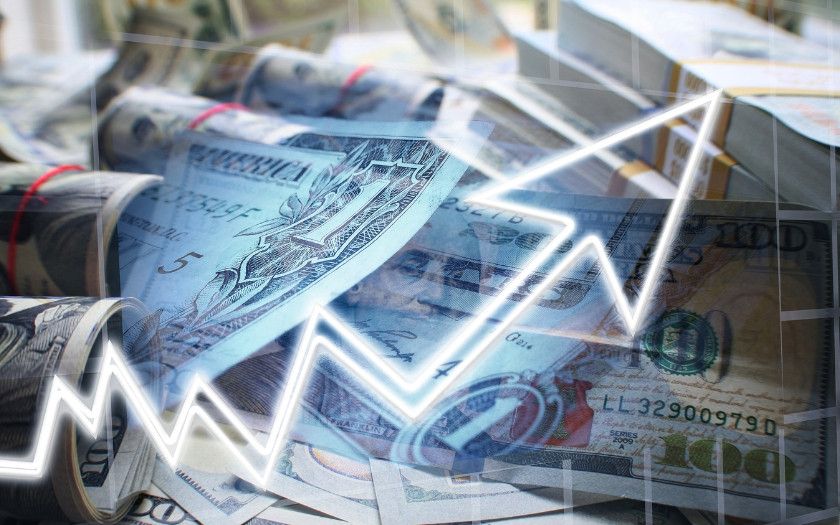
However, in cryptocurrency trading, the funds are often provided by other traders—those who profit from the market demand for Margin funds. Although not as common as Forex, some cryptocurrency exchanges also offer Margin funding to their clients, with Binance being a prime example.
When a Margin trade is executed, the investor is required to commit a percentage of the total order value. This initial deposit is called the Margin, and it is closely related to the concept of leverage. This means that a Margin trading account is used to create leveraged trades, and the leverage ratio indicates the loan amount compared to the Margin.
Practical example: To execute a $50,000 trade with a leverage ratio of 1:10, the investor will need to commit $5,000 of their own capital.
In the stock market, a typical leverage ratio is 1:2, while Futures contracts are typically traded with a leverage of 1:15. In the Forex market, Margin trading is often conducted with a ratio of 1:50. When it comes to the cryptocurrency market, these ratios typically range from 1:2 to 1:100, and the investment community often uses the term “x” (2x, 5x, 10x, 20x, 50x, 100x,…).
1.2. How Does Margin Coin Work?
Margin trading can be used to take both Long (Buy) and Short (Sell) positions. A Long position assumes that the price of the coin will rise in the future, while a Short position assumes the opposite.
When a Margin trade is executed, your capital acts as collateral for the loan. This is a crucial point for traders to understand, as most exchanges have the right to liquidate these assets if the market moves against your position.
Example: If you open a leveraged Long position, you may still be required to add more funds if the price drops to a certain level. A Margin Call occurs when you receive a request to deposit additional funds into your account to meet the minimum Margin requirements. Failure to do so will result in your position being automatically liquidated to cover the losses. In practice, this happens when the total value of all positions in your Margin account falls below the total Margin requirement set by the broker.
1.3. Example of Margin Trading in the Crypto Market
For example, you have a capital of $10,000, and the current price of BTC is also $10,000. Based on your technical and fundamental analysis, you predict that the price of BTC will rise to $11,000.
If you engage in Spot Trading, you would earn a profit of $1,000. But if you want to optimize and increase your profit by 5 times, you would open a Long position with a leverage ratio of 5x.
In other words, you would create a Buy order for BTC at the price of $10,000 with a trade volume of $50,000. If the price moves as predicted, and BTC rises to $11,000, you will close the Buy order (Sell) and make a profit of $5,000, instead of the $1,000 from a regular trade.

Here’s how we can explain it:
When you place a Buy order with a leverage ratio of 5x, essentially, you are borrowing an additional $40,000 from the broker to make a $50,000 Buy order for BTC at $10,000 each => You now own 5 BTC.
Then, Bitcoin rises to $11,000 as expected, and you close the Buy order => You sell 5 BTC at $11,000, receiving $55,000.
Next, you need to repay the $40,000 you borrowed from the broker, plus service fees => The result is that your capital has increased from $10,000 to $15,000 (a 50% gain).
1.4. Advantages and Disadvantages of Using Margin in Cryptocurrency
| Advantages | Trade with a small capital and higher profit opportunities: Investors with limited capital will have more chances to earn profits like traders with large capital. Additionally, if the trade is successful, you will earn much higher profits compared to regular trading. |
| Earn profits even during Downtrend markets: You can still make profits by taking Short positions during market downturns. | |
| Disadvantages | Risk from the price volatility of cryptocurrencies: Cryptocurrencies have very large and sudden price fluctuations. If the price moves contrary to expectations, you will incur greater losses compared to trading without leverage. |
| Risk of liquidation: If the price moves against your expectations and the margin balance in your account is insufficient to maintain your position, your position will be liquidated, and you will lose your initial margin. | |
| Risk from the traders themselves: Market analysis skills, inaccurate price trend predictions, and the use of high leverage can result in even greater losses when the price does not follow the initial expectations. |
In summary:
Margin trading combines elements of spot trading and futures trading, allowing investors to trade cryptocurrencies with leverage. Similar to spot trading (buying or selling the asset directly), margin trading involves the immediate exchange of cryptocurrency assets.
2. Key Terminology in Crypto Margin Trading
To fully understand the nature and operation of margin trading, you need to be familiar with the following basic terms:
Leverage
In simple terms, when using leverage, you can trade with an amount that is x times larger than the capital you have (x is a positive number).

Practical Example:
If you choose a leverage of x10, it means that you can use 10 times the amount of capital you have to carry out the trade.
Position
In margin trading, there are two positions: Long (Buy) and Short (Sell).
- Long Position: Buying position
- Short Position: Selling position
Liquidation Price
This is the price level where, if the price of the coin surpasses it, the platform’s system will immediately liquidate all of your assets in that order.
3. How Margin Trading Differs from Futures and Spot Trading
For many new investors, the terms Margin and Futures can sometimes cause confusion. To better understand the differences, refer to the table below:
| Spot | Margin | Futures | |
|---|---|---|---|
| Leverage | No | Yes | Yes |
| Leverage Ratio | No | 3x-10x | 1x-125x |
| Market | Real | Real | Derivative |
| Fees | Regular Fees | Regular + Interest | Funding Rate |
| Long/Short | No | Yes | Yes |
| Risk | Low | High | Very High |
| Account Liquidation | No | Yes | Yes |
At Binance, investors need to clearly distinguish between Futures and Margin to select the appropriate market.
4. How to Trade Margin on Binance
In this section, let’s dive into how to open a margin account on Binance and also distinguish the difference between Cross Margin and Isolated Margin on Binance.
4.1. Opening a Margin Account on Binance
First, to activate a margin account on Binance, you need to have a Binance account. To register for an account on this exchange, you can learn more about Binance.
Afterward, you can log in to your Binance account using your Email and Password.
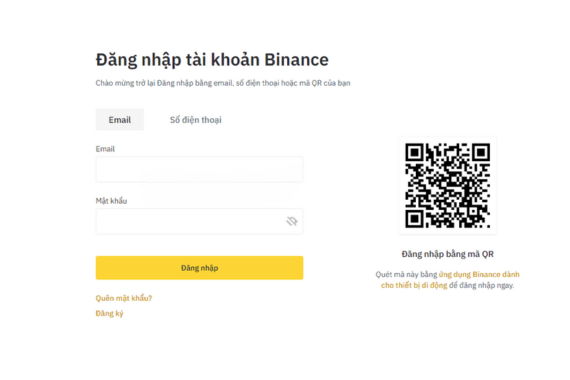
After that, in the Trade section, you select Margin.
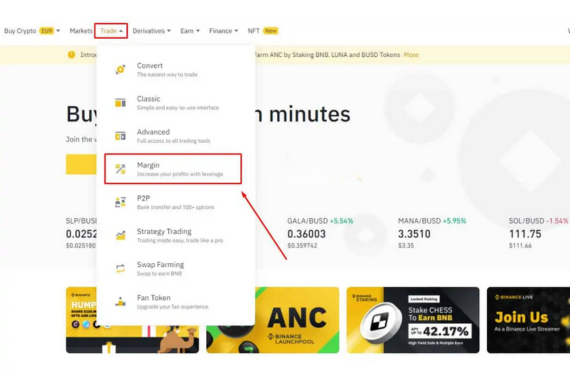
Next, you will be redirected to the Margin trading interface.
In the Buy and Sell order window, you will see additional tabs for Margin (Cross 3x and Isolated 10x).
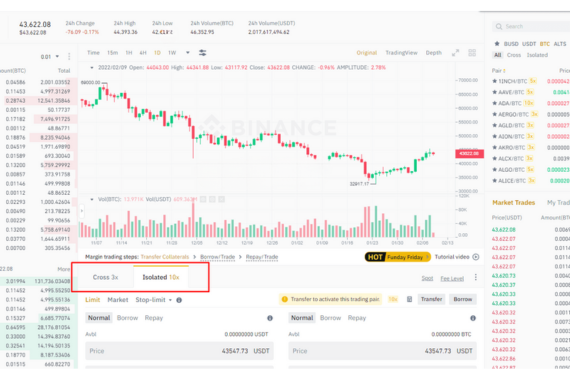
Finally, you click on Open Margin Account and select OK, and your Margin account on Binance will be successfully created.
4.2. What are Cross and Isolated Margin on Binance?
So, what is the difference between Cross Margin Binance and Isolated Margin Binance? Let’s take a closer look:
What is Cross Margin Binance?
Cross Margin trading on Binance is conducted in a single account:
- Each user can only open one Cross Margin account and trade with all supported pairs.
- The assets in this account are cross-collateralized and shared.
- The risk ratio is determined based on the assets and liabilities of the entire Cross account for calculation purposes.
- The platform will base its calculations on the risk level of the Cross account to notify you to add margin balance and close positions. If liquidation occurs, all assets in the account will be liquidated.

What is Isolated Margin Binance?
In Isolated Margin trading on Binance, each pair is handled independently:
- Each trading pair has its own isolated account. Therefore, an Isolated account can only hold, transfer, and borrow the coins of that specific pair. For example, in the BTCUSDT Isolated account, you can only transfer BTC and USDT.
- Each trading pair has an independent position. Therefore, even if your assets in other Cross Margin or Isolated Margin accounts are sufficient, they will not automatically be used to cover the margin for this specific pair, and you will need to do it manually.
- Each Isolated Margin account on Binance has its own risk ratio, which is calculated based on the assets and liabilities of the trading pair.
- The risk ratio for each account is independent, so if liquidation occurs, it will not affect other Isolated accounts.
5. EFFECTIVE MARGIN TRADING TIPS IN THE CRYPTO MARKET
So how can you trade Margin effectively in the Crypto market? Below are a few tips that TradaFX wants to share with you:
5.1. Have a trading plan before executing an order
This is a crucial factor if you want to succeed in any market, especially the cryptocurrency market. You need to prepare a specific, clear trading plan and always follow the plan you have set.
Before opening a position, you need to precisely determine your Entry point, Take Profit, Stop Loss, win ratio, leverage to use, and many other factors that should be outlined in your trading plan.
5.2. Do Not DCA with High Leverage
DCA – short for Dollar-Cost Averaging – is a strategy where you divide your investment capital into several fixed and regular portions over a long period.
Here’s a simple example for better understanding: The market is in an accumulation phase, and you buy some BNB at $500. After that, when the price breaks through an important resistance level, you predict the price will enter a strong bullish phase. Thus, you continue to Buy more at $530.
When using high leverage, you’re taking on higher risk than when using lower leverage. Therefore, balance your risk and always stick to your trading plan.
5.3. Do Not Use Borrowed Funds for Margin Trading
In reality, many cases involve borrowing money from others to trade Margin and end up with a blown account. This results in severe consequences for both you and the person who lent you the money.
If you plan to engage in Margin Trading, always consider the amount of money you can afford to lose and never go all in on a single trade.
6. SUMMARY
In this article, Forex has shared with you the concept of Margin Trading, the differences between Margin and Futures trading, how to trade Margin on Binance, and some tips to help you succeed in Margin Trading within the cryptocurrency market. We hope that what we have discussed will be useful in your journey of learning about this trading method.
If you have any further questions, please leave a comment below, and Forex will respond right away.
Good luck in your trading career!!!
- t.me/finance_solutes
- Website: https://finance-solutes.com
- Hotline: +1 929 5636 439 ( Hotline )
- 26 Broadway, Suite 934, New York, 10004, US
