
 XM
XM Bybit
Bybit Binance
 Robinhood
 Webull
 IC Markets
 Pepperstone
 OKX
OKX Vantage
 VT Markets
 BingX
BingX Gate.io
 Kucoin
 MEXC
MEXC Exness
 Bitget
What is a Token? The term “token” is not only used in the blockchain industry but is also applied in various other fields. However, even within blockchain alone, many investors still do not fully understand the concept of what a token is, what a token coin is, and the differences between a token and a coin. Today’s article will help investors clarify these concepts.
1. WHAT IS A TOKEN?
For many people, when they hear the term “token,” they immediately associate it with the cryptocurrency market. But what exactly is a token, and is it only used in the cryptocurrency industry?
According to the Oxford Dictionary, a token is defined as a tangible item that can be regarded as a means of exchange for goods or services. So, what does “token” mean in crypto? The term “crypto token” or “token in crypto” refers to assets or utilities that are fungible and tradable within the blockchain ecosystem. In the crypto market, tokens can be used for investment purposes, held as a store of value, or exchanged and traded.
Some real-life examples of tokens to help you better understand what a token in crypto is include: RACA token, C98 token (the token of Coin98 – a product developed by a Vietnamese team), and others.
2. TOKEN CLASSIFICATION
As mentioned earlier, the term “token” is not only used in the cryptocurrency market but can also be applied in programming, where it refers to the smallest unit in a data string. Therefore, each industry has its own way of categorizing tokens. This article will focus solely on the classification of tokens in crypto.
Tokens are categorized into groups based on how they are utilized:
– Security Token: This type of token can represent ownership or asset benefits. Its development goal is to become a token with value equivalent to traditional securities (such as stocks and bonds).
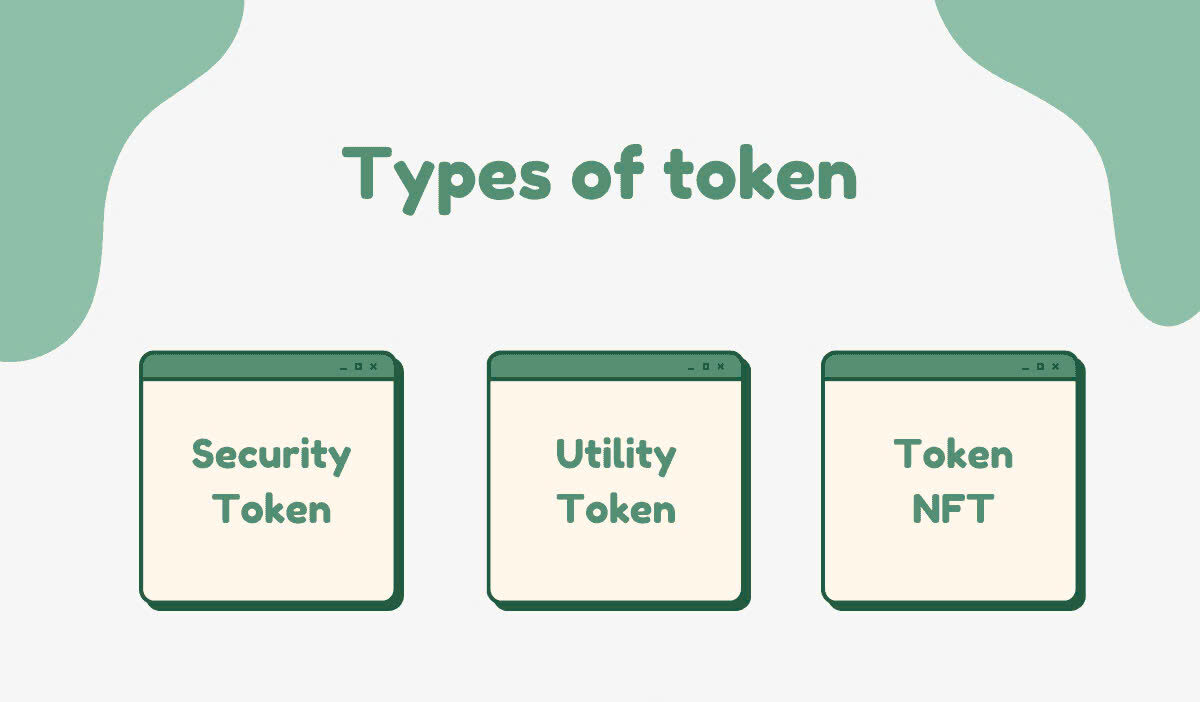
– Utility Token: This type of token provides its holder with access to products and services built within the blockchain system. For example, using ETH to pay for smart contracts executed on the Ethereum platform.
– NFT Token: Each token represents a specific type of asset and does not have a standard value. As such, one NFT token cannot be directly exchanged for another.
3. APPLICATIONS OF TOKENS
Due to the diversity of tokens, they are applied in various industries. Let’s explore two key areas where tokens are utilized:
3.1. Tokens in the Banking Sector
A banking token serves as a second authentication factor, enabling you to initiate actions through a mobile application. Hence, a banking token is also referred to as a security code. It consists of six digits that continuously change and never repeat. To make it simpler and more relatable, the banking token is essentially the code in the OTP (One-Time Password) that you need for online banking transactions.
For instance, when banks like Techcombank require you to use a token code, and you search online for “Techcombank token,” the result you’ll find is a six-digit token key. This code is used to complete online transactions such as transferring money.
3.2. Applications of Tokens in Blockchain
In the blockchain ecosystem, beyond their use in exchanges and transactions, tokens are widely employed for fundraising through token sales (ICO) on platforms like Binance Launchpad, Huobi Primelist, and others.

Tokens are created by platforms built on blockchains. For example, the token of the Ethereum blockchain platform is Ether (ETH). It acts as a transactional unit within the blockchain, operating based on the concept of smart contracts or decentralized finance (DeFi) applications. DeFi tokens enable decentralized financial applications to automate tasks such as interest rate calculations and trading, like SandBox facilitating the sale of virtual real estate. Of course, these tokens are traded just like any other tokens.
4. HOW ARE TOKENS AND COINS DIFFERENT?
Due to a lack of understanding about what tokens are in crypto and the differences between tokens and coins, many traders and investors often confuse the two, sometimes using them interchangeably.
To put it simply, at the most basic level, a coin is a standard currency used within a blockchain ecosystem. The two most popular coins today are Bitcoin (BTC) and Ether (ETH). In more detail, a token is a subset of a coin:
– Coin: A foundational token, it is the native token of a blockchain and is used for currency transactions as well as value storage. The clearest example is Ether, the native currency of the Ethereum blockchain network. However, some tokens like LINK (ChainLink) are only considered operational tokens on this blockchain rather than coins.

– Token: Tokens are often used for staking or trading to earn profits, and they represent assets. Examples include the UNI token (Uniswap) and the MATIC token (Polygon).
– Transactions: Cryptocurrency transactions involving coins are processed directly by the blockchain, while tokens are managed through smart contracts.
– Summary: In short, tokens represent what someone owns, while coins signify what they have the ability to own.
5. FAQ ABOUT TOKENS

5.1. What is a Token Key?
A token key is the security token provided by a bank to execute online transactions. Token keys or banking tokens are encrypted into sequences of random numbers that change continuously to verify transactions on online banking applications.
5.2. What is the Techcombank Token Key?
It is the OTP token provided by Techcombank when you wish to perform an online transaction, such as a money transfer, to authenticate the process.
5.3. What is an Access Token?
An access token is used for authentication to allow an application to access an API. For example, when users log in via an identity provider like Facebook, the provider issues a unique Facebook token, enabling your application to access their API.
5.4. What is a USB Token Digital Signature?
A USB token or digital signature token is a password-protected physical device that establishes personal identity. The digital signature token allows users to access networks without using passwords and verifies the user’s identity electronically.
5.5. What is a Non-Fungible Token (NFT)?
A non-fungible token (NFT) is a token that cannot be replaced. Literally translated, it means “unique” and cannot be substituted by anything else. NFTs are created and exist uniquely on a blockchain and cannot be copied or reproduced. Leading NFT marketplaces include Token Trove, where you can buy and sell NFT tokens.
5.6. What is Token Terminal?
Token Terminal is a leading data analytics platform in the cryptocurrency industry. It aggregates financial data across blockchains and decentralized applications (dApps).
5.7. What is an Invalid Token?
You might encounter the term “Invalid Token” when attempting to reset a password unsuccessfully. This occurs because each security token sent has a specific validity period; once it expires, it becomes an invalid token.
5.8. How Much is 1 Token in Vietnamese Dong?
It’s challenging to give an exact answer to the question of how much 1 token is worth in Vietnamese Dong, as it depends on the specific token in question. Some tokens are free and can be obtained by participating in contests or airdrop programs from certain projects. Additionally, to check the market value of a token in Vietnamese Dong, you can refer to popular crypto pricing platforms like CoinMarketCap and CoinGecko.
6. CONCLUSION
This article on “What is a Token?” primarily covers concepts such as what a token is, what a token in crypto means, and related ideas in other fields like programming tokens or banking tokens. Hopefully, this article has helped you understand what a token in crypto is and how to distinguish between tokens and coins.
- t.me/finance_solutes
- Website: https://finance-solutes.com
- Hotline: +1 929 5636 439 ( Hotline )
- 26 Broadway, Suite 934, New York, 10004, US
