
 XM
XM Bybit
Bybit Binance
 Robinhood
 Webull
 IC Markets
 Pepperstone
 OKX
OKX Vantage
 VT Markets
 BingX
BingX Gate.io
 Kucoin
 MEXC
MEXC Exness
 Bitget
Certainly, for experienced Forex investors, understanding and researching NAV (Net Asset Value) is one of the most important and necessary aspects. It can be said that a detailed understanding of NAV will help you find more effective ways to generate profits than ever before. Below, let’s explore in detail the concept of NAV and the ways to effectively apply NAV.
What is Net Asset Value – NAV?
NAV is an abbreviation for Net Asset Value, which means net asset value, which includes all the following: charter capital, capital generated by the enterprise’s profits and capital generated from the issuance of shares.
Net asset value is understood as one of the extremely important measures used flexibly and specifically by investors to determine whether specific figures on the company’s asset value are commensurate with the relevant information on the assets given and the specific valuation of the product.

An example to illustrate the concept of NAV is a case where a company starts its business with low equity from all shareholders but is assessed to have high asset value, which can be considered as debt capital. Therefore, investors must carefully consider before purchasing securities from this company.
Although there are many similarities between NAV and stock prices today, their meanings are quite different. Specifically:
- Stock price is the market price at which you buy or sell a share in the market. It can be higher or lower than the NAV value.
- NAV represents the net asset value of a business, and it depends entirely on the current net value of the company.
Detailed NAV Calculation Formula
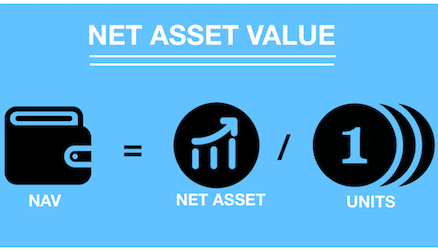
As analyzed in the previous section about what NAV is, investors may have already anticipated how to calculate NAV. To explain simply, the net asset value (NAV) is calculated by determining the difference between the total assets and liabilities, then dividing that by the number of shares outstanding. Specifically, you would calculate it as follows:
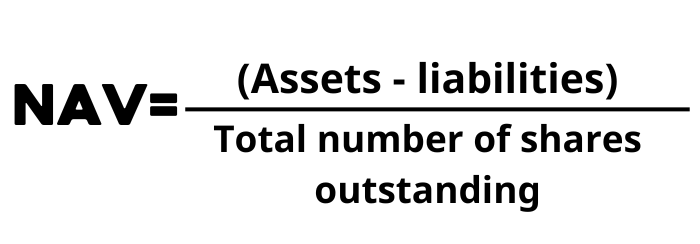
In which:
- Assets are understood as the initial value of the securities accounts that have been invested, or they can also represent the total assets of a company based on a general assessment from the balance sheet.
- Liabilities refer to the value of the debts payable along with the fund costs (such as employee salary expenses, business management expenses, incidental expenses, costs of executing events and activities, audit fees, accounts payable, transaction costs, etc.), or they can be the debts payable by the company in the general assessment of the balance sheet.
Specific Example of How to Calculate NAV
A specific example below will help you better understand how to calculate NAV: Company A currently has total assets on the balance sheet for 2020 of 10 billion VND, mandatory liabilities of 6 billion VND, and the total number of shares outstanding is 1 million shares. Therefore, the NAV index is calculated using the formula as follows:

NAV = (Total Assets – Liabilities) / Total Outstanding Shares = (10,000,000,000 – 6,000,000,000) / 1,000,000 = 400 VND.
Thus, Company A is known to have a net asset value of 400 VND per share in 2020.
Advantages of NAV in Stock Trading
Let’s explore in detail what the NAV index brings to investors when participating in stocks and investments.
NAV helps with daily net asset valuation:
Investment companies will assess the total value of their investments after the market closes at 3:30 PM each day. Then, the following day when the market opens, the evaluation will restart based on the previous day’s closing, with fees deducted to calculate the daily NAV.
Calculation of the net asset value:
The net asset value is the stock price, calculated by considering the individual costs accumulated by each share. This value can fluctuate based on changes in the market price.
What is the meaning of NAV index in stocks?
The NAV index helps investors decide whether to invest in a stock as follows:
If the net asset value is higher than the stock’s nominal value: This indicates that the company has accumulated funds for its business operations, sourced from profits. It proves the company is profitable, and investors may consider purchasing shares of the company.

If the NAV remains unchanged but the company is generating high profits, this means the company has earned substantial profits and is likely to experience further growth in the near and future periods. Consequently, the company’s stock price will also increase steadily, and investors may consider purchasing shares of that company.
In the case where the net asset value remains unchanged but the company is generating negative profits, this indicates the company is experiencing business losses and has more debt than net assets. Investors should be especially cautious before deciding to invest in any company’s stock, as this investment will carry significant risks from the outset.
How to Increase NAV Index
Here are ways investors can increase their NAV index multiple times, allowing them to earn larger profits when trading. Specifically, when performing transactions using the NAV calculation formula mentioned above, the value of NAV will only increase under the following conditions:
Case 1: An increase in the value of securities in the investment portfolio or total business assets.
Case 2: Reducing capital costs (employee salaries, management fees, operational costs, audit fees, etc.) or reducing the company’s liabilities.
For this reason, here are methods that will help investors effectively and accurately increase their NAV index, leading to significantly higher profits:

Method 1: The company will buy back all fund certificates from the market. This will simultaneously stimulate the net asset value of the company.
Method 2: The company will pay dividends to implement actions that increase the price by around 22% to attract more investors in the future.
Method 3: Continue when part or all of the company is replaced with publicly traded shares.
Difference between NAV and stock price:
NAV is the specific net asset value of a company. Meanwhile, the stock price depends on the costs involved in executing transactions that investors are willing to pay. At the same time, the stock price can also be manipulated by other speculative activities.
The stock price may increase or decrease based on all buying-selling factors, supply-demand, and changing market trends. At the same time, the stock price can be either higher or lower than the net asset value (NAV). The difference between the stock price and the NAV index reflects the stability of the market in accurately assessing a company’s value.
NAV is determined at a specific time each day and is entirely dependent on the current net value of the operating company. Prices will change and fluctuate according to appropriate moments, and both buyers and sellers will influence this.
How NAV Affects Mutual Funds?
The NAV index value directly influences mutual funds through the following two evaluation criteria:
Assets:
The assets of a mutual fund include accumulated market capitalization, cash receipts, funds from a specific fund, and accumulated income at the end of the day based on the closing prices of the invested securities and other barriers.

Mutual funds may include a certain proportion of liquid assets and cash holdings, as well as interest payments, dividends, and more. The total value of these assets and their changes belong to which asset category is determined by the fund’s portfolio composition.
Legal Liabilities:
Liabilities when calculating the NAV of a mutual fund include unpaid amounts, outstanding debts, fees, and other charges, as well as debts from related entities, utility expenses, benefits, operational costs, other management fees, employee wages, and any incidental costs associated with business operations.

There may also be foreign debts, including non-resident shares, pending payments to foreign companies, various sales proceeds, etc.
With the above information, we hope that investors can more easily understand what NAV is as well as successfully and flexibly apply and calculate the NAV index in investment, bringing huge and most profitable profits for themselves. Wish you success.
- t.me/finance_solutes
- Website: https://finance-solutes.com
- Hotline: +1 929 5636 439 ( Hotline )
- 26 Broadway, Suite 934, New York, 10004, US
