
 XM
XM Bybit
Bybit Binance
 Robinhood
 Webull
 IC Markets
 Pepperstone
 OKX
OKX Vantage
 VT Markets
 BingX
BingX Gate.io
 Kucoin
 MEXC
MEXC Exness
 Bitget
What is WACC? This is one of the average capital utilization indexes WACC that businesses can use to calculate based on the proportion of capital types that businesses use. Understanding the meaning as well as the formula for applying WACC will be an extremely effective and reliable way to be able to do profitable business. Join Traderforex to learn about WACC with the specific content below.
What is WACC?
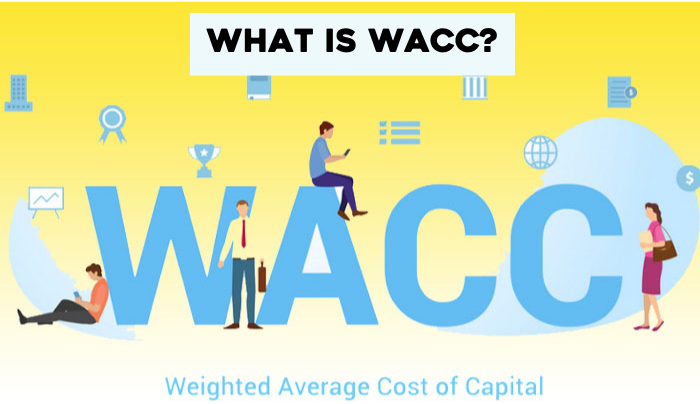
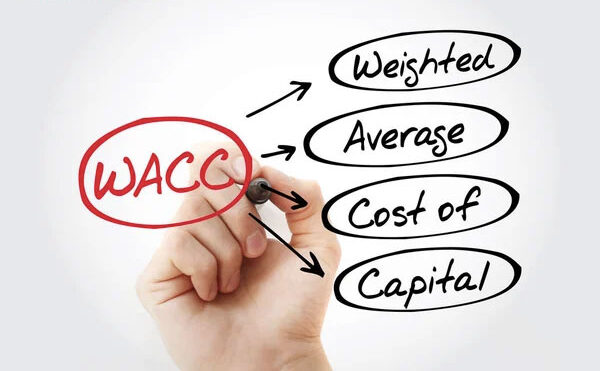
WACC is the cost to be able to use the average capital. WACC stands for Weighted Average Cost of Capital. Enterprises will rely on these costs to be able to have the proportion of the company’s capital. Corporate financial sources include: common stock, preferred stock, bonds, loans …
The Nature of WACC
To understand WACC (Weighted Average Cost of Capital) and how to apply it effectively, we must first grasp its core essence. In the broadest sense, a company can finance its assets through debt or equity. WACC represents the average cost of these financing sources, weighted according to their respective proportions and the associated risks. This allows us to determine the interest expense a company must pay for every dollar of funding it receives.

Debt and equity are two essential components that make up a company’s capital structure. Lenders and shareholders expect a certain return on the money or capital they provide. WACC calculates the weighted cost of both debt and equity, offering insights into the overall cost of capital for a company in specific situations.
In addition, since the cost of capital represents the return that both equity holders (or shareholders) and creditors expect, WACC (Weighted Average Cost of Capital) can only provide the level of returns that both parties (including shareholders and lenders) can expect. In other words, WACC is the opportunity cost of investors who are willing to accept the risks involved when investing in a particular company. The WACC of a company is the overall performance required for the company. Therefore, business leaders often use WACC internally to create an opportunity to evaluate and decide on different investment opportunities and challenges.
To better understand WACC, imagine a company as a source of money. The money comes from two sources: debt and equity. Cash generated from business operations is not considered a third-party source because, once the company has paid off its debts, it retains the money to return to shareholders (in the form of dividends) on their behalf.
wacc là gì 1 – TraderForex
Shareholders require a minimum return of 20% on their investment in order to retain their shares in the company. On average, projects funded by the company’s capital must pay 15% to cover debt and equity. The 15% represents the WACC. If the only amount in the joint fund is $50 for the creditors’ contribution and $50 for the shareholders, and the company invests $100 into a project, the project must generate a very profitable return of $5 per year to meet the expectations of the lenders and $10 per year for the company’s shareholders. This would require a total return of $15 per year, or 15% WACC.
Significance of WACC
With the concepts outlined above, investors are likely eager to understand the significance of WACC. Understanding the meaning of this index will help you gain a clearer insight into the content it represents.
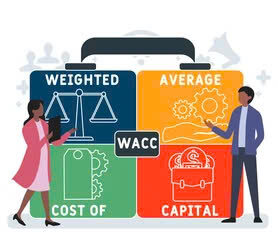
In practice, to meet the maximum demand for investment capital, companies often have to raise and use additional sources of funding, each with a different cost of capital. Therefore, it is necessary to determine the weighted average cost of capital (WACC) in order to make more reasonable financial decisions suitable for business operations.
WACC Formula
The WACC formula is something that many people are very interested in. Applying the following WACC formula can help you effectively utilize WACC
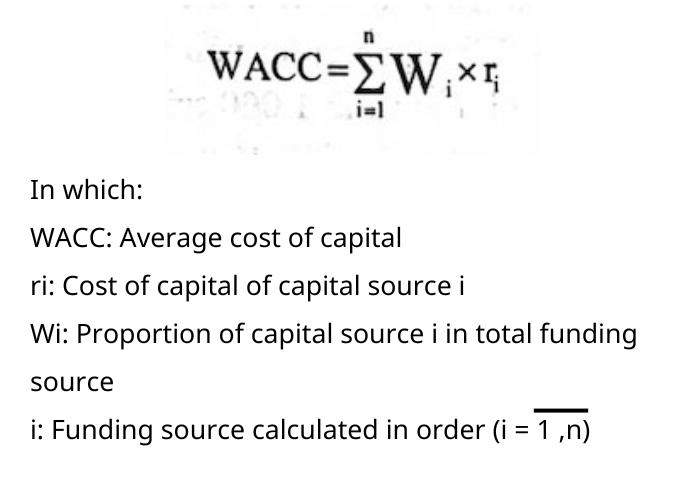
Note:
It is important to note that when calculating the cost of using average capital, the cost of using capital from each individual funding source should be calculated after taxes. Additionally, the capital structure used is considered optimal and is typically determined by the market values of the company. For convenience, book values can also be used when the book value is equivalent to the market value.
WACC Example:
A joint-stock company’s capital is currently 8,000 million VND and has attracted and consolidated several funding sources, as follows:
| No. | Funding Source | Value (Million VND) | Proportion (%) |
|---|---|---|---|
| 1 | Loans | 3,600 | 45% |
| 2 | Preferred Shares | 160 | 2% |
| 3 | Equity Capital (Common Shares and Retained Earnings) | 4,240 | 53% |
| Total | 8,000 | 100% |
The capital structure above is considered optimal. Next year, the company plans to raise an additional 2 billion VND for investment. The additional capital will be raised according to the optimal capital structure, with the company forecasting a reinvestment profit of 1.06 billion VND.
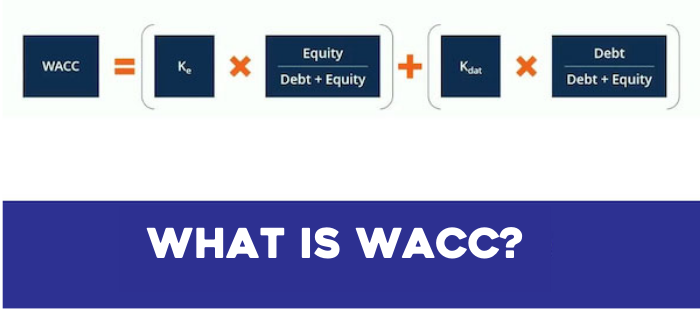
According to specific calculations, the cost of using borrowed capital before tax is 10% per year, the cost of using preferred shares is 10.3% per year, the cost of using equity capital is 10.3% per year, and retained earnings yield is 13.4% per year.
The cost of capital can be calculated as: Post-tax cost of capital: 10% × (1 – 25%) = 7.5% WACC calculation: WACC = (45% × 7.5%) + (2% × 10.3%) + (53% × 13.4%) = 10.55%.
How to Use WACC
After understanding what WACC is, let’s explore the best ways to apply it effectively:
Typically, investors use WACC to evaluate the value of investments. This helps them easily make decisions about which stocks to buy based on the required return on investment (ROI) that matches the company’s cost of capital.
For example, when starting to evaluate and analyze discounted cash flows, investors can easily use the WACC rate as a benchmark to balance and assess efficiency. The discount rate for future cash flows is used to determine the present value.
Additionally, the WACC rate can be widely used to assess operational effectiveness through ROIC (Return on Invested Capital), which measures the profitability of business investments.
Economic Value Added (EVA) Calculation: EVA = NOPAT – (Investment Capital * WACC), where the discount rate used in the calculation is WACC.
Net Present Value (NPV): NPV is a commonly used method to determine the return on investment (ROI). It uses the WACC rate as a hurdle rate for NPV calculations. Moreover, all free cash flows and terminal value can be discounted using WACC.
Some limitations of WACC:
Like other indicators, WACC is effective, but it also has certain limitations that you should be aware of when evaluating and applying this index. Specifically:
- Calculating WACC is difficult: Calculating WACC requires a lot of expertise from investors. This is because the WACC formula has many variables, such as capital costs, and the need for precise transparency in the calculation of values.
- Lack of publicly available information: For publicly listed companies, it is easy to find widely published information, but for private or smaller businesses, financial data may not be publicly available, making WACC calculation much harder. Annual financial reports for partnership companies may also not be audited clearly by auditors.
- Changes in capital structure: WACC assumes that a company’s capital structure remains unchanged. However, the capital structure can easily change when a new project is accepted. New projects may be financed with debt or equity, meaning that investors need to consider the changes in capital structure, which can alter the WACC.
- Can be manipulated: Companies may use tricks or methods (often referred to as “loopholes”) by increasing debt to easily manipulate the WACC. In this case, WACC would be lowered, and the accuracy of the results would not be high. Investors might face challenges, making it difficult to make informed decisions about investments.
In this article, we have explored what WACC is and how to effectively apply it. We hope that this article provides useful and practical information for your financial trading endeavors. Best of luck in your investment journey!
- t.me/finance_solutes
- Website: https://finance-solutes.com
- Hotline: +1 929 5636 439 ( Hotline )
- 26 Broadway, Suite 934, New York, 10004, US
