
 XM
XM Bybit
Bybit Binance
 Robinhood
 Webull
 IC Markets
 Pepperstone
 OKX
OKX Vantage
 VT Markets
 BingX
BingX Gate.io
 Kucoin
 MEXC
MEXC Exness
 Bitget
Do You Have a Firm Grip on Forex Terms? This is probably a question many of you ask when first entering the Forex market. To help you avoid confusion when encountering a new term while trading, I have compiled a list of common Forex terms that frequently appear. If you’re interested in understanding them better, make sure not to miss this article.
Essential Forex Terms You Should Know
Buy or Sell (Long or Short)
You’re probably familiar with the terms Buy and Sell, right? But what about Long or Short? Are they referring to long or short in length? No! In the Forex market, Long or Short have a different meaning. Long refers to buying, and Short refers to selling.
These are specialized Forex terms that only those who research the market thoroughly will understand. Sometimes, in certain articles, you’ll see “long position” and “short position,” which is an error from translating from English to Vietnamese. “Long Position” should be translated as a buy position, while “Short Position” should be a sell position. If translated correctly and understood properly, they refer to “buy position” and “sell position.”
Pending Order
In addition to terms like Buy or Sell, the term Pending is also frequently used and refers to a “pending order,” which includes Sell Limit and Buy Limit orders. These orders are placed to wait until the price reaches the desired entry point before the order is executed.
Entry Point
The entry point refers to the specific price level at which a trader enters a trade, whether it’s a buy or sell position.
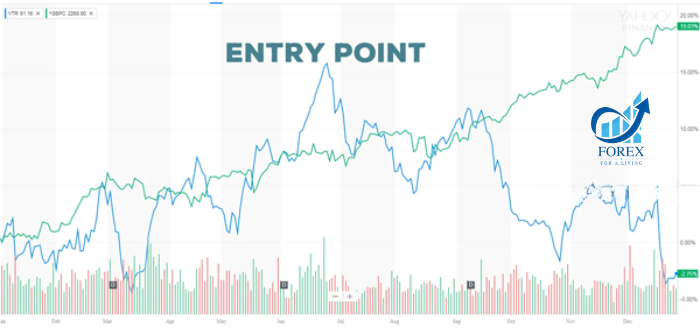
This refers to the ideal point for entering a trade. The entry point doesn’t specify whether you’re buying or selling; it applies to both BUY and SELL orders.
Finding a good entry point is crucial. If you locate a strong entry, you don’t have to worry about losses. Additionally, a good entry point can bring in substantial profits.
Major Currency Pairs
In Forex trading, transactions are conducted between currency pairs rather than individual currencies. Therefore, traders typically refer to them as pairs, not just currencies. Major currency pairs that include the USD are commonly traded, such as: USD/CHF, AUD/USD, GBP/USD, USD/JPY, EUR/USD, etc.
- GBP/CHF – British Pound / Swiss Franc
- EUR/AUD – Euro / Australian Dollar
- EUR/JPY – Euro / Japanese Yen
- EUR/GBP – Euro / British Pound
- USD/CAD – US Dollar / Canadian Dollar
- NZD/USD – New Zealand Dollar / US Dollar
- USD/CHF – US Dollar / Swiss Franc
- AUD/USD – Australian Dollar / US Dollar
- USD/JPY – US Dollar / Japanese Yen
- GBP/USD – British Pound / US Dollar
- EUR/USD – Euro / US Dollar
Cross Currency Pairs
Cross currency pairs are those that do not contain the USD but are still widely traded and invested in by traders. Popular cross currency pairs include: EUR/JPY, GBP/JPY, EUR/AUD, etc.
Exotic Currency Pairs
Exotic currency pairs are combinations of currencies from emerging markets like India, Brazil, or Mexico, paired with a major currency. These pairs are less traded on the market because they have lower liquidity.
Spread
The difference between the ASK price and the BID price is called the spread. In Forex, the ASK price always comes after the BID price. This is the fee charged by the broker for executing the trades.
For example, if EUR/USD is quoted at 1.1162/1.1160, the spread is 2 pips, which is the difference between the two numbers.
Pip
A pip is the smallest unit of price change in the Forex market. Most currency pairs are quoted with four decimal places. Since a pip is the smallest unit, it represents the fourth decimal place, equivalent to 0.0001. Therefore, 1 pip equals 1/100th of a cent in the USD.
Lot
A lot refers to the size of a trade in currency. 1 Lot equals 100,000 units of the base currency. For example, if you’re buying EUR/USD, you need 100,000 USD.
Besides the standard lot, there are mini lots (10,000 units) and micro lots (1,000 units).
BID
BID is the liquidity provided by banks, funds, and brokers to buy currency pairs. It is the price at which a trader must accept to purchase the pair. The BID price is listed before the ASK price.

For example: GBPUSD is offered at 1.8813/1.8811, the BID price is 1.8813. When you want to sell this currency pair, you will sell at the price of 1.8813.
ASK
The ASK price is the price at which a currency pair is offered when you buy it. This price is listed after the BID price in the quote.
For example, if EUR/USD is quoted as 1.2817/1.2815, the ASK price is 1.2817. You must accept this price to execute a BUY order and ensure the trade matches.
Commission Fee
This refers to the commission fee charged by brokers for each trade executed. ECN accounts typically have this fee, which usually ranges from $7 to $10 per lot traded. For example, Exness charges a commission fee of $20.
Leverage
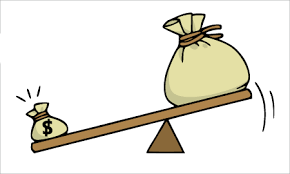
Leverage is the amount of capital provided by the broker to allow you to open larger positions than your account balance. Leverage ratios can vary, such as 100:1 or 1000:1.
For example, when buying or selling 1 lot, you need $100,000 to execute that trade. However, if your account balance is only $1,000, you can use leverage of 1000:1. This means you can borrow a total of $1,000,000 (1000 x $1,000), equivalent to 10 lots. But it’s important to note that not everyone has the same risk appetite. If you use leverage like this, you must have good account management skills to avoid a margin call or losing your entire account.
Pump and Dump (Bull Market and Bear Market)
These terms refer to the price trends in the Forex market. When someone mentions “DUMP” or “Bear Market,” it means the market is in a downtrend (prices are falling). On the other hand, if someone talks about a “Pump” or “Bull Market,” it means the market is in an uptrend (prices are rising).
Demo Account
A demo account is provided by brokers for new traders to practice trading without risking real money. The structure of a demo account mirrors a real trading account. However, any profits made in a demo account cannot be withdrawn, as it’s only for learning and testing strategies.
Central Bank
The central bank is the only institution that has the authority to raise or lower interest rates. Each country has its own central bank. The central bank’s decision to increase or decrease interest rates is designed to combat inflation and stabilize the economy. These actions have a significant impact on the value of the country’s currency, influencing the Forex market.

The Federal Reserve, or the central bank of the United States, is one of the most influential central banks in the world. This is because every decision made by the FED impacts not only the USD but also many other economic factors globally. Therefore, when the FED announces a change in interest rates, the market experiences significant volatility.
Requote
A requote is a notification from the trading platform about a price change when placing an order. The trader can either accept the new price offered or cancel the order. Requotes can occur in accounts that use instant execution, where orders are filled at the market price.
Non-Market Quote
This type of quote meets the following conditions:
- There is a significant price difference.
- The price returns to its original level shortly after the price discrepancy occurs.
- There is a lack of significant price volatility before the non-market quote is displayed.
- There is a lack of major economic news impacting the exchange rates of financial instruments at that time.
Price Slippage
Slippage refers to the price fluctuation from the time an order is placed to the time the order is executed. In some cases, the order may be filled at a better or worse price than initially set. This often happens when the market experiences high volatility.
Indicator
An indicator is a technical analysis tool used to study price movement based on past data. It helps traders to analyze market trends and make informed decisions.
Hedging Strategy
Hedging is a risk management strategy used to reduce potential losses in investment. This strategy involves taking offsetting positions to minimize the impact of adverse price movements on financial instruments.
Financial Instrument
A financial instrument refers to a product in the financial market. This could include currencies, stocks, or futures contracts, among others.
Sell Stop Order
A sell stop order is a pending order to sell at a price lower than the current market price. Traders place this order when they expect the market to decline and want to sell at a lower level.
Buy Stop Order
A buy stop order is a pending order to buy at a price higher than the current market price. Traders place this order when they expect the market to rise and want to buy at a higher price.
Candlestick Chart
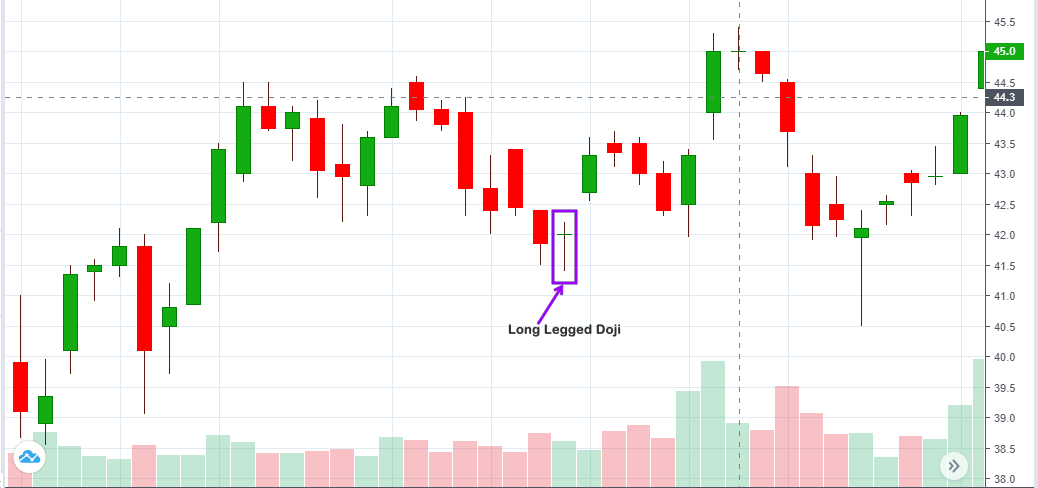
The candlestick chart is one of the most commonly used charts to display price movements. It provides visual representation of open, high, low, and close prices within a specific time frame, showing the market’s sentiment.
Diversification
This is a strategy aimed at reducing risk by spreading investments across different financial instruments or assets.
Trader
A trader refers to an individual or entity engaged in trading activities, such as placing buy or sell orders on a trading account. Traders aim to earn profits from successful trades and take on the risk of losses from unsuccessful trades. They base their decisions on market conditions, news, and economic events that influence price movements, and often use analytical tools to enhance their trading decisions.
Broker
A broker is a company or individual who facilitates transactions between buyers and sellers, and is responsible for ensuring the basic aspects of the trade are executed properly.
Closing a Position
This refers to the process of buying and selling back financial instruments to offset the positions that were opened.
Flat Market
A flat market is a phase where prices move within a narrow range and do not show a clear upward or downward trend.
Automated Trading
This refers to trading methods where orders are executed automatically by a special program or system, with no manual intervention by the trader.
News Trading
This type of trading system focuses on profiting from price differences caused by the release of important economic or financial news.
Day Trading
Day trading involves entering and exiting positions within the same trading day. The trade is not carried over to the next day.
Margin Call
A margin call is a notification from the broker indicating that the balance in your account has fallen below the required margin level. If the market moves unfavorably, this could lead to a forced closure of positions. This notice is sent when your account equity is less than the margin requirement.
Lock (Hedge)
Lock or hedging occurs when a trader holds two positions in opposite directions (long and short) on the same financial instrument at the same time.
Gap
A gap refers to the empty space on a price chart, which occurs when the opening price of a trading session is significantly different from the closing price of the previous session. Gaps can occur during weekends or after significant market events.
Volume
Volume refers to the number of financial instruments traded during a specific period.
Market Execution
Market execution is a type of order execution where the trade is filled at the market price. If the price changes between the time the order is placed and its execution, the trade will be filled at the new price.
Instant Execution
Instant execution is a method where the trade is executed at the specified price. If the price changes during the order process, the trader will receive a requote, which they can either accept or decline.
Take Profit (TP)
Take profit is a preset order to close a position once it reaches a certain level of profit.
Order
An order is a trader’s position when executing a trade at a specific price. Once the position is opened, it must be closed to determine the profit or loss.
Stop Loss (SL)
A stop-loss order is designed to limit the amount of loss a trader can incur by closing a position at a specified price if the market moves unfavorably.
Profit
Profit refers to the positive change in the balance from trading or investment activities after subtracting costs and fees.
Opening a Position
Opening a position refers to buying or selling financial instruments in anticipation of making a profit from the market movements. To finalize your profit or loss, you must close the position.
Target Price
This is a technical analysis term used to define the price level a trader expects to reach before closing a trade.
Support Level
The support level is a technical analysis term referring to a price level at which a financial instrument tends to find buying interest and is expected to stop falling.
Margin Level
Margin level refers to the ratio of equity to margin and is used to determine the amount of leverage a trader can apply on their trades.
Market Maker
A market maker is a large financial institution, such as a bank, that provides liquidity and determines exchange rates based on their trading activity in the market.
Trading Platform
A trading platform is a software application that allows traders to access and conduct their trades using electronic communication networks.
Stop Trading
This refers to the automatic closing of positions that occurs when the account balance falls below a certain percentage of the required margin.
Bear
A “bear” is someone who expects the market to decline and believes that the value of a currency will decrease.
Bull
A “bull” is someone who expects the market to rise and anticipates that exchange rates will increase.
Broker
A broker is a company that acts as an intermediary between buyers and sellers and charges a commission fee for their services.
Automated Trading Software
This is software designed to automatically execute trades according to pre-set conditions, without requiring intervention from the trader.
Fundamental Analysis
Fundamental analysis involves evaluating economic, financial, and news-related data to predict future price movements.
Technical Analysis
Technical analysis is a type of chart-based analysis and it is not necessary to pay attention to visual information because all of that information is reflected in prices. This method will rely on past data to provide direction for the future.

Scalping
Scalping, also known as fast trading, is a short-term trading strategy that often lasts just a few seconds. Traders seek small, fixed profits (usually in a few pips) and make multiple trades throughout the day.
Balance
Balance refers to the amount of money left in a trading account after a trade is completed, excluding any margin, open positions, or unrealized profits/losses.
Swap
A swap is the cost or benefit incurred from holding a position overnight, and it may be either deducted from or added to the trader’s account. It is the difference in interest rates between the two currencies in a currency pair.
Account
An account is a record of a user’s information and transactions in a trading system, including personal details, account balance, and transaction history.
Liquidity
Liquidity measures how easily an asset can be bought or sold in the market. A high level of liquidity means that the asset can be traded quickly and easily, while low liquidity means it’s harder to execute trades.
Margin
Margin is the amount of money required in an account to open and maintain a position. It acts as collateral to cover potential losses from trades.
Base Currency
The base currency is the first currency listed in a currency pair (e.g., EUR in EUR/USD). All trades are conducted based on the value of the base currency.
Volatility
Volatility measures the extent of price fluctuations in the market. High volatility indicates large price movements, while low volatility indicates smaller movements.
Equity
Equity represents the current value of the trader’s account, calculated as the balance plus or minus any unrealized profits or losses from open positions.
Trailing Stop
A trailing stop is an order that moves in tandem with the market price to lock in profits or limit losses. It adjusts as the market moves in favor of the trade, but it doesn’t move back if the market turns against the position.
Exchange Rate
The exchange rate is the price of one currency in terms of another. For example, if 1 EUR equals 1.3000 USD, then the exchange rate for EUR/USD is 1.3000.
Trend
A market trend refers to the general direction in which the price is moving—either upward (bullish), downward (bearish), or sideways (neutral).
Common Slang Terms
In the forex market, traders often use slang to refer to currencies and economic concepts. Here are a few common slang terms:
- US Dollar: “Greenback” or “Buck”
- Australian Dollar: “Aussie”
- New Zealand Dollar: “Kiwi”
- Swiss Franc: “Swissy”
- Canadian Dollar: “Loonie”
- British Pound: “Cable” or “Sterling”
- Euro: “Single Currency”
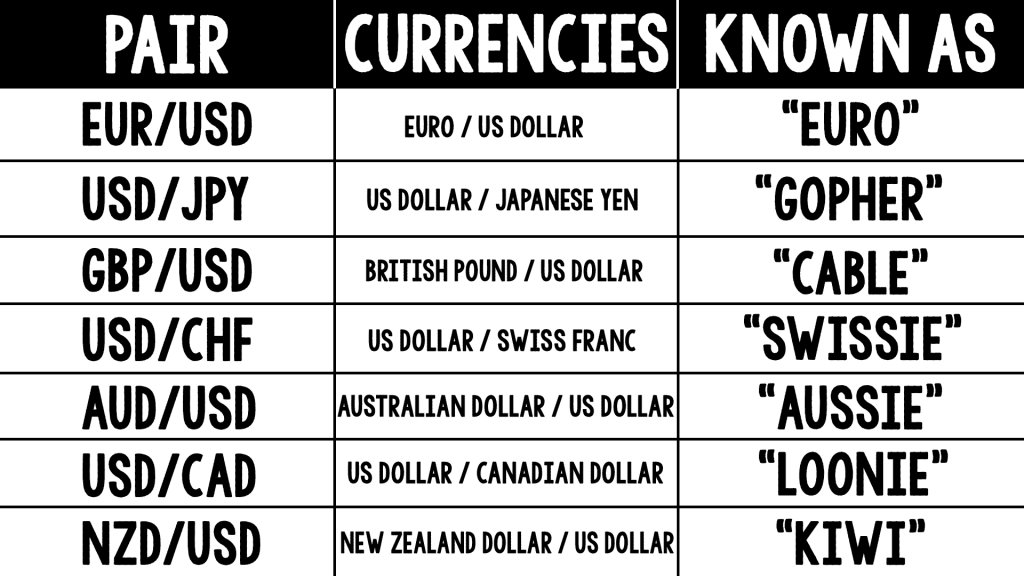
The origins of these Forex terms are indeed fascinating. For instance, the Euro is referred to as the “Single Currency” because it is used by multiple countries, and the “Kiwi” slang for the New Zealand Dollar comes from the kiwi bird, which is nocturnal and cannot fly, symbolizing New Zealand.
Historically, the British Pound was the dominant currency used in trade between Europe and the United States, transmitted via undersea cables. Over time, the term “Cable” became a slang term for the GBP/USD currency pair.
Objective
An objective, or “Take Profit” order, is a predetermined point at which a trader decides to exit a trade once the price reaches a desired level that aligns with their expectations.
Spot Market/Cash Market
Spot price is the value of something at the present time and is different from a future contract. For example:
When you buy a bottle of water and the price of that bottle of water is 2 dollars, when you trade immediately you only lose 2 dollars. But if you do not transact immediately but agree with the shop owner to receive the bottle of water after a period of time and buy it at a price of 2.1 dollars, this is the future price.
Resistance
Resistance refers to a price level or area on a price chart where the market tends to face selling pressure, causing the price to stall or reverse direction. Similar to support, resistance is an area rather than a single price level.
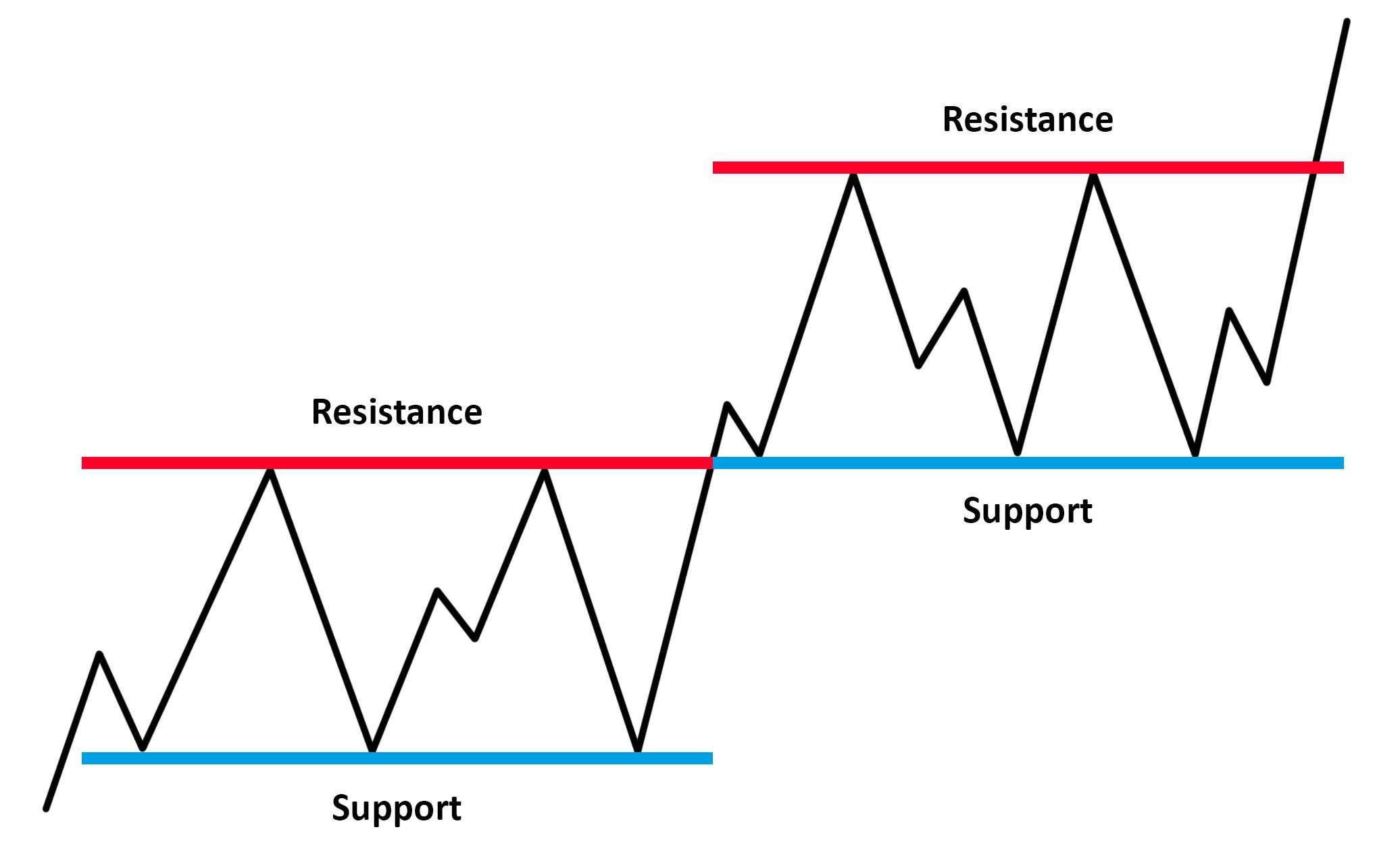
Breakout
A breakout occurs when the price of a currency pair moves beyond a support or resistance zone, signaling a shift in the market’s trend. This can result in significant price movement as it signals a possible new direction in the market.
Price Range
A price range refers to a period in the market where the price of a currency pair is neither clearly increasing nor decreasing, but remains within a defined range.
Accumulation
Accumulation occurs when the price of a currency pair is confined within a narrowing range. This phase often precedes a breakout, as the market consolidates before making a move beyond a key support or resistance level.
Conclusion
These are just a few common Forex terms that traders will often encounter. By understanding and familiarizing yourself with these terms, you’ll be better prepared to navigate the world of Forex trading. I hope this guide helps clear up any confusion you may have when you come across these terms in your trading journey. Wishing you a successful and profitable trading experience!
- t.me/finance_solutes
- Website: https://finance-solutes.com
- Hotline: +1 929 5636 439 ( Hotline )
- 26 Broadway, Suite 934, New York, 10004, US
