
 XM
XM Bybit
Bybit Binance
 Robinhood
 Webull
 IC Markets
 Pepperstone
 OKX
OKX Vantage
 VT Markets
 BingX
BingX Gate.io
 Kucoin
 MEXC
MEXC Exness
 Bitget
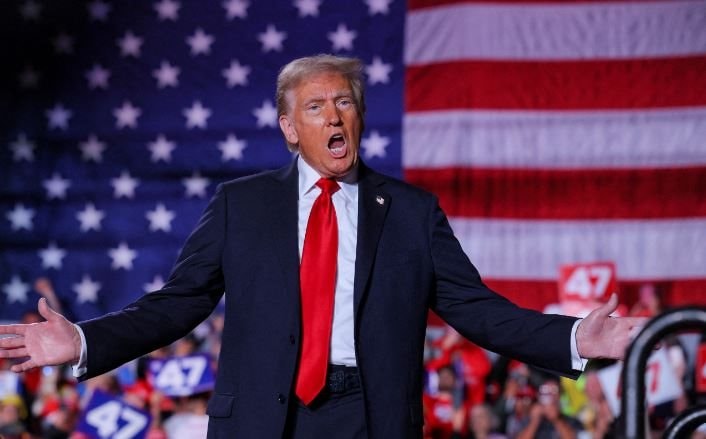
US President Donald Trump announced on Monday that he will impose a 25% tariff on all imported steel and aluminum, escalating trade tensions by extending protectionist measures to the metals sector. This move marks another significant step in Trump’s aggressive trade policy, which has already disrupted global markets and raised concerns over inflation.
Trump’s Announcement and Justification
The President made this announcement during a press briefing while traveling from his Mar-a-Lago resort in Florida to attend the Super Bowl in New Orleans on Sunday evening. Alongside the steel and aluminum tariffs, Trump stated that he would unveil new reciprocal tariffs later this week targeting imports from countries that impose duties on US exports.
Impact on Trade Relations
The proposed tariffs come as Trump embarks on his second term with an assertive trade stance. Financial markets have reacted with concern, fearing inflationary pressures in the US. Major trading partners, including Canada, China, and Mexico, are expected to be significantly affected. Last week, Trump nearly implemented a 25% tariff on imports from Canada and Mexico but postponed the decision for 30 days. However, his administration proceeded with a 10% tariff on Chinese imports, prompting retaliatory measures from Beijing.
Global Ramifications
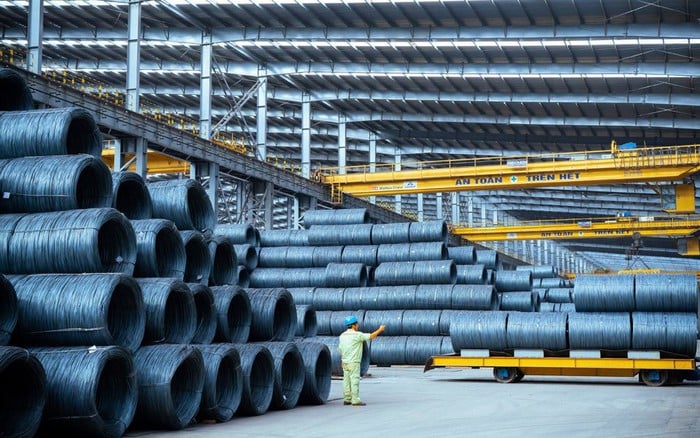
Canada, China, and Mexico are the largest exporters of steel and aluminum to the US, but the tariffs are expected to have a global impact, affecting suppliers from Brazil, Germany, and South Korea. While the tariffs have received support from certain US labor unions and domestic manufacturers, they pose risks of increased input costs for many American companies. In 2023, the US imported $82.1 billion worth of steel and iron and $27.4 billion in aluminum, while exporting $43.3 billion and $14.3 billion of these materials, respectively.
European Union’s Response
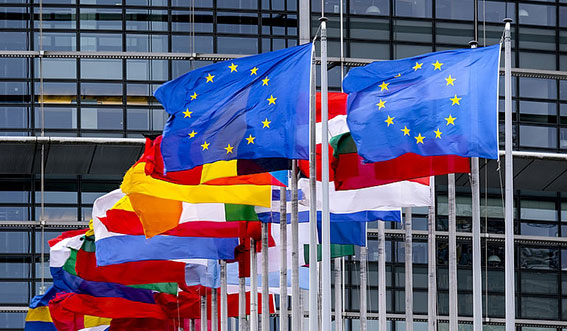
In response to Trump’s tariff pledge, the European Commission stated: “We will react to protect the interests of European businesses, workers, and consumers from unjustified measures.” The EU has not yet received any official notification regarding the new tariffs. During Trump’s first term, he imposed a 25% steel tariff and a 10% aluminum tariff but later granted exemptions to some trade partners, including Canada and Mexico. In 2018, the EU retaliated with tariffs on various US imports, including bourbon whiskey, Harley-Davidson motorcycles, and motorboats.
Market Reactions
Following Trump’s latest tariff plan, the US dollar rose by 0.1% against a currency basket including the euro, yen, and pound on Monday. Aluminum prices on the London Metal Exchange increased by 0.4% to $2,639 per ton. Shares of South Korean steelmakers Hyundai Steel and Posco Holdings fell by 2% and 0.8%, respectively, underperforming the Kospi benchmark index. Meanwhile, ArcelorMittal, one of Europe’s largest steel producers, saw its shares drop by 2.5%.
Industry and Political Reactions
South Korea’s Ministry of Industry, Trade, and Energy held an emergency meeting with steel executives on Monday to assess the situation. “We will work together to actively respond and minimize the impact on our companies,” officials stated.
Australian Prime Minister Anthony Albanese defended his country’s economic interests, emphasizing that Australian companies have invested heavily in the US steel industry, creating thousands of jobs. “We will continue to protect Australia’s national interests in discussions with the US administration,” he affirmed.
Historical Context of Steel Trade Tensions
The steel industry has long been a focal point of trade disputes. Last year, several countries imposed tariffs on imports, with the US tripling tariffs on Chinese steel and the EU launching anti-dumping investigations into Chinese tin-plated steel products. Mexico and Brazil also raised tariffs on steel imports.
Trump’s Stance on US Steel Industry
Trump’s renewed tariff plans come after the White House pledged to block Nippon Steel’s takeover of US Steel, a Pennsylvania-based manufacturer. While Trump has stated he would support significant investment—albeit not a controlling stake—from the Japanese competitor, he emphasized that tariffs would strengthen US Steel. “Tariffs will make [US Steel] very successful. And I think the company is well-managed,” he said. Shares of Nippon Steel fell 0.4% in Tokyo on Monday.
Trump did not specify how he plans to implement the reciprocal tariffs he promised to announce in the coming days. “It’s very simple—if they charge us, we will charge them,” he declared.
Conclusion
Trump’s latest tariff plan signals a continuation of his aggressive trade policies, with potential global economic repercussions. While aimed at boosting domestic industry, the move risks escalating trade tensions and prompting retaliatory actions from major economic partners. The coming days will reveal the full scope of the policy and its broader impact on global trade.\
EXPLORE MORE LATEST NEWS RIGHT HERE!
- Forex: Get the latest trends and effective trading strategies
- Crypto: Stay updated on the hottest cryptocurrency market news
- Stock & Commodities: Discover potential investment opportunities
- Trading Brokers: Choose reliable brokers for your trades
- Expert Advisor: Smart tools to assist your trading
- Finance News: 24/7 updates on financial news
DON’T MISS OUT, CLICK AND READ NOW!
- t.me/finance_solutes
- Website: https://finance-solutes.com
- Hotline: +1 929 5636 439 ( Hotline )
- 26 Broadway, Suite 934, New York, 10004, US
