
 XM
XM Bybit
Bybit Binance
 Robinhood
 Webull
 IC Markets
 Pepperstone
 OKX
OKX Vantage
 VT Markets
 BingX
BingX Gate.io
 Kucoin
 MEXC
MEXC Exness
 Bitget
After gaining a certain understanding of what the spot market is, today’s article will introduce you to a related term in the spot market: Spot Rate vs. Forward Rate. So, what are the spot rate and forward rate? How are they similar and different? Keep reading to find the answers to these questions!
1. SPOT RATE VS. FORWARD RATE
1.1. What Is Spot Rate?
Spot Rate, also known as Spot Exchange Rate, refers to the current exchange rate or the spot exchange rate. The spot rate is the quoted price for settling financial, commodity, and asset transactions immediately or within a specified period.
This price is determined based on the amount buyers are willing to pay and the amount sellers are willing to accept. It often depends on factors such as the current market price and the anticipated future market price.
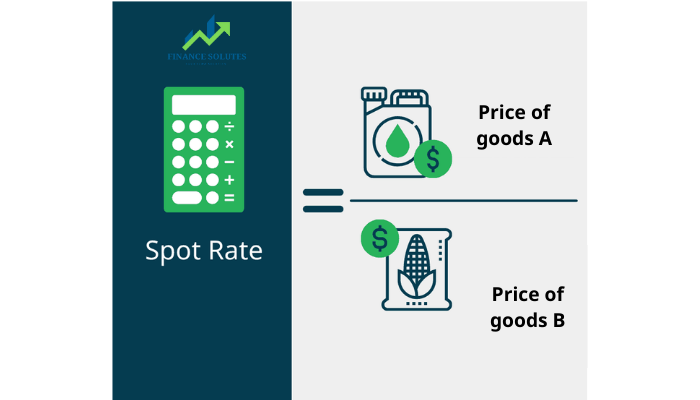
Currently, the spot price of most securities and commodities tends to be relatively uniform when calculated based on exchange rates worldwide.
In general, the Spot Rate is determined by the global foreign exchange market, where institutions, countries, and currency traders settle economic transactions and financial investments. The foreign exchange market is the most liquid market globally, with trillions of dollars traded daily.
1.1.1. Characteristics of Spot Rate
– The Spot Rate reflects the supply and demand in the market for an asset or commodity available for immediate transaction.
– The specific spot exchange rate is used to determine the price of futures contracts and is closely correlated with them.
– Delivery contracts often use the spot rate as a reference at the time of signing.
1.1.2. Example of Spot Rate
Some sources such as Bloomberg, Morningstar, and Thomson Reuters provide spot rate information for traders. The spot exchange rates for currency pairs, securities, and commodities are often published in news bulletins.
For example, suppose you execute a spot transaction in the forex market by purchasing 100,000 EUR in exchange for USD. Your broker quotes you an exchange rate of 1.2162, which is the prevailing spot rate for that currency pair.
If you agree with that rate and decide to trade at that exchange rate, it means you are engaging in a spot transaction.
1.2. What Is Forward Rate?
Forward Rate, also known as Forward Exchange Rate, refers to the exchange rate for a transaction, economic operation, or financial deal that will take place in the future rather than an immediate trade.
The forward exchange rate is adjusted relative to the spot rate, commonly based on interest rate differentials between the relevant currencies and how far the forward delivery date is from the current spot date.
This term can also refer to a fixed interest rate for a future financial obligation, such as the interest rate applied when repaying a loan.
1.2.1. Characteristics of Forward Rate
The forward exchange rate can be calculated using one of the following methods:
– Yield Curve – The relationship between interest rates of government bonds with different maturities.
– Spot Rate – The implied interest rate of a zero-coupon security.
1.2.2. Example of Forward Rate
Mr. Danny is considering purchasing a Treasury security that will mature in one year. He has two investment options:
– Buy a government bond that matures in six months, then purchase another six-month government bond.
– Buy a government bond that matures in twelve months.
The yield earned on the first option may fluctuate more since interest rates could change between purchasing the first six-month bond and the second bond. If there were a guarantee that interest rates would remain unchanged, Mr. Danny wouldn’t have to worry about which option to choose.

However, in reality, interest rates can fluctuate significantly when an investor moves from the first purchased bond to the second one. If the rate increases, Mr. Danny will clearly earn more money by choosing the first option—buying one bond and then purchasing a second one later.
Conversely, if interest rates drop, Mr. Danny will suffer a loss compared to the second option. To make the best decision in such situations—one that maximizes potential returns for investors—it is essential to consider the forward rate.
Calculating the actual forward rate is quite complex. Fortunately, investors can look up the current projected forward rates on any financial information website or simply ask their broker.
2. DIFFERENCES BETWEEN SPOT RATE AND FORWARD RATE
Below is a comparison table between the forward rate and the spot rate:
| Spot Rate | Forward Rate |
|---|---|
| A direct interest rate that provides the price of a financial contract at the current moment. The spot date is when the funds related to the business transaction are transferred between the involved parties. It can be two days after the trade or even on the same day the transaction is completed. A 5% spot rate represents the agreed market price of a trade based on the actions of current buyers and sellers. | Theoretically, the forward rate is the price of financial transactions expected to occur at some point in the future. |
| A spot transaction is completed (i.e., the funds are transferred to complete the spot contract transaction) typically within a maximum of two business days from the trade date. This timeframe is also known as the spot settlement period. | The forward rate indicates the interest rate of a loan that starts at some point in the future, while the spot rate is the interest rate of a loan that begins immediately. Thus, the forward market rate applies to future deliveries beyond the standard settlement period in the cash market. |
| The spot date is the settlement date. Regardless of what happens in the market between the start and end of the transaction, the trade will still be executed at the spot rate agreed upon in the prior spot contract. This is usually within approximately two business days (T+2). | Determining the forward rate—the price of a financial transaction or economic operation in the future—is based on the spot rate. Since the expected price of goods, securities, or currencies in the future depends on their current value and the risk-free rate until the contract matures. |
| In the currency market, the Spot Rate, as in most markets, refers to the spot exchange rate. | The forward rate refers to the future exchange rate agreed upon in forward contracts. |
3. SUMMARY
With the basic forex knowledge provided in today’s article, we hope you now have a clearer understanding of what spot rate (spot exchange rate) and forward rate (forward exchange rate) are. Additionally, you should now be able to distinguish between the two and recognize their key differences.
Thank you for reading, and don’t forget to follow Finance Solutes for more upcoming articles!
- t.me/finance_solutes
- Website: https://finance-solutes.com
- Hotline: +1 929 5636 439 ( Hotline )
- 26 Broadway, Suite 934, New York, 10004, US
