
 XM
XM Bybit
Bybit Binance
 Robinhood
 Webull
 IC Markets
 Pepperstone
 OKX
OKX Vantage
 VT Markets
 BingX
BingX Gate.io
 Kucoin
 MEXC
MEXC Exness
 Bitget
Shitcoin – this term was previously mentioned by Finance Soluutes in the article What is a Coin. However, in this article, we’ll go into more detail about what a shitcoin actually is, which exchanges to buy shitcoins on, important things to know before investing in shitcoins, as well as potential shitcoins and whether there’s a way to mine shitcoins for free. So if you’re still unsure whether you should invest in shitcoins, don’t skip this article!
1. WHAT IS A SHITCOIN?
The term shitcoin (or coin rác in Vietnamese) is used to describe cryptocurrencies that lack a clear use case, are simply copies of other coins, or bring no real value or innovation to the crypto market. These coins typically have no defined goals or practical purpose.
Usually, shitcoins have no solid foundation for development or long-term survival, and they lack the fundamental principles needed to support them in the future. In fact, many investors view shitcoins—true to their name—as poor and unreasonable investment choices. The term shitcoin originated from posts and discussions on social media forums dedicated to crypto.
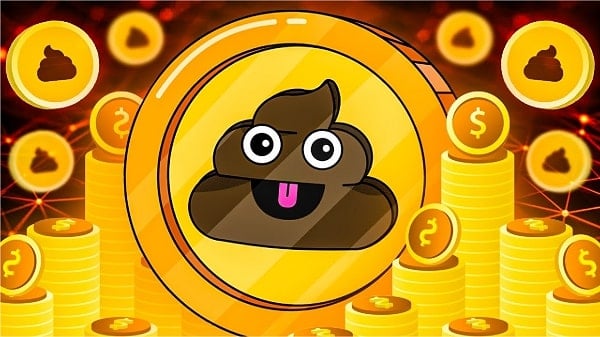
A famous example of a shitcoin is Dogecoin – a coin that emerged after a hard fork from Litecoin in 2013. It is also widely known as a meme coin.
1.1. How to Identify a Shitcoin
Shitcoins often share several notable characteristics that investors can easily spot:
- Undefined Functionality: While top-tier coins are typically created to solve specific problems in the market—such as improving certain features or enhancing decentralized finance (DeFi) applications—shitcoins lack such clear purposes. Their features and project aspects are often vague or even copied directly from other crypto projects.
- Anonymous Developers: Although some legitimate crypto projects also choose not to disclose their development teams, the vast majority of shitcoin projects either completely hide their developers or use fake names. This lack of transparency makes them even more untrustworthy.

- Low Number of Holders: This is not only a sign of a shitcoin but also a basic metric for evaluating the potential of a coin. For a coin with real value, the number of holders is typically at least 200, with about 5 to 10 transactions occurring every minute.
- Very Low Liquidity: Liquidity directly impacts your ability to trade. If a coin’s trading volume is only a few tens of thousands of dollars, this should be a clear red flag that you shouldn’t ignore.
1.2. History of Shitcoin Formation
Regardless of whether they bring value or not, shitcoins are technically part of the altcoin group—meaning all cryptocurrencies that are not Bitcoin. The origin and operational mechanism of shitcoins were inspired by Bitcoin itself. After BTC’s success, public interest in the crypto market surged significantly. As a result, various organizations and individual groups started leveraging blockchain technology to launch new coins, often designed based on Bitcoin’s structure.
However, the shitcoin boom truly exploded after the launch of the Ethereum platform, which allowed anyone to create a token with just a few lines of code. This led to the emergence of many coins and tokens without real utility or a defined purpose. In most cases, the value of these shitcoins was driven solely by FOMO (Fear of Missing Out) among traders. And over time—as you might expect—the price of most shitcoins tends to return to their true intrinsic value.
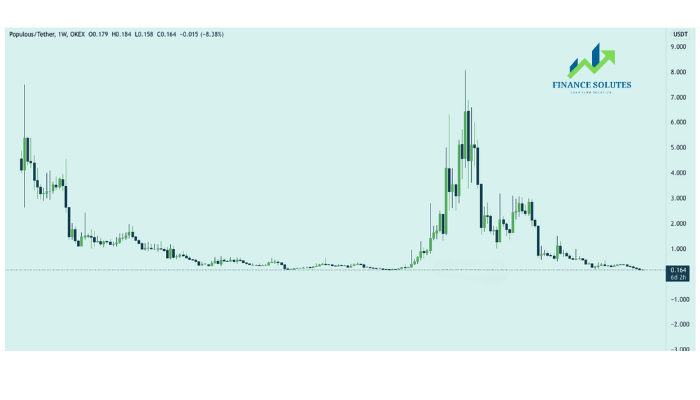
Aside from Dogecoin, another prime example of a shitcoin that once experienced a dramatic price spike—reaching nearly 30 times its original value—is PPT. Let’s take a look at the price chart of this coin:
2. CATEGORIES OF SHITCOINS
You might not feel the need to categorize shitcoins into subgroups if it seems unimportant to you. However, most shitcoin projects typically fall into one of the following two categories:
- Rug Pull:
This term refers to situations where the project’s development team abandons the project after raising a large amount of investor funds—leaving behind a worthless token. Rug pulls are quite common on decentralized exchanges (DEXs). Typically, the token is listed on a DEX, then its value is pumped up—sometimes 50x or even 100x—creating a strong FOMO effect in the market. But once the token reaches its peak, the dev team pulls all liquidity and disappears. - Exit Scam:
This type is quite similar to a rug pull but occurs differently. Instead of listing a token on a DEX first, a shitcoin project is launched as a hard fork of an existing coin. After conducting an ICO (Initial Coin Offering), the team vanishes.
What contributes to the success of both types of shitcoin scams is their large marketing budgets, which are used to promote the coins aggressively. These campaigns attract new investors who are influenced and driven by FOMO in the market.
3. TRADING EXPERIENCE WITH SHITCOINS
Not just in crypto, but in all financial markets, there’s one principle every investor must understand: profit always comes with risk, and the correlation between the two is directly proportional.
That means if you want high returns, you must also be prepared for equally high (or even higher) risks—especially if you use financial tools like leverage. Investing in shitcoins, even so-called “promising” ones, is no exception to this rule.
3.1. Risks of Investing in Shitcoins
According to data from CoinMarketCap, there are currently nearly 20,000 coins in the crypto market. Naturally, not every coin created can succeed or lead the market like Bitcoin or Ethereum. Investing in shitcoins sometimes involves a bit of luck. The shitcoin you choose may not be considered a “potential” one, but its price could still skyrocket overnight—by tens or even hundreds of percent.
All shitcoins carry risk, and there are no exceptions. They all share a common characteristic: the lack of fundamental principles to support sustainable growth. You may get rich quickly or lose a significant amount of money because the value of a shitcoin is not maintained over time. Influential figures in the community often play a significant role in pumping the price of these coins, even though, in essence, they bring no real value to the community that could justify a price increase like top-tier coins.
3.2. Shitcoin Investment Strategy
Many people wonder whether they should invest in shitcoins, how to find potential ones, or how to earn from them, etc. It can be said that you can trade shitcoins—but only in the short term. You might catch a good price wave, but holding for the long term is not considered a smart investment strategy.
While risks are inevitable, if you still want to invest in shitcoins or learn how to do it, you should at least evaluate some aspects of the coin before making any decisions—especially to avoid FOMO when someone claims a coin is a “potential shitcoin of 2022” or that a shitcoin on Binance is guaranteed to rise. Consider the following factors:
- Project Whitepaper: Most shitcoins either don’t have a whitepaper or only provide a very basic one. However, a few projects still publish whitepapers. At the very least, you should look into the project’s vision, roadmap, and basic information about the coin.
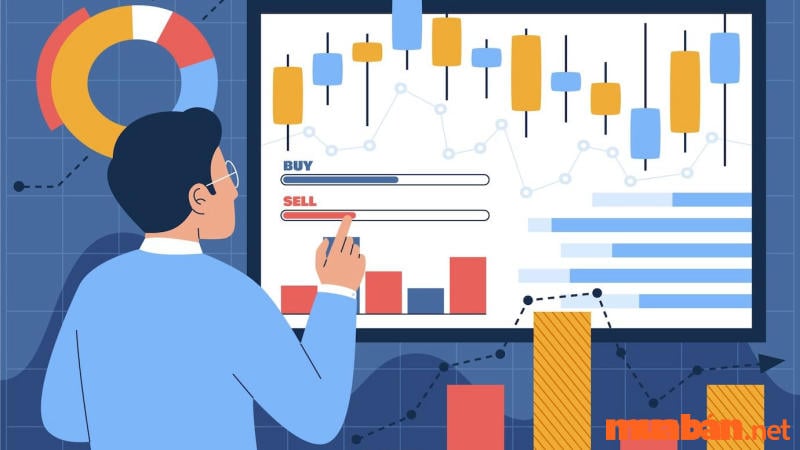
- ICO Events: Initial Coin Offerings (ICOs) are opportunities for investors to acquire tokens before they are listed on exchanges. One red flag to watch for is when an ICO lacks a working demo of the project or when the tokens are not fully sold during the event.
If you’re not aware, the majority of shitcoins fall into “pump and dump” schemes, where inexperienced traders end up holding the bag after the coin’s price has been artificially pumped and then dumped by early insiders.
Therefore, trading shitcoins should only be approached with a short-term strategy. As for mining shitcoins using CPU or searching for ways to mine them—it’s not recommended. By the time you successfully mine a coin, its value may have already dropped significantly from when you started due to how quickly shitcoin prices can spike—sometimes in just hours or even minutes.
4. THE TRUTH ABOUT GETTING RICH FROM SHITCOINS?
It is true that shit coins can increase in value very quickly, so it is true that someone can make a huge profit from shit coins, but it is not certain that they can get rich from shit coins. Unlike the top coins on the market, investing in shit coins is risky. Today you can make money from it, but tomorrow when the price suddenly drops, you can lose all your initial capital.
5. POTENTIAL SHITCOINS
In reality, it’s extremely difficult to evaluate whether a shitcoin has potential, because—again—its value might only exist for a very short period. Profiting from shitcoins depends heavily on luck and timing—whether you enter and exit at exactly the right moments. Some shitcoins may evolve into more stable coins (like certain meme coins), but such cases are rare.

The simplest way to discover trending shitcoins is by monitoring forums like Bitcointalk or exploring coins listed on smaller exchanges, especially DEXs (Decentralized Exchanges). However, not all shitcoins are limited to obscure platforms. Some are listed on major exchanges like Binance, Huobi, or Coinbase. That means you can absolutely buy shitcoins on Binance. The process of buying shitcoins on Binance is the same as buying any other standard coin.
6. CONCLUSION
It’s undeniable that low-cap altcoins and some shitcoins can deliver very high returns, but only if an investor is extremely lucky and exits at the perfect time. Through this article explaining what shitcoins are, you’ve also seen the risks involved in trading them. Hopefully, the insights shared here help you better understand how to find potential shitcoins and how to invest in them wisely.
- t.me/finance_solutes
- Website: https://finance-solutes.com
- Hotline: +1 929 5636 439 ( Hotline )
- 26 Broadway, Suite 934, New York, 10004, US
