
 XM
XM Bybit
Bybit Binance
 Robinhood
 Webull
 IC Markets
 Pepperstone
 OKX
OKX Vantage
 VT Markets
 BingX
BingX Gate.io
 Kucoin
 MEXC
MEXC Exness
 Bitget
In this article, Finance Solutes will introduce investors to the first multi‑chain DeFi project in the Polkadot ecosystem: ReeF Finance. Known as an intelligent liquidity tool, how exactly has ReeF Finance supported users with its special operating mechanism? Follow along to learn the details behind Reef Finance’s workings and to discover the applications of the REEF coin!
1. WHAT IS REEF FINANCE?
Reef (short for Reliable Extensible Efficient Fast) is a Layer‑1 blockchain purpose‑built for DeFi, NFTs, and Gaming. It delivers high scalability, enabling near‑instant, low‑cost transactions without wasteful mining. Reef Finance supports Solidity and the EVM, so DApps can be migrated seamlessly from Ethereum without any code‑base changes.
In essence, Reef Chain is one of the most advanced EVM blockchains, featuring on‑chain self‑upgrades and governance. Its infrastructure also allows for EVM extensions, and in the near future it will add other virtual machines so developers can code in multiple languages. The network runs on Nominated Proof of Stake (NPoS) consensus, giving it both scalability and low fees.
2. PROJECT HIGHLIGHTS
- Solidity‑friendly: Move your existing Ethereum apps to Reef with zero changes to your Solidity code.
- Liquidity bridge: Bring established ERC‑20 assets onto Reef and swap liquidity between Ethereum and Reef.
- Reef staking: Bond your REEF tokens to take part in validation and on‑chain governance.
- Community governance: Reef Chain is built for long‑term sustainability through seamless on‑chain upgrades and governance.
Reef targets crypto newcomers as well as current DeFi users who struggle to juggle funds and wallets across multiple blockchains. To solve Ethereum’s high gas fees—often cited as making DeFi protocols “unusable”—the Reef team built on Substrate, enabling near‑instant, low‑cost transactions.

What makes Reef unique is that any DeFi protocol already deployed on Ethereum—or on any EVM‑compatible network—can run on Reef with only minimal code tweaks. In other words, Reef Chain sits at the crossroads of Ethereum and Polkadot: besides acting as a bridge to other blockchains, the Reef ecosystem is reachable by anyone with a Web3 wallet who wants to access dApps on Reef.
Because it is built on Substrate, Reef is highly scalable and can support multiple virtual machines (VMs) as well as extensions for existing popular VMs such as the EVM. It also features on‑chain upgrades, so any new functionality can be pushed through the network layer easily, together with on‑chain governance.
3. WHAT IS THE REEF COIN?
Reef Coin (REEF) is the native token of Reef Chain. At present, there are 14,807,552,172 REEF tokens in circulation, and 38.2 % of the total supply is allocated for staking. Reef Chain currently boasts more than 23 validators.
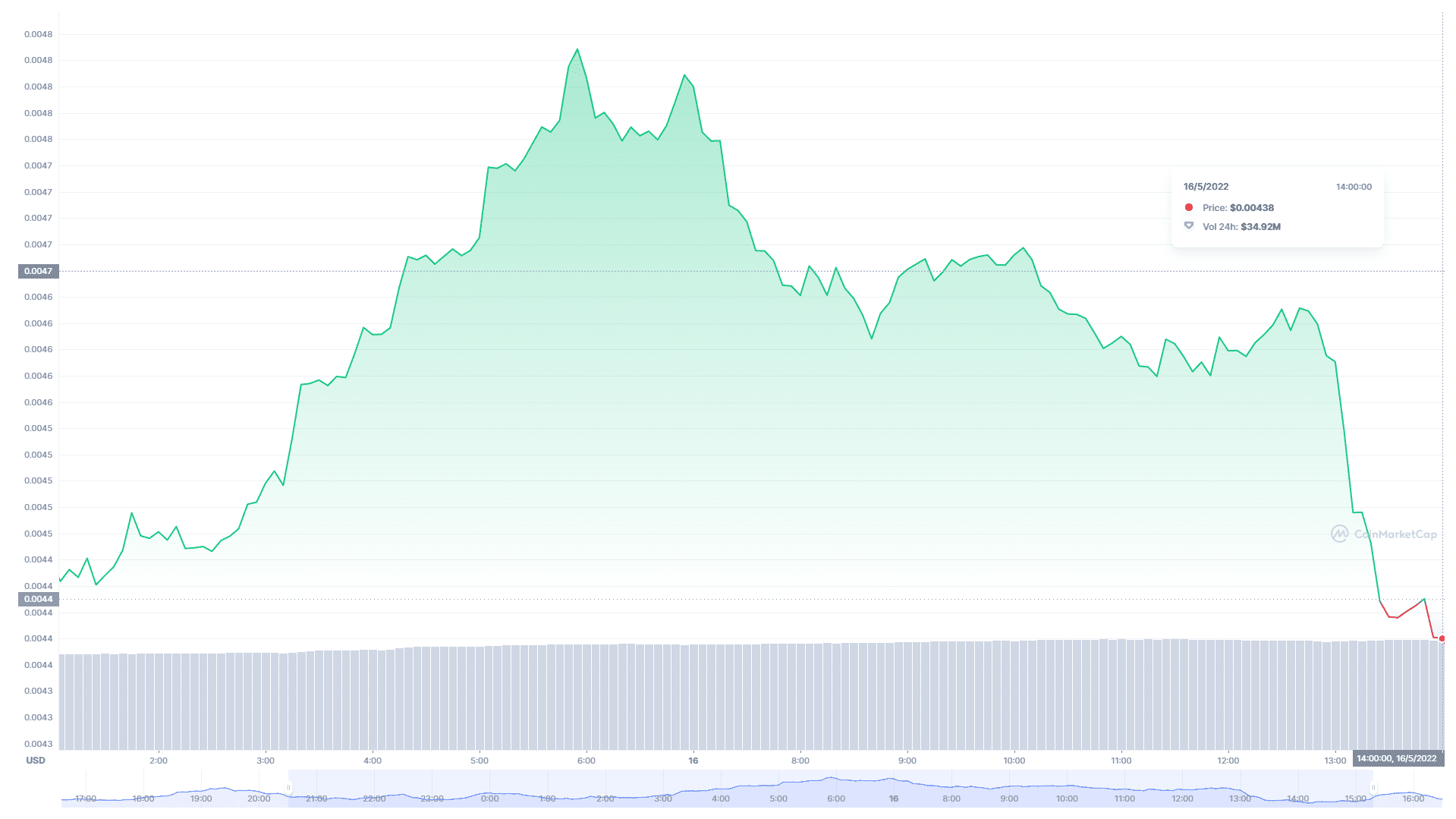
As of May 16, 2022, the CoinMarketCap price of REEF is USD 0.004392, with a 24‑hour trading volume of USD 34,042,079.
3.1. Basic information about the REEF coin
- Token name: Reef Finance Token
- Ticker: REEF
- Token standards: ERC‑20, BEP‑20
- Current price: USD 0.009309
- Token contract: 0xfe3e6a25e6b192a42a44ecddcd13796471735acf
- Maximum supply: 20,000,000,000 REEF
3.2. Uses of the REEF coin
As Reef Chain’s native token, REEF is employed for:
- Paying fees for data storage and transaction processing.
- Running validator nodes by staking REEF.
- Nominating validators to determine which nodes should be part of the network.
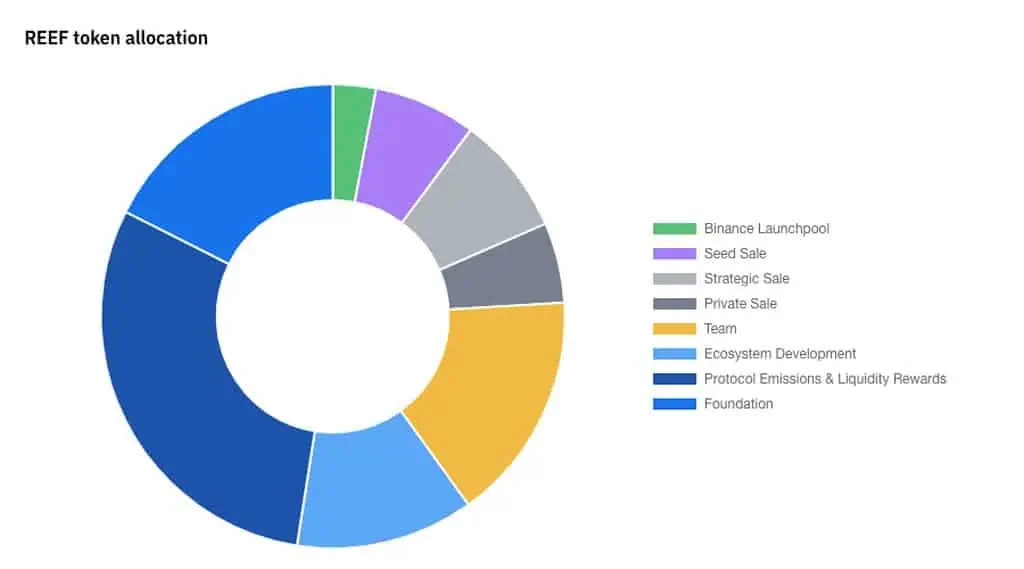
3.3. REEF coin allocation plan
-
Binance Launchpool: 3.00 %
-
Seed Sale: 7.14 %
-
Strategic Sale: 8.33 %
-
Team: 16 %
-
Protocol Emissions & Liquidity Rewards: 29.96 %
-
Private Sale: 5.6 %
-
Foundation: 17.57 %
-
Ecosystem: 12.4 %
4. ROADMAP
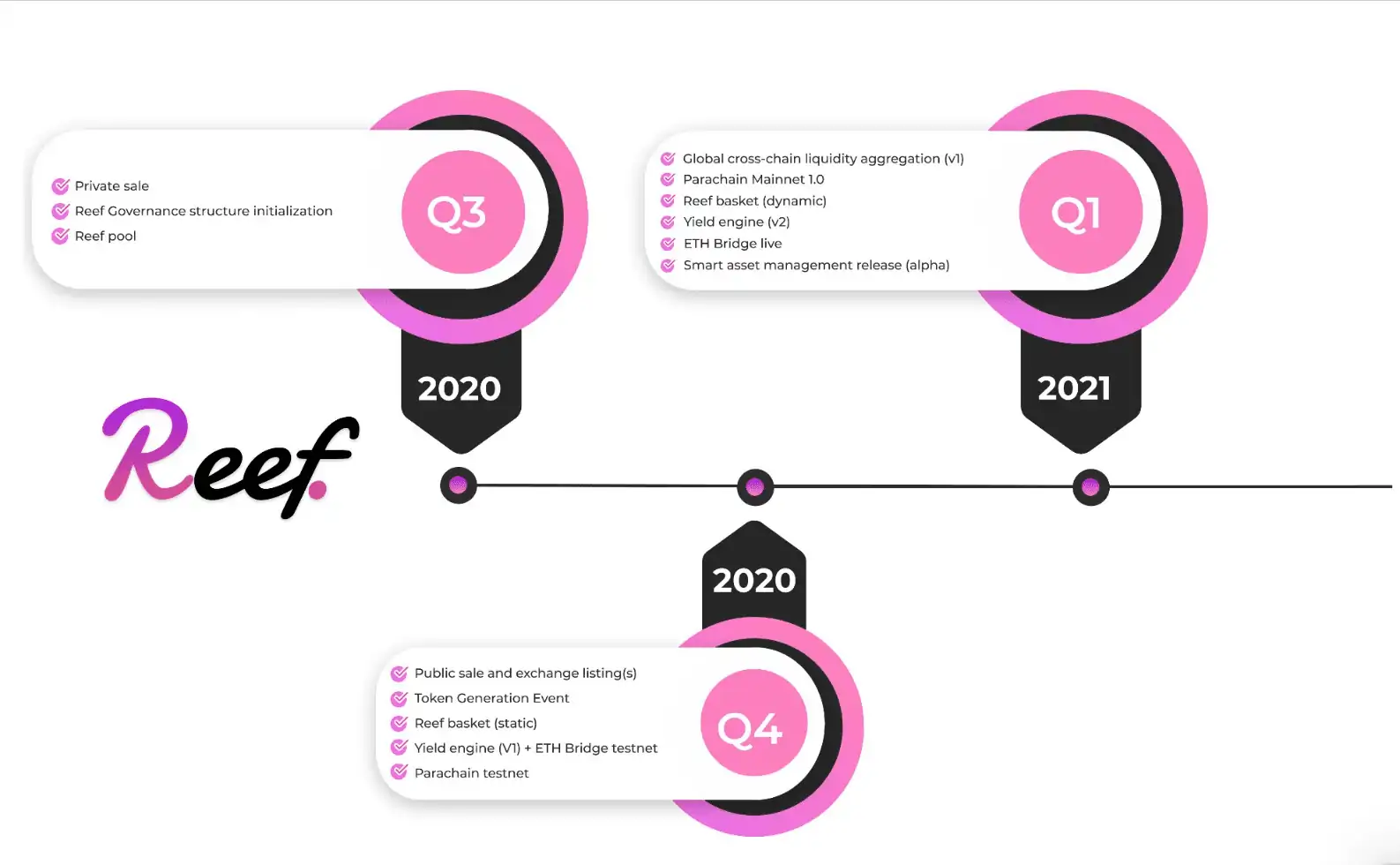
Q3 – 2020
-
Private sale
-
Establish Reef governance structure
-
Launch Reef Pool
Q4 – 2020
-
Public sale and exchange listings
-
Token‑generation event
-
Reef Basket (static)
-
Yield Engine v1 + ETH Bridge (testnet)
-
Parachain testnet
Q1 – 2021
-
Global cross‑chain liquidity aggregation (v1)
-
Parachain Mainnet 1.0
-
Reef Basket (dynamic)
-
Yield Engine v2
-
ETH Bridge live with smart‑asset management (alpha)
5. DEVELOPMENT TEAM
Denko Mancheski — Founder of Reef Finance. Denko’s mission is to build the most advanced blockchain for retail investors eager to enter DeFi, NFTs, and gaming. He aims to upgrade the newcomer experience, removing the complexities of interacting with a blockchain and grasping new concepts such as DeFi and NFTs. By providing multiple bridges to other blockchains, Reef lets capital and liquidity flow in easily, giving retail users high scalability at low cost.
Born in Macedonia, Mancheski says his passion for FinTech led him to blockchain technology. For him, assembling a capable team was the biggest challenge in bringing the Reef project to life.
6. INVESTORS
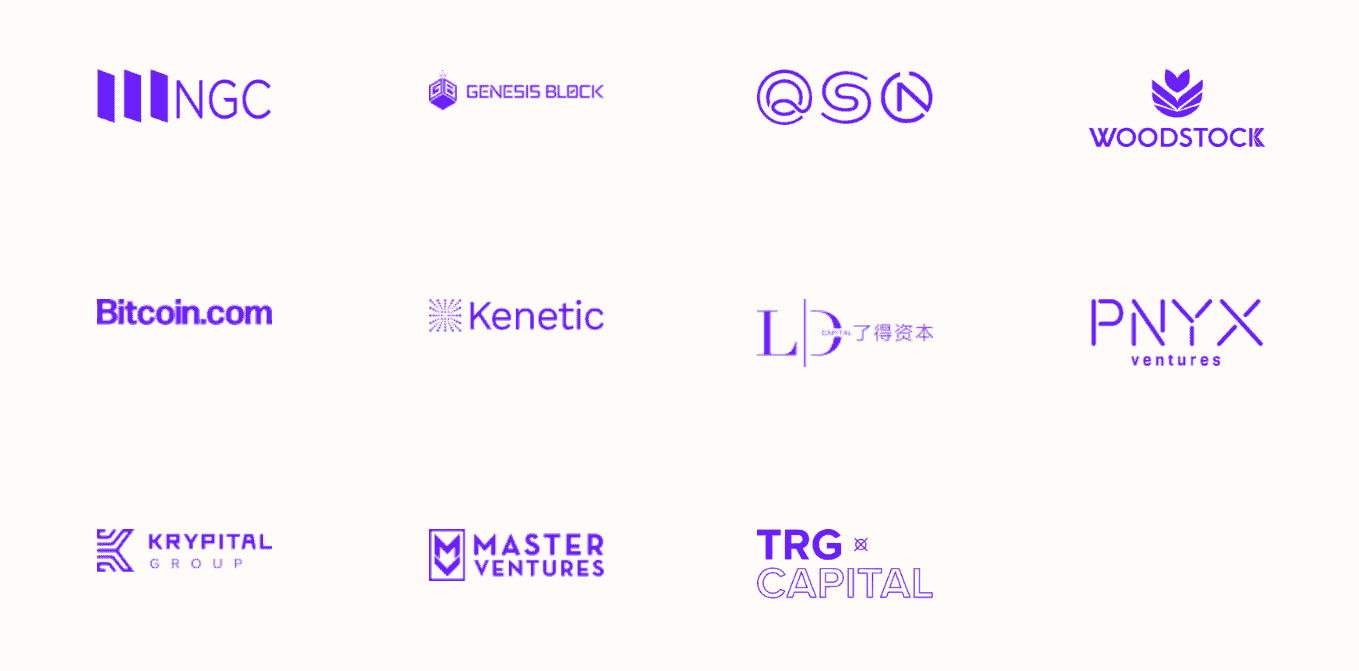
Reef is backed by leading funds and venture investors, including NGC, QCP, Bitcoin.com, Kenetic Capital, LD Capital, TRG Capital, Krypital Group, Genesis Block, and Woodstock Fund.
7. WHERE TO BUY REEF TOKENS?
Binance offers the largest number of pairs as of September 2020, offering trading with USDT, BTC, and BUSD, while Huobi Global also offers Bitcoin (BTC), Ethereum (ETH), and Tether (USDT) options. It is also available on Gate.io and Bitfinex. Bitfinex also supports Reef Chain.

REEF can also be purchased on decentralized exchanges such as 1inch and Uniswap.
8. SUMMARY
This article by Finance Solutes has provided a detailed overview of the Reef Finance project and the applications of the REEF coin. It is clear that REEF addresses many common complexities encountered in DeFi platforms, offering users a smoother experience. Do you think this is a promising project? Don’t hesitate to leave your comments below and let us know!
- t.me/finance_solutes
- Website: https://finance-solutes.com
- Hotline: +1 929 5636 439 ( Hotline )
- 26 Broadway, Suite 934, New York, 10004, US
